
Skip to content
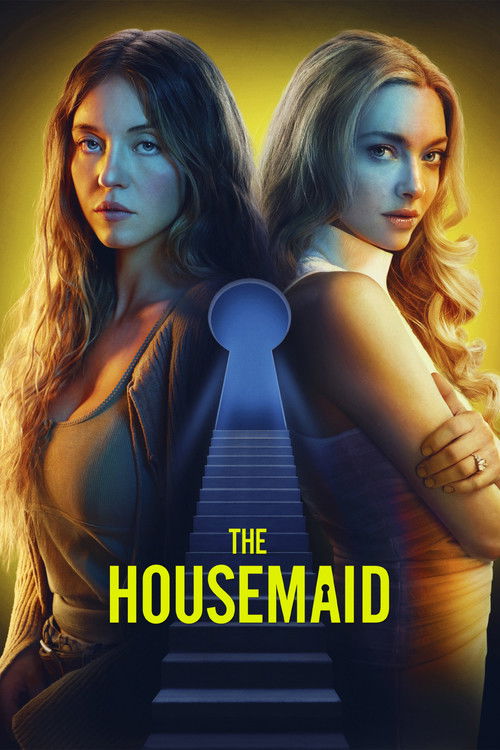
The Housemaid
Wrapped in pristine suburban luxury, this glossy psychological thriller simmers with paranoid desperation, like a gilded cage constructed from sleek, sunlit marble where every reflection conceals a razor-sharp trap.
The Housemaid

The Housemaid

"Discover what lies behind closed doors."

18 December 2025 United States of America 131 min 7.3 (2,727)

Director: Paul Feig

Cast: Sydney Sweeney, Sarah Cooper, Amanda Seyfried, Brandon Sklenar, Michele Morrone

Thriller Mystery The Deceptive Facade of Suburban Perfection Domestic Abuse, Gaslighting, and Coercive Control Subversion of Female Competition into Solidarity Class Exploitation, Vulnerability, and Survival
Budget: $35,000,000
Box Office: $399,644,671

Overview

Directed by Paul Feig and adapted by Rebecca Sonnenshine from Freida McFadden’s bestselling 2022 novel, The Housemaid is a slick, high-tension psychological thriller set in the affluent enclaves of Long Island, New York. The narrative follows Millie Calloway (Sydney Sweeney), a struggling young ex-convict living in her car who desperately needs employment to maintain her parole status. Her luck seems to turn when she is hired as a live-in housekeeper by Nina Winchester (Amanda Seyfried), a glamorous matriarch residing in a sprawling, picture-perfect mansion with her handsome husband Andrew (Brandon Sklenar) and young daughter Cecelia.

However, Millie’s dream job quickly devolves into an unsettling maze of erratic behaviors and mind games. Nina subjects Millie to sudden, inexplicable outbursts of rage, contradictory instructions, and public humiliations, while rumors swirl among suburban neighbors regarding Nina's fragile mental history. Meanwhile, Andrew emerges as a sympathetic harbor of charm and gentleness, apologizing for his wife’s unhinged episodes and quietly bonding with the grateful housemaid.

Relegated to a tiny attic bedroom featuring a sealed window and a door that ominously deadbolts only from the outside, Millie finds herself drawn into the Winchesters' volatile marital friction. As attraction brews between Millie and Andrew amidst Nina's escalating malice, Millie soon realizes that the Winchester home conceals deeply disturbing secrets where no one—and nothing—is quite what it appears to be.

Core Meaning

The film serves as a satirical yet gripping examination of the deceptive nature of suburban wealth, the insidious mechanics of domestic gaslighting, and the subversion of traditional female rivalries. Director Paul Feig strips away the polished facade of high-society 'perfection' to expose how prestige and charm often cloak predatory domestic abuse. Rather than pitting women against one another in a cliché story of marital infidelity, The Housemaid ultimately delivers a message centered on female solidarity, survival, and retribution, demonstrating how systemic abuse forces victims to rewrite the rules of justice when traditional power structures fail them.

Thematic DNA

The Deceptive Facade of Suburban Perfection 30%
Domestic Abuse, Gaslighting, and Coercive Control 25%
Subversion of Female Competition into Solidarity 25%
Class Exploitation, Vulnerability, and Survival 20%

The Deceptive Facade of Suburban Perfection

The Winchester estate represents an idyllic vision of American upper-class success—sunlit kitchens, pristine interior design, and haute couture clothing. However, the film reveals that this physical beauty actively conceals dark horror, demonstrating how socio-economic privilege allows domestic abusers to hide their toxicity behind polite social standing.

Domestic Abuse, Gaslighting, and Coercive Control

The core of the narrative unpacks how gaslighting dismantles a victim's perception of reality. Through psychological framing, the true abuser manipulates social institutions and suburban gossip to brand victims as 'mentally unstable,' isolating them completely.

Subversion of Female Competition into Solidarity

The story initially frames Nina and Millie as arch-rivals vying for the favor of a charming husband. As the truth unfolds, this catfight dynamic turns upside down, revealing a clandestine bond of solidarity where women join forces to survive and dismantle their common oppressor.

Class Exploitation, Vulnerability, and Survival

Millie’s status as a desperate ex-felon highlights how socio-economic vulnerability makes working-class individuals prime targets for exploitation. Survival requires Millie to rely on her criminal instincts and raw resilience to navigate a gilded trap designed to destroy her.

Character Analysis

Millie Calloway

Sydney Sweeney

Archetype: Resilience Antihero / Survivor Key Trait: Fierce street-smart survival instinct masked beneath an innocent, meek exterior.

Motivation

To clear her parole, secure financial stability, and escape a lingering history of trauma.

Character Arc

Evolves from a desperate, easily manipulated ex-con seeking a fresh start into an observant, cunning agent of vigilante justice.

Nina Winchester

Amanda Seyfried

Archetype: The Mastermind / Trickster Key Trait: Sharp, theatrical intellect disguised as unhinged mental instability.

Motivation

To liberate herself and her daughter from her sadistic husband while securing financial independence.

Character Arc

Shifts in the viewer's eyes from a manic, cruel suburban socialite into a calculating, brilliant survivor who orchestrates an elaborate escape plan.

All 4 characters and cast

Symbols & Motifs

The Attic Room and the Exterior Deadbolt Lock

Meaning:

Imprisonment, structural domestic abuse, and hidden domestic secrets.

Context:

Given to Millie as her bedroom; the door locks strictly from the outside, turning a sleeping space into a literal prison cell used by Andrew to discipline disobeyed wives.

The Sealed Window

Meaning:

Lack of perspective, isolation, and inescapable claustrophobia.

Context:

Located in the attic room; painted shut and screwed tight, preventing any physical escape or outward cry for help.

Broken China and Crockery

Meaning:

Shattered domestic facades and weaponized household expectations.

Context:

Nina smashes fine dinnerware during manufactured tantrums; later, Andrew uses broken china shards as tools of physical punishment.

Teeth / The Extraction

Meaning:

Loss of power, vanity, and visceral karmic retribution.

Context:

Andrew takes extreme pride in his immaculate smile; when trapped, Millie forces him to extract his own tooth as a brutal lesson in consequences.

The White Singlet / Tailored Wardrobe

Meaning:

Polished upper-class charm masking predatory male narcissism.

Context:

Andrew continuously wears immaculately styled, casual luxury attire to maintain an approachable, attractive image while enacting calculated cruelty behind closed doors.

Memorable Quotes

Teeth are a privilege!
— Nina Winchester / Millie

Context

Spoken during the film's tense climax.

Meaning

Emphasizes the themes of stripping power and vanity away from an abuser.

What kind of monsters are we?
— Nina Winchester

Context

Delivered with dark, winking irony while showing Millie the attic deadbolt lock.

Meaning

Foreshadows the horror beneath their suburban lifestyle.

All 5 quotes

Philosophical Questions

Is deceptive manipulation morally justifiable when escaping severe coercive control?

Explored through Nina's calculation in subjecting an innocent housemaid to danger to secure her own freedom.

How does wealth and social privilege alter societal perceptions of guilt and sanity?

Explored via Andrew’s ability to easily convince neighbors and authorities that his wife is insane and his maid is untrustworthy.

Can extrajudicial vigilante justice break cycles of violence?

Explored through Millie’s eventual transformation into an undercover operative assisting other trapped wives.

Alternative Interpretations

Feminist Anti-Abuse Parable: Views the film as a story of female empowerment where victims recognize that traditional legal channels often fail to protect women from wealthy abusers, necessitating guerilla solidarity.Morally Grey Exploitation Narrative: A more critical reading argues that Nina, despite being abused, ruthlessly exploits Millie—a vulnerable ex-con—as unwitting collateral and bait to...

Full ending explanation

Cultural Impact

Released in December 2025, The Housemaid capitalized on the massive literary phenomenon of 'BookTok thrillers'. The film achieved critical acclaim and commercial success, earning an 80% Certified Fresh rating on Rotten Tomatoes. Critics praised Amanda Seyfried’s wildly entertaining performance and Feig’s skillful balance of camp comedy and genuine suspense. By generating over $400M globally and dominating global streaming charts in early 2026, it proved the commercial viability of R-rated, female-led domestic noir thrillers in modern cinema.

Audience Reception

Praised:

  • Amanda Seyfried’s scene-stealing, deliciously unhinged performance.
  • Sydney Sweeney’s grounded vulnerability and transformation into an action-thriller survivor.
  • The mid-film perspective twist that completely recontextualizes the story.

Criticisms:

  • Unrealistic plot logic requiring high suspension of disbelief.
  • Underutilization of supporting cast members like Michele Morrone.

Overall Verdict: A wildly entertaining, sleek, and deliciously twisted popcorn thriller that balances dark camp with tension.

Interesting Facts

  • The 'Nancy Meyers Nightmare' Concept: Director Paul Feig designed the movie's look to resemble a high-end Nancy Meyers aesthetic—bright, warm, and hyper-luxurious—specifically to contrast it with dark psychological horror.
  • On-Set Living: To build natural chemistry, Sydney Sweeney, Amanda Seyfried, and the cast spent long production days inside the main mansion set in Long Island, hanging out in the living areas between takes.
  • Massive Box Office Sensation: Produced on a budget of $35 million, the film grossed over $400.5 million worldwide, making it one of Lionsgate's highest-grossing original thrillers.
  • Immediate Franchise Greenlight: Due to its runaway theatrical success and topping streaming charts on Prime Video, Lionsgate immediately greenlit a sequel based on the second book, The Housemaid's Secret, with Feig and Sweeney returning and Kirsten Dunst joining.
  • Adapted by Rebecca Sonnenshine: Screenwriter Rebecca Sonnenshine (known for The Boys and The Vampire Diaries) adapted Freida McFadden’s viral BookTok novel, deliberately sharpening the pacing and expanding the thriller climax for cinematic scale.

Easter Eggs

Reference to A Simple Favor

Director Paul Feig incorporates stylistic callbacks to his 2018 hit A Simple Favor, including sharp martini iconography, glamorous fashion choices, and satirical high-camp beats.

BookTok Fan Nods

Specific props—such as the exact styling of the attic lock, the steakhouse dinner order, and the specific books mentioned—pay direct homage to fan-favorite moments from Freida McFadden’s original 2022 novel.

Gothic Domestic Horror Homages

The film visually references classic gaslighting thrillers like Gaslight (1944) and Sleeping with the Enemy (1991), subverting their tropes through modern tech and perspective flips.

Frequently Asked Questions

Explore More About This Movie

Dive deeper into specific aspects of the movie with our detailed analysis pages

Comments (0)

Leave a comment

No comments yet. Be the first to share your thoughts!

Similar Movies