Skip to content
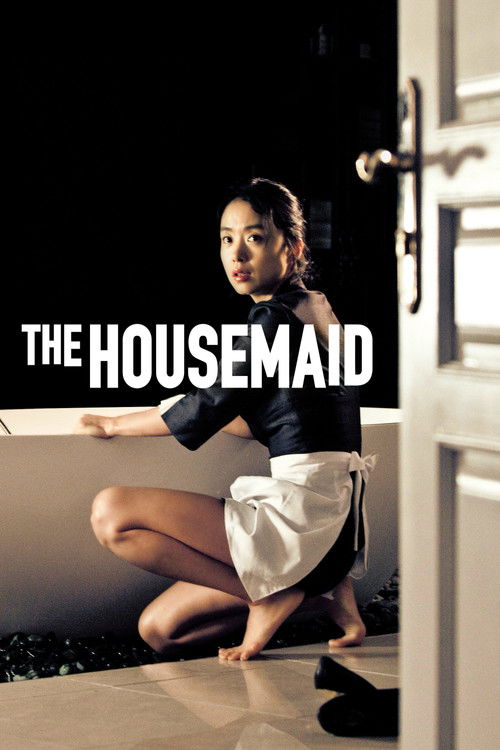
The Housemaid
A suffocating erotic melodrama steeped in icy malice and silent despair, where aristocratic opulence serves as a gilded cage crushing an innocent soul like porcelain beneath polished marble.
The Housemaid

The Housemaid

하녀

"When Opportunity Knocks, Answer at Your Own Risk."

13 May 2010 South Korea 107 min 6.3 (395)

Director: Im Sang-soo

Cast: Jeon Do-yeon, Lee Jung-jae, Seo Woo, Youn Yuh-jung, Park Ji-young

Drama Thriller Predatory Class Stratification and Feudal Entitlement Bodily Commodification, Exploitation, and Female Agency Complicity, Servitude, and the Crushed Working Class The Façade of High-Culture Refinement vs. Moral Barbarism
Budget: $4,000,000

Overview

The Housemaid (2010), written and directed by Im Sang-soo, is a provocative psychological thriller and biting class satire reimagining Kim Ki-young’s seminal 1960 South Korean classic. The story begins in the bustling streets of Seoul, where a young woman’s public suicide leaves a haunting impression on Eun-yi (Jeon Do-yeon), an earnest, divorced, working-class woman. Seeking a fresh start, Eun-yi accepts a position as an au pair and domestic helper in the palatial, ultra-modern modernist estate of an immensely wealthy businessman named Hoon (Lee Jung-jae) and his heavily pregnant trophy wife, Hae-ra (Seo Woo).

Supervised by the cynical, long-serving senior housekeeper Byeong-sik (Youn Yuh-jung), Eun-yi quickly throws herself into the grueling domestic routines and forms a genuine, affectionate bond with the couple’s young daughter, Nami (Ahn Seo-hyun). However, the sterile harmony of the estate crumbles when the arrogant patriarch Hoon exercises his unstated feudal entitlement and seduces the naive maid. What begins as a transactional domestic role quickly degenerates into an asymmetric sexual entanglement.

When the secret affair leads to Eun-yi's pregnancy, the entrenched upper-class hierarchy mobilizes to protect its lineage, reputation, and domestic order. Hae-ra’s ruthless mother, Mrs. Park (Park Ji-young), orchestrates a systematic campaign of domestic surveillance and psychological warfare. Caught in a web of betrayal, cold violence, and exploitation, Eun-yi finds herself stripped of agency and dignity, setting the stage for a tragic confrontation with South Korea’s untouchable elite.


Core Meaning

Director Im Sang-soo designed The Housemaid as a savage critique of South Korea’s contemporary super-rich (chaebol and elite class) and the predatory nature of modern capitalist hierarchy. Unlike Kim Ki-young’s 1960 original—which framed the working-class housemaid as a monstrous, sexually aggressive threat to a fragile middle-class household—Im completely reverses the power dynamic. In the 2010 version, the housemaid is fundamentally powerless, while the ultra-wealthy are the true sociopathic monsters.

The film’s central message is that stratospheric wealth dehumanizes both those who wield it and those who serve it. The wealthy treat working-class individuals as disposable commodities to be consumed, discarded, or paid off with envelopes of cash. Im Sang-soo demonstrates how the elite's polite veneer of high culture, fine wines, and classical piano masks an archaic, feudal cruelty that easily absorbs and erases any rebellion.

Thematic DNA

Predatory Class Stratification and Feudal Entitlement 35%
Bodily Commodification, Exploitation, and Female Agency 25%
Complicity, Servitude, and the Crushed Working Class 20%
The Façade of High-Culture Refinement vs. Moral Barbarism 20%

Predatory Class Stratification and Feudal Entitlement

The film contrasts the stark economic divide in South Korea. Hoon embodies droit du seigneur (the lord’s right), treating domestic staff as property. Money is used as an absolute shield against moral responsibility and legal consequence, showing how the ruling class commodifies human life.

Bodily Commodification, Exploitation, and Female Agency

Eun-yi’s body becomes a battleground: first as an object of sexual gratification for Hoon, then as an incubator for an unwanted heir, and ultimately as a victim of violent termination. Her struggle to keep her unborn child represents an attempt to assert autonomy against the coercive control of her employers.

Complicity, Servitude, and the Crushed Working Class

Through the veteran housekeeper Byeong-sik, the film examines how working-class individuals become complicit in their own subjugation. Byeong-sik resents her masters yet spies for them to survive, illustrating how economic precarity forces the oppressed to police each other rather than stand in solidarity.

The Façade of High-Culture Refinement vs. Moral Barbarism

The film strips away the polished veneer of high society. Hoon plays classical piano, drinks vintage wine, and curates expensive modern art, yet behind closed doors, his family engages in attempted murder, poisoning, and calculated abuse.

Character Analysis

Eun-yi

Jeon Do-yeon

Archetype: Tragic Victim / Naive Ingénue Key Trait: Childlike innocence and vulnerability exploited by those above her

Motivation

Seeking affection, economic independence, and the preservation of her dignity and unborn child.

Character Arc

Starts as a trusting, cheerful divorcee eager to care for a child, gradually realizes she is merely an expendable plaything, and concludes in catastrophic, incendiary defiance.

Hoon

Lee Jung-jae

Archetype: Predatory Patriarch / Feudal Aristocrat Key Trait: Psychopathic detachment disguised as aristocratic politeness

Motivation

Complete control, sexual gratification, and preserving his lineage and dynastic reputation.

Character Arc

Maintains an unruffled, polished demeanor throughout; his shallow surface remains unchanged even after orchestrating and witnessing irreversible human destruction.

All 5 characters and cast

Symbols & Motifs

The Grand Staircase and Chandelier

Meaning:

Symbolizes the precarious domestic hierarchy.

Context:

Serves as a visual precipice from which Eun-yi is pushed and, ultimately, the staging ground for her self-immolation and theatrical retribution.

Wine and Crystal Glasses

Meaning:

The fragile, transparent crystal mirrors the vulnerability of those under Hoon's roof and the deceptive clarity of his aristocratic manners.

Context:

Hoon pours high-end wine into delicate crystal glasses as a tool of seduction and dominance.

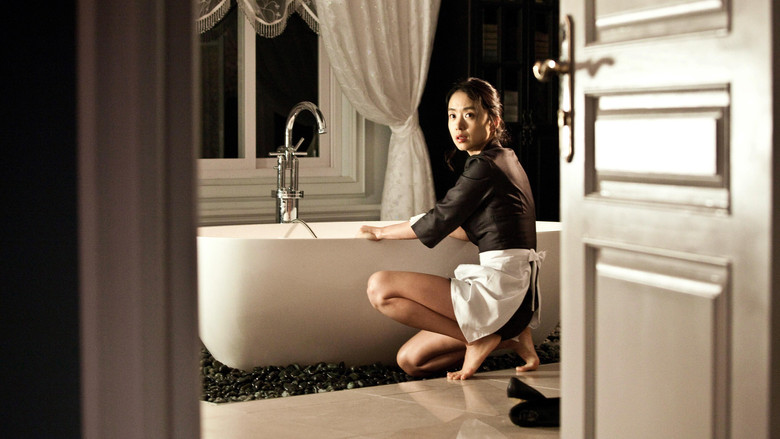
The Bathtub / Water Cleansing

Meaning:

Reflects Eun-yi’s innocence, her forced labor, and an obsession with physical and moral purity.

Context:

Appears during frequent scenes of bathing, scrubbing bathroom tiles, and washing babies, and later returns as overhead indoor fire sprinklers washing away the ashes of tragedy.

Envelopes of Cash

Meaning:

Represent the commodification of human rights and dignity, where bodily trauma and forced abortions are treated as minor business settlements.

Context:

Thick bank envelopes offered by Hoon and Mrs. Park to buy silence and pacify victims.

The Steinway Grand Piano

Meaning:

Reflects performative sophistication used to drown out the suffering of those around the elite.

Context:

Hoon playing classical music in the mansion as background noise during human distress.

Fire and Ash

Meaning:

Represents an elemental force of destruction and uncontainable truth, contrasting with the cold, sterile marble architecture of the estate.

Context:

Used during Eun-yi’s final act of theatrical self-immolation.

Memorable Quotes

너, 참 더럽게 당당하구나.
— Hae-ra

Context

Spoken when confronting Eun-yi about the affair.

Meaning

Hae-ra expresses fury that a lower-class maid dares to stand upright and look her in the eye rather than cower in shame.

아기… 제 아기예요. 제 몸속에 있어요.
— Eun-yi

Context

Eun-yi's desperate declaration to Hoon and his mother-in-law.

Meaning

Eun-yi's declaration asserting maternal ownership and bodily autonomy against upper-class demands for an abortion.

All 4 quotes

Philosophical Questions

Can extreme economic power coexist with genuine morality?

The film asks whether vast structural inequality inevitably turns human relationships into transactions of ownership and abuse.

What constitutes true violence: physical rebellion or systemic erasure?

The film explores the contrast between the quiet, administrative violence of forced abortion and the loud, visceral violence of public self-immolation.

Is complicity a survival strategy or a moral surrender?

Through Byeong-sik, the narrative questions whether the oppressed have an ethical obligation to show solidarity with one another when economic survival demands obedience.

Alternative Interpretations

The Traumatic Memory / Hallucination Reading: The final scene—a bizarre, stylized garden party where the family speaks awkward English while drinking champagne—is interpreted by many critics as an allegorical fantasy or a manifestation of post-traumatic coping, highlighting how the rich instantly sanitize tragedy into performative normalcy.

Full ending explanation

Cultural Impact

Released in 2010, the film mirrors growing anxiety in South Korea regarding widening income inequality, the consolidating power of family-owned conglomerates (chaebols), and the precarity of the service workforce.

In South Korea, the film was a major commercial hit, drawing over 2.8 million admissions and grossing over $14.7 million. Youn Yuh-jung won multiple accolades for Best Supporting Actress, including at the Blue Dragon Film Awards, the Grand Bell Awards, and the Asian Film Awards.

Audience Reception

The film polarized critics at Cannes and worldwide. Critics praised Lee Ha-jun’s production design, Lee Hyung-deok's cinematography, and the acting (especially Youn Yuh-jung and Jeon Do-yeon). However, some critics found the melodramatic shifts and the surreal ending excessively abrasive compared to the original.

Audience reviews reflected admiration for the mansion's production design conveying sterile wealth, along with strong portrayals of innocence crushed by cruelty. Criticisms centered on pacing shifts, tonal jumps between erotic thriller, melodrama, and dark satire, as well as the extreme theatricality of the final 15 minutes that alienated viewers seeking a traditional revenge payoff. Overall, it stands as a visually stunning, highly provocative, and darkly comedic psychological thriller that deliberately unsettles viewers by refusing comforting Hollywood-style tropes.

Interesting Facts

  • The modernist two-story mansion was, at the time of release in 2010, the largest and most expensive purpose-built interior set constructed in South Korea, designed by production designer Lee Ha-jun (who later won international acclaim for Parasite).
  • The film was selected to compete for the prestigious Palme d'Or at the 2010 Cannes Film Festival, marking Im Sang-soo’s high-profile return to the Croisette.
  • Youn Yuh-jung, who plays senior maid Byeong-sik, made her debut in director Kim Ki-young’s Woman of Fire (1971) and The Insect Woman (1972)—films forming the extended thematic lineage of Kim Ki-young's original 1960 The Housemaid.
  • Jeon Do-yeon, who won Best Actress at Cannes in 2007 for Secret Sunshine, took on the physically and psychologically demanding role of Eun-yi, performing intense wire-work and dramatic hanging stunts.
  • Lee Jung-jae took the role of Hoon to challenge his leading-man persona, deliberately leaning into predatory narcissism and aristocratic aloofness.
  • Im Sang-soo stated in interviews that while Kim Ki-young’s 1960 film reflected a patriarchal fear of women rising in the post-war industrial era, his 2010 version was designed to reflect 21st-century globalization and the untouchable nature of modern oligarchs.

Easter Eggs

Kim Ki-young Heritage

The entire film is a direct thematic conversation with Kim Ki-young’s 1960 masterpiece The Housemaid. The role reversal—transforming the maid from a scheming femme fatale into an exploited victim—is a conscious cinematic subversion.

Youn Yuh-jung's Dialogue Nuance

Byeong-sik's character shares the name of several characters from Kim Ki-young’s cinematic universe, nodding to Youn's historic status as Kim's ultimate muse.

Architectural Link to Parasite

Production designer Lee Ha-jun utilized a very similar spatial design philosophy (vast glass panels, vertical stair separations, hidden servant quarters) that he later refined in Bong Joon-ho's Parasite (2019).

Homage to European Cinema

The stylistic precision, tracking shots, and satirical treatment of bourgeois moral decay reference the works of Claude Chabrol (La Cérémonie) and Luis Buñuel (The Discreet Charm of the Bourgeoisie, Diary of a Chambermaid).

Frequently Asked Questions

Explore More About This Movie

Dive deeper into specific aspects of the movie with our detailed analysis pages

Comments (0)

Leave a comment

No comments yet. Be the first to share your thoughts!

Similar Movies