Skip to content
The King: Eternal Monarch
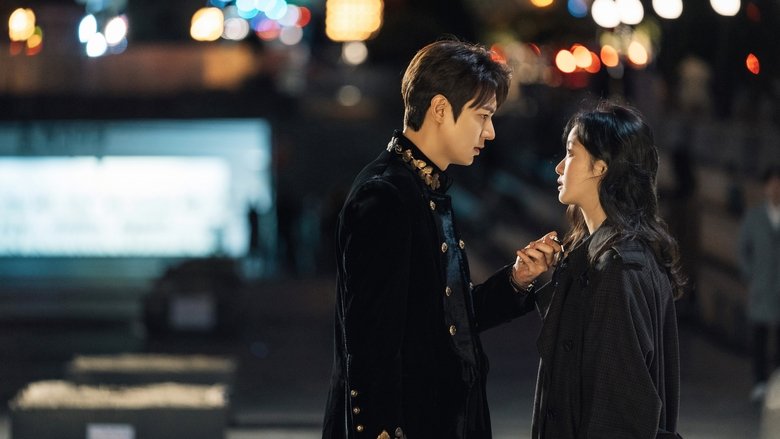
A grand romantic fantasy woven with quantum mystery, where tragic longing collides with regal elegance. Across a fracture in time and space, two lovers navigate a labyrinth of fate—their connection shimmering like a solitary eclipse bridging parallel worlds.
The King: Eternal Monarch

The King: Eternal Monarch

더 킹 : 영원의 군주

17 April 2020 — 12 June 2020 South Korea 1 season 16 episode Ended 8.2 (911)

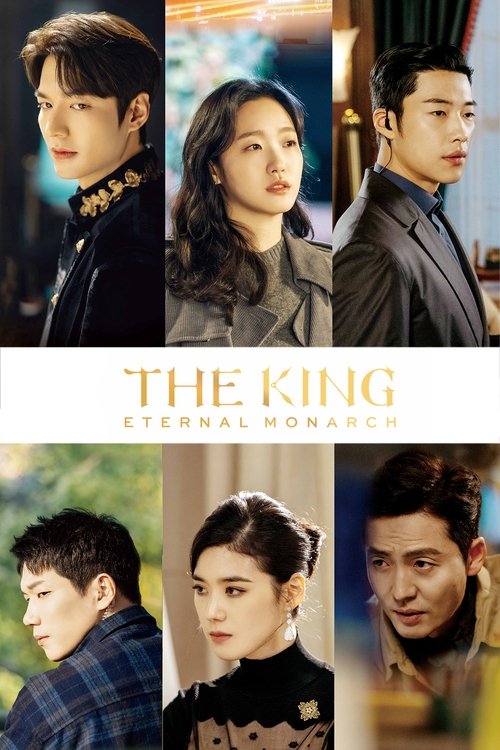
Cast: Lee Min-ho, Kim Go-eun, Woo Do-hwan, Kim Kyung-nam, Jung Eun-chae

Drama Sci-Fi & Fantasy Destiny vs. Free Will The Weight of Duty and Sacrifice Duality and Identity Greed, Temptation, and Human Corruption Love Across Time and Space

Overview

The King: Eternal Monarch is a 16-episode fantasy drama set across two parallel realities: the modern-day Republic of Korea and the Kingdom of Corea, a constitutional monarchy. The story begins in 1994 when Prince Lee Lim assassinates the Emperor of Corea to obtain the Manpasikjeok, a mythical flute with supernatural powers. During the bloody night, the flute splits into two. The young Prince Lee Gon survives with one half, while Lee Lim escapes into a portal holding the other half, discovering a parallel universe.

Twenty-five years later, Emperor Lee Gon stumbles upon the same portal in a bamboo forest and crosses into the Republic of Korea. There, he meets Detective Jung Tae-eul—a woman whose police badge he held since the night of the treason. As Lee Gon and Tae-eul join forces, they uncover Lee Lim’s grand conspiracy: he has been replacing citizens in both worlds with their alternate doppelgängers, exploiting human greed and distorting the natural order.

As time begins to fracture and stop at increasing intervals due to the portal’s open gate, Lee Gon and Tae-eul must untangle a web of temporal loops and doppelgänger swaps. To restore balance to the universe, they must defeat Lee Lim and seal the rift between worlds, knowing that fixing the timeline could rewrite history and potentially erase their memories and love forever.

Core Meaning

The central thesis of The King: Eternal Monarch is that true love and moral responsibility can overcome predetermined fate and the chaotic nature of the cosmos. Through the lens of parallel universes, screenwriter Kim Eun-sook explores how choices—rather than sheer destiny—define human existence. While Lee Lim uses portal travel to play God by manipulating human greed and offering people 'better lives' through the murder of their alter-egos, Lee Gon demonstrates that leadership requires self-sacrifice and balance. The drama posits that love is an eternal anchor: even if time is rewritten and worlds are reset, genuine human connections transcend time, space, and memory.

Thematic DNA

Destiny vs. Free Will 30%
The Weight of Duty and Sacrifice 25%
Duality and Identity 20%
Greed, Temptation, and Human Corruption 15%
Love Across Time and Space 10%

Destiny vs. Free Will

The show continually questions whether fate is unchangeable or malleable. Characters face temporal loops and prophecies, but ultimate triumph comes from active, brave choices. Lee Gon and Tae-eul repeatedly defy the odds to write their own ending.

The Weight of Duty and Sacrifice

Lee Gon’s identity as an Emperor comes with total commitment to his people. His romance with Tae-eul is constrained by his obligation to restore the timeline and protect both realms. True royalty is depicted not as privilege, but as the willingness to carry tragic burdens alone.

Duality and Identity

Through doppelgängers (Lee Gon / Lee Ji-hun, Tae-eul / Luna, Jo Yeong / Eun-seob), the show explores how environment and choice shape character. Living in a different world can turn a police officer into a criminal or a stoic royal guard into a quirky civilian.

Greed, Temptation, and Human Corruption

Lee Lim targets desperate people by showing them wealthy versions of themselves in the alternate world and tempting them to commit murder to steal that life. This demonstrates how unbridled desire destroys the soul and destabilizes society.

Love Across Time and Space

Romance acts as a transcendent force. Even when time is frozen or historical timelines are reset, love remains intact in emotional memory.

Character Analysis

Lee Gon

Lee Min-ho

Archetype: Hero / Philosophic Monarch Key Trait: Regal, brilliant mathematician, fiercely loyal

Motivation

Restoring balance to his kingdom, protecting Tae-eul, and eradicating Lee Lim's treason.

Character Arc

Begins as a traumatized, solitary king obsessed with solving mathematical mysteries and finding his savior. Evolves into a selfless ruler willing to reset time and sacrifice his own happiness to defeat Lee Lim and save both worlds.

Jung Tae-eul / Luna

Kim Go-eun

Archetype: Heroine / The Justice-Seeker (Tae-eul) vs. Tragic Antihero (Luna) Key Trait: Resilient, sharp-witted, emotionally brave

Motivation

Upholding justice and keeping her loved ones safe.

Character Arc

Tae-eul starts as a pragmatic, cynical violent crimes detective who doubts Lee Gon's claims. Over time, she embraces the reality of parallel worlds, fighting alongside Lee Gon and risking her life. Luna starts as a terminally ill, hardened criminal in Corea, but ultimately chooses redemption over stealing Tae-eul’s life.

All 5 characters and cast

Symbols & Motifs

The Manpasikjeok (Mythical Flute)

Meaning:

Symbolizes ultimate power, balance, and the key to alternate dimensions.

Context:

When whole, it maintains cosmic order; when split, it opens fractured doors and halts time.

The White Horse (Maximus)

Meaning:

Symbolizes royal authority, nobility, and the fairy-tale bridge between realities.

Context:

Maximus physically carries Lee Gon through the portal into Tae-eul’s world.

The Bamboo Forest

Meaning:

Serves as the liminal threshold between dimensions where the stone pillars (portal gates) stand.

Context:

It is a place of mystery, transition, and destiny.

Red Spider Lily (Sangsahwa / Seeds)

Meaning:

Representing yearning, tragic love, and hopeless romance, the red spider lily blooms only when its leaves have died.

Context:

Tae-eul planting seeds in both worlds symbolizes her proactive effort to bloom hope in a frozen timeline.

The Yoyo Boy / The Yo-Yo

Meaning:

Symbolizes the cosmic balance, the thread of time, and the guardian of the portal.

Context:

The string of the yoyo represents the fragile timeline connecting parallel dimensions.

Frozen Time / Lightning Scars

Meaning:

Stopped time indicates the degradation of time-space caused by opening portals.

Context:

Lightning-like burning scars on portal-travelers during rainstorms represent the painful tax exacted by nature for disrupting temporal laws.

Memorable Quotes

가자. 나의 세계로.
— Lee Gon

Context

Lee Gon says this to Tae-eul at the end of Episode 4 as he takes her through the bamboo portal to prove the existence of the Kingdom of Corea.

Meaning

Marks the transition from disbelief to shared destiny.

나는 대한제국의 황제이고, 하염없이 부른 내 이름은 이곤이다.
— Lee Gon

Context

Lee Gon formally reveals his true identity and name to Tae-eul.

Meaning

Demonstrates his complete trust in Tae-eul by revealing his true identity and name—which is treason for anyone else to speak aloud.

All 5 quotes

Episode Highlights

The Night of Treason

S1E1

Sets up the entire mythology, introducing the 1994 coup by Lee Lim, the splitting of the Manpasikjeok, young Lee Gon’s survival, and the discovery of the parallel world portal.

Significance:

Establishes the inciting incident for all 16 episodes.

Crossing to Corea

S1E4

Tae-eul travels to the Kingdom of Corea for the first time. She sees Lee Gon on his throne, realizing every 'wild story' he told her was true.

Significance:

Shifts Tae-eul from an outsider to an active participant in the multi-dimensional dynamic.

The Naval Stand-off and the First Time Freeze

S1E6

Showcases Lee Gon's strategic leadership during a naval crisis. Lee Gon realizes time is freezing for longer durations, signaling portal decay.

Significance:

Escalates the stakes beyond a love story to a realm-wide cosmic threat.

The Public Reveal and Tragic Reunion

S1E10

Lee Lim publicly reveals his youthfulness in Corea. Lee Gon suffers the loss of his beloved Grand Prince Lee Jong-in (his fatherly mentor).

Significance:

Marks the dark turning point where Lee Gon realizes Lee Lim is actively murdering key figures to destabilize his throne.

Protect Her! She is the Future Empress!

S1E11

Tae-eul is kidnapped to Corea by Lee Lim's henchmen. Trapped and bloody, she fights back until Lee Gon leads a majestic cavalry charge into the city center to rescue her.

Significance:

Widely cited as the climax of action and romance in the show; solidifies Tae-eul's standing in Corea.

The Time Loop Revealed

S1E14

Lee Gon travels back to the night of 1994 to stop Lee Lim. He realizes that he himself was the mysterious shooter who saved his childhood self 25 years ago.

Significance:

Resolves the core temporal paradox of the series, showing how Lee Gon completed the causal loop.

The Final Reset and Eternal Travel

S1E16

Lee Gon and Jo Yeong successfully defeat Lee Lim in 1994, rewriting history. History changes, erasing painful memories for many, but Lee Gon uses the full flute to travel through time and find Tae-eul again.

Significance:

Delivers the definitive resolution where the main leads spend weekends traveling through various historical timelines together.

Philosophical Questions

Is a person defined by their genetics or their environment?

Explored through doppelgängers like Tae-eul (a righteous cop) and Luna (a desperate criminal).

If time is reset, do past emotions and memories still exist?

Explored in the finale when characters feel unexplained nostalgia or phantom tears despite historical rewrites.

Is it moral to sacrifice the balance of nature for personal happiness?

Explored through Lee Lim’s selfish manipulation versus Lee Gon’s self-restraint.

Can free choice alter a predestined causal loop?

Explored via Lee Gon travelling to 1994 to correct his own past mistakes.

Alternative Interpretations

The Psychological Reading (Grief and Trauma): Some critics argue the parallel world represents Lee Gon’s inner psychological realm—a coping mechanism created by a traumatized child who watched his father die. Tae-eul represents the grounded sanity calling him back to reality.The Temporal Loop / Quantum Multiverse Reading: Viewers interpret the realm between 0 and 1 not as physical space, but as a...

Full ending explanation

Cultural Impact

Released during the early COVID-19 pandemic in spring 2020, The King: Eternal Monarch was one of the most anticipated international streaming titles on Netflix. While domestic Korean TV ratings hovered around 6–11% due to complex plot mechanics, the series achieved massive international success, holding the #1 spot on Netflix across multiple Asian, South American, and European regions for weeks.

The show introduced global audiences to the concept of Korean constitutional monarchy aesthetics (blending Joseon Dynasty court apparel with modern military attire) and boosted international tourism interest in Ahopsan Forest and Busan.

Audience Reception

Praise:

  • Woo Do-hwan’s dual performance as Jo Yeong and Eun-seob received unanimous praise.
  • High production value, stunning cinematography, and impressive orchestral soundtrack.
  • Strong chemistry during emotional and action scenes in the second half.

Criticism:

  • Confusing editing and complex time travel mechanics in early episodes.
  • Excessive product placements (PPL) that broke narrative immersion.
  • Domestic Korean ratings fell below high expectations set for writer Kim Eun-sook.

Verdict: A complex, visual K-drama that rewards binge-watching over weekly viewing. It remains a cult favorite among international K-drama fans.

Interesting Facts

  • Star-Studded Comeback: The King: Eternal Monarch marked Lee Min-ho's highly anticipated return to television after completing his mandatory military service.
  • Reunion with Kim Eun-sook: It was Lee Min-ho’s second project with famed writer Kim Eun-sook (after The Heirs) and Kim Go-eun’s second (after Goblin).
  • Massive Budget: The series was one of the most expensive K-dramas of 2020, with a budget exceeding 30 billion South Korean won (approx. $25 million USD) spent on CGI, set construction, and costumes.
  • Horse Bonding: Lee Min-ho spent weeks before shooting practicing horseback riding and bonding with 'Benjamin' (the horse playing Maximus), who became very attached to Lee on set.
  • Real-Life Filming Locations: The bamboo forest scenes were filmed at Ahopsan Forest in Gijang, Busan. Gwanghwamun Square in Seoul was shut down for special night-filming permission.
  • PPL Controversy: The show featured aggressive product placement (PPL) for fried chicken, canned coffee, lip balms, and face masks, which triggered online discussions regarding immersion.

Easter Eggs

Reference to The Man from Nowhere

In Episode 9, Woo Do-hwan’s character Eun-seob shaves his head while reenacting Won Bin’s famous mirror monologue from the classic K-movie The Man from Nowhere.

Signal Homage

In Episode 3, a detective makes a direct dialogue reference to the famous line from the hit thriller drama Signal.

Kim Eun-sook Drama Parallel (Goblin & DOTS)

In several scenes, subtle musical cues and umbrella/rain motifs echo Kim Eun-sook's previous mega-hits Goblin and Descendants of the Sun.

BTS Mention

In the Kingdom of Corea, a newspaper article headline displays 'BTS takes the world by storm,' confirming the band exists in both parallel universes.

Alice in Wonderland Allusions

Lee Gon explicitly refers to Tae-eul as his 'Clock-wearing Rabbit' who led him down the rabbit hole into another world, mirroring Lewis Carroll's novel.

Frequently Asked Questions

Explore More About This Movie

Dive deeper into specific aspects of the movie with our detailed analysis pages

Comments (0)

Leave a comment

No comments yet. Be the first to share your thoughts!

Similar Movies