Skip to content
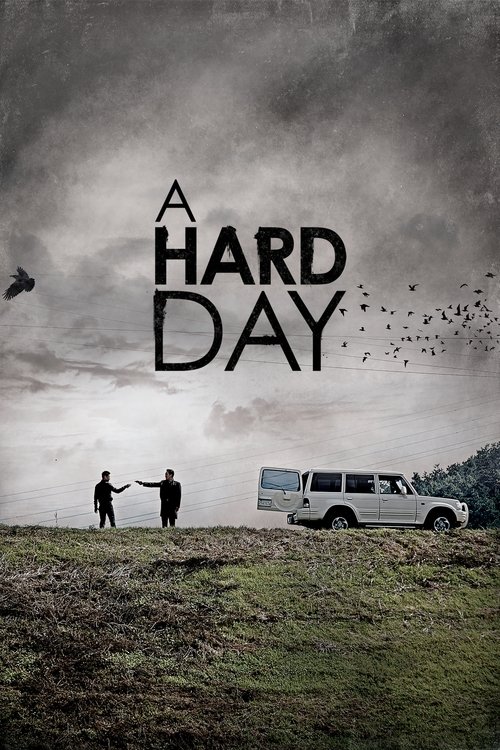
A Hard Day
A relentless, suffocating crime thriller laced with pitch-black panic, where a corrupt detective frantically hides a dead body inside a ticking cinematic labyrinth.
A Hard Day

A Hard Day

끝까지 간다

"The war for a dirty secret."

29 May 2014 South Korea 111 min 7.1 (528)

Director: Kim Seong-hun

Cast: Lee Sun-kyun, Cho Jin-woong, Jeong Man-sik, Shin Jung-keun, Shin Dong-mi

Crime Action Thriller Mystery The Domino Effect of Dishonesty Systemic and Institutional Corruption Survival and Desperation vs. Pure Villainy Dark Absurdity and Irony of Fate
Box Office: $26,488,847

Overview

A Hard Day begins with corrupt Seoul homicide detective Ko Gun-soo experiencing the worst day of his life. While speeding away from his estranged mother's funeral to respond to an urgent internal affairs audit investigating his squad for illicit bribes, Gun-soo swerves to dodge a dog on a dark rural road and fatally hits a pedestrian. Panic-stricken and fearing criminal indictment and career ruin, Gun-soo chooses not to call emergency services and instead conceals the corpse in his trunk, hauling it to the funeral parlor where he hatches a desperate plan to stash the victim inside his mother's coffin just before burial.

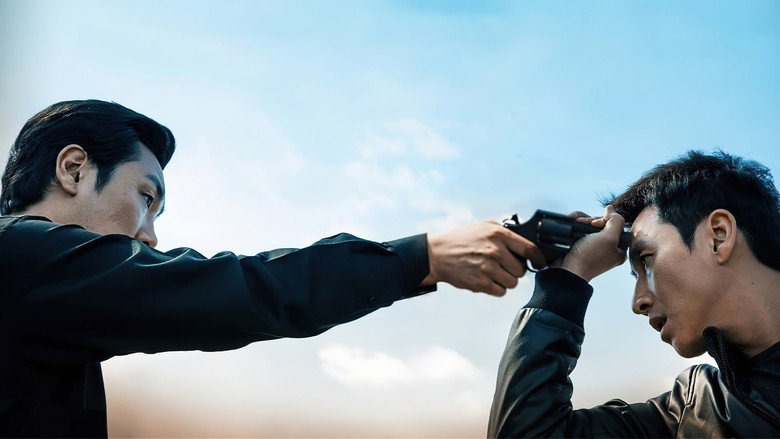
As the body is successfully entombed, Gun-soo believes he has narrowly averted disaster, only to find the nightmare compounding at every turn. His precinct is assigned to locate the very hit-and-run victim, drawing suspicion directly toward his own unit. Soon, a chilling phone call shatters Gun-soo's fragile illusion of safety: an anonymous caller reveals that he witnessed the entire collision and demands the corpse's immediate return.

The caller is revealed to be Lieutenant Park Chang-min, a terrifyingly composed police officer whose criminal empire dwarfs Gun-soo's petty transgressions. As Chang-min's brutal extortion tightens like a noose around Gun-soo and his family, the narrative shifts into an escalating duel of wits, extortion, and explosive violence where every attempt to correct an error pulls Gun-soo deeper into the abyss.
Core Meaning

At its core, A Hard Day is a cynical and satirical examination of moral compromise, systemic corruption, and the butterfly effect of dishonesty. Director Kim Seong-hun illustrates how petty transgressions within institutions dismantle personal ethics until self-preservation completely eclipses basic human decency. Rather than framing morality as a classic battle between virtue and malice, the film pits minor corruption against monstrous depravity, highlighting how compromised authority figures inevitably spawn worse monsters who flourish under the very same shield of badge and law.

Thematic DNA

The Domino Effect of Dishonesty 30%
Systemic and Institutional Corruption 25%
Survival and Desperation vs. Pure Villainy 25%
Dark Absurdity and Irony of Fate 20%

The Domino Effect of Dishonesty

The narrative demonstrates how an initial ethical lapse demands progressively absurd and dangerous deceptions. Gun-soo's decision to conceal his vehicular manslaughter snowballs from hiding a corpse in a coffin to grave desecration, bomb-making, and violent clashes, showing that deception feeds on itself exponentially.

Systemic and Institutional Corruption

The film paints South Korean law enforcement as an interconnected network of kickbacks, bribery, and forged reports. The police department is less concerned with justice than with avoiding internal affairs audits, creating an environment where a sociopath like Lieutenant Park can traffic narcotics with absolute impunity.

Survival and Desperation vs. Pure Villainy

The story explores the confrontation between flawed, anxious humanity and cold, unyielding sociopathy. Gun-soo is defined by sweat, panicked impropriety, and familial concern, contrasting sharply with Park's calculated, Terminator-like invulnerability and sadistic enjoyment of power.

Dark Absurdity and Irony of Fate

Tragedy and farcical black comedy intertwine continuously. Serious rites of passage, such as a parent's burial, are punctured by toy soldier surveillance and ringing cell phones hidden in a corpse's pocket, exposing the ridiculous cruelty of chance.

Character Analysis

Ko Gun-soo

Lee Sun-kyun

Archetype: Antihero / Corrupt Detective Key Trait: Frantic resourcefulness under extreme duress

Motivation

To protect his career, keep his freedom, and safeguard his young daughter and sister from murderous blackmail.

Character Arc

Begins as an opportunistic, stressed-out cop willing to skirt the law; pushed to extreme physical and psychological limits, he survives Park's terror and walks away hardened, wealthy, yet spiritually ambiguous.

Park Chang-min

Cho Jin-woong

Archetype: Shadow Archetype / Monstrous Sociopath Key Trait: Cold-blooded physical intimidation and unyielding persistence

Motivation

To retrieve the vault key held on the corpse of his embezzling partner, protecting his multi-million illicit drug fortune.

Character Arc

Enters halfway through the film as a mysterious tormentor, escalating into an almost unkillable physical force before meeting a violent demise at the bottom of an apartment pond.

All 4 characters and cast

Symbols & Motifs

The Mother's Coffin

Meaning:

Symbolizes the ultimate violation of filial piety and the physical burial of Gun-soo's conscience, serving as a dark sanctuary that corrupts sacred funeral rites for selfish survival.

Context:

Gun-soo sneaks the hit-and-run victim into the mortuary and uses wires and his daughter's toy soldier to deposit the corpse inside his mother's casket just before it is sealed and lowered into the grave.

The Remote-Controlled Toy Soldier

Meaning:

Represents filial neglect, domestic innocence corrupted by criminal complicity, and the farcical mechanics of Gun-soo's desperate improvisations.

Context:

Given to Gun-soo by his young daughter, the toy is retrofitted by him with fishing line to pull the corpse's hand and maneuver the body through ventilation ducting into the casket.

The Locker and Vault Key

Meaning:

Represents the intoxicating lure of illicit wealth and the persistent cycle of greed that outlives mortal retribution.

Context:

Found inside the swallow-tail incisions of Lee Kwang-min's body, this key unlocks an underground vault filled with billions in black-market cash, ultimately seducing Gun-soo in the film's closing sequence.

Memorable Quotes

사람 죽이고도 지낼만해요?
— Park Chang-min

Context

Delivered by Chang-min over the telephone while taunting Gun-soo about the hit-and-run cover-up.

Meaning

Highlights Chang-min's sadistic psychological dominance, cutting straight through Gun-soo's outward composure with mocking moral superiority.

궁금한 게 많아지면 명이 짧아진다.
— Park Chang-min

Context

Whispered directly into Gun-soo's ear during their tense confrontation inside the police precinct bathroom.

Meaning

Serves as an overt death threat and a brutal summary of the underworld rules Chang-min operates by.

All 4 quotes

Philosophical Questions

Can an individual retain any moral integrity when preservation requires continuous ethical degradation?

Gun-soo's trajectory shows how a single panic-driven lie forces an individual to abandon filial piety, professional duties, and social honesty, demonstrating that integrity cannot survive in survival mode.

Does confronting a greater evil vindicate or cleanse a lesser evil?

The film positions Gun-soo as an antihero whom viewers cheer for simply because Park Chang-min is exponentially more ruthless, forcing the audience to grapple with their willingness to forgive corruption when juxtaposed against sociopathic terror.

How It Ends

Alternative Interpretations

While widely viewed as a pulse-pounding action-comedy thriller, some critics interpret the film as an allegory of South Korea's entrenched bureaucratic fatalism and class complicity. In this reading, Gun-soo represents the beleaguered, ethically compromised middle-management workforce trapped between corporate audits and survival instincts, while Park Chang-min personifies the predatory, unchecked oligarchical criminality that operates untouchable above regular laws. The final scene—where Gun-soo opens the massive vault filled with illicit cash—is interpreted either as a comic fairy-tale reward or as a grim confirmation that Gun-soo will inevitably take Park's place in the criminal food chain.

Full ending explanation

Cultural Impact

Released in 2014, A Hard Day revitalized the South Korean crime thriller genre by infusing the grim cynicism of New Korean Cinema with kinetic black comedy and relentless set pieces. Debuting at the 2014 Cannes Directors' Fortnight, the film solidified director Kim Seong-hun as a premier genre craftsman, leading directly to his helm of the disaster blockbuster Tunnel and Netflix's globally acclaimed period zombie series Kingdom. Moreover, the movie's razor-sharp premise established it as one of the most remade modern Korean scripts, inspiring adaptations in China, the Philippines, France, and Japan.

Audience Reception

The film earned enthusiastic acclaim from both critics and general audiences, holding high ratings across platforms like Rotten Tomatoes, IMDb, and Korean portals Naver and Daum. Praise centered heavily on its masterful pacing, inventive suspense sequences (notably the mortuary coffin scene), and the electrifying chemistry between Lee Sun-kyun and Cho Jin-woong. Minor criticism was directed at the somewhat over-the-top, near-indestructible endurance of Park Chang-min in the third act, though most viewers found the adrenaline-fueled momentum and black comedy more than compensated for the slight strain on realism.

Interesting Facts

  • The film was invited to the Directors' Fortnight section of the 67th Cannes Film Festival in May 2014, where it received widespread critical praise for its pacing and dark humor.
  • At the 51st Baeksang Arts Awards in 2015, both lead actors Lee Sun-kyun and Cho Jin-woong jointly won Best Actor in Film, an exceptionally rare dual win.
  • Director Kim Seong-hun suffered a severe commercial and critical flop with his 2006 debut 'How the Lack of Love Affects Two Men' and spent seven years in near poverty refining the script for 'A Hard Day'.
  • Actor Park Bo-gum appears in an early career supporting role as Officer Lee Jin-ho, a junior traffic policeman in Park Chang-min's division.
  • The film's high-concept premise spawned four official international remakes: 'Peace Breaker' (2017) in China, 'A Hard Day' (2021) in the Philippines, 'Restless' (2022) in France, and 'Hard Days' (2023) in Japan.
  • Despite opening in the shadows of Hollywood blockbusters like 'X-Men: Days of Future Past', the film became a sleeper hit in South Korea, drawing approximately 3.45 million admissions.

Easter Eggs

The 'Pig Safe' (돼지금고) business card found on the corpse

Foreshadows the underlying motive of the entire plot; while initially dismissed as junk in the dead man's pocket, it points directly to Park Chang-min's secret vault holding his illicit drug fortune.

Park Bo-gum's early cameo as Police Constable Lee Jin-ho

Provides a glimpse of future superstar Park Bo-gum during his breakthrough period, serving as the unwitting junior officer who hands Gun-soo Chang-min's contact dossier.

Frequently Asked Questions

Explore More About This Movie

Dive deeper into specific aspects of the movie with our detailed analysis pages

Comments (0)

Leave a comment

No comments yet. Be the first to share your thoughts!

Similar Movies