Skip to content
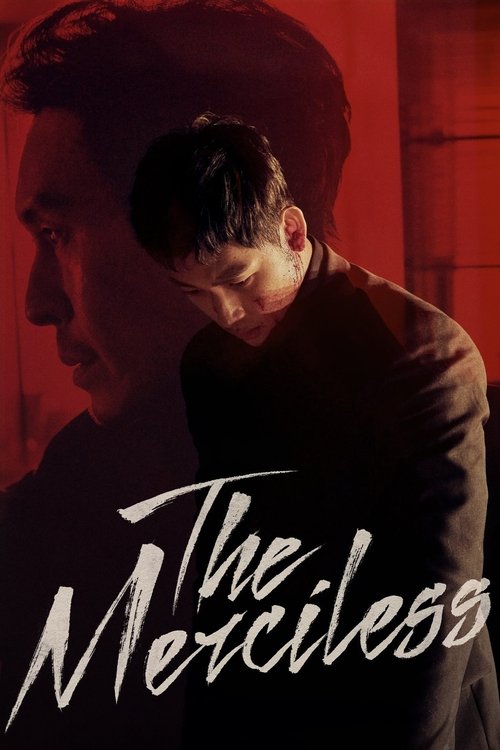
The Merciless
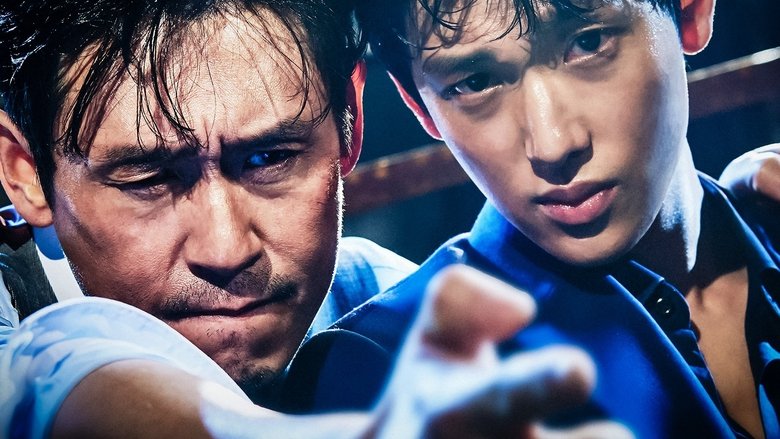
Drenched in slick neo-noir fatalism, the film captures an intoxicating descent into betrayed intimacy, where two men navigate a burning criminal underworld bathed in neon crimson and cold steel.
The Merciless

The Merciless

불한당: 나쁜 놈들의 세상

"Careful who you trust."

17 May 2017 South Korea 120 min 7.2 (144)

Director: Byun Sung-hyun

Cast: Sul Kyung-gu, Yim Si-wan, Kim Hie-won, Jeon Hye-jin, Lee Kyung-young

Crime Action Mystery Faith vs. Circumstance Homoerotic Melodrama & Fractured Brotherhood Institutional Moral Decay Identity Fragmentation & Emotional Isolation

Overview

The Merciless (불한당: 나쁜 놈들의 세상) is a South Korean neo-noir crime thriller directed by Byun Sung-hyun. Set within the violent underworld of drug trafficking and Busan's organized crime syndicates, the narrative explores the volatile relationship between Han Jae-ho, a ruthless senior lieutenant aiming to overthrow his mob syndicate, and Jo Hyun-soo, a defiant newcomer whose fearless attitude earns Jae-ho's respect and protection behind bars.

Unlike conventional undercover thrillers that build toward an exposure climax, the film dismantles traditional genre structures early on. Through a non-linear timeline that interweaves penitentiary struggles with present-day criminal operations, the story exposes the hidden agendas of mob factions and a relentless police division led by Chief Chun In-sook.

As Jae-ho and Hyun-soo partner up post-incarceration to seize control of the enterprise, their forged brotherhood becomes entangled in manipulation, tactical deceit, and conflicting loyalties. Both men are drawn into a high-stakes psychological game where every display of vulnerability may be a calculated snare.
Core Meaning

Fundamentally designed as a tragic melodrama disguised as hard-boiled noir, the film's core thesis posits that absolute cynicism is self-defeating. Han Jae-ho lives by the creed that survival requires trusting situational necessity rather than human beings, yet his downfall occurs precisely when he violates his own ironclad rule and genuinely trusts—and loves—another person. The film demonstrates how toxic environments and ruthless institutions (both the crime syndicate and the police force) erode morality, proving that sincere human connection inevitably leads to total annihilation in a dog-eat-dog world.

Thematic DNA

Faith vs. Circumstance 35%
Homoerotic Melodrama & Fractured Brotherhood 25%
Institutional Moral Decay 20%
Identity Fragmentation & Emotional Isolation 20%

Faith vs. Circumstance

The narrative continuously tests Jae-ho's philosophical motto, "Trust the situation, not the person." It juxtaposes situational leverage against emotional trust, illustrating how calculated manipulation destroys the authentic bonds characters attempt to forge.

Homoerotic Melodrama & Fractured Brotherhood

Subverting masculine gangland cinema, the central dynamic is framed as an intense, tragic romance. Themes of jealousy, possessiveness, betrayal, and longing dictate the plot far more than money or territorial conquest.

Institutional Moral Decay

The film presents no moral high ground. Chief Chun and law enforcement exploit human lives with the same callous, transactional cruelty seen in Chairman Ko's drug syndicate, showing that authority figures manipulate individuals as disposable pawns.

Identity Fragmentation & Emotional Isolation

Hyun-soo's identity disintegrates under the weight of grief and conflicting allegiances. Trapped between a corrupt police division and an affectionate yet murderous mentor, he loses his moral compass and is reduced to numb desolation.

Character Analysis

Han Jae-ho

Sul Kyung-gu

Archetype: The Tragic Antihero / Corrupting Mentor Key Trait: Ruthless tactical pragmatism paired with desperate, repressed emotional need

Motivation

To seize absolute power within Osean Trading while securing the singular, undivided devotion of Hyun-soo.

Character Arc

Begins as an untouchable, cynical mob ruler who controls inmates with violence and charisma; upon meeting Hyun-soo, he allows genuine emotional vulnerability to crack his armor, which becomes his ultimate fatal flaw.

Jo Hyun-soo

Yim Si-wan

Archetype: The Infiltrator Fallen from Grace / Doomed Protagonist Key Trait: Fearless bravado concealing fragile emotional vulnerability

Motivation

Initially to save his ailing mother and fulfill his duty; later shifts to seeking retribution against all who betrayed his trust.

Character Arc

Starts as a spirited, quick-witted undercover detective willing to take beatings to maintain his cover; gradually transforms into an emotionally pulverized, vengeful figure who executes everyone who manipulated him.

All 4 characters and cast

Symbols & Motifs

The Red Sports Car (Ferrari)

Meaning:

Represents desire, unrestrained ambition, and superficial freedom.

Context:

It bookends the narrative, framing Hyun-soo's trajectory from an eager young operative to a hollow survivor lying paralyzed within it at the end.

Raw Fish (Sashimi) / Seafood Logistics

Meaning:

Symbolizes predatory hierarchy, slaughter, and the film's transactional worldview.

Context:

The opening conversation about the freshness of raw fish serves as an overt metaphor for gutting human beings while they are still alive.

The Mother's Kidney & Dialysis

Meaning:

Represents Hyun-soo's lingering connection to pure, uncorrupted humanity.

Context:

When Jae-ho manipulates her medical arrangements and orchestrates her demise, Hyun-soo's remaining tether to empathy is permanently severed.

Cigarettes and Lighters

Meaning:

Act as currency, tokens of dominance, and physical gestures of intimacy and submission.

Context:

Exchanged repeatedly inside the prison and in dark urban alleys between Jae-ho and Hyun-soo.

Overhead and Floor Perspectives

Meaning:

Symbolize trapped helplessness, vulnerability, and inescapable surveillance.

Context:

Utilized through distinct cinematography angles looking straight down from above or looking up from floor level.

Memorable Quotes

사람을 믿지 마라. 상황을 믿어야지, 상황을.
— Han Jae-ho

Context

Spoken to Hyun-soo after his mother's funeral.

Meaning

Serves as Jae-ho's guiding life philosophy and the thematic backbone of the entire screenplay regarding the peril of emotional trust.

형, 나 경찰이야.
— Jo Hyun-soo

Context

Spoken inside the prison shower area when Hyun-soo confesses his true identity to Jae-ho before the police can force a setup.

Meaning

Shifts their dynamic from an undercover operation into a mutual pact of illicit devotion and shared vulnerability.

All 4 quotes

Philosophical Questions

Can authentic trust exist in a system built entirely on transactional power?

Explored through the characters' doomed attempts to cultivate genuine loyalty and love when survival instincts and manipulative leverage dictate every interaction.

Is morality defined by allegiance or by action?

Explored through Chief Chun, who represents state authority while engaging in monstrous emotional manipulation, contrasting with the brutal gangster Jae-ho, who displays genuine devotion.

Does the desire for complete possession inevitably destroy the object of desire?

Explored through Jae-ho's compulsion to sever Hyun-soo's familial ties to become his sole emotional anchor, which ultimately sparks an irreversible cycle of vengeance.

Alternative Interpretations

Complete Nihilistic Destruction (Noir Reading): Hyun-soo's execution of Jae-ho and Chief Chun is the ultimate realization of Jae-ho's cynical worldview; trust is an illusion, all institutions are corrupt, and Hyun-soo is left spiritually hollow in a luxury car.

Full ending explanation

Cultural Impact

Despite initial box office hurdles, The Merciless spawned a passionate cult following in modern Korean cinema known as the 'Bulhandangwon' (불한당원). Fans organized private theater re-screenings, authored queer literary analyses, and revitalized Sul Kyung-gu's career among younger demographics. Additionally, the film catalyzed a shift in Korean crime cinema away from hyper-realistic machismo toward stylized, aestheticized, and emotionally nuanced character studies.

Audience Reception

The film garnered acclaim for the magnetic chemistry and performances of Sul Kyung-gu and Yim Si-wan, Cho Hyoung-rae's dynamic cinematography, and its inventive subversion of undercover crime tropes. Criticisms focused on the convoluted non-linear structure and the presence of violent genre conventions like prison brawls and drug trades. Despite pre-release director tweet controversies impacting domestic box office returns, the film is widely regarded as a visually stunning cult classic.

Interesting Facts

  • The film screened Out of Competition in the Midnight Screenings section at the 70th Cannes Film Festival in May 2017, earning an enthusiastic seven-minute standing ovation.
  • Director Byun Sung-hyun explicitly stated in interviews that during pre-production, he studied romantic melodramas more than traditional noir films to imbue the central relationship with deliberate romantic subtext.
  • Actor Sul Kyung-gu openly noted in press conferences that he approached his character's chemistry with Yim Si-wan with emotions akin to 'love and jealousy' rather than simple male bonding.
  • Director Byun Sung-hyun became embroiled in a social media controversy in South Korea just before the domestic release regarding past personal tweets, which impacted opening weekend box office sales.
  • Following its international acclaim, French-Swiss studio Pathé Films and CJ Entertainment struck an agreement to develop an international English-language remake.

Easter Eggs

Subversion of Infernal Affairs and New World tropes

The film plays with classic undercover genre conventions—such as car park meetings and rooftop handoffs—but subverts them by having the undercover cop voluntarily blow his cover to the mobster in the first act rather than reserving the reveal for the finale.

Comic book framing of the slapping tournament

The prison slap contest employs exaggerated, dynamic framing, reflecting the director's intent to merge graphic novel aesthetics with classical cinema.

Wardrobe color inversion

While Jae-ho consistently wears tailored three-piece suits with open collars, Hyun-soo gradually transitions from casual youthwear to identically styled dark suits, visually signaling his loss of identity and assimilation into Jae-ho's surrogate.

Frequently Asked Questions

Explore More About This Movie

Dive deeper into specific aspects of the movie with our detailed analysis pages

Comments (0)

Leave a comment

No comments yet. Be the first to share your thoughts!

Similar Movies