Skip to content
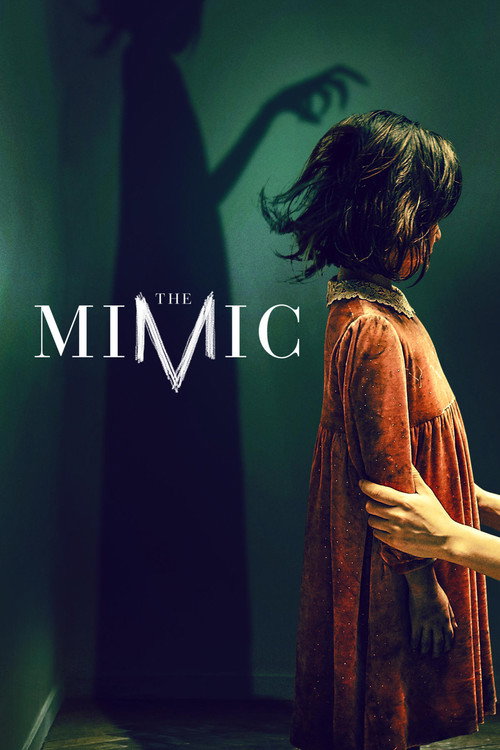
The Mimic
A hushed Korean folk-horror of grief and borrowed voices, where a mother's longing turns into a fatal weakness. The dark forest and a bricked-up cave act as a throat that calls loved ones by name.
The Mimic

The Mimic

장산범

"Don't follow its voice."

17 August 2017 South Korea 100 min 6.3 (180)

Director: Huh Jung

Cast: Yum Jung-ah, Park Hyuk-kwon, Heo Jin, Shin Rin-a, Lee Jun-hyeok

Thriller Horror Grief and refusal to let go Deception, voice and false identity Family fracture and guilt Folklore, shamanism and the price of power Cycles of abuse and sacrifice

Overview

The Mimic (Jangsanbeom) is a 2017 South Korean horror film written and directed by Huh Jung. It draws on the legend of the Jangsan Tiger, a mountain spirit said to imitate human voices to lure people in. Hee-yeon, her husband Min-ho and their young daughter Jun-hee move to Hee-yeon's mother's hometown near the mountain. They hope the move will ease the grandmother Soon-ja's dementia. Five years earlier the couple's son Jun-suh vanished, and Hee-yeon has never accepted that he is gone.

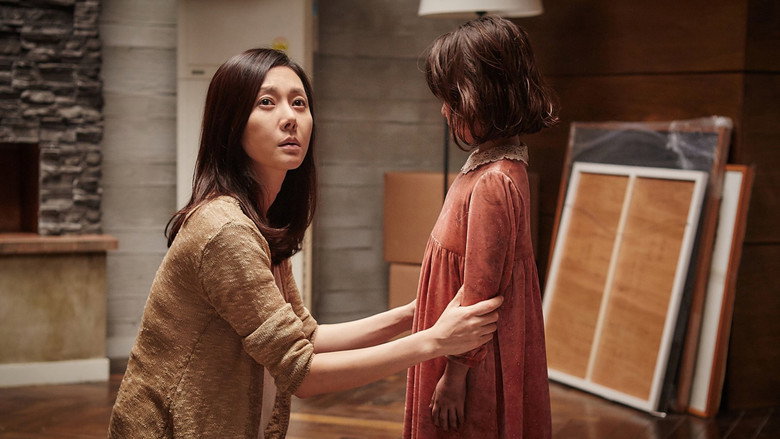
Soon after they arrive, strange things happen. Local children hear a voice that sounds exactly like their lost dog and find a bricked-up cave. A frightened, ragged girl turns up in the woods. Hee-yeon takes her in and lets her stay. The girl begins to copy Jun-hee's name, voice and manner, and she soon calls the couple mom and dad. Min-ho is uneasy and wants the police involved. Hee-yeon, driven by loss, holds on to the child.

The film is slow-building. It takes time to establish the family's strained relationships before the scares come thick and fast in the final stretch, set in and around the cave. A detective, a neighbor and a shaman add pieces of the legend. The central fear is that the voices you hear may be the ones you most want to believe.


Core Meaning

The film argues that grief is the real doorway for horror. The monster does not need force, because it only has to speak in the voice of someone you have lost. Hee-yeon's refusal to accept her son's disappearance makes her a perfect target, and the film asks what we will risk for even an imitation of the people we love.

It also looks at the cruelty that can be passed between generations and the guilt that goes unspoken inside families. The mimic's power comes from our own longing. The film warns that desperate love, like fear, can be exploited, and that the people closest to us can become hidden victims.

Thematic DNA

Grief and refusal to let go 30%
Deception, voice and false identity 25%
Family fracture and guilt 20%
Folklore, shamanism and the price of power 15%
Cycles of abuse and sacrifice 10%

Grief and refusal to let go

Hee-yeon is still on medication and still searching for her missing son five years on. Her longing drives her to shelter the strange girl and ignore warnings. Min-ho's insistence that they accept the loss sets up the central marital conflict.

Deception, voice and false identity

The creature copies voices of loved ones, and the girl takes on the name and voice of Jun-hee. The film turns hearing, which we normally trust, into the unreliable sense.

Family fracture and guilt

The son vanished while in the care of the dementia-afflicted grandmother. Blame and unresolved guilt quietly strain the household and make each member easier to lure.

Folklore, shamanism and the price of power

The legend of the Jangsan Tiger, a shaman who served it for power, and the neighbor's warnings root the horror in local belief. Those who give in to the entity lose their sight.

Cycles of abuse and sacrifice

The backstory involves a father who abused and sacrificed his own child. The film uses this to ask who the real victims are and to complicate the girl's role.

Character Analysis

Hee-yeon

Yum Jung-ah

Archetype: Grieving mother / tragic hero Key Trait: Fragile, stubborn maternal devotion

Motivation

To find her missing son, or to fill the hole he left.

Character Arc

She begins in denial of her son's loss and becomes emotionally entangled with the mysterious girl. The finale in the cave forces her to confront the cost of her longing and make hard decisions.

Min-ho

Park Hyuk-kwon

Archetype: Skeptical husband / rationalist Key Trait: Pragmatic and worried

Motivation

To protect the family and make his wife move on.

Character Arc

He insists on accepting reality and calling the police. When he goes to the cave to find his mother-in-law he is taken, and he is later found blind.

All 5 characters and cast

Symbols & Motifs

Voices and echoes

Meaning:

Desire and memory turned into weapons.

Context:

The dog's bark that lures the children, the grandmother following her sister's voice, and the echoing cave. Characters are warned never to trust any voice or to make a sound.

Mirrors taped over

Meaning:

Doubling and imitation; the barrier between the real and the copy.

Context:

The grandmother covers the house's mirrors in tape because that is how the entity comes through. A hand mirror with taped glass is found early, and a room of mirrors appears in the cave.

The bricked-up cave

Meaning:

Repressed guilt and buried secrets, sealed but never silent.

Context:

The film opens with a woman being walled in the cave. The wall is later opened, and the cave becomes the setting for the finale.

Blindness and failing eyesight

Meaning:

The cost of surrendering to the false voice, and the refusal to see the truth.

Context:

Victims who give in lose their sight. The man from the opening develops eye problems, and Min-ho is later shown to be blind.

The lost child

Meaning:

An absence that shapes everything else.

Context:

The missing son Jun-suh, and the girl who stands in for the missing child, tempting Hee-yeon to accept a replacement.

Philosophical Questions

Can we trust our own senses and desires?

The film makes the voice of a loved one, the most trusted sound, the lure. Characters must choose between emotional certainty and rational doubt.

Is a replacement for a lost loved one a comfort or a betrayal?

Hee-yeon's attachment to the girl, who mimics her daughter, shows how a surrogate can soothe grief while endangering the living family.

Who is responsible when victims become perpetrators?

The shaman's daughter serves the tiger because of her father's abuse, which complicates ideas of guilt and innocence.

How It Ends

Alternative Interpretations

One reading treats the story as a psychological drama in which the entity externalizes Hee-yeon's unresolved mourning, so the monster is grief itself. A second reading centers the girl as the film's real tragic figure, an abused child forced to serve her abuser, which turns the horror into a story of inherited trauma. Critics also noted that the ending feels both open and natural, and some found it conventional, so viewers differ on whether it is bleakly inevitable or a familiar genre twist.

Full ending explanation

Cultural Impact

The film arrived after a quiet stretch for Korean horror and followed the success of The Wailing, which it was often compared to for its use of shamanism and folklore. It was a solid local hit and was credited with reviving the genre commercially. It later reached international audiences through streaming, including a U.S. release in 2018.

Critics noted it echoes familiar Asian horror staples such as haunted mirrors, creepy children and a warning neighbor. Its handling of familial grief was compared to films like Dark Water and Don't Look Now. Reception in English-language criticism was mixed to positive; Rotten Tomatoes reportedly listed it at 83% on a small number of reviews.

Audience Reception

Praised: the atmospheric cinematography, strong makeup and creature work (especially in the cave), a fresh take on folklore, and performances, notably Shin Rin-ah and Yum Jung-ah. Reviewers also liked the slow build and the logical reason behind the protagonists' choices.

Criticized: a derivative feel, overuse of red herrings and cheap jump scares, and thin character development. Some found the mid-film twist undermined the promise and felt the evil became less frightening once its rules were explained. Some viewers consider it underrated.

Verdict: a polished, effective if familiar folk-horror that works best as a study of grief.

Interesting Facts

  • The film was written and directed by Huh Jung, whose debut was the 2013 thriller Hide and Seek, which drew 5.6 million admissions.
  • It was released in South Korea on August 17, 2017, and runs 100 minutes.
  • It was based on the Korean urban legend of the Jangsan Tiger, a creature that imitates human voices.
  • It reportedly became the first Korean genre release in over four years to pass one million viewers; the Korean total is reported at roughly 1.3 million admissions.
  • The worldwide box office is listed at about US$9.4 million.
  • Principal photography reportedly took place in late summer and early fall 2015, and production favored natural locations over the real Mount Jangsan in Busan, which was considered too urbanized.
  • The production company was Studio Dream Capture and the distributor was Next Entertainment World.

Frequently Asked Questions

Explore More About This Movie

Dive deeper into specific aspects of the movie with our detailed analysis pages

Comments (0)

Leave a comment

No comments yet. Be the first to share your thoughts!

Similar Movies