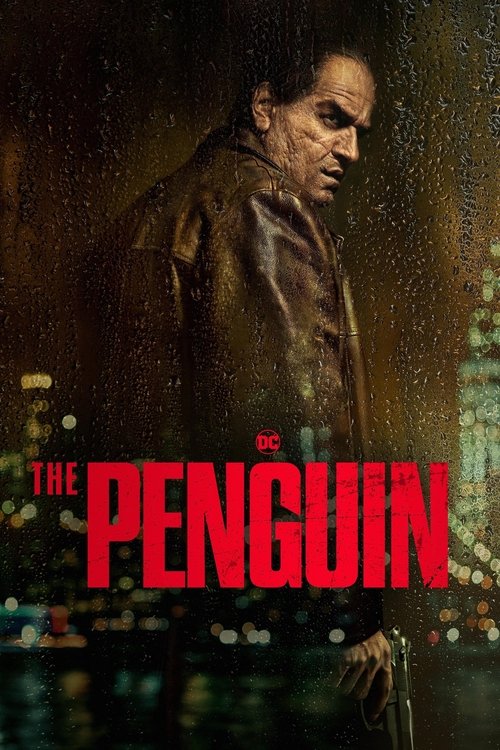
The Penguin
A rain-slicked descent into Gotham's decaying marrow, where ambition is a jagged blade and loyalty a slow-acting poison. A visceral noir tapestry woven with the blood of family and the neon glow of power.
The Penguin

The Penguin

"The city will be his."

19 September 2024 — 10 November 2024 Ireland 1 season 8 episode Ended ⭐ 8.4 (1,165)
Cast: Colin Farrell, Cristin Milioti, Rhenzy Feliz, Deirdre O'Connell, Clancy Brown
Drama Crime
The Duality of Family Class and Marginalization Cycle of Trauma Identity and Performance

Overview

Set in the immediate, debris-cluttered aftermath of the Riddler's attack on Gotham City, The Penguin follows the meteoric and bloody rise of Oswald "Oz" Cobb. As a mid-level lieutenant in the late Carmine Falcone’s empire, Oz exploits a massive power vacuum to orchestrate a daring coup against the established order. The series meticulously tracks his transition from a waddling, underestimated operative to a formidable criminal mastermind, navigating a landscape of shifting alliances and brutal betrayals.

Central to the narrative is Oz's adversarial relationship with Sofia Falcone, Carmine’s daughter, who returns from a harrowing stint in Arkham Asylum with a vengeance of her own. As the two jockey for control of the lucrative "Bliss" drug trade, the show peels back the layers of Oz's psyche, revealing a childhood defined by trauma and a complex, suffocating bond with his mother, Francis. Through eight episodes, the series serves as a gritty bridge in the The Batman saga, transforming a comic-book villain into a grounded, terrifyingly human monster.

Core Meaning

The core of The Penguin is a subversion of the traditional American Dream, reimagined as a relentless and soul-eroding "hustle." The creators suggest that in a world built on structural inequality and historical trauma, power is not earned through merit but seized through the systematic destruction of one's own humanity. The series argues that the ultimate cost of absolute authority is the total excision of vulnerability, making the "successful" man the most isolated and monstrous version of himself.

Thematic DNA

The Duality of Family 30%
Class and Marginalization 25%
Cycle of Trauma 25%
Identity and Performance 20%

The Duality of Family

The series explores family as both a foundational strength and a fatal weakness. While Oz uses his loyalty to his mother as a shield and motivator, he eventually identifies love as a liability that must be terminated to achieve true power. This is mirrored in Sofia's journey, where her family's betrayal is the catalyst for her transformation into a ruthless leader.

Class and Marginalization

Rooted in the grit of Crown Point, the show highlights the desperation of Gotham's lower class. Oz views himself as a "man of the people," weaponizing populist rhetoric to rally the city's overlooked underlings against the "old money" Falcone and Maroni families, though his intentions are purely narcissistic.

Cycle of Trauma

The narrative investigates how past wounds—Oz's childhood fratricide and Sofia's wrongful imprisonment—shape the monsters of the present. The series demonstrates that without intervention, trauma perpetuates a cycle of violence where the victim eventually becomes the oppressor.

Identity and Performance

Oz is a master of performance, using his disability and perceived low status to manipulate others. The show examines the masks people wear to survive in Gotham, ultimately revealing that the most dangerous person is the one who can fool even themselves into believing they are a hero.

Character Analysis

Oswald "Oz" Cobb

Colin Farrell

Archetype: Villain
Key Trait: Manipulative Resilience

Motivation

Driven by an insatiable hunger for respect and his mother's pride, fueled by a lifelong resentment of being mocked for his physical appearance.

Character Arc

Starts as a striving, mid-level mobster seeking approval and ends as the undisputed, sociopathic Kingpin of Gotham. His development is a downward moral spiral, culminating in the murder of his own surrogate son to prove his lack of weakness.

Sofia Falcone (Gigante)

Cristin Milioti

Archetype: Anti-villain / Fallen Hero
Key Trait: Controlled Rage

Motivation

Vengeance against the men who betrayed her, specifically her father Carmine and his former driver, Oz.

Character Arc

Released from Arkham after being framed as the "Hangman," she initially seeks justice but eventually embraces her family's dark legacy to destroy Oz. She ends the season broken, returning to the very asylum she escaped.

Victor Aguilar

Rhenzy Feliz

Archetype: Sidekick / Innocent
Key Trait: Loyalty

Motivation

Survival and a search for a sense of belonging after losing his biological family in the flood.

Character Arc

A homeless teenager who becomes Oz's protégé. He loses his innocence as he is pulled deeper into the criminal underworld, only to be murdered by his mentor in the finale’s most tragic twist.

Francis Cobb

Deirdre O'Connell

Archetype: The Matriarch
Key Trait: Hardened Love

Motivation

Securing a comfortable life for herself and her son, while grappling with the repressed truth of Oz's childhood crimes.

Character Arc

A fierce but fading woman who oscillates between demanding greatness from Oz and fearing his inner darkness. Her arc concludes in a vegetative state, becoming a silent witness to her son's final victory.

Symbols & Motifs

The Purple Maserati

Meaning:

Symbolizes Oz's loud, garish ambition and his desire to be noticed in a city that tries to hide its rot.

Context:

Used throughout the series as his primary vehicle; it stands out in the gray, rainy streets of Gotham, representing his refusal to be a "nobody."

Carmine's Signet Ring

Meaning:

Represents stolen authority and the transition of power from the old guard to the new.

Context:

Oz takes the ring from Alberto Falcone's corpse and later uses it to manipulate Salvatore Maroni, physically claiming the legacy he was never meant to inherit.

Slush Puppies

Meaning:

A symbol of the fleeting, distorted innocence and the bond between Oz and Victor.

Context:

The two share these drinks after their first successful "partnership," highlighting the "meet-cute" quality of their mentor-mentee relationship before it turns dark.

Bird in a Cage

Meaning:

A metaphor for Francis Cobb’s condition and Oz’s desire for control over those he loves.

Context:

At the end of the series, Francis is catatonic in a penthouse, essentially Oz's "pet," unable to reject him or his crimes ever again.

Memorable Quotes

America’s a hustle. Not that I’m complainin’.

— Oz Cobb

Context:

Spoken in Episode 1, "After Hours," as Oz explains his worldview to Victor while disposing of Alberto’s body.

Meaning:

The series' thesis statement regarding the predatory nature of the social and economic system Oz inhabits.

F*** me?! F*** the goddamn world!

— Oz Cobb

Context:

A heated response to Victor in Episode 3, "Bliss," when the teenager considers leaving the criminal life.

Meaning:

A nihilistic outburst expressing Oz's rejection of all social and moral constraints.

Whatever woman you become, you deserve much better than what this family could have offered.

— Sofia Falcone

Context:

Spoken to her cousin’s daughter, Gia, in Arkham during Episode 7.

Meaning:

Reveals Sofia's remaining shred of empathy and her awareness of her family's toxicity.

It’s your strength, it drives you. But f*** if it don’t make you weak, too. And I can’t have that no more.

— Oz Cobb

Context:

The series finale, Episode 8, shortly before Oz strangles Victor on a park bench.

Meaning:

The chilling justification for Oz's decision to kill Victor, prioritizing power over love.

Episode Highlights

After Hours

S1E1

Oz impulsively murders Alberto Falcone, sparking a gang war, and recruits Victor Aguilar as his driver. This episode establishes the grounded, gritty tone of the series.

Significance:

Sets the entire series in motion and establishes the twisted mentor-mentee dynamic that serves as the show's emotional core.

Bliss

S1E3

Focuses on the origins of the new psychedelic drug "Bliss" and explores Victor's backstory during the Riddler's flood.

Significance:

Deepens the world-building by showing the impact of the flood on Gotham's marginalized citizens and introduces the drug that Oz will use to build his empire.

Cent'Anni

S1E4

A flashback-heavy episode detailing Sofia's time in Arkham and the truth behind her "Hangman" reputation.

Significance:

Pivotally reframes Sofia as a victim of patriarchal betrayal, making her a more sympathetic and complex adversary for Oz.

Top Hat

S1E7

Reveals the shocking truth that a young Oz intentionally locked his two brothers in a flooded storm drain, leading to their deaths.

Significance:

Upturns the sympathetic "underdog" narrative Oz has cultivated, proving he has been a monster since childhood.

A Great or Little Thing

S1E8

The finale sees Oz defeat Sofia by manipulating the city's gangs and culminate in the cold-blooded murder of Victor.

Significance:

Cements Oz as an irredeemable villain and sets the stage for his role in The Batman: Part II.

Philosophical Questions

Can love exist without the potential for exploitation?

The series explores this through Oz's relationships. He claims to love Victor and Francis, yet he uses Victor as a tool and ends up keeping his catatonic mother as a trophy of his success, suggesting that for someone like Oz, 'love' is merely a form of possession.

Does structural corruption inevitably create monsters?

The show asks if Oz and Sofia were born evil or if the corruption of the Falcone family and the systemic neglect of Crown Point left them with no choice but to embrace villainy to survive.

Alternative Interpretations

Critics and audiences have debated whether the series is a tragedy or a character study of a sociopath. One interpretation suggests the entire show is a dark subversion of the "mentor" trope, where Victor represents the audience's hope for Oz's redemption, which Oz then literally strangles to death. Another reading focuses on the Oedipal nature of Oz's relationship with Francis, suggesting that his rise to power is actually a desperate, failed attempt to replace his brothers and earn a love that was tainted by his own early violence. Some viewers also see Sofia as the true protagonist of a Greek tragedy, whose quest for justice ultimately makes her the monster the world already believed she was.

Cultural Impact

The Penguin significantly redefined the "supervillain origin" trope by refusing to offer a traditional redemption arc or a truly sympathetic ending. It has been hailed as the "Sopranos of superhero shows," proving that the DC universe can sustain mature, high-stakes crime dramas that function independently of their caped protagonists. The series also had a major impact on the perception of prosthetic performances, with Colin Farrell’s unrecognizable turn becoming a benchmark for the medium. By grounding the fantastical elements of Gotham in real-world issues like class warfare and mental health, it expanded the cultural footprint of Matt Reeves' The Batman saga into a legitimate prestige television franchise.

Audience Reception

Audience and critical reception was overwhelmingly positive, with the series holding high ratings on platforms like IMDb and Rotten Tomatoes. While initial reactions were excited by the Batman connection, the consensus shifted to praising the show for its own merits—particularly the "powerhouse" performances of Farrell and Milioti. The finale was highly controversial but acclaimed for its "gut-punch" ending, with many viewers feeling betrayed by Oz's murder of Victor, which critics argued was a necessary narrative choice to solidify his villainy. The dark, prestige-TV tone was frequently compared favorably to The Sopranos and Boardwalk Empire.

Interesting Facts

  • Colin Farrell spent roughly 3-4 hours in the makeup chair daily to transform into Oz Cobb.
  • The makeup artist, Mike Marino, used a custom formula for the prosthetic chin to ensure the pores moved naturally with Farrell's expressions.
  • Farrell had a cooling tent on set nicknamed the 'Iceberg Lounge' because the heavy prosthetics made him overheat.
  • The character 'Victor Aguilar' was created specifically for the show and does not have a direct comic book counterpart.
  • The series was filmed during a brutally cold New York winter, which the colorist used to define the show's unique daylight look.
  • Mick Giacchino, the son of 'The Batman' composer Michael Giacchino, composed the score for the series.

Easter Eggs

The Burgess Meredith jewelry store

A subtle nod to Burgess Meredith, who iconically played the Penguin in the 1960s Batman TV series.

Selina Kyle's Letter

In the finale, Sofia receives a letter from her half-sister Selina Kyle (Catwoman), teasing a potential future collaboration or confrontation.

Alberto's 'Gotham Knights' Calendar

A reference to the 'Gotham Knights' comic series and video game, indicating the wider network of protectors and threats in this universe.

⚠️ Spoiler Analysis

Click to reveal detailed analysis with spoilers

Frequently Asked Questions

Explore More About This Movie

Dive deeper into specific aspects of the movie with our detailed analysis pages

Comments (0)

Leave a comment

No comments yet. Be the first to share your thoughts!