The Way of the Househusband
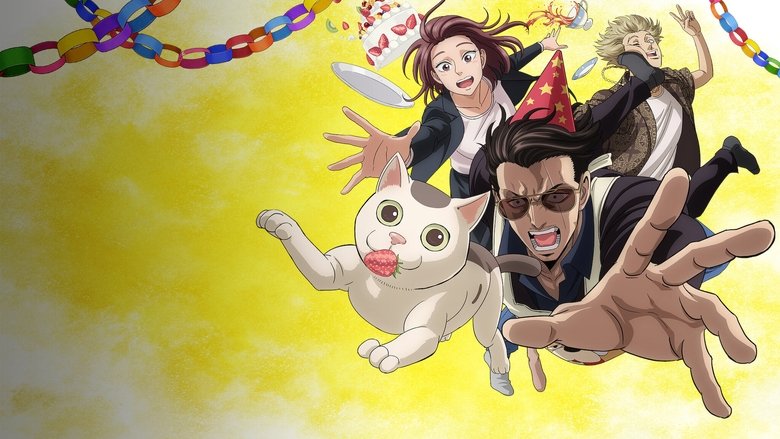
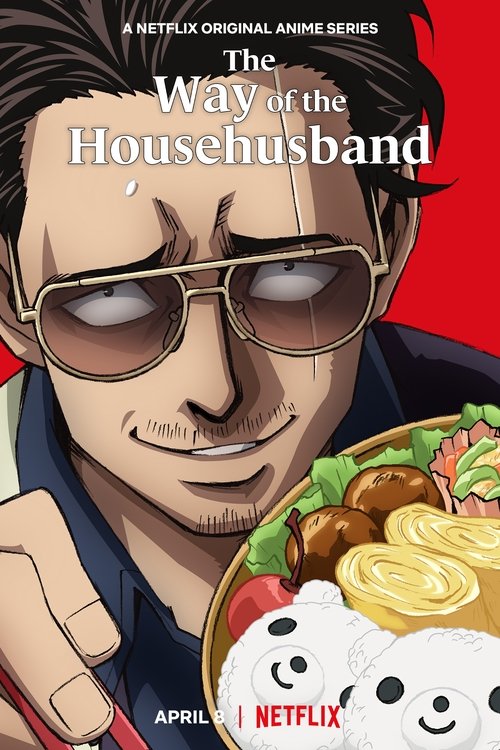
A high-octane domestic comedy where a former underworld legend wields a spatula like a katana, blending yakuza-grade intensity with the heartwarming serenity of a quiet suburban kitchen.
The Way of the Househusband

The Way of the Househusband

極主夫道

08 April 2021 — 01 January 2023 Japan 2 season 15 episode Ended ⭐ 8.4 (474)
Cast: Kenjiro Tsuda, Shizuka Itoh, Kazuyuki Okitsu, Mao Ichimichi, Yoshimasa Hosoya
Animation Comedy
Subversion of Masculinity The Dignity of Labor Social Reintegration and Redemption Perspective and Misunderstanding

Overview

The Way of the Househusband (Gokushufudo) follows the daily life of Tatsu, a legendary and feared yakuza boss known as "The Immortal Dragon," who vanished from the criminal underworld after single-handedly dismantling a rival syndicate. In a radical life pivot, he has retired from the path of violence to support his career-driven wife, Miku, as a dedicated stay-at-home husband. The series is episodic, depicting Tatsu’s hyper-serious approach to mundane tasks such as grocery shopping, cleaning, and cooking, which he executes with the same terrifying gravity he once applied to gang warfare.

Throughout its two seasons, the story explores Tatsu's interactions with his former yakuza associates—who are often baffled by his new lifestyle—as well as his integration into the local neighborhood association. While there is no traditional high-stakes narrative arc, the series builds a charming world where the protagonist's growth is measured by his mastery of household tips rather than body counts. The humor stems from the "gap-moe" between Tatsu’s scarred, tattooed appearance and his absolute devotion to domestic perfection and his wife’s happiness.
Core Meaning

The core meaning of the series lies in the redefinition of strength and masculinity. By placing a hyper-masculine icon in a traditionally feminine role, the show argues that the labor of caretaking and domesticity is as rigorous, honorable, and demanding as any "warrior" path. It conveys that true power is found in the ability to change for love and that peace is not the absence of intensity, but the redirection of it toward those we cherish. Ultimately, the series posits that a person's past does not dictate their future, and that redemption is found in the small, daily acts of service that sustain a home.

Thematic DNA

Subversion of Masculinity 35%
The Dignity of Labor 25%
Social Reintegration and Redemption 20%
Perspective and Misunderstanding 20%

Subversion of Masculinity

The series consistently challenges traditional gender roles in Japanese society. Tatsu retains his hyper-masculine traits—his deep voice, tattoos, and threatening demeanor—but applies them to cooking and cleaning. This suggests that masculinity is not inherently tied to violence but can be expressed through devotion and domestic responsibility.

The Dignity of Labor

By framing grocery shopping as a tactical mission and cleaning as a life-or-death battle, the show elevates unpaid domestic work. It highlights the skill, planning, and mental fortitude required to run a household, often showing Tatsu working harder at home than his yakuza rivals do on the streets.

Social Reintegration and Redemption

Tatsu is a man "out of water," trying to navigate civilian life with a criminal mindset. His journey across both seasons shows how he builds a new identity and community, proving that even a "monster" can find a place in the light through genuine reform and community service.

Perspective and Misunderstanding

Much of the comedy revolves around how Tatsu's yakuza-tinted lens causes him to misinterpret civilian life (and vice-versa). This theme explores how our background shapes our reality, turning a simple knife sale into an interrogation or a yoga class into a test of physical endurance.

Character Analysis

Tatsu

Kenjiro Tsuda

Archetype: Reformed Anti-Hero
Key Trait: Hyper-intensity

Motivation

His primary motivation is unwavering love and gratitude for his wife, Miku, who saved him when he was at his lowest point. He seeks to provide her with a perfect home as a way of repaying that debt.

Character Arc

Over two seasons, Tatsu moves from being a secretive, isolated ex-criminal to a beloved pillar of the community. While his personality remains intense, he becomes more comfortable in his civilian skin, successfully resisting the pull of his old life while mastering everything from bargain hunting to neighborhood politics.

Miku

Shizuka Itoh

Archetype: Breadwinner / Supporting Spouse
Key Trait: Otaku / Workaholic

Motivation

Driven by her career ambitions and her genuine love for Tatsu's quirky but sincere nature. She wants to live a happy, normal life despite her husband's legendary reputation.

Character Arc

Miku remains the steady anchor of the show. Her development focuses on her career growth as a designer and her increasing reliance on and appreciation for Tatsu's unique way of showing affection. She serves as the only person capable of reigning in Tatsu's intensity.

Masa

Kazuyuki Okitsu

Archetype: The Disciple / Sidekick
Key Trait: Clumsy Loyalty

Motivation

Deep loyalty to Tatsu. He initially wants Tatsu to return to the gang but eventually accepts and tries to emulate Tatsu's new domestic discipline.

Character Arc

Tatsu's former underling struggles to adapt to a life without a gang. Across the series, Masa evolves from a lost hoodlum into a junior 'apprentice' househusband, learning that "the way" Tatsu follows now is just as difficult and disciplined as the yakuza path.

Symbols & Motifs

The Shiba Inu Apron

Meaning:

It symbolizes the bridging of Tatsu's two lives. The domestic garment features a cute dog, contrasting sharply with the yakuza tattoos underneath, representing his commitment to the househusband lifestyle without erasing his formidable core.

Context:

Tatsu wears this apron in almost every episode while performing chores, often over a sharp suit, making it the most iconic visual element of the series.

The Kitchen Knife

Meaning:

Symbolizes the transformation of a weapon into a tool of creation. In the underworld, a blade is for destruction; for a househusband, it is for nourishing others.

Context:

Tatsu treats his high-end kitchen knives with the reverence a samurai would show a katana, often terrifying salesmen or neighbors with his expert handling.

White Powder (Flour/Sugar)

Meaning:

A recurring motif for misperception. It represents the lingering shadow of his past crime life that leads others to assume the worst of his innocent domestic actions.

Context:

Tatsu often refers to "the goods" or "pure white powder" while shopping for baking supplies, leading onlookers to believe he is dealing drugs.

Memorable Quotes

主夫の道、なめるなよ (Shufu no michi, nameru na yo)

— Tatsu

Context:

Tatsu says this frequently (Season 1, multiple episodes) when people dismiss housework as easy or when he successfully completes a difficult chore.

Meaning:

Translates to "Don't underestimate the way of the househusband." It is the series' mission statement, asserting that homemaking is a discipline worthy of respect.

Cleaning is a war where you cannot afford to lose.

— Tatsu

Context:

Often spoken during his elaborate cleaning montages, such as the battle against a stubborn stain (Season 1, Episode 1).

Meaning:

Highlights his militant approach to domesticity and the idea that filth is the new "enemy syndicate" he must eradicate.

Episode Highlights

Season 1, Episode 1

S1E1

The premiere establishes the visual and tonal language of the show. Tatsu prepares an incredibly intricate bento box for Miku, treating the ingredients like precious contraband, and has a terrifying encounter with a Roomba.

Significance:

Introduces the central irony of the show and sets the stage for Tatsu's new life.

Season 1, Episode 3

S1E3

Tatsu joins a neighborhood cooking class. His intense knife skills and yakuza jargon petrify the teacher and other housewives until they realize his sincere passion for the craft.

Significance:

Shows Tatsu’s first major integration into the community and his willingness to learn from civilians.

Season 1, Episode 5

S1E5

The episode focuses on Miku's birthday. Tatsu goes to extreme lengths to buy her a specific toy from her favorite anime series, Policure, leading to a high-stakes auction battle.

Significance:

Highlights Tatsu's complete devotion to Miku and reveals her secret passion for magical girl anime.

Season 2, Episode 1

S2E1

Tatsu faces off against a typhoon to protect his home and the neighborhood. He also engages in a "battle" with a child over a playground game.

Significance:

Expands the scope of Tatsu's domestic duties to neighborhood protection, emphasizing his role as a guardian.

Season 2, Episode 5

S2E5

In the series finale, Tatsu's past and present collide as he helps organize a community event that requires all his tactical and domestic skills. The episode ends on a quiet, domestic note that reinforces his commitment.

Significance:

Provides a sense of finality to his transition, showing that he is no longer a yakuza living as a husband, but truly a househusband through and into his soul.

Philosophical Questions

Can a person truly escape their past, or do they simply translate it into a new context?

The series explores this through Tatsu’s constant use of yakuza skills for domestic tasks. He hasn't erased his past; he has repurposed it, suggesting that our history is an indelible part of our skill set, regardless of how we choose to live now.

What defines the 'value' of labor in a capitalist society?

By treating grocery coupons with the same value as gang territory, the show questions why domestic labor is often undervalued. It argues that value is a matter of dedication and perspective, not just monetary gain.

Alternative Interpretations

While primarily a comedy, some critics interpret the show as a metaphor for PTSD and social rehabilitation. Tatsu’s inability to stop using yakuza terminology and his hyper-vigilance during grocery shopping can be seen as a lingering trauma from his violent past, with domesticity acting as his chosen form of therapy. Another interpretation suggests the show is a critique of performative masculinity; Tatsu is 'performing' househusbandry with the same theatricality he used to 'perform' being a gangster, suggesting that all social roles are merely costumes we wear. Some fans also view the relationship as a role-reversal fantasy where the husband provides the 'perfect' emotional and domestic support that women in traditional media were historically expected to provide.

Cultural Impact

The Way of the Househusband sparked significant conversation regarding gender norms in Japan, a country traditionally known for rigid gender roles and the 'salaryman' culture. By portraying a figure of peak traditional masculinity (a Yakuza boss) finding fulfillment in domestic labor, the show contributed to the cultural normalization of 'Ikumen' (involved fathers) and househusbands. Critics praised its feminist undertones, noting that Tatsu’s respect for housewives—whom he refers to as 'bosses'—elevates the status of domestic work. However, the anime also became a case study in experimental animation; its static, manga-panel style was highly controversial, leading to debates about the definition of 'anime' versus 'motion comics' in the streaming era.

Audience Reception

Audience reception was intensely polarized due to the animation style. Upon the release of Season 1, many viewers were disappointed by the lack of fluid motion, comparing it to a 'PowerPoint presentation.' However, as the series progressed into Part 2 and Season 2, a dedicated fanbase grew to appreciate the style for its comic timing, which closely mimics the experience of reading a manga. Kenjiro Tsuda’s voice performance was universally acclaimed, often cited as the element that 'saved' the show. By the end of its run, the series achieved 'comfort show' status for many, praised for its wholesome heart and short, digestible episode format.

Interesting Facts

  • The anime's motionless 'slide-show' style was a deliberate choice by director Chiaki Kon at the producer's request to capture the feel of a moving manga.
  • Kenjiro Tsuda, who voices Tatsu, also played the character in a live-action promotional video for the manga before the anime was produced.
  • The series is based on the award-winning manga by Kousuke Oono, which won the Eisner Award for Best Humor Publication in 2020.
  • The fictional anime within the show, 'Policure,' is a direct parody of the real-life 'Pretty Cure' (PreCure) franchise.
  • Netflix released the series in two parts for the first season (5 episodes each) and then a 5-episode second season, totaling 15.

Easter Eggs

Policure References

Miku’s obsession with Policure is a recurring gag that references the Magical Girl genre (specifically PreCure), highlighting her hidden otaku side.

Yakuza Game Nods

Fans have noted stylistic similarities and thematic nods to the 'Like a Dragon' (Yakuza) video game series, particularly in how Tatsu handles side quests in the city.

⚠️ Spoiler Analysis

Click to reveal detailed analysis with spoilers

Frequently Asked Questions

Explore More About This Movie

Dive deeper into specific aspects of the movie with our detailed analysis pages

Comments (0)

Leave a comment

No comments yet. Be the first to share your thoughts!