Skip to content
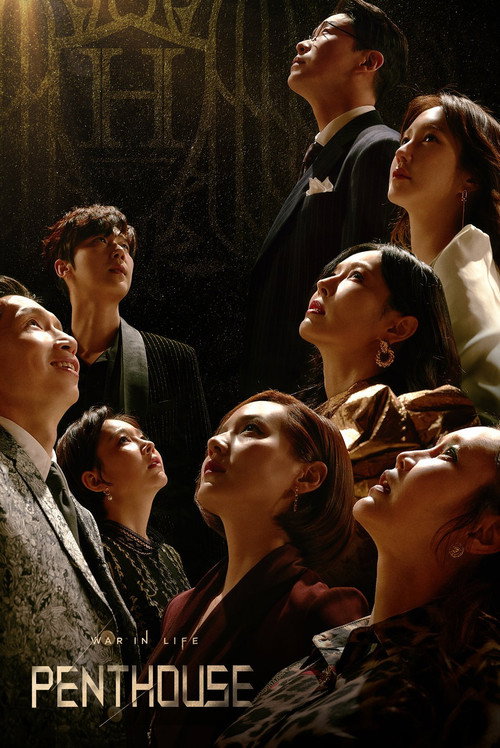
The Penthouse
Draped in baroque opulence and suffocating anxiety, this high-octane melodrama burns like a gilded cage in flames, where towering marble monuments of greed crush fragile souls in a breathtaking, hypnotic fall from grace.
The Penthouse

The Penthouse

펜트하우스

"100th Floor Bloody Penthouse."

26 October 2020 — 10 September 2021 South Korea 3 season 48 episode Ended 8.3 (256)

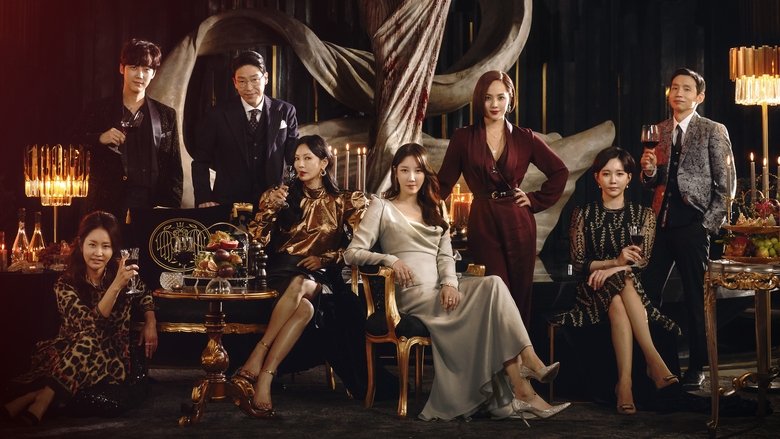
Cast: Lee Ji-ah, Kim So-yeon, Eugene, Uhm Ki-joon, Shin Eun-kyung

Drama Mystery Distorted Maternal Devotion & Intergenerational Trauma Toxic Class Privilege and Elitism Vengeance and the Endless Cycle of Retribution Educational Obsession & Stolen Meritocracy

Overview

The Penthouse: War in Life (펜트하우스) is a multi-season South Korean suspense thriller and melodrama set within Hera Palace, a 100-story ultra-luxury residential skyscraper in Gangnam, Seoul. Home to the top 1% of South Korea’s elite, the complex serves as a battleground for real estate tycoons, acclaimed opera singers, and ambitious parents who will break any law or moral code to secure wealth, social status, and admission for their children into the prestigious Cheong-ah Arts High School.

The narrative arc spans three interconnected seasons, initiated by a horrific incident during a high-society party that exposes the rot beneath the complex's pristine exterior. What begins as an intense rivalry over academic and musical supremacy evolves into a sprawling web of conspiracy, murder, illicit affairs, backstabbing alliances, and long-term revenge schemes. Across all three seasons, the story tracks the escalating warfare between three core women—an elegant penthouse matriarch seeking justice, an icy prima donna clinging to power, and a struggling working-class mother driven by desperate maternal ambition—alongside a ruthless real estate magnate who manipulates everyone like pawns.

As secrets emerge and past crimes resurface, the characters are dragged through cycles of retaliation, betrayal, fake identities, and tragic downfalls. The overall arc moves from localized ambition and institutional corruption in Season 1 to high-stakes vengeance in Season 2, before culminating in an apocalyptic reckoning in Season 3, where every character is forced to pay the ultimate price for their unbridled desire.

Core Meaning

Conceived by writer Kim Soon-ok and director Joo Dong-min, The Penthouse: War in Life functions as an aggressive satire of modern South Korean societal pressures, specifically the obsession with real estate speculation, extreme educational hyper-competitiveness (입시 전쟁), and systemic class inequality. Through its exaggerated makjang framework, the creators convey that unbridled ambition and the pursuit of status built on the suffering of others inevitably destroy both the perpetrator and their lineage.

The series argues that distorted parental love—when transformed into an extension of one's own ego—becomes a toxic force that inflicts deep intergenerational trauma on children. Ultimately, the complete story demonstrates that true peace cannot be achieved through revenge or wealth accumulation, but through genuine repentance, moral accountability, and the breaking of destructive karmic cycles.

Thematic DNA

Distorted Maternal Devotion & Intergenerational Trauma 30%
Toxic Class Privilege and Elitism 25%
Vengeance and the Endless Cycle of Retribution 25%
Educational Obsession & Stolen Meritocracy 20%

Distorted Maternal Devotion & Intergenerational Trauma

In Season 1, maternal love is introduced as a desperate survival mechanism (Oh Yoon-hee fighting for Bae Ro-na) or an avenue of narcissistic control (Cheon Seo-jin forcing Ha Eun-byeol to sing). By Season 2, this protection transforms into extreme criminal cover-ups. In Season 3, it culminates in fatal self-sacrifice and the severe psychological breakdown of the children, proving that vicarious ambition destroys the next generation.

Toxic Class Privilege and Elitism

The series opens by establishing Hera Palace as a literal physical hierarchy where floor height dictates human worth. Season 1 portrays the elite united in trampling lower-class individuals like Min Seol-ah and Oh Yoon-hee. Season 2 shows the elite turning on each other as their privileges fracture. By Season 3, the illusion of upper-class superiority is completely shattered as their wealth is liquidated and Hera Palace collapses into rubble.

Vengeance and the Endless Cycle of Retribution

Season 1 sets up Shim Su-ryeon's clandestine campaign to avenge her murdered daughter. Season 2 escalates revenge into a multi-front war involving Logan Lee and Oh Yoon-hee, where vengeance requires taking on deceptive alter-egos. Season 3 reveals the self-destructive nature of revenge: even when the villains are eliminated, the avengers are so consumed by the darkness that they cannot seamlessly return to a normal life.

Educational Obsession & Stolen Meritocracy

Initially centered on rigged auditions, stolen exam papers, and bribery at Cheong-ah Arts High School, the theme expands in Season 2 into physical sabotage during the Cheong-ah Arts Festival. In Season 3, the educational war gives way to total societal exposure, demonstrating that meritocracy in a corrupt system is a hollow construct.

Character Analysis

Shim Su-ryeon

Lee Ji-ah

Archetype: Tragic Heroine / Vengeful Strategist Key Trait: Unshakable grace combined with lethal, tactical intellect

Motivation

Securing justice for Min Seol-ah; evolves into cleansing Hera Palace of evil and protecting the surviving innocent children.

Character Arc

Begins as a gentle, passive penthouse queen living in ignorance of her husband’s monstrous nature. After witnessing her biological daughter's murder, she transforms into a cold, brilliant mastermind of long-term revenge. She assumes the alter-ego of Na Ae-gyo in Season 2 to dismantle her enemies from within, and ultimately chooses self-sacrifice in Season 3 after executing total retribution.

Cheon Seo-jin

Kim So-yeon

Archetype: Tragic Antihero / Monstrous Femme Fatale Key Trait: Unhinged, dramatic intensity and relentless narcissism

Motivation

Pathological need to be #1 in music and life to gain approval, and securing absolute power for her daughter Ha Eun-byeol.

Character Arc

Introduced as an arrogant, ruthless prima donna who will commit any crime to stay on top. Over three seasons, her desperate drive leads her to let her own father die, sabotage rivals, commit murder, and suffer severe psychological collapse. She loses her voice, her fortune, and her daughter's affection, ending her life in prison via suicide while suffering from laryngeal cancer.

All 5 characters and cast

Symbols & Motifs

The Statue of the Goddess Hera

Meaning:

Symbolizes divine power, vanity, and moral judgment.

Context:

Located in the grand lobby atrium of Hera Palace. Min Seol-ah’s body landing in its arms in Episode 1 marks the absolute desecration of the elite's sanctuary, while Joo Dan-tae’s final death on the statue in Season 3 completes the poetic karmic loop.

The Cheong-ah Arts Festival Trophy

Meaning:

Symbolizes stolen glory, bloody rivalry, and institutional corruptibility.

Context:

It is used by Cheon Seo-jin to cut Oh Yoon-hee's throat in their youth, and later used by Ha Eun-byeol and Joo Dan-tae to strike Bae Ro-na, linking generations through shared violence.

The 100th-Floor Penthouse

Meaning:

Represents the absolute peak of social ambition, isolation, and moral decay.

Context:

It functions as Joo Dan-tae’s throne room and the supreme prize for which characters sacrifice their humanity.

Classical Operatic Vocalization

Meaning:

Acts as a metaphor for hidden madness and physical destruction.

Context:

The pristine beauty of soprano aria performances contrasts directly with the violent corruption occurring behind backstage curtains, culminating in Seo-jin literally losing her voice to laryngeal cancer.

The Red String of Fate

Meaning:

Symbolizes spiritual connection, redemptive peace, and destiny beyond mortal suffering.

Context:

Featured prominently in the final scene of Season 3, wrapping around Shim Su-ryeon and Logan Lee’s fingers as they walk into the afterlife.

Memorable Quotes

벌써 떨리는군...^^
— Joo Dan-tae

Context

Season 1, Episode 1 (and recurring throughout all seasons).

Meaning

Expresses Dan-tae's sadistic thrill before orchestrating cruel ruin for his victims; became an iconic villain catchphrase in South Korean pop culture.

내 인생은 내가 만들어!
— Cheon Seo-jin

Context

Season 1, Episode 15, during the legendary blood-stained piano performance after she leaves her father to die of a stroke in the torrential rain.

Meaning

The thesis of Seo-jin's character—her absolute refusal to submit to moral authority, family expectations, or legal consequences.

All 5 quotes

Episode Highlights

Season 1, Episode 1

S1E1

Opens with Min Seol-ah’s violent fall onto the Hera statue, immediately setting up the murder mystery, class dynamics, and high-school rivalries.

Significance:

Established the series' signature rapid pacing and aggressive cliffhanger formula.

Season 1, Episode 15

S1E15

Features Cheon Seo-jin abandoning her dying father in the rain to secure her inheritance, followed by her playing Liszt’s Mazeppa on the piano with blood-stained hands.

Significance:

Widely cited by critics as one of the single greatest acting sequences in Korean television history, defining Kim So-yeon’s performance.

Season 1, Episode 20

S1E20

Reveals through flashbacks that Oh Yoon-hee—the secondary protagonist—was the person who pushed Min Seol-ah off the balcony while drunk.

Significance:

Subverted traditional Korean drama narrative tropes by making the main relatable protagonist guilty of the central crime.

Season 1, Episode 21

S1E21

Shim Su-ryeon is apparently stabbed to death in Dan-tae’s study, and Yoon-hee is framed for the murder by Dan-tae and Seo-jin.

Significance:

Generated massive nationwide shock and record-breaking ratings (28.8%), setting up Season 2.

Season 2, Episode 6

S2E6

Bae Ro-na is struck with the Cheong-ah trophy and pushed down marble stairs; Lee Ji-ah makes her dramatic re-entry as Na Ae-gyo.

Significance:

Shifted Season 2 into high gear, introducing double-identity mind games.

Season 2, Episode 13

S2E13

The Hera Palace adults are sentenced to prison in a public trial; Logan Lee's car is blown up by Dan-tae disguised as an old man right in front of Su-ryeon.

Significance:

Delivered extreme viewer frustration and anticipation for the final season.

Season 3, Episode 4

S3E4

Oh Yoon-hee attempts to hold back a rolling car to save Ha Eun-byeol at a cliff, but Cheon Seo-jin arrives and deliberately pushes the car over the cliff, killing Yoon-hee.

Significance:

Eliminated a core lead character and cemented Seo-jin’s irredeemable villainy.

Season 3, Episode 12

S3E12

Shim Su-ryeon confronts Joo Dan-tae at Hera Palace; she shoots him in the forehead, causing him to fall 100 floors while activating a remote detonator that demolishes Hera Palace.

Significance:

Resolved the primary antagonist’s storyline and visually brought down the show's core architectural symbol.

Season 3, Episode 14

S3E14

Traces the tragic aftermath: Su-ryeon's deliberate fake suicide at the cliff, Seo-jin’s terminal illness and suicide in prison, and Logan’s death, ending with Su-ryeon and Logan reuniting in the afterlife.

Significance:

Provided a somber, tragic conclusion emphasizing that no one escapes karmic consequence.

Philosophical Questions

Is revenge morally justifiable when legal systems are thoroughly corrupted by wealth?

The series forces viewers to root for Shim Su-ryeon and Logan Lee as they execute vigilante justice, while demonstrating that operating outside the law corrupts even the pure-hearted.

Where does legitimate parental protection end and narcissistic projection begin?

Examined through Cheon Seo-jin and Oh Yoon-hee, showing how parents claim to act 'for their children' while actually seeking to heal their own wounded egos.

Can an individual achieve true atonement without total self-sacrifice?

Explored through Oh Yoon-hee and Shim Su-ryeon, both of whom realize that living with past sins or revenge-stained hands prevents true peace, leading to their ultimate choices of self-eradication.

Alternative Interpretations

The series and its ending offer several layers of thematic interpretation:

Full ending explanation

Cultural Impact

The Penthouse aired during a period of intense public frustration in South Korea regarding skyrocketing real estate prices in Seoul and severe hyper-competitiveness in elite university admissions. The show mirrored real-life scandals involving corrupt educational favors for elite families, striking a sensitive cultural nerve.

The series redefined modern television makjang (over-the-top melodrama) by marrying soap-opera tropes with high-end cinematic visuals. Kim So-yeon won the prestigious Best Actress Award in Television at the 57th Baeksang Arts Awards for her role as Cheon Seo-jin. The show generated countless internet memes, variety show parodies, and solidified writer Kim Soon-ok as one of Korea's most commercially dominant television creators.

Audience Reception

The Penthouse: War in Life generated widespread engagement across its three seasons, evolving in both tone and audience reception:

  • Season 1: Overwhelmingly positive and a cultural phenomenon. Praised for its addictive pacing, shocking cliffhangers, Kim So-yeon’s iconic performance, and dark class satire, driving viewership from 6.7% to a 28.8% peak. However, it faced criticism and official warnings regarding violence and intense school bullying scenes.
  • Season 2: Highly positive and considered peak entertainment. Audiences praised the fast-paced revenge satisfaction, Na Ae-gyo twist, and tight plot progression, despite mild criticism regarding absurd survival logic and escalating soap-opera tropes.
  • Season 3: Mixed and polarizing. While winning its timeslot, critics and viewers noted 'resurrection fatigue' due to characters repeatedly surviving explosions and fatal falls, a slower weekly release format, and an exceptionally bleak body count.

Interesting Facts

  • Hera Palace does not exist in real life; exterior and tower shots were constructed using CGI over Gangnam cityscape backgrounds, while interior living spaces were built on massive soundstage sets in Paju, Gyeonggi Province.
  • Actress Kim So-yeon spent months practicing Liszt’s Transcendental Étude No. 4 (Mazeppa) to perform the physical finger movements accurately for her iconic Episode 15 piano scene, despite not knowing how to play.
  • Actor Lee Sang-woo, the real-life husband of Kim So-yeon (Cheon Seo-jin), made a guest cameo in Season 2 as Reporter Son, a journalist who takes joy in writing scandal pieces exposing Seo-jin.
  • All classical opera singing performances in the series were performed by professional opera vocalists and lip-synced precisely by cast members Kim So-yeon, Eugene, and Kim Hyun-soo.
  • The total production budget across all three seasons exceeded 32.7 billion KRW (~$28 million USD), averaging 670–680 million KRW per episode.

Easter Eggs

Greek Mythology Allegory

The layout of Hera Palace directly parallels Mount Olympus. Shim Su-ryeon represents Hera (goddess of family/revenge), Joo Dan-tae represents Zeus (king of gods, ruthless cheating ruler), and Oh Yoon-hee represents Athena/Demeter.

S.E.S. Reunion / Bada Cameo

Legendary K-pop singer Bada, a real-life former bandmate of Eugene (Oh Yoon-hee) in S.E.S., made a cameo in Season 2, Episode 2 as Park Young-ran, the secret lip-sync singer hired for Cheon Seo-jin’s concert.

Jun Jin & Ryu Yi-seo Cameo

Shinhwa member Jun Jin and his real-life wife Ryu Yi-seo made a special cameo in Season 2, Episode 1 as a wealthy royal couple hosting a private concert performance in the United States.

SBS Drama Universe Cameos

Cast members made cross-over cameos in other SBS hit series; Kim So-yeon later appeared in her Penthouse villain demeanor in Taxi Driver 2.

Frequently Asked Questions

Explore More About This Movie

Dive deeper into specific aspects of the movie with our detailed analysis pages

Comments (0)

Leave a comment

No comments yet. Be the first to share your thoughts!

Similar Movies