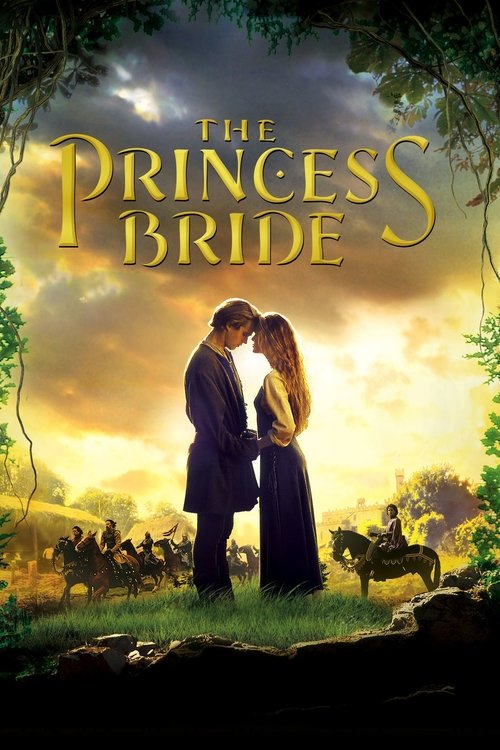
The Princess Bride
"It's as real as the feelings you feel."
Overview
The film is presented as a story within a story, beginning with a kindly grandfather reading a book to his skeptical, sick grandson. The tale-within-the-tale follows Buttercup, a beautiful woman from the kingdom of Florin, and Westley, her beloved farm boy who leaves to seek his fortune but is presumed killed by the Dread Pirate Roberts. Years later, a heartbroken Buttercup is forcibly betrothed to the odious Prince Humperdinck.
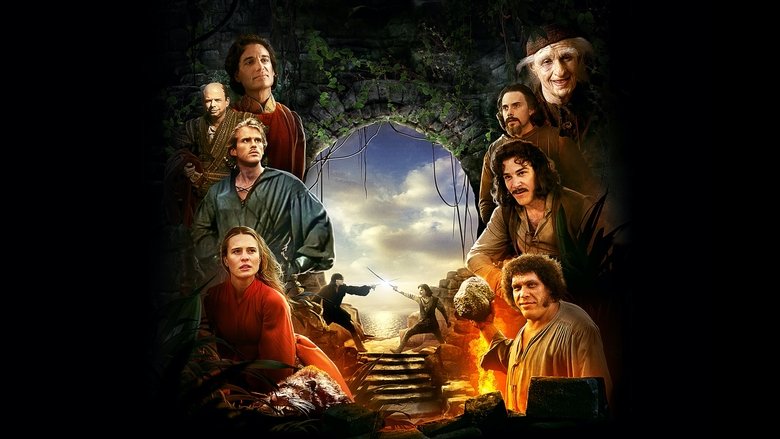
Before the wedding, Buttercup is kidnapped by a trio of outlaws: the Sicilian genius Vizzini, the Spanish fencing master Inigo Montoya, and the Turkish giant Fezzik. They are pursued by a mysterious Man in Black who bests them all in battles of steel, strength, and wit. Revealed to be Westley in disguise, he rescues Buttercup, only for them to be captured by Humperdinck and his sadist right-hand man, Count Rugen.
The narrative culminates in a daring rescue mission where Inigo and Fezzik reunite with a resurrected Westley to storm the castle. While Westley outsmarts the Prince, Inigo faces the six-fingered man who killed his father. The film ends with the heroes riding to freedom and the grandfather finishing the story, bonding with his grandson who now appreciates the romance and adventure he initially scorned.
Core Meaning
At its heart, The Princess Bride is a celebration of the enduring power of storytelling and true love. Director Rob Reiner and writer William Goldman deconstruct fairy tale tropes only to lovingly reconstruct them, suggesting that while life is filled with pain and unfairness, love—and the stories we share about it—is the one thing worth fighting for.
The framing device emphasizes that stories are a bridge between generations. The cynical grandson represents the modern audience, initially resistant to sincerity, who is gradually won over by the timeless appeal of high adventure and genuine emotion. The film posits that true love is not just a fairy tale cliché, but a bond that transcends death, cynicism, and time itself.
Thematic DNA
True Love
The central driving force of the plot. It is portrayed not as a passive state but as an active, powerful force that can overcome death ('mostly dead') and defies social class. Westley's devotion to Buttercup and the grandfather's patient reading to the grandson mirror this theme.
Revenge vs. Justice
Personified by Inigo Montoya, revenge is shown as a consuming life purpose. While satisfying ('I want my father back, you son of a bitch'), the film also subtly questions what comes after revenge is achieved, as Inigo is left without a guiding purpose once Rugen is dead.
Storytelling and Meta-fiction
The film constantly comments on itself through the interruptions of the grandson. It explores how stories are told, how audiences interact with them (rejecting the 'kissing parts' then embracing them), and how narratives provide comfort and connection in the real world.
Loyalty and Friendship
The bond between Inigo and Fezzik, and later their alliance with Westley, contrasts with the transactional and treacherous relationships of the villains. Their loyalty is born of mutual respect and shared hardship, proving as essential to survival as romantic love.
Character Analysis
Westley / Dread Pirate Roberts
Cary Elwes
Motivation
To reunite with Buttercup and prove that death cannot stop true love.
Character Arc
Transforms from a submissive farm boy to a legendary pirate and master of all skills. His journey is static in morality but dynamic in capability; he is the constant force of competence and devotion that drives the plot.
Buttercup
Robin Wright
Motivation
To mourn her lost love, and later, to escape a loveless marriage to be with Westley.
Character Arc
Starts as a haughty girl, becomes a grieving woman, and eventually finds the courage to stand up to Humperdinck. While often a traditional damsel, she gains agency by choosing love over safety.
Inigo Montoya
Mandy Patinkin
Motivation
To kill the six-fingered man and avenge his father.
Character Arc
A man consumed by a singular purpose for twenty years. He moves from a mercenary drowning his sorrows to a focused warrior who fulfills his destiny, only to face the existential void of 'what now?'.
Prince Humperdinck
Chris Sarandon
Motivation
To start a war with Guilder for political gain using Buttercup's death as a pretext.
Character Arc
Remains a static villain who views people as possessions and war as a game. He is stripped of his dignity but not his life, revealing his true cowardly nature.
Fezzik
André the Giant
Motivation
To support his friend Inigo and avoid being alone.
Character Arc
Moves from a henchman following orders to a hero who thinks for himself and saves his friends. He finds a place where he is valued for his loyalty, not just his size.
Symbols & Motifs
"As You Wish"
A verbal symbol for 'I love you' and total devotion. It transforms servitude into a voluntary act of love.
Used by Westley to answer Buttercup's demands, and critically, by the Grandfather to the Grandson in the final scene, linking the fairy tale romance to familial love.
The Mask
Symbolizes the fluidity of identity and the idea that a hero is more than just a person; it's a legacy.
Westley explains that the 'Dread Pirate Roberts' is a title passed down, allowing the legend to live on while the man retires. The mask allows Westley to become the legend necessary to save Buttercup.
The Six-Fingered Hand
Represents physical deformity reflecting inner corruption and the specific, unforgettable nature of trauma.
Count Rugen's distinct hand is the sole identifier Inigo has for his father's killer, symbolizing how trauma marks a person's memory.
The Book
Represents tradition, legacy, and the physical vessel of connection between generations.
The film opens and closes with the physical book, grounding the fantastical events in a tangible object shared between the grandfather and boy.
Memorable Quotes
Hello. My name is Inigo Montoya. You killed my father. Prepare to die.
— Inigo Montoya
Context:
Rehearsed throughout the film, finally delivered with intensity during the climactic duel with Count Rugen.
Meaning:
The ultimate mantra of revenge. It represents a lifetime of preparation and the reclaiming of honor.
As you wish.
— Westley / Grandfather
Context:
First said by Westley to Buttercup on the farm, and finally by the Grandfather to the grandson, sealing the thematic bond of the film.
Meaning:
A code for 'I love you' that signifies placing another's happiness above one's own desires.
Inconceivable!
— Vizzini
Context:
Said repeatedly when things go wrong (the Man in Black climbing the rope, cutting the rope, etc.), prompting Inigo to question if he knows what the word means.
Meaning:
Irony. It highlights Vizzini's arrogance and refusal to accept that his plans can fail.
Life is pain, Highness. Anyone who says differently is selling something.
— Westley (as Man in Black)
Context:
Said to Buttercup when she accuses him of mocking her grief, revealing the hardness Westley acquired during his time as a pirate.
Meaning:
A cynical truth that grounds the fairy tale. It suggests that love and happiness are valuable because life is inherently difficult.
Mawage. Mawage is wot bwings us togeder today.
— The Impressive Clergyman
Context:
Spoken at the beginning of the wedding ceremony between Humperdinck and Buttercup, interrupted by Buttercup's realization.
Meaning:
Pure comedic relief that satirizes the pomp and circumstance of royal weddings.
Philosophical Questions
Is revenge a fulfilling life purpose?
The film explores this through Inigo Montoya. His entire identity is constructed around avenging his father. When he finally succeeds, his immediate reaction is not joy but emptiness: 'I have been in the revenge business so long. Now that it's over, I do not know what to do with the rest of my life.' This suggests that while justice is necessary, revenge alone cannot sustain a life.
Does true love require suffering?
Westley tells Buttercup, 'Life is pain, Highness. Anyone who says differently is selling something.' The film posits that true love is validated through suffering (The Fire Swamp, The Machine, separation). It rejects the sanitized 'happily ever after' of Disney by showing that love is an active, often painful struggle against the world's cruelty.
What is the relationship between reality and fiction?
The framing device questions the value of stories. The grandson initially dismisses the book as fake and 'kissing,' but the film argues that the emotions felt in fiction—fear, love, hate—are real and have the power to bond people in the real world (the grandfather and grandson).
Alternative Interpretations
The Grandfather is Westley: A popular fan theory suggests the grandfather is actually an aged Westley reading his own story. Proponents point to the 'As you wish' line at the end and the fact that he owns the book. However, the book establishes the author as S. Morgenstern, making this unlikely but emotionally resonant.
The Industrial Revolution Allegory: Some analyze the conflict as Florin (old world, agrarian) vs. Guilder (wealth-based). Vizzini's mention of Australia (colonized 1788) places the film in a specific pre-industrial window, and Humperdinck's war mongering can be seen as a push for military-industrial expansion.
Vizzini's Death: A theory posits that Westley didn't poison the wine but the powder itself, meaning Vizzini inhaled the poison while smelling it. This would explain why Westley was safe (he built immunity or held his breath) and why Vizzini died so instantly.
Cultural Impact
The Princess Bride was a modest box office success upon release but exploded into a massive cult phenomenon via home video. It is now widely regarded as one of the most quotable films in history and a defining movie of the 1980s.
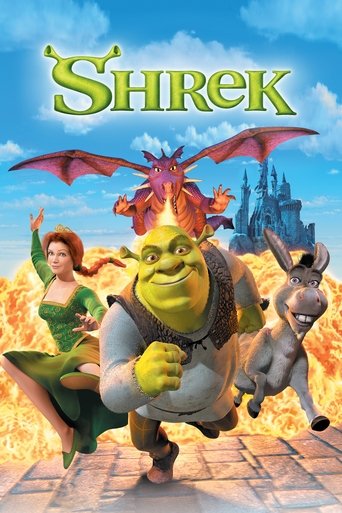
Its blend of sincerity and satire influenced a generation of filmmakers and paved the way for the self-aware fairy tale genre (like Shrek). The film has permeated internet culture with memes (particularly Inigo's introduction and 'Inconceivable!'). It is frequently cited as a 'perfect movie' for its tight pacing, screenplay, and ability to appeal equally to children and adults. In 2016, it was selected for preservation in the United States National Film Registry as being 'culturally, historically, or aesthetically significant'.
Audience Reception
Praised: The film is almost universally adored for its witty screenplay by William Goldman, the chemistry between Elwes and Wright, and the standout performances of Patinkin and Crystal. It is celebrated for being 'family-friendly' without being childish.
Criticized: Modern critics sometimes point out the passive role of Buttercup, who acts primarily as a prize to be won rather than an active heroine, though this is often defended as a deliberate trope homage. Some original reviews in 1987 found the shifting tone between satire and sincerity confusing.
Verdict: A beloved classic that has only improved with age, maintaining a rare 97%+ approval rating on aggregation sites.
Interesting Facts
- Cary Elwes (Westley) was actually knocked unconscious by Christopher Guest (Count Rugen) during the capture scene because he told Guest to hit him for real to make it look authentic.
- Mandy Patinkin (Inigo) has said that when he delivered the line 'I want my father back, you son of a bitch', he was channeling the real grief for his own father who died of cancer.
- André the Giant had severe back problems during filming; for the scene where he carries Buttercup, Robin Wright was actually suspended by cables to relieve the weight.
- Director Rob Reiner had to leave the set during Billy Crystal's scenes as Miracle Max because he was laughing so hard he would ruin the takes.
- The sword fight between Westley and Inigo required months of training, and the actors performed the entire duel themselves without stunt doubles (except for the flips).
- Mark Knopfler of Dire Straits agreed to do the music only if Rob Reiner included the hat he wore in 'This Is Spinal Tap' in the movie. The hat appears in the grandson's bedroom.
- Cary Elwes filmed many scenes with a broken toe (injured while riding an ATV with André the Giant), which is why he sits or leans in several shots.
- The R.O.U.S. (Rodents of Unusual Size) were played by little people in suits. One of them was arrested for speeding while still in costume on the way to the set.
Easter Eggs
Spinal Tap Hat
A baseball cap with the 'USS Coral Sea' logo hangs in the grandson's bedroom. This is the same hat Rob Reiner wore as Marty DiBergi in his film This Is Spinal Tap.
The Grandson's Room Decor
The room is filled with 80s pop culture items, including a Judge Dredd comic and a poster for the video game Hardball!, grounding the 'real world' in a specific era contrasting the timeless fairy tale.
The Pope's Quote
Though not in the film, it is a famous external detail: Pope John Paul II reportedly told Cary Elwes, 'You are the one from The Princess and the Bride,' proving the film's reach even to the Vatican.
⚠️ Spoiler Analysis
Click to reveal detailed analysis with spoilers
Frequently Asked Questions
Explore More About This Movie
Dive deeper into specific aspects of the movie with our detailed analysis pages
Comments (0)
No comments yet. Be the first to share your thoughts!