Skip to content
The Prison
A claustrophobic crime-action descent into a penitentiary where the walls protect a kingdom of crime. Menace and swagger collide in concrete corridors, and a prison that looks like a cage turns out to be a throne room.
The Prison

The Prison

프리즌

"Rule The Outside From Within."

23 March 2017 South Korea 125 min 7.1 (113)

Director: Na Hyun

Cast: Han Suk-kyu, Kim Rae-won, Jung Woong-in, Jo Jae-yun, Shin Sung-rok

Crime Action Institutional corruption Power and territory Justice versus vengeance Masculinity and violence Alibi and the illusion of order

Overview

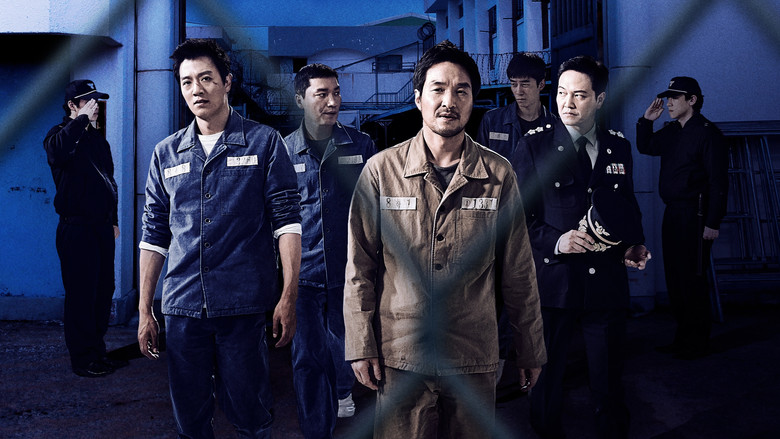
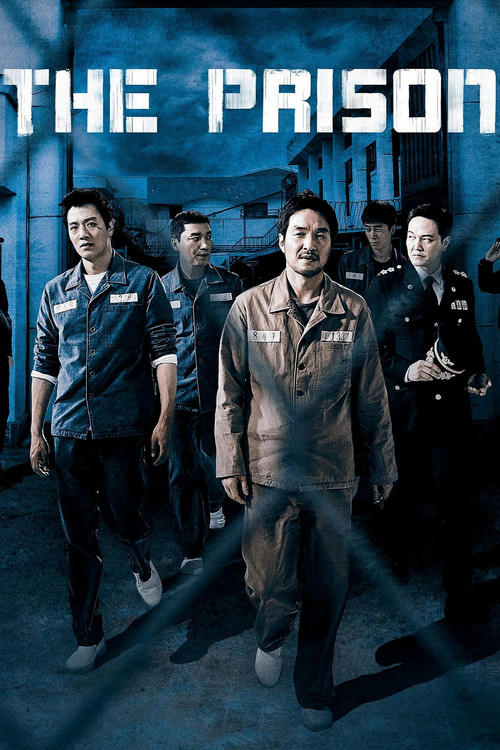
The Prison (프리즌, 2017) is a South Korean action crime film. It was written and directed by Na Hyun, a screenwriter known for May 18 and Forever the Moment, in his directorial debut. Kim Rae-won plays Song Yoo-gun, a hot-headed ex-cop once proud of a perfect arrest record. He is sent to prison after a hit-and-run accident and evidence tampering.

Inside, Yoo-gun clashes with other inmates from his first day. He then meets Jung Ik-ho (Han Suk-kyu), a long-term "model prisoner" who is the real power in the jail. Ik-ho runs a crime syndicate from inside the walls, with the cooperation of the warden and guards. Because the prison gives his crimes a perfect alibi, his gang can commit crimes outside and return to their cells with no trace.

The film becomes a duel between two strong men in a closed world. Ik-ho draws Yoo-gun into his schemes and shows his ruthless ambitions. Yoo-gun has to decide how far he will go, and what he really wants, in a place where the law is whatever the king says it is.
Core Meaning

The film inverts the idea of prison. Normally a prison is where society puts its criminals. Here it is a safe house for the powerful, a place where crime is untouchable because the institution is complicit. Ik-ho's trailer line about the world not running by itself, and "the ones who run it" being someone else, states the film's thesis. The people who profit from order are often those who corrupt it.

Beneath the genre thrills, Na Hyun asks who the law really protects. Corrupt officials who look away are as guilty as the killers they serve. The film also looks at what a man will do to beat a monster, and whether that makes him one. As in the best Korean crime films, institutional rot is the true villain, and the individual brawlers are its symptoms.

Thematic DNA

Institutional corruption 30%
Power and territory 25%
Justice versus vengeance 20%
Masculinity and violence 15%
Alibi and the illusion of order 10%

Institutional corruption

The prison is run by an inmate with the cooperation of the warden and guards, who give his syndicate a 'perfect alibi'. The people meant to enforce the law are its main beneficiaries.

Power and territory

Ik-ho rules the prison like a monarch. The film is full of dominance contests and the idea that this is 'my world'. Governor Kang believes he rules the jail, but he is only a figurehead beside the real king.

Justice versus vengeance

Yoo-gun is a violent cop who bends rules, and he is pushed into a world where his methods are mirrored by someone far worse. The film asks whether fighting a monster requires becoming one.

Masculinity and violence

An all-male cast, brutal fights, torture and bravado define the prison society. Respect is won and lost through physical force.

Alibi and the illusion of order

The most confined place in the society becomes the best cover for crime. The film suggests that appearances of discipline and order can hide the opposite.

Character Analysis

Jung Ik-ho

Han Suk-kyu

Archetype: Villain / crime king Key Trait: Chillingly affable authority

Motivation

To keep and expand an empire of crime in which the prison is his base and his alibi.

Character Arc

He starts as the calm, charming ruler of the prison. His tolerance of the new inmate turns into an attempt to recruit him, and his violent side emerges as his control is threatened.

Song Yoo-gun

Kim Rae-won

Archetype: Antihero Key Trait: Hot-headed, combative

Motivation

To survive and to come out on top, driven by his own agenda and sense of justice.

Character Arc

He goes from a reckless ex-cop who provokes everyone to a man who must survive and learn the rules of the prison. He is drawn into Ik-ho's world while looking for his own way to beat it.

All 4 characters and cast

Symbols & Motifs

The prison itself

Meaning:

A microcosm of a corrupt society, in which the hierarchy of power is plain.

Context:

The production was reportedly shot entirely on location at a real prison (Jangheung County Prison), which gives its corridors and cells an oppressive authenticity.

The ringing phone / the gang's call to action

Meaning:

The link between the secure world inside and the crimes outside. It is the moment the 'perfect crime' machine starts.

Context:

The trailer shows a ringing phone signalling the start of the crime, after which capable prisoners gather and the prison doors open.

The throne / territory

Meaning:

Ownership and sovereignty. Ik-ho's claim to the prison as his own world is a claim of kingship.

Context:

Ik-ho is billed as the prison's 'absolute emperor'. Late in the film he shouts that this is his world and that everything is his, and viewers remember the cry as a sign of the ego beneath his calm.

The prisoner's uniform

Meaning:

Equality of status is an illusion. The same uniform covers a king and a pawn, and it blurs the line between cop and criminal.

Context:

Ex-cop Yoo-gun is forced to wear the same uniform as the criminals he once arrested.

Memorable Quotes

이 세상이 저절로 굴러가는 것 같지? 세상 굴리는 새끼들 따로 있어
— Jung Ik-ho

Context

It opens the first trailer and introduces Ik-ho's authority.

Meaning

The film's thesis: unseen powerful people run the world.

당장 꺼져 이 개새끼들아. 여기 내 구역이야! 내가 만든, 내 세상이야!
— Jung Ik-ho

Context

A late outburst of rage, as cited on a Korean fan wiki for the actor.

Meaning

His claim of ownership over the prison; the king defending his realm.

Philosophical Questions

Can justice be served by methods that are themselves criminal?

Yoo-gun is a cop who bends the rules, and he must use the prison's own brutal logic to survive and fight. The film leaves open whether that makes him better than his enemy.

Who really holds power: the one with the title or the one who controls the system?

The warden holds the title, but Ik-ho runs the prison. The film shows that formal authority and real power are separate.

Does confinement reform or corrupt?

The prison here produces a more efficient criminal enterprise, and shows that institutions can reinforce the behaviour they are meant to correct.

How It Ends

Alternative Interpretations

Some see the film as pure genre entertainment, a macho action romp in a jail. Others read it as a political allegory in which the prison stands for a nation run by an unaccountable elite and the warden for officials who are figureheads. A third reading frames Yoo-gun and Ik-ho as mirror images, two men of violence separated only by their position relative to the law.

Full ending explanation

Cultural Impact

The film is part of a long Korean tradition of crime thrillers that dramatize institutional corruption. Its high-concept "criminals run the prison" premise made it an export success, with rights sold to dozens of territories at the European Film Market. In Korea it opened in second place and reportedly reached close to 3 million admissions. Han Suk-kyu's turn as an outright villain was a highlight, and some Korean viewers later linked the warden's absentee-boss lines to real political scandals of the time. Abroad it was released in limited theatres by Well Go USA and reached streaming platforms.

Audience Reception

Critical reception was mixed. Rotten Tomatoes showed a 40% rating from a small number of reviews. Reviewers praised the tense, claustrophobic prison setting, the well-choreographed brutality and Han Suk-kyu's performance, and one called the film fun and above average for a debut. Easternkicks gave it 3.5 stars and described it as slick and fast-paced. Critics complained about a thin, generic script, forgettable supporting characters and an over-the-top ending. Another reviewer called the plot underdeveloped. IMDb users rate it around 6.5/10. The overall verdict is a competent genre piece elevated by its villain.

Interesting Facts

  • The Prison was Na Hyun's feature directorial debut after a career as a screenwriter.
  • It was reportedly the first South Korean film shot entirely in a real prison, at Jangheung County Prison in South Jeolla Province, over about four months.
  • A pyrotechnics scene was done by setting off real explosives inside an actual prison building after getting approvals.
  • At the 2017 European Film Market in Berlin, distribution rights were sold to 62 countries.
  • Han Suk-kyu has said it was his first fully villainous role, and he changed his trademark manner of speaking for it.
  • It was released in South Korea on March 23, 2017, and grossed about US$21.2 million worldwide.
  • It won Best Lighting at the 54th Grand Bell Awards in 2017.
  • The film was Han Suk-kyu and Kim Rae-won's first on-screen pairing, although they were friends through fishing.

Frequently Asked Questions

Explore More About This Movie

Dive deeper into specific aspects of the movie with our detailed analysis pages

Comments (0)

Leave a comment

No comments yet. Be the first to share your thoughts!

Similar Movies