Skip to content
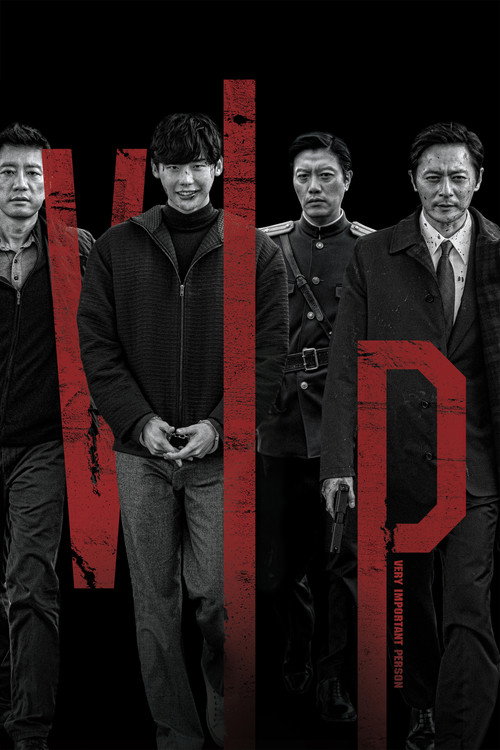
V.I.P.
A suffocating, hard-boiled neo-noir thriller drenched in cynicism and cold fury, where justice is an abandoned ruin trapped between geopolitical bureaucracy and the chilling smirk of untouchable evil.
V.I.P.

V.I.P.

브이아이피

"The most dangerous, the most vicious and the most wanted."

23 August 2017 South Korea 128 min 7.7 (232)

Director: Park Hoon-jung

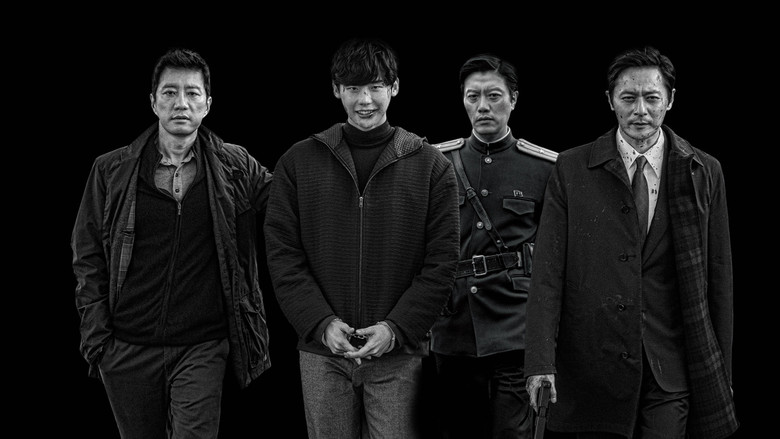
Cast: Kim Myung-min, Jang Dong-gun, Park Hee-soon, Lee Jong-suk, Peter Stormare

Crime Action Thriller Institutional Complicity and Bureaucratic Corruption The Impunity of Privilege and the "Untouchable" Elite Cold Geopolitical Realpolitik The Moral Bankruptcy of Justice and Law

Overview

Directed and written by acclaimed crime-cinema auteur Park Hoon-jung (New World, writer of I Saw the Devil), V.I.P. is a dark, multi-agency procedural thriller that fuses a cat-and-mouse serial killer investigation with high-stakes international espionage. When a string of horrifying, sadistically staged murders terrorizes South Korea, gruff, rogue detective Chae Yi-do is recalled from suspension to spearhead a special investigation task force. Yi-do quickly identifies the primary suspect: Kim Gwang-il, a wealthy, soft-spoken defector and the spoiled son of a powerful North Korean military general.

However, standard police work swiftly collides with national intelligence priorities. National Intelligence Service (NIS) officer Park Jae-hyuk, acting in conjunction with American CIA handler Paul Gray, has orchestrated Gwang-il’s covert extraction from the North. For the intelligence apparatus, Gwang-il is not an ordinary citizen subject to the penal code; he is an invaluable intelligence asset possessing cryptographic keys and access codes to his father’s foreign bank accounts and regime slush funds. Consequently, the NIS and CIA deploy legal, institutional, and clandestine roadblocks to shield the suspect, denying the South Korean police jurisdiction.

Matters escalate with the clandestine arrival of Ri Dae-bum, a North Korean investigator who previously chased Gwang-il across the northern border before his entire unit was purged for daring to touch the political royalty. With three distinct forces—a righteous detective, an institutional bureaucrat, and a bitter North Korean pursuer—colliding around a sociopath who exploits their mutual distrust and legal paralysis, V.I.P. unfolds as an unrelenting collision of law, power, and realpolitik.
Core Meaning

The overarching message of V.I.P. is a cynical indictment of institutional morality and international realpolitik. Park Hoon-jung strips away the romanticism often found in espionage fiction, demonstrating how modern intelligence agencies, law enforcement systems, and state governments prioritize strategic utility, financial leverage, and geopolitical balance over fundamental human justice and victimhood.

The film posits that totalitarian privilege and capitalist opportunism feed from the same trough: Gwang-il is an absolute monster created by the unchecked despotism of North Korean elites, yet his immunity is perpetuated and protected by Western and South Korean agencies that treat human casualties as tolerable collateral for financial intelligence. Ultimately, Park argues that when legal institutions bend to accommodate state interests, formal justice ceases to exist, leaving vigilante barbarism as the only remaining mechanism to confront untouchable evil.

Thematic DNA

Institutional Complicity and Bureaucratic Corruption 30%
The Impunity of Privilege and the "Untouchable" Elite 25%
Cold Geopolitical Realpolitik 25%
The Moral Bankruptcy of Justice and Law 20%

Institutional Complicity and Bureaucratic Corruption

The film demonstrates how modern institutions willingly shield a sadistic killer to preserve jurisdictional authority and geopolitical intelligence. Rather than pursuing truth, the NIS, the CIA, and rival departments dedicate their resources to sabotaging legitimate police work.

The Impunity of Privilege and the "Untouchable" Elite

Gwang-il embodies an extreme manifestation of sociopathic entitlement. Born into the North Korean ruling class and later deemed an essential foreign asset, he kills not out of primal urge, but out of a mocking awareness that ordinary laws do not apply to him.

Cold Geopolitical Realpolitik

The Korean peninsula’s divided reality serves as a backdrop of political expedience rather than ideological passion. South Korea, North Korea, and the United States operate without moral compasses, trading human lives and legal principles like trade commodities.

The Moral Bankruptcy of Justice and Law

The narrative systematically breaks down the conventional crime-thriller premise that the legal system can deliver justice. Every character operating strictly within legal boundaries ends up compromised, sidelined, or destroyed.

Character Analysis

Park Jae-hyuk

Jang Dong-gun

Archetype: The Conflicted Bureaucrat / Antihero Key Trait: Taciturn, calculating restraint hiding a deep moral boiling point

Motivation

Managing organizational protocol and diplomatic fallout, which eventually shifts into cold, personal vengeance.

Character Arc

Begins as a pragmatic, obedient NIS desk officer wearing corporate suits and glasses, prioritizing organizational orders over conscience. As the horrific reality of Gwang-il's deeds sinks in alongside the CIA’s cynical manipulation, he sheds bureaucratic detachment and transforms into an extrajudicial executioner.

Chae Yi-do

Kim Myung-min

Archetype: The Hard-Boiled Detective / Rogue Cop Key Trait: Uncompromising grit, physical stubbornness, and disregard for bureaucratic hierarchy

Motivation

Absolute dedication to securing evidence, cuffing the culprit, and putting a serial killer behind bars.

Character Arc

A relentless, foul-mouthed investigator who disdains political maneuvering. He pursues Gwang-il with single-minded stubbornness, only to realize that following legal due process in a corrupt system leaves him vulnerable and powerless against geopolitical predators.

All 5 characters and cast

Symbols & Motifs

Classical Music and Expensive Books

Meaning:

This motif contrasts refined culture with subhuman brutality, highlighting Gwang-il's view of murder as an aristocratic game or intellectual diversion rather than a crime.

Context:

Kim Gwang-il frequently listens to classical compositions and reads foreign literature while committing or arranging atrocities.

The Pristine White Clothes and Blood Spatter

Meaning:

The contrast of vivid red arterial spray across immaculate white shirts underscores the character’s emotional sterility and the taint he leaves on an orderly society.

Context:

Gwang-il often wears tailored, immaculate light-colored clothing during scenes of violence.

Cigarettes and Lighters

Meaning:

The relentless chain-smoking serves as a visual manifestation of burning rage, procedural exhaustion, and the suffocating atmosphere of institutional obstruction.

Context:

Detective Chae Yi-do is rarely seen without a cigarette hanging from his lips as he fights against bureaucratic roadblocks.

The Diplomatic Dossier / Foreign Account Codes

Meaning:

Symbolizes the transactionality of human life. The code renders him a literal "V.I.P.," transforming a butcher into a protected diplomatic commodity.

Context:

The folder containing Gwang-il’s financial access codes to his late father's hidden regime slush funds.

Memorable Quotes

너 나 잘 모르지?
— Chae Yi-do

Context

Spoken directly to institutional superiors and rival agents warning him to back off the case.

Meaning

It encapsulates Yi-do’s refusal to kneel before political pressure or bureaucratic decorum.

개새끼...
— Park Jae-hyuk

Context

Muttered under his breath after dealing with the condescending, arrogant demands of his American CIA counterpart Paul Gray.

Meaning

It signals Jae-hyuk's growing private humiliation and brewing rebellion against being treated as an errand boy in his own country.

All 4 quotes

Philosophical Questions

Can sovereign justice exist when subordinate to geopolitical realpolitik?

The narrative asks whether domestic laws protect citizens when foreign intelligence agencies decide a criminal is "too valuable" to prosecute.

Does absolute privilege inevitably breed sadism?

Through Gwang-il, the film examines whether monsters are born or cultivated when human beings grow up completely insulated from consequences and boundaries.

When the state protects evil, is vigilantism a moral necessity?

The film challenges the viewer to determine whether extrajudicial murder remains a crime when the institutional justice system willingly facilitates the killer's escape.

Alternative Interpretations

An Allegory for Neocolonial and Diplomatic Subjugation: One reading interprets the narrative through South Korea’s geopolitical predicament. South Korean authorities are portrayed as caught between North Korean feudal thuggery and condescending American CIA paternalism. In this view, Gwang-il is not merely a criminal, but the grotesque physical embodiment of foreign intervention running roughshod over South Korean domestic sovereignty.

Full ending explanation

Cultural Impact

Geopolitical Climate (2016–2017): The movie went into production and was released during intense geopolitical tension surrounding North Korea’s weapons testing and high-profile real-life defection incidents. Park used this public consciousness to build a narrative around the intelligence mechanics behind defection maneuvers.

The Domestic Misogyny Controversy: Released in South Korea in late August 2017, the film immediately triggered severe public controversy and online review bombing regarding its depiction of graphic, prolonged sexual violence against women, particularly the prolonged murder sequence of a young girl and her family. Naver ratings plummeted as viewers and feminist critics condemned the script for utilizing female characters solely as disposable, tortured plot devices to showcase male villainy, sparking broad industry debates about gender representation in Korean crime noir.

International Festival Recognition: Despite the polarizing domestic storm, the film found recognition in genre circles abroad; director Park Hoon-jung won the Best Director prize in the "Thriller Features" competition at Fantastic Fest 2017 in Austin, Texas.

Audience Reception

Praise: Strong praise was directed at Lee Jong-suk’s dramatic transformation, commending his unnerving, cold-blooded performance that completely shed his romantic lead persona. Critics lauded the technical polish, including Mowg's atmospheric score, Kim Young-ho’s noir cinematography, and the sharp multi-layered procedural pacing. Genre enthusiasts appreciated its bleak, hard-boiled commitment to an uncompromising story devoid of saccharine melodrama.

Criticism & Controversies: The opening murder and torture sequences were widely condemned as exploitative, excessively graphic, and gratuitously cruel toward female victims. End-credits listing of multiple rookie actresses simply as "dead female body" fueled accusations of misogynistic violence. Some domestic and international critics also found the narrative populated by repetitive, dour male tropes, noting that relentless smoking and cursing replaced genuine character depth.

Overall Verdict: A technically proficient, atmospheric, and brutally dark political-serial-killer noir that achieved modest box office numbers ($9.7 million) but remains one of the most controversial and polarized entries in modern South Korean crime cinema.

Interesting Facts

  • Lee Jong-suk proactively contacted director Park Hoon-jung to audition to break away from his romantic drama 'flower boy' typecasting and portray an unapologetically wicked villain.
  • Director Park Hoon-jung instructed Lee Jong-suk to smile calmly like an indolent noble indulging in an afternoon game rather than playing a typical frantic film psychopath.
  • V.I.P. was the third major South Korean feature directly financed and distributed by Warner Bros. Pictures Korea.
  • The production mounted on-location shoots across Hong Kong and Thailand over a three-month shooting schedule to provide an authentic international espionage scope.
  • Lee Jong-suk spent months practicing North Korean dialect accents and English dialogue to convey the bilingual, international background of an elite general's son.
  • Actor Park Hee-soon previously worked with director Park Hoon-jung on his 2011 directorial debut The Showdown.

Easter Eggs

Park Sung-woong Cameo

Renowned actor Park Sung-woong, who played the iconic mobster Lee Joong-gu in Park Hoon-jung's masterpiece New World (2013), appears as a senior intelligence/police official warning Chae Yi-do about diplomatic ramifications.

Peter Stormare’s Casting

The casting of Swedish Hollywood veteran Peter Stormare as CIA handler Paul Gray serves as a direct homage to the icy, callous Western intelligence figures typical of American political thrillers, reinforcing the international realpolitik motif.

Echoes of I Saw the Devil

As the original screenwriter of Kim Jee-woon's I Saw the Devil (2010), Park Hoon-jung revisits the motif of an unrepentant, grotesque sadist who remains completely unfazed and defiant in the face of brutal violence and physical restraint.

Frequently Asked Questions

Explore More About This Movie

Dive deeper into specific aspects of the movie with our detailed analysis pages

Comments (0)

Leave a comment

No comments yet. Be the first to share your thoughts!

Similar Movies