The Seven Deadly Sins: Cursed by Light
劇場版 七つの大罪 光に呪われし者たち
Overview
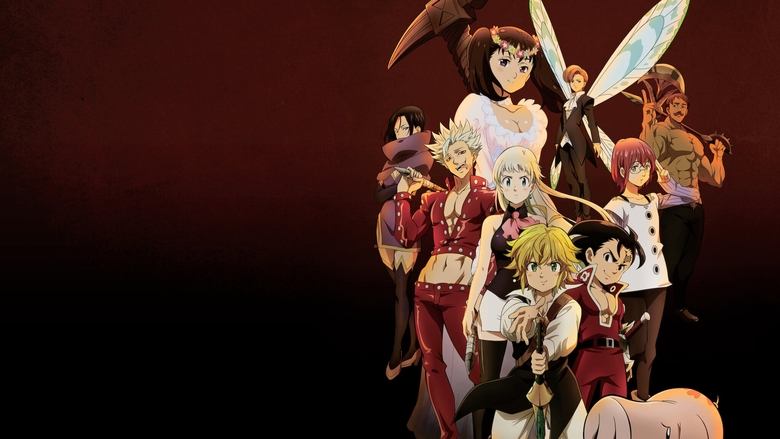
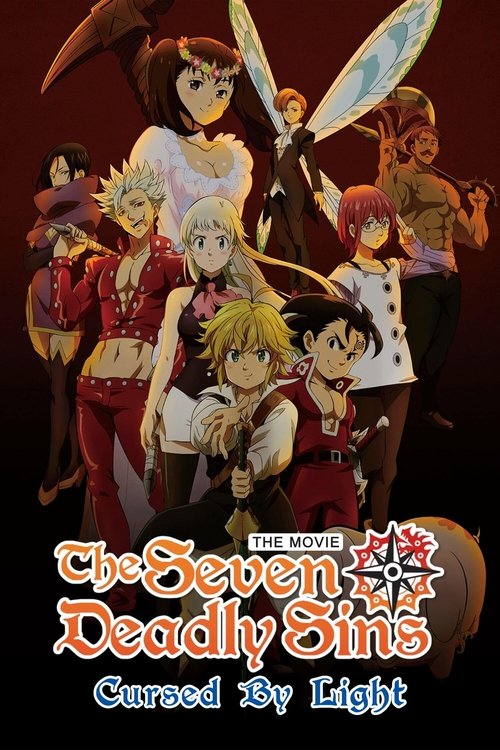
Six months after the defeat of the Demon King and the end of the Holy War, the world of Britannia is finally at peace. Meliodas and Elizabeth embark on a journey to revisit the places of their shared past, while King and Diane prepare for their wedding. However, this tranquility is shattered when the Demon Realm is attacked by an army led by the Second Fairy King, Dahlia, and the Giant Master Craftsman, Dubs. These ancient legends have been resurrected and are intent on punishing the Seven Deadly Sins for disrupting the balance of the world.
As the Sins scatter to defend their friends and the Demon Realm, Meliodas reunites with his estranged brother, Zeldris. Together, they discover that the true mastermind behind the chaos is none other than the Supreme Deity, the mother of the Goddess Clan. She believes that eternal conflict is necessary for balance and seeks to restart the Holy War. The brothers must put aside their past grievances and combine their powers to defeat a god who views their lives as mere pawns in an eternal game.

Core Meaning
The film serves as a definitive rejection of fatalism and divine control. By defeating the Supreme Deity, the characters declare that their lives are not pieces in a cosmic game played by gods, but their own to define. It emphasizes that true peace is not just the absence of war, but the active dismantling of the cycles of hatred that fuel it, best exemplified by the reconciliation between Meliodas and Zeldris.
Thematic DNA
Reconciliation and Brotherhood
The emotional core of the film is the mending of the relationship between Meliodas and Zeldris. After centuries of conflict and misunderstanding, they are forced to fight side-by-side, allowing them to finally communicate as brothers rather than enemies. Zeldris moves from resentment to begrudging respect and affection.
Destiny vs. Free Will
The Supreme Deity represents the imposition of a pre-ordained destiny (eternal war). The Sins, particularly Meliodas and Elizabeth, fight to break free from these divine shackles, asserting their right to choose a future of peace and chaos over a curated order of endless conflict.
Family of Choice
While biological family plays a huge role (Meliodas/Zeldris, Elizabeth/Supreme Deity), the film reinforces that true family is chosen. Elizabeth explicitly rejects her biological mother, the Supreme Deity, in favor of the bonds she formed with the Sins and her adoptive father, King Bartra.
The Cycle of War
The antagonists believe that war is a necessary state of being for the world. The heroes challenge this cynical worldview, fighting to prove that existence does not require a binary opposition of Light and Dark to sustain itself.
Character Analysis
Meliodas
Yuki Kaji
Motivation
To protect the peace he fought for and to reconcile with his brother before starting his new life with Elizabeth.
Character Arc
Meliodas transitions from a warrior burdened by guilt to a peacemaker focused on his future family. His arc concludes by fixing his biggest regret: his failed relationship with his brother, Zeldris.
Zeldris
Tatsuhisa Suzuki
Motivation
To prove himself as a capable ruler of the Demon Clan and to protect his lover, Gelda.
Character Arc
Starts as distant and dutiful, ruling the Demon Realm. Through fighting alongside Meliodas, he learns to let go of his resentment and accepts his brother's love, evolving into a benevolent leader for his clan.
The Supreme Deity
Kana Kurashina
Motivation
To maintain the 'balance' of the world through eternal conflict between Goddesses and Demons.
Character Arc
She remains static, serving as the embodiment of the old world order. She descends to punish the Sins for ending the Holy War but is ultimately defeated, marking the end of the Age of Gods.
Elizabeth Liones
Sora Amamiya
Motivation
To protect her friends and her chosen family from her biological mother's wrath.
Character Arc
She steps out of the shadow of her divine lineage. By facing her mother, she claims her identity as a human (spiritually) and a member of Liones, rejecting the goddess who cursed her.
Symbols & Motifs
The Supreme Deity's Light
It symbolizes a destructive, blinding purity that lacks empathy. Unlike the warm light of the sun, this light is cold and oppressive, representing order without compassion.
Used during the climax when the Supreme Deity attacks; her presence is bathed in an overwhelming brightness that threatens to erase everything, contrasting with the Sins' colorful diversity.
Dubs' Crafted Weapons
These represent the turning of one's own strengths against them. Dubs uses the Sins' own sacred treasures (which he helped create) or similar magic to counteract their abilities.
Dubs uses his knowledge of magical artifacts to neutralize the Sins' attacks initially, symbolizing how the tools of the past must be overcome to secure the future.
The Handshake/Drink
A symbol of equal standing and truce. It marks the end of hierarchy and the beginning of genuine brotherhood.
At the end of the film, Meliodas and Zeldris share a drink (or agree to), signifying the final healing of their rift and Zeldris's acceptance of Meliodas.
Memorable Quotes
The Holy War is merely an amusing game to us.
— Supreme Deity
Context:
Spoken during the climax when she explains to Meliodas and Elizabeth why she wants to restart the war.
Meaning:
Reveals the cruel nihilism behind the gods' actions; they do not care about morality, only their own entertainment and the status quo.
A parent is the one who raises you, not just the one who gives birth to you!
— Elizabeth Liones
Context:
Elizabeth shouts this at the Supreme Deity, rejecting her 'mother's' authority and acknowledging Bartra as her true father.
Meaning:
A powerful declaration of independence and a definition of true family. It rejects biological determinism in favor of love and care.
Come visit sometime... the castle needs repairs, so you can help with that.
— Zeldris
Context:
The final conversation between the brothers before they part ways, showing their reconciled bond.
Meaning:
A veiled invitation of love. Zeldris is too proud to simply ask Meliodas to visit, so he invents a practical excuse to maintain their connection.
I like what I'm seeing in you, brother.
— Meliodas
Context:
Spoken during their team-up fight, acknowledging Zeldris's strength and leadership.
Meaning:
An affirmation of Zeldris's growth and character, validating him not just as a subordinate or a demon, but as a family member he respects.
Philosophical Questions
Is conflict necessary for balance?
The Supreme Deity argues that light and dark must eternally war to maintain cosmic equilibrium. The film challenges this dualism, suggesting that 'balance' is a construct of those in power to maintain control, and that true harmony comes from coexistence (represented by Meliodas and Elizabeth's union) rather than opposition.
What defines a family?
Through Zeldris and Elizabeth, the film explores the tension between blood obligation and chosen bonds. It concludes that shared experiences and love supersede biological ties, validating adopted and found families over abusive biological ones.
Alternative Interpretations
Some critics view the film not just as a finale, but as a critique of 'sequel escalation.' The Supreme Deity's insistence that the war must continue because it is a 'game' can be interpreted as a meta-commentary on long-running shonen series that refuse to let conflicts end. By defeating her, the characters are metaphorically fighting for the right to have a 'happily ever after' and end the series on their own terms. Another reading focuses on the failure of the 'old guard' (Dahlia, Dubs, Supreme Deity) representing traditionalism that must be violently overthrown by the new generation to achieve progress.
Cultural Impact
Cursed by Light served as the grand finale to The Seven Deadly Sins anime saga, a series that was instrumental in Netflix's early push into exclusive anime distribution. While the franchise suffered from declining animation quality in later seasons (Studio Deen), the film was generally seen as a step up visually and a satisfying narrative conclusion for long-time fans. It successfully transitioned the franchise from the 'Holy War' arc to the 'Chaos' arc, paving the way for the sequel Four Knights of the Apocalypse. It solidified the trend of shonen anime using canon feature films to wrap up storylines or fill gaps (similar to Naruto: The Last).
Audience Reception
Audience reception was generally positive, particularly among dedicated fans who felt the anime series ending was rushed. Viewers praised the focus on Zeldris and Meliodas's relationship, citing it as the emotional highlight. The animation was considered an improvement over the TV series' notorious later seasons, though some still found it lacking compared to high-budget cinematic contemporaries. Critics were more mixed, pointing out the 'villain of the week' feel of Dahlia and Dubs, but acknowledged that the film succeeded in its primary goal: giving the characters a proper send-off.
Interesting Facts
- The story was written specifically for the film by the original manga author, Nakaba Suzuki, unlike the previous movie 'Prisoners of the Sky'.
- This film marks the first time the Supreme Deity's face is fully revealed in the anime franchise.
- The plot serves as a direct bridge to the sequel series, 'Four Knights of the Apocalypse'.
- Akihito Okano from the band Porno Graffitti performed the theme song 'Sono Saki no Hikare e' (Onward to the Light).
- The events take place between the final two episodes of the 'Dragon's Judgement' anime season (or between chapters 344 and 345 of the manga).
- Dubs, the Giant craftsman, is the creator of several Sacred Treasures used by the Sins, including Meliodas's Lostvayne.
Easter Eggs
Merlin's Post-Credits Scene
Merlin is seen speaking to Arthur about the 'Age of Chaos,' directly setting up the conflict and setting of the sequel series, Four Knights of the Apocalypse.
Tristan's Mention
The ending montage and dialogue allude to the future children of the Sins, specifically Tristan (Meliodas's son), who is a protagonist in the sequel.
Hawk and Wild
Hawk is shown reunited with his brother Wild in Purgatory/Demon Realm, resolving a long-standing plot thread from the anime regarding Hawk's lost brother.
⚠️ Spoiler Analysis
Click to reveal detailed analysis with spoilers
Frequently Asked Questions
Explore More About This Movie
Dive deeper into specific aspects of the movie with our detailed analysis pages
Comments (0)
No comments yet. Be the first to share your thoughts!