The Shop Around the Corner
"EVERY GIRL OR FELLOW WHO EVER KEPT A “BLIND DATE”"
Overview
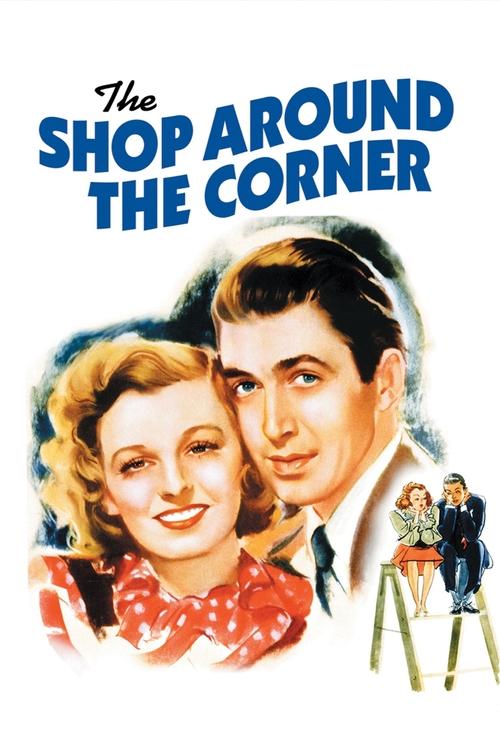
"The Shop Around the Corner" is a classic romantic comedy directed by Ernst Lubitsch, set in pre-war Budapest. The story centers on the employees of Matuschek and Company, a leather goods shop. Alfred Kralik (James Stewart) is the top salesman, a principled but proud man. Klara Novak (Margaret Sullavan) is the ambitious new saleswoman who immediately clashes with Kralik. Their workplace relationship is defined by constant bickering and disagreements on everything from sales techniques to personal taste.
Unbeknownst to them, both Kralik and Novak are engaged in an anonymous romantic correspondence, having connected through a newspaper ad. Through their letters, they have fallen deeply in love with the idealized version of each other, sharing their deepest thoughts, dreams, and love for literature. The film masterfully builds dramatic irony as the two pen pals, who adore each other on paper, continue to be antagonists in person, completely unaware that their greatest rival is also their dearest friend.
The central conflict is heightened by subplots involving their boss, the volatile yet ultimately kind-hearted Mr. Matuschek (Frank Morgan), who is dealing with his own personal crisis of infidelity. As Christmas approaches, Kralik and Novak plan to finally meet their mysterious correspondents, leading to a fateful rendezvous where identities are revealed and the line between idealized love and real-life affection is beautifully explored.
Core Meaning
At its heart, "The Shop Around the Corner" is an exploration of the contrast between the ideal and the reality of love and human connection. Director Ernst Lubitsch uses the premise of anonymous letters to comment on how people often fall in love with a romanticized idea of a person rather than the complex, flawed individual they truly are. The film suggests that true love requires looking past surface-level irritations and preconceived notions to discover the "inner truth" of another person. It champions the idea that genuine affection can blossom in the most unexpected places, even amidst daily workplace squabbles. Furthermore, the film is a touching portrayal of the workplace as a surrogate family, where personal and professional lives are deeply intertwined, and the small dramas of everyday life—job security, personal pride, and loneliness—are treated with warmth and humanity. It's a celebration of ordinary, middle-class people and the extraordinary emotions they experience.
Thematic DNA
Ideal vs. Reality in Love
The central theme revolves around the discrepancy between the idealized pen pals Alfred and Klara fall in love with and their real-life, antagonistic counterparts. Their letters allow them to present their best selves, focusing on intellect and culture, while their daily interactions are fraught with misunderstanding and petty arguments. The film masterfully explores the journey of reconciling the perfect person on paper with the flawed, and ultimately more real, person in front of them, suggesting that true love bridges this gap.
Anonymity and Identity
The anonymity of the correspondence allows Alfred and Klara to be vulnerable and reveal their true selves without the fear of judgment that accompanies face-to-face interaction. This secret identity becomes a sanctuary. The plot hinges on the eventual reveal of their true identities and the shock and humor that ensues when Alfred discovers his intellectual soulmate is his most annoying coworker. This theme questions how much our perception of someone is shaped by the context in which we know them.
Workplace as Family
The film portrays the employees of Matuschek & Co. as a tight-knit, if sometimes dysfunctional, family. They gossip, support each other, and are deeply affected by the moods and personal crises of their boss, Mr. Matuschek. His journey from suspecting Kralik to realizing his shop is his true home and his employees are his family is a key emotional arc. This theme highlights the humanity and interconnectedness found in the mundane setting of a retail shop.
Loneliness and the Search for Connection
Underneath the witty banter and romantic comedy setup, both Alfred and Klara are fundamentally lonely individuals seeking a meaningful connection. Their correspondence is a lifeline, a way to combat the isolation of their everyday lives. Klara, in particular, clings to the hope of her anonymous suitor. The film poignantly captures the universal human desire to be understood and loved for one's true self.
Character Analysis
Alfred Kralik
James Stewart
Motivation
His primary motivation is to find a deep, intellectual connection with someone, a desire born of loneliness. After he discovers Klara is his correspondent, his motivation shifts to winning her affection in person, hoping that the woman who loves him on paper can come to love him in real life.
Character Arc
Kralik begins as a competent, proud, and somewhat rigid top salesman who is easily irritated by Klara. Through his anonymous letters, we see his more sensitive and intellectual side. His arc involves the difficult process of reconciling the idealized woman of his letters with the flesh-and-blood woman he finds infuriating. After discovering her identity, he shifts from antagonist to a gentle, albeit slightly manipulative, suitor, testing the waters before revealing himself. He matures from a man who values ideals to one who embraces the messy, imperfect reality of love, ultimately gaining both the girl and the position of store manager.
Klara Novak
Margaret Sullavan
Motivation
Klara is motivated by a desire for both economic independence and a romantic connection that values her intellect and spirit. She longs to meet the man who seems to understand her so perfectly through his letters, an ideal that sustains her through her workplace struggles.
Character Arc
Klara starts as an ambitious, intelligent, and somewhat defensive young woman determined to make her own way. Her sharp tongue and professional pride put her in direct conflict with Kralik. Her arc is one of vulnerability; while outwardly confident, she pins all her romantic hopes on her anonymous correspondent. Her disillusionment when her pen pal doesn't show up is crushing. Over time, as Kralik softens his approach towards her at work, she begins to see a different side of him, admitting she initially had a crush on him. Her journey is about letting down her guard and realizing that the love she was searching for was right in front of her all along.
Hugo Matuschek
Frank Morgan
Motivation
Initially, his motivation is driven by pride and the fear of being cuckolded. After his personal crisis, his motivation becomes a desire for connection and to rectify his mistakes. He seeks to restore order and happiness to his professional "family," which he had nearly destroyed.
Character Arc
Mr. Matuschek begins as a mercurial and stressed shop owner, whose moods dictate the atmosphere of the entire store. His suspicion that his wife is having an affair, which he mistakenly projects onto Kralik, makes him cruel and irrational, leading him to fire his best employee. His arc is tragic and redemptive. After discovering the real culprit and attempting suicide, he transforms. He becomes a forgiving, benevolent, and almost fatherly figure, promoting Kralik, apologizing for his mistake, and realizing that his employees are his true family.
Ferencz Vadas
Joseph Schildkraut
Motivation
Vadas is motivated by pure self-interest, social climbing, and vanity. He seeks to live beyond his means and class, which manifests in his affair with Mrs. Matuschek.
Character Arc
Vadas is a static character who serves as a foil to the honest Kralik. He is a two-faced, sycophantic employee who flatters Mr. Matuschek to his face while secretly undermining him. His arc is a simple one of discovery and comeuppance. He is revealed to be the true adulterer, is unceremoniously fired by Kralik, and exits the film in disgrace. Leland Poague suggests he symbolizes the undesirable qualities of the middle class that the other characters metaphorically purge by firing him.
Symbols & Motifs
The Letters
The letters symbolize the idealized and intellectual side of romance. They represent the pure, unfiltered connection of minds, divorced from physical appearance and daily irritations. They are a vessel for dreams and vulnerability, containing the perfect versions of Alfred and Klara that they wish to be.
The entire plot is driven by the anonymous letters exchanged between Alfred and Klara. The contents of the letters are discussed frequently, highlighting their shared love for literature and culture. The moment Klara reads a letter from her pen pal aloud to Alfred (who secretly wrote it) is a pivotal scene of dramatic irony.
The Musical Cigarette Box
The musical cigarette box, which plays "Ochi Chërnye," represents a point of commercial and personal contention, symbolizing bad taste versus potential profitability. Initially, it's a source of conflict between Kralik and Matuschek, and later, it's the item that Klara successfully sells to get her job, proving her sales acumen. It symbolizes how subjective value and perception can be, both in commerce and in relationships.
Mr. Matuschek wants to stock the cigarette boxes, but Kralik thinks they are tacky and will never sell. Klara enters looking for a job and, through clever reframing, sells one as a candy box to a customer who finds it delightful, securing her position at the shop.
The Shop (Matuschek & Co.)
The shop itself is a microcosm of society and a sanctuary for its employees. It represents the world of work, economic anxiety, and daily routine. However, it's also the stage where all the film's drama, comedy, and romance unfolds, ultimately symbolizing a surrogate home and family for its workers, particularly for the lonely Mr. Matuschek.
Nearly the entire film is set within the confines of Matuschek & Co. The opening scene establishes the shop as the center of the characters' lives as they wait for it to open. The heartwarming final scene, where Alfred reveals his identity to Klara, also takes place in the shop on Christmas Eve, solidifying its role as the heart of the story.
A Red Carnation and 'Anna Karenina'
These items serve as the designated signals for the pen pals' first meeting. They symbolize literary romance and the high-minded ideals the correspondents expect from each other. The book, a tragic romance, adds a layer of irony to the comedic and awkward situation that actually unfolds.
When Alfred and Klara decide to meet, they agree that she will be carrying a copy of Tolstoy's "Anna Karenina" with a red carnation tucked inside it as a bookmark. Alfred sees Klara with these signals in the Cafe Nizza, which is how he discovers that his irritating co-worker is his beloved pen pal.
Memorable Quotes
There might be a lot we don't know about each other. You know, people seldom go to the trouble of scratching the surface of things to find the inner truth.
— Alfred Kralik
Context:
Said during one of their early, tense conversations in the shop, where they are discussing their general dislike for one another. Klara's sharp retort follows immediately.
Meaning:
This line encapsulates the central theme of the film. Kralik says it to Klara before he knows her secret identity, but it ironically foreshadows the entire journey they must take. It speaks to the difference between surface impressions (their bickering) and deeper reality (their hidden love).
Well I really wouldn't care to scratch your surface, Mr. Kralik, because I know exactly what I'd find. Instead of a heart, a hand-bag. Instead of a soul, a suitcase. And instead of an intellect, a cigarette lighter... which doesn't work.
— Klara Novak
Context:
This is Klara's immediate response to Kralik's "scratching the surface" comment, delivered with cutting precision in the middle of the shop.
Meaning:
This is Klara's witty, devastating comeback to Kralik's philosophical musing. It perfectly illustrates the animosity between them and showcases her sharp tongue. The insult is particularly clever as it uses the shop's merchandise to dehumanize him, reducing him to faulty goods.
Pirovitch, did you ever get a bonus? ... The boss hands you the envelope. You wonder how much is in it, and you don't want to open it. As long as the envelope's closed, you're a millionaire.
— Alfred Kralik
Context:
Kralik says this to his friend and confidant, Pirovitch, while they are at work, reflecting on the hopes and fears of working-class life.
Meaning:
This quote speaks to the theme of economic anxiety and the power of hope and imagination. It's a poignant reflection on how the anticipation of good fortune can sometimes be more satisfying than the reality, a feeling that mirrors his anticipation of meeting his pen pal.
Psychologically, I'm very confused... But personally, I don't feel bad at all.
— Klara Novak
Context:
Spoken to Kralik in the shop on Christmas Eve, shortly after he has revealed that he is her anonymous "dear friend."
Meaning:
This is Klara's wonderfully contradictory and human reaction in the film's final moments. It perfectly captures the confusing but delightful emotional state of discovering that the man she thought she despised is the man she loves. It is a hallmark of the sophisticated, witty dialogue for which the film is praised.
Doctor, do I call you a pill-peddler?
— Pepi Katona
Context:
Pepi says this to a doctor at the hospital after Mr. Matuschek's suicide attempt. The doctor patronizingly asks if Pepi is an "errand boy," and Pepi fires back with this clever response.
Meaning:
This witty retort from the ambitious delivery boy, Pepi, demonstrates his sharp mind and refusal to be condescended to. It's a comedic line that also reveals his character—he sees himself as much more than a mere errand boy and demands respect.
Philosophical Questions
Can we truly know another person, or do we only fall in love with our idea of them?
The film uses the central conceit of anonymous letter-writing to explore this question. Alfred and Klara fall in love with the curated, intellectual versions of each other they present on paper. Their real-life interactions, filled with flawed human moments like pride and irritation, are a stark contrast. The narrative suggests that true intimacy is achieved not by finding a perfect ideal, but by integrating the idealized version with the messy, complicated reality of a person. The journey from loving the "dear friend" in the letters to loving the annoying coworker in the shop is the film's answer to this question.
What is the nature of identity, and how does it shift between our private and public selves?
In their letters, Alfred and Klara reveal their private selves—sensitive, literary, and vulnerable. At work, they project their public personas—professional, defensive, and competitive. The film illustrates the chasm that can exist between these two identities. Kralik's journey, after he learns the truth, is about trying to merge his and Klara's public and private selves. He attempts to bring the warmth of their correspondence into their daily interactions, proving that identity is not fixed but fluid, shaped by context and the willingness to be vulnerable.
Alternative Interpretations
While largely seen as a straightforward and heartwarming romantic comedy, some analysis offers a slightly different perspective. One interpretation focuses less on the romance and more on the film as a commentary on economic anxiety during the Great Depression. The characters' lives are dictated by their jobs; the fear of being fired is palpable, and Mr. Matuschek's whims hold immense power over their livelihoods. In this reading, the romance is a sweet escape, but the underlying tension is the struggle for survival and dignity in a precarious economic climate. Mr. Kralik's joy at being rehired as manager is as significant a victory as winning Klara's heart.
Another reading suggests that Alfred Kralik's behavior after discovering Klara's identity is not entirely charming but involves a degree of psychological manipulation. Knowing he holds all the cards, he teases and tests her, subtly mocking her idealized image of her pen pal. While played for comedic effect, this interpretation sees a power imbalance where Alfred toys with Klara's emotions before revealing the truth. The ending is still happy, but it arrives after a period where one character has an unfair and somewhat cruel advantage over the other.
Cultural Impact
"The Shop Around the Corner" was released in 1940, on the cusp of World War II. While the film is set in Budapest, it avoids any direct political commentary, instead creating a nostalgic, bittersweet portrait of a European society on the brink of destruction. This historical context lends the film a layer of poignancy, depicting a charming, everyday world that would soon be lost.
Initially, the film was not a major box office success, though it received positive reviews. However, its reputation has grown immensely over the decades, and it is now considered a masterpiece of the romantic comedy genre and one of director Ernst Lubitsch's finest works. Its sophisticated dialogue, warm characterizations, and masterful blending of comedy and drama are hallmarks of the famed "Lubitsch Touch"—a style of filmmaking so influential that director Billy Wilder reportedly kept a sign in his office asking, "How would Lubitsch do it?".
The film's most significant cultural legacy is its premise of anonymous lovers who dislike each other in real life. This trope has become a staple of the romance genre. The story has been adapted multiple times: first as the 1949 MGM musical "In the Good Old Summertime" and most famously as the basis for Nora Ephron's 1998 hit "You've Got Mail," which updated the letter-writing to email correspondence. The latter film directly references its predecessor by naming the heroine's bookstore "The Shop Around the Corner," cementing the 1940 film's place in popular culture. Today, the film is hailed by critics, holding a 99% rating on Rotten Tomatoes, and is recognized by the National Film Registry as a culturally significant work.
Audience Reception
Audience reception for "The Shop Around the Corner" has been overwhelmingly positive, particularly in the decades since its release, solidifying its status as a beloved classic. Viewers consistently praise the film's charm, wit, and heartwarming story. The chemistry between James Stewart and Margaret Sullavan is a frequent point of acclaim; their evolution from bickering antagonists to romantic leads is considered one of the most believable and endearing in cinema history. The supporting cast, especially Frank Morgan as Mr. Matuschek and Joseph Schildkraut as the smarmy Vadas, is also highly lauded for adding depth and humor.
The screenplay by Samson Raphaelson is celebrated for its intelligent, sparkling dialogue and clever construction. Audiences appreciate that the film balances its romantic comedy elements with moments of genuine pathos, such as Mr. Matuschek's despair over his wife's infidelity and subsequent suicide attempt. This emotional depth is often cited as a reason the film resonates so strongly and avoids becoming overly saccharine. While some modern viewers might find Kralik's teasing of Klara after he knows her identity to be slightly cruel, most interpret it within the comedic context of the film's era. The overall verdict from audiences is that it is a near-perfect romantic comedy, timeless in its appeal and a comforting watch, especially during the Christmas season.
Interesting Facts
- The film is based on the 1937 Hungarian play "Parfumerie" by Miklós László.
- Director Ernst Lubitsch considered "The Shop Around the Corner" the best film he ever made.
- Lubitsch drew upon his own experiences working in his father's shop in Berlin as a young man.
- Production was delayed until both James Stewart and Margaret Sullavan were available; in the interim, Lubitsch directed the classic "Ninotchka".
- The film was shot in 28 days for under $500,000.
- Reportedly, all the scenes were shot in sequence.
- The story was remade as the 1949 musical "In the Good Old Summertime" starring Judy Garland and Van Johnson, and it heavily inspired the 1998 romantic comedy "You've Got Mail" starring Tom Hanks and Meg Ryan.
- Billy Wilder, a protégé of Lubitsch, famously had a sign in his office that read, "How would Lubitsch do it?"
- In 1999, the film was selected for preservation in the United States National Film Registry by the Library of Congress as being "culturally, historically, or aesthetically significant".
Easter Eggs
The name of the bookstore in the 1998 remake, "You've Got Mail," is "The Shop Around the Corner."
This is a direct and loving homage from director Nora Ephron to the 1940 film. It explicitly acknowledges the film's source of inspiration, connecting the two movies for audiences and paying tribute to the enduring charm of the original story.
⚠️ Spoiler Analysis
Click to reveal detailed analysis with spoilers
Frequently Asked Questions
Explore More About This Movie
Dive deeper into specific aspects of the movie with our detailed analysis pages
Comments (0)
No comments yet. Be the first to share your thoughts!