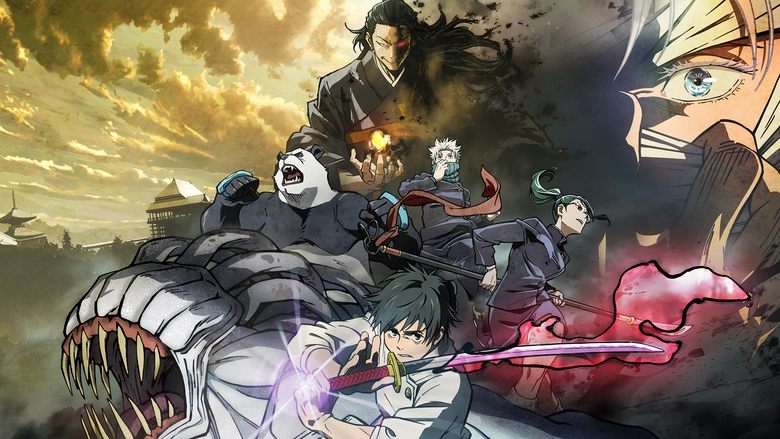
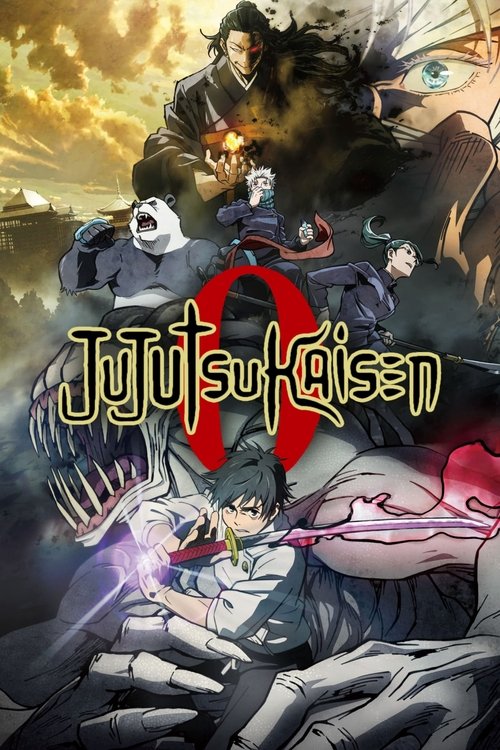
Jujutsu Kaisen 0
A hauntingly beautiful elegy of phantom limbs and cursed love, where raw, unrestrained emotion paints the screen in visceral shades of action and sorrow, exploring the monstrous strength found in accepting one's deepest grief.
Jujutsu Kaisen 0

Jujutsu Kaisen 0

劇場版 呪術廻戦 0

"Love is a twisted curse."

24 December 2021 Japan 105 min ⭐ 8.1 (1,557)
Director: Sunghoo Park
Cast: Megumi Ogata, Kana Hanazawa, Yuichi Nakamura, Takahiro Sakurai, Mikako Komatsu
Animation Fantasy Action
Love as the Ultimate Curse Finding the Will to Live The Dangers of Ideology and Isolation The Burden of Power
Box Office: $195,870,885

Overview

"Jujutsu Kaisen 0" serves as a compelling prequel to the main anime series, centering on Yuta Okkotsu, a timid high school student burdened by a monstrous curse. After his childhood friend, Rika Orimoto, died in a tragic accident, her spirit transformed into a powerful and overprotective Cursed Spirit, violently lashing out at anyone who threatens Yuta. Desiring his own death to end the suffering, Yuta is instead found by Satoru Gojo, the most powerful Jujutsu Sorcerer, who offers him a different path: enroll in Tokyo Jujutsu High to learn how to control Rika's immense power.

Thrust into the hidden world of Curses and Sorcerers, Yuta meets his classmates: the determined Maki Zen'in, the quiet Toge Inumaki, and the friendly Panda. Through training and his first missions, Yuta begins to form bonds and finds a reason to live, slowly gaining control over the terrifying entity that haunts him. However, his existence attracts the attention of Suguru Geto, a dangerous and charismatic curse user with a radical ideology. Geto, a former friend of Gojo, seeks to create a world exclusively for Jujutsu sorcerers by eradicating all non-sorcerers. Believing Rika's power is key to his ambition, Geto declares war, forcing Yuta and his newfound friends into a desperate battle for the future of their world.
Core Meaning

The core meaning of "Jujutsu Kaisen 0" revolves around the profound and often painful relationship between love, grief, and power. The film posits that love is the most potent and, therefore, the most "twisted" curse of all. It explores how Yuta's inability to accept Rika's death is the very source of the curse that binds her to him. His journey is not about exorcising a demon, but about confronting his own trauma and guilt. The film's central message is that true strength comes from accepting one's pain and finding the courage to live on, not in spite of the grief, but because of the love that caused it. Yuta's transformation from a suicidal, isolated boy to a powerful sorcerer who fights to protect others is a testament to the idea that our deepest wounds can become our greatest sources of power when we find a purpose beyond our own suffering.

Thematic DNA

Love as the Ultimate Curse 35%
Finding the Will to Live 30%
The Dangers of Ideology and Isolation 25%
The Burden of Power 10%

Love as the Ultimate Curse

The film's central tenet, explicitly stated by Satoru Gojo, is that "Love is the most twisted curse of all." This theme is embodied by Yuta and Rika. Yuta's profound love for Rika and his refusal to accept her death are what inadvertently curse her, transforming her spirit into a monstrous entity. Her immense power is a direct manifestation of his love and grief. The narrative recontextualizes the idea of a curse, framing it not as an external malevolent force but as a powerful, distorted emotion. Geto's desire to possess Rika, the "Queen of Curses," underscores this theme, as he seeks to harness the power born from this ultimate emotional bond for his destructive ends.

Finding the Will to Live

Yuta begins the story as a deeply traumatized individual who wishes for his own death to escape the torment of Rika's curse. His character arc is a journey toward finding self-worth and a reason to continue living. At Jujutsu High, through his connections with Maki, Toge, and Panda, he discovers a sense of belonging for the first time. His motivation shifts from wanting to die to wanting to have a connection with others and the confidence to feel that it's okay for him to be alive. This theme is powerfully articulated in his climactic battle, where he fights not to simply get rid of Rika, but to protect the people he has come to care about.

The Dangers of Ideology and Isolation

Suguru Geto represents the dark path of ideological extremism. Disillusioned with protecting non-sorcerers, whom he views as weak "monkeys" responsible for creating curses, he advocates for a world of only sorcerers. His philosophy is born from his own trauma and isolation after his friendship with Gojo fractured. Geto's goal to create a paradise for sorcerers is a twisted reflection of Yuta's journey. While Yuta finds strength and purpose in connection, Geto's path is one of separation and hatred, demonstrating how profound power, when coupled with a righteous and isolating ideology, can lead to devastating consequences.

The Burden of Power

The film explores the immense weight that comes with extraordinary power. Yuta's power is initially a source of immense suffering, isolating him and causing harm to those around him. Satoru Gojo, the strongest sorcerer, carries the burden of responsibility for the entire Jujutsu world, a loneliness that is subtly hinted at. Geto's tragic fall is also a result of the psychological toll of his abilities and the constant exposure to the worst of humanity. The film suggests that power is not a solution in itself but a responsibility that can either be used to forge connections or to enforce isolation.

Character Analysis

Yuta Okkotsu

Megumi Ogata

Archetype: The Reluctant Hero
Key Trait: Empathetic

Motivation

Initially, Yuta's sole motivation is to find a way to break Rika's curse and die so he can no longer hurt anyone. This evolves into a desire to form connections with others and to gain "the confidence to feel like it's okay to live." Ultimately, his primary motivation becomes the protection of his friends, who gave him a reason to live. This selfless goal allows him to unlock the true potential of his power, which is rooted in love.

Character Arc

Yuta begins as a deeply traumatized and suicidal teenager, completely isolated by the guilt and fear of Rika's curse. His journey at Jujutsu High is one of profound internal growth. Through his friendships with Maki, Toge, and Panda, he moves from isolation to connection, finding a sense of belonging and self-worth. He learns to accept his past and his power, transforming his grief from a source of suffering into a source of strength. His arc culminates in him willingly sacrificing himself for his friends, demonstrating a complete reversal from his initial desire for death out of despair to a willingness to die for a purpose.

Rika Orimoto

Kana Hanazawa

Archetype: The Vengeful Spirit / Tragic Love
Key Trait: Protective

Motivation

As a Cursed Spirit, Rika's singular motivation is the protection of Yuta, albeit in a violent and destructive manner. This stems from their childhood promise and the powerful emotions tied to her death. Her actions, though monstrous, are a twisted manifestation of her love and desire to keep him safe. Her ultimate, unspoken motivation is to be freed from the curse that binds her to the mortal plane.

Character Arc

Rika's arc is seen through Yuta's perception of her. She transforms from a sweet childhood friend into a monstrous, possessive Cursed Spirit after her traumatic death. For most of the film, she is a terrifying, uncontrollable force. The climax reveals her true nature: her spirit was not malevolent, but was trapped and twisted by Yuta's grief-fueled curse. Her final transformation is back into her human form, where she is able to say a proper goodbye. Her arc completes when the curse is broken, allowing her soul to finally pass on peacefully, a symbol of Yuta's acceptance and emotional healing.

Satoru Gojo

Yuichi Nakamura

Archetype: The Mentor / The Strongest
Key Trait: Unflappable

Motivation

Gojo's primary motivation is to reform the corrupt and stagnant Jujutsu society. He believes that simply killing the higher-ups is not enough; a true revolution requires educating a new generation of strong and intelligent allies. He sees immense potential in Yuta not just as a weapon, but as a student who, through overcoming his personal struggles, can become a cornerstone of this new era. His actions are all geared towards fostering the growth of his students.

Character Arc

Gojo serves as the catalyst for Yuta's journey, saving him from execution and guiding him toward self-control. While he remains the overwhelmingly powerful and confident sorcerer, the film provides deeper insight into his character through his past relationship with Suguru Geto. His interactions with Geto reveal a layer of sadness and regret beneath his carefree exterior. His arc in the film is less about personal change and more about showcasing his philosophy of nurturing a new generation of powerful, independent-thinking sorcerers to reshape the flawed Jujutsu world from the ground up.

Suguru Geto

Takahiro Sakurai

Archetype: The Fallen Hero / The Ideologue
Key Trait: Charismatic

Motivation

Geto's motivation stems from a deep-seated disillusionment and trauma from his time as a Jujutsu sorcerer, where he constantly witnessed the ugliness of non-sorcerers and the thankless sacrifices of his comrades. He believes that eliminating non-sorcerers is the only logical solution to eradicate Curses, as they are born from the negative emotions of normal humans. His goal is to seize Rika's power to ensure he has the strength to achieve his vision of a sorcerer-only world.

Character Arc

Geto is the film's primary antagonist, a former friend of Gojo who has descended into extremism. His arc is a tragic one that is mostly in the past, but his motivations are explored in the present. He believes sorcerers are the superior race and aims to create a world for them by eliminating all non-sorcerers, whom he derogatorily calls "monkeys." His conflict with Yuta and Gojo is ideological. The film ends with his defeat and subsequent death at the hands of Gojo, a somber conclusion to their fractured friendship and a pivotal moment that sets up future events in the main series.

Symbols & Motifs

Rika's Engagement Ring

Meaning:

The ring symbolizes Yuta and Rika's childhood promise to get married and stay together forever. Initially, it represents their pure, innocent love. After her death, it becomes the primary medium through which Yuta channels and controls Rika's cursed power. It is a physical manifestation of their bond and the curse itself, representing both the love that created the curse and the promise that ultimately allows him to master it and, finally, to set her free.

Context:

Rika gives the ring to Yuta shortly before her death. Throughout the film, Yuta wears it on a necklace, keeping it close to his heart. In the final battle against Geto, Yuta places the ring on his finger, fully accepting his bond with Rika and unleashing their combined power by offering his life and future to her in exchange for her strength. This act transforms the symbol from one of a haunting promise to one of selfless love and sacrifice.

The Katana

Meaning:

The katana represents Yuta's growing resolve and his transition from a passive victim to an active sorcerer. Initially, he is untrained and cannot wield it effectively. As he trains with Maki, the sword becomes an extension of his will and a tool to channel his own cursed energy, separate from Rika. It symbolizes his journey of gaining agency and confidence, learning to fight for himself and others rather than relying solely on Rika's protection.

Context:

Gojo gives Yuta the katana early in his training at Jujutsu High. His initial struggles with it mirror his internal struggles. His sparring sessions with Maki are crucial moments where he learns not just swordsmanship but also how to stand up for himself. In the final battle, he imbues the katana with his own immense cursed energy, demonstrating that he has become a capable sorcerer in his own right.

Curtains (Veils)

Meaning:

The dark, semi-transparent "Curtains" or veils that sorcerers deploy create a barrier between the Jujutsu world and the ordinary world, hiding their battles from non-sorcerers. They symbolize the secrecy of the sorcerers' struggle and the separation between the two worlds. For Geto, this separation is a philosophy; he wishes to make the separation permanent by eliminating the non-sorcerer world entirely. The visual of the curtain falling signifies the start of a hidden, supernatural conflict.

Context:

Curtains are used multiple times throughout the film, such as during Yuta and Maki's first mission at the elementary school and during the final city-wide battles of the "Night Parade of a Hundred Demons." Geto dramatically drops a massive curtain over Shinjuku and Kyoto to kickstart his attack, visually representing his declaration of war on the non-sorcerer world.

Memorable Quotes

愛ほど歪んだ呪いはないよ

— Satoru Gojo

Context:

Gojo says this to Yuta at Jujutsu High after Yuta speculates that he might have been the one to curse Rika, not the other way around. Gojo confirms his suspicion with this philosophical statement, providing the key insight that allows Yuta to begin understanding and eventually accepting his unique situation.

Meaning:

Translated as "There is no curse more twisted than love," this line encapsulates the film's central theme. It redefines the nature of curses in the narrative, suggesting that the most powerful and dangerous ones are not born of pure hatred, but from intense, positive emotions that have been distorted by tragedy and grief. It perfectly explains the origin of Rika's power and Yuta's predicament.

生きてていいって自信が欲しいんだ

— Yuta Okkotsu

Context:

Yuta declares this as his new goal after beginning his training at Jujutsu High and forming bonds with his classmates. It is his answer to why he is choosing to become a Jujutsu sorcerer. It signifies his shift from wanting to isolate himself to wanting to find his place in the world alongside others.

Meaning:

This translates to "I want the confidence to feel like it's okay to live." This quote is the emotional core of Yuta's character arc. It marks his turning point from a suicidal boy who sees himself as a burden to someone actively seeking self-acceptance. It highlights his deep-seated desire not just for survival, but for a life with connection and purpose, free from the crushing weight of his guilt.

失礼だな、純愛だよ

— Yuta Okkotsu

Context:

Yuta says this during the climax of his battle with Suguru Geto. Geto, a master manipulator, tries to belittle Yuta by calling him a "curse-wielding womanizer." Yuta's calm and firm response shows he is no longer afraid or ashamed of his connection to Rika, instead embracing it as his greatest strength before unleashing their combined power.

Meaning:

Translated as "How rude. This is pure love." This is Yuta's powerful retort to Geto's assertion that his relationship with Rika is a curse he's wielding. By this point, Yuta has fully accepted his bond with Rika. He reclaims the narrative, framing their connection not as a twisted curse to be exploited, but as a genuine and powerful love. It is the ultimate expression of his character growth and the source of his true power.

僕達はただ、この世界では心の底から笑えなかった

— Suguru Geto

Context:

These are among Geto's final words, spoken to Gojo after his defeat by Yuta. He is mortally wounded and shares a final, private moment with his former best friend before Gojo executes him. It contextualizes his entire struggle not as a quest for power, but as a tragic search for a world where he and those like him could find peace.

Meaning:

Meaning "We just couldn't smile from the bottom of our hearts in this world." This poignant line reveals the tragic core of Geto's character. It's a moment of vulnerability where he admits to Gojo that his extreme actions were born from a profound sense of despair and alienation from a world he found fundamentally flawed. It suggests his villainy was a response to a world that brought him no genuine happiness.

Philosophical Questions

Can the most powerful love create the most destructive hate?

The film explores this question through its central premise: Yuta's pure love for Rika, when twisted by the trauma of her death, creates a devastatingly powerful and dangerous curse. This suggests that powerful emotions are inherently volatile and that the line between profound love and a destructive, possessive force is thin. Suguru Geto's character also reflects this; his initial desire to protect humanity (a form of love) curdles into a genocidal hatred for non-sorcerers after repeated trauma and disillusionment. The film posits that it is not the emotion itself but the inability to process the pain associated with it that leads to destruction.

Is it justifiable to sacrifice the few for the happiness of the many?

This is the core of Suguru Geto's philosophy. He believes that the existence of non-sorcerers (the many) is the source of all curses, which cause the suffering and death of sorcerers (the few). Therefore, he sees the eradication of non-sorcerers as a justifiable, logical step to create a paradise for his own kind. The film presents his view as a dangerous and extreme ideology, contrasting it with the sorcerers of Jujutsu High who dedicate their lives to protecting the non-sorcerer population, despite the personal cost. The narrative implicitly rejects Geto's utilitarian argument, championing the protection of all lives, regardless of their 'worth' or power.

What is the true meaning of strength?

"Jujutsu Kaisen 0" presents multiple forms of strength. There is the overwhelming cursed energy of Yuta and Rika, the peerless combat ability of Satoru Gojo, and the ideological conviction of Suguru Geto. However, the film ultimately argues that the greatest strength is emotional and psychological. Yuta's journey shows that true power isn't just about wielding a curse; it's about having the strength to confront one's own grief, to form bonds with others, and to find the will to live and protect. Maki Zen'in, who has very little cursed energy, demonstrates immense strength through her physical training and unwavering determination in the face of her family's rejection. The film suggests that true strength is found in vulnerability, connection, and the courage to accept oneself.

Alternative Interpretations

One alternative interpretation focuses on the nature of Rika's consciousness as a curse. While the film presents her as a spirit trapped by Yuta's love, some viewers theorize that the entity known as "Rika" is not the complete soul of the girl, but rather a Cursed Spirit born from Yuta's trauma that has taken on her form and memories. This interpretation suggests that the "real" Rika passed on at the moment of her death, and the curse is a separate, powerful entity created by Yuta's rejection of that reality. The final scene where Rika appears as a young girl to say goodbye would then be a manifestation of Yuta's closure, allowing the curse to finally dissipate, rather than Rika's actual spirit being freed.

Another perspective analyzes Suguru Geto's final conversation with Satoru Gojo. The film deliberately leaves Gojo's last words to Geto unheard. While the common interpretation is a final, somber exchange between best friends, some theories suggest Gojo might have revealed something more strategic, perhaps related to the future threat of Kenjaku (the entity that later possesses Geto's body). This reading frames Gojo's final act not just as a mercy killing, but as a calculated move in his long-term plan to reform the Jujutsu world, knowing his friend was truly gone and that his body could still be a threat.

Cultural Impact

"Jujutsu Kaisen 0" was a massive commercial success, becoming the highest-grossing film at the Japanese box office in 2021 and earning over $196 million worldwide. Its success solidified the "Jujutsu Kaisen" franchise as a global phenomenon, boosting manga sales and anticipation for the anime's second season. The film was widely praised by critics and audiences alike for being an accessible entry point for newcomers, as it tells a self-contained story that requires no prior knowledge of the series. This accessibility was a key factor in broadening the franchise's audience beyond the existing anime and manga fanbase.

Critically, the film was lauded for its stunning animation by studio MAPPA, which delivered fluid, high-octane action sequences that surpassed the already high standard of the TV series. The emotional depth of Yuta's character arc, focusing on themes of grief, love, and self-acceptance, resonated strongly with viewers and was highlighted as a major strength. The movie's success demonstrated the high market demand for feature-length anime films based on popular shonen properties, contributing to the ongoing trend of cinematic releases for major anime franchises. It also significantly raised the profiles of the characters it focused on, particularly Yuta Okkotsu, making his eventual introduction into the main series a highly anticipated event.

Audience Reception

Audience reception for "Jujutsu Kaisen 0" was overwhelmingly positive. Fans of the existing series praised the film's faithfulness to the source material while appreciating the expanded scenes and enhanced animation that the movie format allowed. The fluid and dynamic fight sequences, particularly the climactic battles involving Yuta, Gojo, and Geto, were frequently cited as highlights. Many viewers were deeply moved by the emotional core of the story, focusing on Yuta's tragic backstory and his journey of healing and self-acceptance. The relationship between Yuta and Rika was often described as both heartbreaking and beautiful.

A common point of praise was the film's accessibility. Many who had never seen the anime or read the manga reported being able to follow and enjoy the story, with some stating it served as a perfect introduction to the world of Jujutsu Kaisen. Criticism was minimal but occasionally pointed towards the pacing, with some feeling that certain supporting character arcs felt underdeveloped due to the film's runtime. However, the overall consensus from audiences was that the film was a spectacular success, delivering on action, emotion, and world-building, and serving as a satisfying experience for both established fans and newcomers.

Interesting Facts

  • The film was originally not planned as a movie, but as a potential arc within the main TV series. The production team at MAPPA decided to adapt it into a feature film instead.
  • The manga the film is based on, "Jujutsu Kaisen 0," was originally a short, four-chapter series titled "Tokyo Metropolitan Curse Technical School." It was created by Gege Akutami before the main "Jujutsu Kaisen" series was serialized, and was retroactively made its prequel.
  • The film's climactic event, the "Night Parade of a Hundred Demons," takes place on December 24th. This date was also the movie's theatrical release date in Japan.
  • Director Sunghoo Park stated that the film includes new content not featured in the original manga, particularly expanding on the backstory and interactions between Satoru Gojo and Suguru Geto.
  • Yuta Okkotsu was originally considered to be the protagonist for the main "Jujutsu Kaisen" anime series, but the creators ultimately decided to start with Yuji Itadori's story instead.
  • The post-credits scene featuring Yuta and Miguel in Africa was an original addition for the film, not present in the manga. The idea for the scene was provided by the manga's author, Gege Akutami.
  • Yuta Okkotsu is a distant relative of Satoru Gojo, as they both share the legendary sorcerer Michizane Sugawara as an ancestor. This explains Yuta's immense latent cursed energy.

Easter Eggs

Cameos of First-Year Students from the Main Series

During the chaos of Suguru Geto's "Night Parade of a Hundred Demons" in Kyoto, there is a brief scene showing a young Aoi Todo and Mei Mei. This serves as a fun nod for fans of the main series, showing what other characters were doing during the events of the film before they were formally introduced in the main storyline.

Yuta's Appearance in the Anime's Second Opening

Before the movie was released, Yuta Okkotsu made a very brief, blink-and-you'll-miss-it cameo in the second opening sequence of the "Jujutsu Kaisen" anime's first season. This teased his future importance to the story long before his official animated debut in the film.

The Post-Credits Scene Connection

The post-credits scene, where Gojo meets Yuta and Miguel in Africa, directly sets up Yuta's eventual return in the main manga storyline. In the anime's first season, it is mentioned that Yuta is studying overseas. The scene gives visual confirmation of this and foreshadows Gojo's plans for Yuta following the events of the Shibuya Incident arc.

⚠️ Spoiler Analysis

Click to reveal detailed analysis with spoilers

Frequently Asked Questions

Explore More About This Movie

Dive deeper into specific aspects of the movie with our detailed analysis pages

Comments (0)

Leave a comment

No comments yet. Be the first to share your thoughts!