
Wonder
"Who gives you the courage to face the world?"
Overview
"Wonder" tells the profoundly moving story of August "Auggie" Pullman, a 10-year-old boy born with a rare facial deformity known as Treacher Collins syndrome. After years of being homeschooled and undergoing numerous surgeries, Auggie's parents, Isabel and Nate, decide to enroll him in a mainstream private school for the fifth grade. This decision marks the beginning of an extraordinary journey for Auggie and everyone around him.
As Auggie navigates the often-cruel world of middle school, he faces stares, whispers, and outright bullying from his classmates, particularly from a boy named Julian. However, he also finds unexpected friendships with Jack Will and Summer, who learn to see beyond his appearance. The film expands its narrative to include the perspectives of those closest to Auggie, including his older sister Via, who has long felt overshadowed by her brother's needs, and her best friend Miranda. Through these shifting viewpoints, the film explores the ripple effect of Auggie's presence on his family and community.
Ultimately, "Wonder" is a story about the power of kindness, the courage to be oneself, and the importance of empathy. It chronicles Auggie's challenges and triumphs as he and his community learn that true beauty is not about what you look like, but who you are on the inside. At his fifth-grade graduation, Auggie is awarded the Henry Ward Beecher medal for his quiet strength and kindness, having taught his classmates and his town a valuable lesson about acceptance.
Core Meaning
The central message of "Wonder" is a powerful plea for kindness, empathy, and acceptance in the face of physical differences. Director Stephen Chbosky aims to convey that an individual's character and heart are far more significant than their outward appearance. The film champions the idea that everyone is fighting their own battles and, therefore, deserves compassion. It challenges viewers to look beyond the surface and to actively "choose kind." The narrative, by shifting perspectives among its characters, underscores that Auggie's journey impacts everyone, teaching them about friendship, courage, and the profound effect of simple human decency. The ultimate meaning is that true 'wonder' lies in our capacity for empathy and our ability to see the extraordinary in everyone.
Thematic DNA
Kindness and Empathy
This is the film's most central theme, encapsulated by the precept from Auggie's teacher, Mr. Browne: "When given the choice between being right, or being kind, choose kind." The story explores how acts of kindness, both big and small, have a profound impact on Auggie's experience. Characters like Summer, who sits with Auggie at lunch when no one else will, and Jack Will, who becomes his friend, demonstrate the positive power of choosing empathy over judgment. Conversely, the cruelty of Julian and his friends highlights the painful consequences of a lack of kindness. The film suggests that empathy is a choice and a skill that can be learned, ultimately transforming a community.
Courage and Resilience
Auggie's journey is a testament to immense courage. He must summon the strength to face a world that often stares and judges. Despite fear and instances of heartbreaking bullying, Auggie consistently shows up and tries his best to connect with others. His resilience is evident in his ability to forgive Jack after a betrayal and to continue attending school even when it's difficult. His mother tells him he is a "wonder," and by the end of the film, he is awarded a medal for his strength and courage, proving that his internal fortitude is his most defining characteristic.
The Nature of Friendship
"Wonder" provides a nuanced look at childhood friendships. Auggie's friendship with Jack Will is central to the plot, experiencing realistic ups and downs. Auggie is deeply hurt when he overhears Jack making fun of him to appease the popular kids. Their eventual reconciliation, based on Jack's genuine remorse and effort, teaches a valuable lesson about forgiveness and the work required to maintain a true friendship. The film also highlights the simplicity of genuine connection through Summer, who befriends Auggie without any ulterior motives, simply because she enjoys his company.
Family Dynamics and Sacrifice
The Pullman family is the emotional anchor of the film. Isabel and Nate's unwavering love and support are crucial to Auggie's ability to face the world. The film also explores the theme of sacrifice, particularly through Isabel, who put her Ph.D. dissertation on hold to care for Auggie. A significant subplot focuses on Via, Auggie's sister, who often feels invisible because her brother's needs are so demanding. Her storyline explores feelings of neglect and the complex emotions of loving her brother while also craving her own identity and attention, adding depth to the film's portrayal of family life.
Character Analysis
August "Auggie" Pullman
Jacob Tremblay
Motivation
Auggie's primary motivation is the universal desire to be accepted and to have friends. He wants to be seen as an ordinary kid, not just as his face. He is driven by a deep longing for connection and a need to prove to himself and others that he can survive and thrive in a world that wasn't built for him.
Character Arc
Auggie begins the film as a shy, self-conscious boy who hides behind his astronaut helmet, fearful of the outside world. His journey through fifth grade forces him to confront his fears, endure bullying, and navigate the complexities of friendship. Through these experiences, he develops resilience and courage. He learns to stand up for himself, to trust others, and to accept himself for who he is. By the end, he has shed his need to hide and has become an inspiration to his entire school, transforming from a boy who felt invisible to a celebrated "wonder."
Isabel Pullman
Julia Roberts
Motivation
Isabel's motivation is rooted in her fierce love for her son and her desire for him to have a full, enriching life beyond the confines of their home. She pushes for him to attend school because she knows he cannot be sheltered forever and needs to experience the world, friendships, and challenges for himself.
Character Arc
Isabel starts as Auggie's protective teacher and primary caregiver, having put her own life and career on hold. Her arc involves learning to let go and trust that Auggie can navigate the world without her constant presence. Sending him to school is a monumental step for her. As Auggie gains independence, she rediscovers her own identity, finally completing the thesis she had abandoned. Her journey is about finding the balance between being a protective mother and allowing her child to grow.
Nate Pullman
Owen Wilson
Motivation
Nate is motivated by a deep-seated need to protect his family, especially Auggie, from pain. He wants his son to be happy and safe, and his actions, from his jokes to his protective instincts, all stem from this paternal love. He also strives to maintain a sense of normalcy and fun within the family despite their challenges.
Character Arc
Nate is the more cautious parent, initially hesitant about sending Auggie to school, fearing the cruelty of other children. He often uses humor to lighten the mood and emotionally support his family. His arc involves overcoming his own fears for Auggie's well-being. A key moment of his development is his confession about hiding the astronaut helmet, revealing the depth of his love and his desire to see his son's face, which he adores. This shows his growth from a protector who enables hiding to one who encourages facing the world.
Olivia "Via" Pullman
Izabela Vidovic
Motivation
Via is motivated by a desire for her own identity and to be seen for who she is. She craves the normal high school experiences and the parental attention that has been largely focused on her brother. She is also fiercely protective of Auggie, and this dual motivation—to protect him and to find herself—drives her actions.
Character Arc
Via begins the story feeling like a secondary planet in the "Sun" of her family's solar system, which revolves around Auggie. She has learned to be self-sufficient and not to burden her parents with her problems. Her arc is about finding her own voice and identity outside of being "Auggie's sister." She navigates the loss of her best friend, a new romance, and her place in the school drama club. She learns to express her own needs and frustrations, ultimately reaffirming her deep love for her brother while also carving out her own space in the world.
Jack Will
Noah Jupe
Motivation
Jack is motivated by a desire to fit in and be liked, which initially conflicts with his genuine affection for Auggie. Ultimately, his conscience and his recognition of Auggie's inherent worth and kindness motivate him to do the right thing and be a true friend.
Character Arc
Jack is initially asked by the principal to befriend Auggie. He struggles with the social pressures of middle school, wanting to be friends with Auggie but also fearing the judgment of the popular kids. This conflict leads him to betray Auggie by speaking cruelly about him on Halloween. Jack's arc is one of redemption. He realizes his mistake, feels genuine remorse, and works to earn back Auggie's trust. He learns to prioritize true friendship over social status, culminating in him defending Auggie and choosing to be his friend, regardless of the consequences.
Symbols & Motifs
Astronaut Helmet
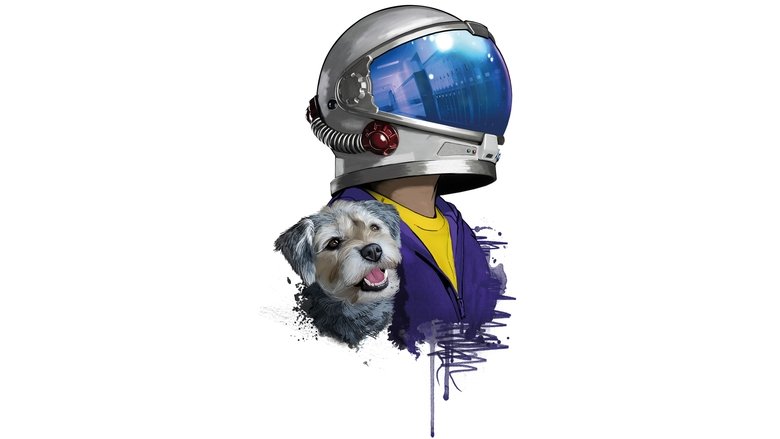
The astronaut helmet symbolizes Auggie's desire for escapism and to hide from a world that judges him based on his appearance. It is a shield that allows him to navigate public spaces without being stared at, giving him a sense of control and anonymity. It represents a safe space, but also his isolation from genuine human connection.
Auggie wears the helmet frequently at the beginning of the film, especially when he is feeling anxious or is out in public. Miranda, Via's friend, gave it to him. A pivotal moment comes when his father, Nate, confesses to having hidden the helmet because he missed seeing his son's face. This act, done out of love, forces Auggie to confront the world without his primary coping mechanism, symbolizing a necessary step in his journey toward self-acceptance.
Star Wars
References to "Star Wars" serve as a cultural touchstone that connects Auggie to his peers and symbolizes his normalcy. Despite his extraordinary circumstances, he is a typical kid who loves popular culture. It also provides a metaphorical framework for good versus evil, with characters like Julian representing the "dark side" and Auggie and his friends fighting for the light.
Auggie frequently imagines himself in "Star Wars" scenarios, with characters like Chewbacca appearing at his school. His Padawan braid is a small but significant part of his identity. These references help build a bridge between Auggie and Jack Will, and they offer moments of levity and imaginative escape throughout the film.
The Plague
"The Plague" is a cruel game started by Julian where anyone who touches Auggie has a short time to wash their hands or they will "catch" it. It symbolizes the unfounded fear, prejudice, and social ostracism that people with physical differences often face. It is a tangible representation of bullying and the dehumanizing way the children initially treat Auggie.
The game is introduced early in the school year and becomes a significant source of Auggie's isolation. Jack Will initially participates, which deeply hurts Auggie when he finds out. The eventual decline of the game signifies a shift in the school's social dynamics and the students' growing acceptance of Auggie as an individual rather than an object of fear.
Memorable Quotes
When given the choice between being right or being kind, choose kind.
— Mr. Browne (quoting a precept)
Context:
Mr. Browne, Auggie's English teacher, introduces this as the first of his monthly precepts written on the chalkboard. It sets the tone for the school year and becomes a recurring theme that influences the students' actions and moral development throughout the story.
Meaning:
This is the central moral precept of the film, acting as its core message. It suggests that empathy and compassion are more valuable virtues than being correct or winning an argument. It's a guiding principle that the characters, and the audience, are encouraged to live by.
You can't blend in when you were born to stand out.
— Via Pullman
Context:
Via says this to Auggie as he is about to enter school for the first time, feeling terrified and trying to hide. It is a moment of profound sibling support, meant to bolster his courage as he faces one of the biggest challenges of his life.
Meaning:
This quote is a powerful statement of acceptance and empowerment. Via says it to Auggie to encourage him to embrace his uniqueness rather than see it as a curse. It reframes his physical difference from a source of shame into a mark of distinction and strength.
We all have marks on our faces. This is the map that shows us where we're going, and this is the map that shows us where you've been.
— Isabel Pullman
Context:
Isabel says this to Auggie in a quiet, intimate moment when he is feeling down about his appearance. She points to her heart and then to his face, differentiating between the map of one's journey (the heart) and the map of one's history (the face).
Meaning:
Isabel uses this metaphor to normalize Auggie's scars and reframe them as a record of his life and survival, rather than as deformities. She connects his physical marks to the emotional marks everyone carries, suggesting that our experiences, visible or not, are what shape us and tell our story.
You really are a wonder, Auggie.
— Isabel Pullman
Context:
Isabel says this to Auggie with heartfelt sincerity at the end of the film, as the family walks home from his graduation ceremony. It is the final affirmation of his worth and the journey he has completed, bringing the story to an emotional and satisfying close.
Meaning:
This is the titular line of the film and encapsulates the movie's ultimate conclusion about its protagonist. It signifies that despite his own feelings of being ordinary on the inside, his impact on the world and the people around him is extraordinary. His resilience, kindness, and courage make him a true 'wonder.'
Philosophical Questions
What is the relationship between appearance and identity?
The film constantly explores whether we are defined by how we look. Auggie insists he's an ordinary kid on the inside, but the world consistently defines him by his face. His journey forces those around him to confront their own prejudices and question the value they place on physical appearance. The film asks: To what extent can we shape our own identity when society places so much emphasis on our external selves? Can true identity ever be fully separated from physical embodiment?
Is kindness an innate quality or a conscious choice?
Mr. Browne's precept, "When given the choice between being right or being kind, choose kind," frames kindness as a deliberate action rather than a passive feeling. The film presents characters who struggle with this choice. Jack Will initially chooses social standing over kindness before correcting his course, while Summer chooses kindness instinctually. The narrative suggests that while some may be more naturally inclined towards empathy, true, meaningful kindness requires conscious effort, courage, and a decision to prioritize compassion over personal gain or social pressure.
What is the true measure of a successful life?
At the end of the film, Mr. Tushman gives a speech where he redefines success, not by accomplishments, but by character. He states, "The greatest measure of success... is what you've done with your time, how you've chosen to spend your days, and whom you've touched this year." This question challenges conventional notions of achievement. Through Auggie's story, the film proposes that a life's worth is measured by its positive impact on others and by the qualities of courage, friendship, and kindness one cultivates.
Alternative Interpretations
While "Wonder" is largely received as a straightforward, heartwarming narrative, some alternative interpretations and critiques exist. One perspective is that the film, despite its good intentions, presents a somewhat sanitized and privileged view of disability. The Pullman family is financially well-off, living in a brownstone in Brooklyn and able to afford private school and extensive medical care, a reality not accessible to many families facing similar challenges. This lens can be seen as simplifying the socioeconomic struggles that often accompany severe medical conditions.
Another interpretation focuses on the film's emotional tone, with some critics arguing that it borders on being "inspiration porn"—a term for media that portrays people with disabilities as one-dimensional inspirational figures for the benefit of an abled audience. From this viewpoint, Auggie's primary narrative function is to make the characters and audience around him better people, which can overshadow his own complex inner life and agency. Furthermore, the neat, happy ending where Auggie is universally celebrated can be viewed as an idealistic and somewhat unrealistic resolution to the deep-seated issues of bullying and social prejudice, potentially downplaying the persistent, long-term challenges individuals with visible differences face.
Cultural Impact
"Wonder" made a significant cultural impact upon its release by bringing mainstream attention to the subject of craniofacial differences and the broader themes of bullying, empathy, and acceptance. Based on R.J. Palacio's hugely popular novel, the film resonated with a wide audience of children, parents, and educators. It sparked widespread conversations in schools and homes about the importance of kindness, using the mantra "Choose Kind" as a memorable and actionable message. Many schools integrated the book and film into their anti-bullying curricula.
Critically, the film was largely praised for its heartfelt tone, strong performances, and ability to handle sensitive subject matter without becoming overly sentimental, though some critics found it manipulative. It proved to be a commercial success, demonstrating the public's appetite for positive, family-oriented stories with a strong moral center. However, the film also became part of a larger conversation in Hollywood about representation. The casting of Jacob Tremblay, an actor without a facial difference, drew criticism from some in the disability community who argued it was a missed opportunity for authentic casting. Despite this, the film's overall influence has been positive, promoting a message of compassion and encouraging audiences, particularly young ones, to look beyond appearances and appreciate the 'wonder' in everyone.
Audience Reception
Audience reception for "Wonder" was overwhelmingly positive. The film earned a rare "A+" CinemaScore, which is based on polls of moviegoers on opening night and indicates exceptional approval. Viewers frequently praised the film's heartwarming and inspirational message, finding it to be an emotional and uplifting experience for the whole family. The performances, particularly that of Jacob Tremblay as Auggie, were widely acclaimed for their authenticity and emotional depth. Many audience members, especially parents and educators, appreciated the film's handling of complex themes like bullying, friendship, and acceptance in a way that was accessible and impactful for children. While some viewers acknowledged the film's sentimentality, the general consensus was that it was earned and effective, with many admitting it moved them to tears. The primary points of praise were its powerful emotional core, its positive message of kindness, and its faithful adaptation of the beloved source novel.
Interesting Facts
- The film is based on the best-selling 2012 novel of the same name by R.J. Palacio.
- The author, R.J. Palacio, was inspired to write the book after an incident where her young son started to cry upon seeing a girl with a severe facial deformity at an ice cream shop. She regretted her reaction of quickly leaving and began to write the story from the child's perspective.
- Jacob Tremblay, who plays Auggie, underwent extensive makeup and prosthetics application, which reportedly took up to two hours each day to create Auggie's look.
- The condition Auggie has is called Treacher Collins syndrome (or mandibulofacial dysostosis), a real genetic disorder that affects the development of bones and tissues in the face.
- Some criticism was directed at the film for casting an actor without a craniofacial condition to play Auggie, a point that co-writer Jack Thorne later acknowledged as a missed opportunity for disabled representation.
- The film received an "A+" CinemaScore from audiences upon its release, a rare grade indicating extremely positive reception.
- The movie was nominated for an Academy Award for Best Makeup and Hairstyling.
Easter Eggs
Chewbacca Cameo
In several scenes where Auggie is feeling overwhelmed at school, he imagines the "Star Wars" character Chewbacca walking through the halls as a fellow student. This is a direct visual representation of Auggie's inner world and his love for the franchise, serving as a comforting presence in a stressful environment.
Darth Sidious Voice
When Auggie and Jack are being threatened by older kids in the woods, the voice of the bully who taunts them is provided by J. Douglas Stewart, who is known for his impersonations of the Star Wars villain Darth Sidious. This subtly reinforces the "Star Wars" motif of good versus evil.
⚠️ Spoiler Analysis
Click to reveal detailed analysis with spoilers
Frequently Asked Questions
Explore More About This Movie
Dive deeper into specific aspects of the movie with our detailed analysis pages
Comments (0)
No comments yet. Be the first to share your thoughts!