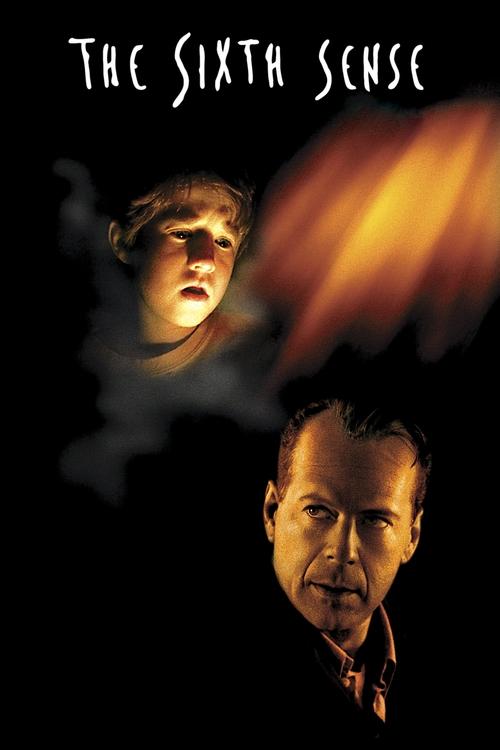
The Sixth Sense
A chilling psychological thriller where a child's terrifying secret becomes a spectral bridge between life and death, cloaked in an atmosphere of quiet dread and profound sorrow.
The Sixth Sense

The Sixth Sense

"Not every gift is a blessing."

06 August 1999 United States of America 107 min ⭐ 7.9 (12,305)
Director: M. Night Shyamalan
Cast: Bruce Willis, Haley Joel Osment, Toni Collette, Olivia Williams, Donnie Wahlberg
Drama Thriller Mystery
Communication and Isolation Fear and Acceptance Guilt and Redemption The Afterlife and Unfinished Business
Budget: $40,000,000
Box Office: $672,800,000

Overview

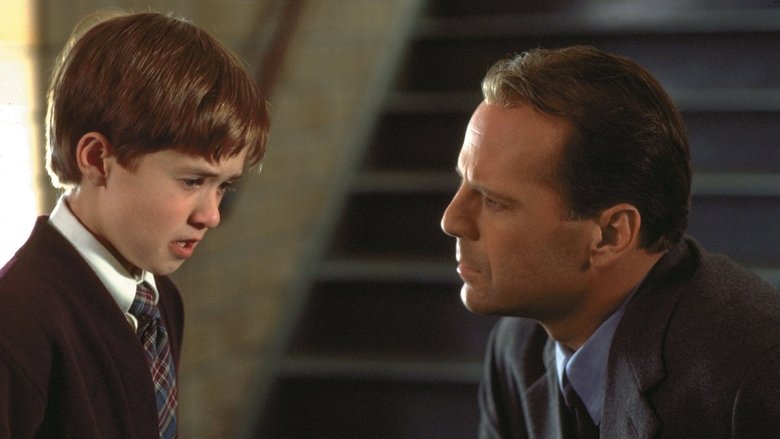
"The Sixth Sense" centers on Dr. Malcolm Crowe, a distinguished child psychologist in Philadelphia who is haunted by the violent suicide of a former patient he feels he failed. Months later, he takes on the case of nine-year-old Cole Sear, a withdrawn and frightened boy who reminds him of his past failure. Cole is socially isolated and harbors a terrifying secret: he can see and interact with the dead. The ghosts he encounters are often tormented and unaware that they have passed on, appearing to him with the injuries that caused their deaths.

Initially, Malcolm diagnoses Cole with a possible mood disorder or schizophrenia, but as their sessions continue, he begins to believe the boy's incredible claim. Malcolm suggests that Cole's purpose might be to help these spirits find peace by resolving their unfinished business on Earth. As Cole tentatively embraces this new perspective, he starts to use his ability to help others, transforming his fear into a sense of purpose. Meanwhile, Malcolm struggles with his own life; his relationship with his wife, Anna, has become cold and distant since the night of the attack, leaving him feeling isolated and heartbroken.
Core Meaning

The core meaning of "The Sixth Sense" revolves around the themes of communication, healing, and accepting unresolved trauma. The director, M. Night Shyamalan, explores the profound idea that the dead are not necessarily malevolent entities but lost souls seeking closure. The film suggests that fear often stems from misunderstanding, and true healing begins with listening and empathy. Cole's journey from terror to purpose illustrates that confronting our deepest fears can lead to profound growth. Furthermore, Malcolm's arc demonstrates the importance of letting go and finding peace, suggesting that both the living and the dead are bound by unresolved issues that can only be overcome through acknowledgment and communication. The film ultimately posits that connection and understanding are the bridges between worlds and the keys to resolving the pain that haunts us.

Thematic DNA

Communication and Isolation 35%
Fear and Acceptance 30%
Guilt and Redemption 25%
The Afterlife and Unfinished Business 10%

Communication and Isolation

The film is fundamentally about the difficulty of communication, both with the living and the dead. Cole is isolated by his terrifying secret, unable to tell his mother for fear she will see him as a 'freak'. Malcolm is similarly isolated from his wife, Anna; their conversations are non-existent, leaving him in a state of quiet despair. The ghosts themselves are trapped in a state of isolation, unable to communicate with the living except through Cole. The film's resolution hinges on breakthroughs in communication: Cole finally confides in his mother, and Malcolm finds a way to speak to his wife, bringing peace to them both.

Fear and Acceptance

Cole's primary struggle is overcoming the intense fear caused by his supernatural ability. The ghosts he sees are often frightening in their appearance and demeanor. Malcolm's crucial advice is for Cole to listen to them and understand their needs, suggesting that their purpose isn't to harm but to seek help. This shift in perspective allows Cole to move from a state of passive terror to active empathy. He learns to accept his role as a conduit, and in doing so, his fear diminishes, replaced by a sense of purpose and confidence.

Guilt and Redemption

Dr. Malcolm Crowe is driven by a deep sense of guilt over his failure to help a former patient, Vincent Grey, who had the same abilities as Cole. He sees his work with Cole as a chance for redemption, an opportunity to succeed where he once failed. This motivation is the central pillar of his character arc. The entire narrative is framed by his need to atone for his past mistakes, which he ultimately achieves by helping Cole accept his gift and find peace. His own resolution and ability to move on is directly tied to this act of redemption.

The Afterlife and Unfinished Business

The film presents a specific vision of the afterlife where spirits remain on Earth because of unresolved issues. They are not omniscient; as Cole explains, "They only see what they want to see. They don't know they're dead." These ghosts are trapped in a loop, seeking help to complete a final task or communicate a last message. Cole becomes their reluctant intermediary, helping a young girl expose her own murder and later, helping his own grandmother communicate with his mother. This theme underscores the idea that peace in death is contingent on finding closure for the life that was lived.

Character Analysis

Dr. Malcolm Crowe

Bruce Willis

Archetype: The Mentor / Wounded Healer
Key Trait: Devoted

Motivation

His primary motivation is to redeem his past failure with patient Vincent Grey by successfully helping Cole, a boy with similar afflictions. This professional goal is intertwined with a personal one: to reconnect with his distant wife, Anna, and repair their seemingly broken marriage.

Character Arc

Malcolm begins as a confident, celebrated psychologist who is shattered by a violent encounter with a former patient. Believing he is alive, his arc is one of redemption, as he channels his guilt into helping Cole Sear. He moves from clinical skepticism to belief and provides Cole with the tools to manage his fear. His journey culminates in the shocking realization that he has been dead all along, and his work with Cole was his own "unfinished business." He finds peace by helping Cole and finally communicating his love to his wife, allowing him to let go.

Cole Sear

Haley Joel Osment

Archetype: The Innocent / The Cursed
Key Trait: Sensitive

Motivation

Cole's initial motivation is simply to survive his terrifying encounters and stop being afraid. He also deeply desires to be seen as normal by his mother, whom he loves dearly and wishes not to frighten. As the film progresses, his motivation shifts toward helping the ghosts and, in turn, helping himself and Dr. Crowe.

Character Arc

Cole starts as a terrified, isolated, and bullied child, burdened by a secret that causes him immense psychological distress. Through his trust in Malcolm, he undergoes a significant transformation. He learns to reframe his "curse" as a gift, using it to help the spirits he once feared. His arc is a journey from victim to hero; he gains confidence, repairs his relationship with his mother by sharing his secret, and even helps his own therapist find peace.

Lynn Sear

Toni Collette

Archetype: The Caregiver
Key Trait: Protective

Motivation

Her motivation is entirely centered on her son's well-being. She wants to protect him, understand what is causing his suffering, and find a way to help him lead a happy, normal life. Her love for Cole is the unwavering core of her character.

Character Arc

Lynn is a single mother struggling to understand and connect with her troubled son. She is fiercely protective but also frustrated and frightened by Cole's behavior, which she cannot explain. Her arc is one of dawning belief. Initially, she suspects abuse or a psychological disorder, but in a pivotal, emotional scene in the car, she listens to Cole and accepts his incredible truth after he delivers a message from her deceased mother. This moment transforms their relationship from one of worried concern to one of profound understanding and acceptance.

Symbols & Motifs

The Color Red

Meaning:

The color red is a recurring visual motif that symbolizes the intersection of the physical world and the spirit world. It signals the presence of a ghost or a moment of intense supernatural activity.

Context:

Red appears consistently before a ghostly encounter: the red doorknob to Malcolm's locked basement, the red balloon at the birthday party, Anna's red throw blanket, the red tent where Cole sees the sick ghost of Kyra, and his mother's red sweater during the car accident scene. This subtle visual cue primes the audience for moments of fear and supernatural intrusion.

Cold Temperatures

Meaning:

A sudden drop in temperature, often made visible by the characters' breath, signifies that a ghost is nearby and is agitated or angry.

Context:

Cole explains this phenomenon to Malcolm directly. This is shown when ghosts appear in Cole's room, in the school, and most poignantly, at the end when Malcolm realizes his own state, and Anna's breath becomes visible in the cold air he has brought into the room. The physical cold mirrors the emotional chill of fear and grief.

Locked Doors

Meaning:

Locked doors, particularly the red-knobbed door to Malcolm's basement office, symbolize denial and the inability to see or accept the truth.

Context:

Malcolm repeatedly tries and fails to open his basement office door throughout the film, believing he has misplaced the key. In the final reveal, he discovers the door was never locked but was blocked by a large desk. Since he only sees the world as he remembers it from when he was alive, he could not perceive the change. The 'locked' door represents his own mental block against the truth of his death.

Wedding Rings

Meaning:

The wedding rings, or lack thereof, symbolize the state of Malcolm and Anna's relationship and ultimately, Malcolm's status as a ghost.

Context:

The final, undeniable clue for both Malcolm and the audience is when Anna drops his wedding ring, and he realizes he hasn't been wearing it. Throughout the film, Anna is seen wearing her ring, signifying her continued connection and grief, while Malcolm is without his. To hide this clue, Bruce Willis, who is left-handed, learned to write with his right hand for the role.

Memorable Quotes

I see dead people.

— Cole Sear

Context:

Spoken in a hushed, trembling whisper in the safety of his hospital room, Cole finally confides in Malcolm, trusting him with the secret that has been tormenting him. The camera famously focuses on Malcolm's stunned reaction, a shot the producer initially feared would give away the twist.

Meaning:

This is the film's most iconic line and the central reveal of Cole's secret to Malcolm. It encapsulates the film's premise and became a massive cultural catchphrase. The line's power lies in its simple, childlike delivery of a terrifyingly profound truth, instantly shifting the film from a psychological drama to a supernatural thriller.

They don't know they're dead. ... They only see what they want to see.

— Cole Sear

Context:

Cole explains the nature of the ghosts to Malcolm during one of their therapy sessions. He is describing his experiences and trying to make Malcolm understand the reality he lives with. The line is delivered matter-of-factly, adding to its chilling authenticity.

Meaning:

This line provides the crucial 'rules' of the film's supernatural world and is the most significant piece of foreshadowing for the final twist. It explains why the ghosts are trapped and, more importantly, provides the logic for why Malcolm is unaware of his own condition. He is unable to see the truth because he is subconsciously choosing not to.

You were never second, ever. I love you.

— Dr. Malcolm Crowe

Context:

After realizing he is dead, Malcolm sits by a sleeping Anna. Cole had advised him to speak to her while she's asleep so she can hear him without knowing it. He whispers this heartfelt confession, freeing himself and her from the unresolved pain that lingered between them.

Meaning:

This is Malcolm's final, cathartic message to his wife, Anna. It resolves his personal guilt and the central conflict in their perceived relationship. He addresses her fear that he always put his work before her, providing closure for both of them and allowing him to finally move on.

Do I make her proud?

— Lynn Sear

Context:

In the car, after Cole has told her his secret, he proves it by relaying a message from his grandmother. He tells Lynn that her mother saw her at a dance recital and that the answer to a question she once asked at the gravesite is "Every day." Lynn tearfully asks, "What did you ask?" before remembering and asking the question aloud, confirming the truth of Cole's ability and providing a deeply emotional reconciliation.

Meaning:

This question reveals the deep-seated insecurity Lynn feels as a single mother and her longing for her own deceased mother's approval. It's a powerfully humanizing moment that adds emotional depth to her character.

Philosophical Questions

What is the nature of reality and perception?

The film fundamentally questions objective reality by presenting a world where one person's perception (Cole's) includes an entire layer of existence invisible to others. The twist ending forces the audience to re-evaluate their own perception of the entire film. Malcolm's story explores the idea that reality is subjective; he lives in a self-constructed reality based on denial and memory, unable to perceive the changes in the world around him because he only sees what he wants to see. This raises questions about how much of our own reality is shaped by our beliefs, fears, and unwillingness to accept painful truths.

What is our responsibility to the dead, and to the grieving?

"The Sixth Sense" proposes that the living have a continuing connection and responsibility to the dead. Cole's journey suggests a moral imperative to listen to the unresolved pain of those who have passed and to help them find closure. Simultaneously, the film explores the process of grief through Anna's character. Malcolm's final act is one of easing his wife's grief by giving her the closure she needs to move on. The film posits that death does not sever connection and that communication, even one-sided, is essential for both the dead to find peace and the living to heal.

How do we overcome fear of the unknown?

The film is a powerful exploration of fear, particularly the fear of what we don't understand. Cole is initially paralyzed by his encounters with the supernatural. The turning point is not the elimination of the ghosts, but a change in his approach to them. By choosing to listen instead of run, and to empathize instead of panic, he transforms the unknown from a source of terror into an opportunity for connection and purpose. The film argues that understanding and empathy are the most powerful tools for conquering fear.

Alternative Interpretations

While the film's primary interpretation is straightforward, some discussions and alternative readings have emerged among viewers:

  • Malcolm as a Figment of Cole's Imagination: An alternative, though less supported, theory posits that Malcolm is not a ghost but a psychological manifestation created by Cole to cope with his trauma and abilities. In this reading, Malcolm represents the father figure Cole lacks and the guide he desperately needs. Their conversations are internal, and Malcolm's 'story' with his wife is a projection of Cole's own feelings of isolation and desire for familial connection. This interpretation downplays the supernatural twist in favor of a purely psychological one, but it struggles to account for the opening scene depicting Malcolm's shooting.
  • Religious and Spiritual Allegory: The film can be viewed through a spiritual or religious lens, where Cole is a prophet-like figure or a reluctant saint chosen to be a conduit between worlds. His journey is one of accepting a divine or spiritual calling. Malcolm, in this interpretation, acts as a guardian angel or spirit guide, sent to help Cole embrace his purpose. The ghosts are akin to souls in purgatory, seeking absolution or peace before they can move on. The film's themes of redemption and finding peace align well with many religious doctrines concerning the afterlife.

Cultural Impact

"The Sixth Sense" was a sleeper hit that became a cultural phenomenon upon its release in 1999. It defied genre classifications, blending psychological drama with supernatural horror in a way that appealed to a massive mainstream audience. The film's staggering box office success, becoming the second-highest-grossing film of 1999, catapulted writer-director M. Night Shyamalan to international fame, establishing him as a master of suspense and the plot twist. His name became synonymous with surprise endings, a reputation that has defined his entire subsequent career.

The film's reception was overwhelmingly positive from both critics and audiences, leading to six Academy Award nominations, including Best Picture, a rare feat for a horror film. Haley Joel Osment's performance was particularly lauded, earning him a Best Supporting Actor nomination. The phrase "I see dead people" instantly entered the pop culture lexicon, becoming one of the most famous and frequently parodied movie lines in history. Its influence can be seen in numerous subsequent films and television shows that adopted its quiet, atmospheric tone and reliance on a major third-act reveal. The film revitalized the ghost story genre, proving that horror could be emotionally resonant and character-driven, paving the way for a new wave of thoughtful, psychological horror.

Audience Reception

Audience reception for "The Sixth Sense" was overwhelmingly positive, and the film became a word-of-mouth sensation. Viewers were captivated by its unique blend of heartfelt drama, genuine suspense, and psychological depth. The performances of Bruce Willis, in a rare subdued role, and especially the young Haley Joel Osment were universally praised. The most discussed aspect was, without a doubt, the shocking twist ending. It was a masterfully executed reveal that sent audiences reeling and prompted immediate repeat viewings to spot the clues they had missed. The film was lauded for being smart, emotionally resonant, and genuinely scary without relying on gore. Criticism was minimal, though some found the pacing to be slow. Overall, audiences embraced it as a modern classic, a film that was both a terrifying ghost story and a moving tale of human connection and healing.

Interesting Facts

  • Bruce Willis took the role as part of a two-film settlement with Disney after a previous film he was involved in, "The Broadway Brawler", was shut down.
  • Donnie Wahlberg, who played the disturbed former patient Vincent Grey, lost 43 pounds for the role to achieve a gaunt, unrecognizable look.
  • The icy breath seen when ghosts are present was not CGI. The crew achieved the effect by building enclosures on set and pumping in freezing cold air.
  • M. Night Shyamalan has a cameo in the film as Dr. Hill, the doctor whom Cole's mother consults about potential child abuse.
  • Actor Michael Cera auditioned for the role of Cole Sear but played the scene in an upbeat manner, which was not the tone the director was looking for.
  • Toni Collette had a shaved head from a previous role when she auditioned and wore a wig throughout the filming of "The Sixth Sense".
  • The film was released on director M. Night Shyamalan's 29th birthday, August 6, 1999.
  • Until the release of "It" (2017), "The Sixth Sense" was the highest-grossing horror film of all time.
  • Bruce Willis is left-handed but learned to write and draw with his right hand for the film to avoid drawing the audience's attention to the fact that his character was not wearing a wedding ring on his left hand.
  • The vomit used by Mischa Barton, who played the ghost of Kyra Collins, was a mixture of breakfast cereal.

Easter Eggs

Malcolm Crowe wears slight variations of the same outfit he was wearing on the night he was shot throughout the entire film.

This serves as a subtle, constant clue that he is a ghost, stuck in the moment of his death. The outfit consists of the same blue dress shirt, grey waistcoat, and trousers. The bloodstain from his fatal wound is also present, though only Cole can see it, explaining the boy's initial terror of him.

On a Collector's Edition DVD, a hidden clip of another early horror film by M. Night Shyamalan can be found.

This is a classic DVD-era easter egg. By navigating to a specific hidden spot in the bonus features menu, viewers can access a clip from one of the director's much earlier, amateur films.

During the dinner scene between Malcolm and Anna, a microphone cord is briefly visible through Malcolm's shirt.

While likely an unintentional production error (a 'blooper'), some fans have retrospectively interpreted this as a symbolic detail. Since only Cole can truly 'hear' Malcolm, the visible microphone could be seen as a metaphorical hint about the nature of his communication and existence.

⚠️ Spoiler Analysis

Click to reveal detailed analysis with spoilers

Frequently Asked Questions

Explore More About This Movie

Dive deeper into specific aspects of the movie with our detailed analysis pages

Comments (0)

Leave a comment

No comments yet. Be the first to share your thoughts!