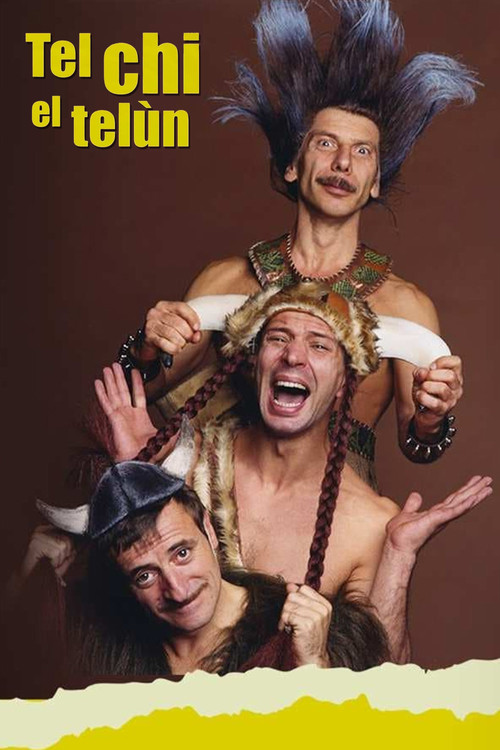
Tel chi el telùn
Overview
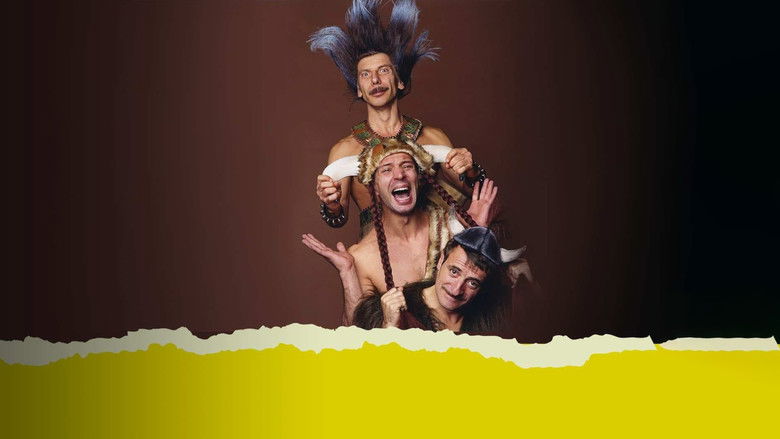
Tel chi el telùn (a Milanese dialect phrase meaning "Here is the big top/curtain") is not a film but a celebrated 1999 theatrical show by the Italian comedy trio Aldo, Giovanni & Giacomo, directed by the renowned transformist Arturo Brachetti. Conceived from the start with a television broadcast in mind, the show was performed for two months in a specially constructed mega tent-structure in Milan before being aired as a three-part special on Canale 5. The name itself is a pun on the phrase "tel chi el terùn" ("here is the southerner"), playfully referencing the trio's own composition of two northern Italians and one southerner (Aldo Baglio).
The show is structured as a collection of comedic sketches, mixing some of the trio's most famous routines with new material. It functions as a variety show, featuring musical interludes by the swing band The Good Fellas, and guest appearances by other prominent Italian comedians like Corrado Guzzanti, Antonio Cornacchione, and Fichi d'India. Accompanied by their frequent collaborator Marina Massironi, the trio cycles through a gallery of absurd characters: from incompetent surgeons and bumbling police cadets to prehistoric men communicating with a bizarre deity and parody versions of secret agents in a Mission: Impossible spoof. The comedy is highly physical, relying on impeccable timing, mime, and the distinct personas of the three leads.
Core Meaning
The core meaning of Tel chi el telùn lies in its celebration of pure, unadulterated comedic performance. Directed by Arturo Brachetti, the show is a masterclass in theatrical comedy, blending the traditions of Italian avanspettacolo (vaudeville) and clowning with modern satire. The central message is the power of laughter to dissect and poke fun at everyday life, social norms, and cultural stereotypes. The show critiques and parodies various genres from mythology and medical dramas to police procedurals and spy films, all filtered through the trio's signature surreal and slightly melancholic lens. It's a testament to their dynamic as a comedic group, highlighting their distinct character archetypes and their ability to find humor in the absurdities of human interaction and the friction between Northern and Southern Italian cultures.
Thematic DNA
Parody and Satire
A primary theme is the parody of popular culture, particularly film and television genres. Sketches like the 'Busto Garolfo Cops' mock American police training scenes, 'I tre medici' satirizes medical dramas like E.R., and the opening sketch parodies spy thrillers like Mission: Impossible. This allows the trio to deconstruct familiar tropes and find humor in their absurdity when placed in a mundane Italian context.
The Clash of Cultures
The very title is a pun on North-South Italian stereotypes ('telùn' vs 'terùn'). This theme runs through much of their work. Aldo's Sicilian character is often pitted against the Northern sensibilities of Giovanni and Giacomo. Sketches like 'Scuola di Siciliano' directly play on linguistic and cultural differences, turning them into a source of surreal and universally understood comedy rather than division.
Friendship and Group Dynamics
The show constantly plays with the established on-stage personas of the trio: Aldo the naive, chaotic simpleton; Giovanni the pedantic, easily irritated leader; and Giacomo the fussy, intellectual foil. Their interactions, arguments, and reconciliations in sketches like 'Il viaggio' (The Trip) or the 'Le poesie' finale explore the humorous frictions and underlying affection of their long-standing friendship.
The Absurdity of the Everyday
Many sketches take a mundane situation—a traffic stop ('Ajeje Brazorf'), a road trip, or a poetry reading—and escalate it to a point of complete absurdity. This highlights the trio's ability to find the surreal in the ordinary, transforming simple interactions into chaotic and hilarious scenarios through misunderstandings, physical comedy, and bizarre logic.
Character Analysis
Aldo
Aldo Baglio
Motivation
His primary motivation is usually a simple, childlike desire (e.g., eating, avoiding trouble, expressing a bizarre idea) that clashes with the more complex or rigid intentions of his companions. He is often the catalyst for the sketch's escalation into absurdity.
Character Arc
Aldo's character does not have a traditional arc but serves as a consistent comedic engine. He is the embodiment of joyful chaos and misunderstanding. Whether as a prehistoric 'Eletto' speaking to the god Pdor or a dim-witted police cadet, his role is to derail the 'normal' plans of Giovanni and Giacomo with his surreal logic and physical blunders.
Giovanni
Giovanni Storti
Motivation
He is driven by a need for order, precision, and control. Whether he is directing a mission, teaching a class, or simply trying to get to a destination on time, his goal is to execute a plan, which is invariably doomed to fail.
Character Arc
Giovanni consistently plays the role of the group's self-appointed leader who desperately tries to maintain order but is constantly undermined by Aldo's chaos and Giacomo's sarcasm. His character's journey within each sketch is a descent from confident authority into exasperated fury. He represents the futile attempt to impose logic on an illogical world.
Giacomo
Giacomo Poretti
Motivation
His motivation is often self-preservation and the desire to remain detached from the unfolding insanity. He seeks intellectual superiority and is pained by the incompetence surrounding him, which is the source of his comedy.
Character Arc
Giacomo is the critical, often cynical, voice of reason. He is more of an observer than Giovanni, quick with a sarcastic comment or a pained expression. His character arc within sketches often involves him being reluctantly dragged into Aldo and Giovanni's madness, providing commentary from the sidelines before inevitably succumbing to the chaos.
Marina
Marina Massironi
Motivation
Her motivation varies by sketch. Often, she is trying to accomplish a simple, serious task (like reciting poetry or singing a song) in a world dominated by the trio's man-child antics, serving as the perfect foil to their chaotic energy.
Character Arc
Marina Massironi acts as the versatile fourth pillar. She can be the straight woman reacting to the trio's absurdity, the object of their misguided attention, or a comedic character in her own right. Her role in sketches like 'Le poesie' showcases her as an artist whose serious intentions are hilariously sabotaged by the trio's childishness.
Symbols & Motifs
The Subaru Baracca
The dilapidated Subaru, nicknamed 'Baracca' (shack), symbolizes the chaotic and dysfunctional nature of the trio's journeys and, by extension, their relationships. It's a vessel for their misadventures, a confined space where their conflicting personalities inevitably clash.
Featured prominently in the famous 'Il viaggio' sketch, where a simple trip to a wedding becomes an odyssey of arguments, bizarre stops, and misunderstandings. The car itself is a recurring element in their work, also appearing in their films.
The 'Telone' (The Big Top/Curtain)
The title's 'telone' literally refers to the massive tent where the show was performed, but it also symbolizes the world of theater, circus, and performance itself. It frames the entire production as a self-conscious piece of entertainment, breaking the fourth wall from the very beginning.
The show was physically staged in a giant tent structure in Milan. The opening sequence is a cinematic gag about the trio trying to reach the tent, culminating in them literally stepping out of a screen and onto the stage.
Shadows
The use of shadow puppetry symbolizes the creative process and the hidden effort behind the performance. It playfully reveals the 'magic' of the theater, showing the clumsy reality that creates the polished illusion.
In one sketch, the trio performs a piece using shadows, which is then followed by a behind-the-scenes look at how the chaotic and argumentative 'real' trio created the effects. This meta-comedic act peels back a layer of the performance.
Memorable Quotes
Io sono Pdor, figlio di Kmer, della tribù di Istar!
— Pdor (Voiced by Giovanni)
Context:
The sketch features a prehistoric man named 'L'Eletto' (The Chosen One, played by Aldo) trying to chisel the sacred words of the booming, unseen god Pdor onto stone tablets, constantly interrupted by his annoying son (Giacomo).
Meaning:
This is the opening line of the iconic 'Pdor' sketch. It establishes the ridiculous, over-the-top grandeur of a fictional deity who tasks a caveman (Aldo) with an impossible mission. The quote's humor comes from its bombastic, mythological tone clashing with the mundane and idiotic behavior of the characters. It has become one of the trio's most famous catchphrases.
Ma va là, va là, va là!
— Giovanni
Context:
This quote is used in numerous sketches, often as a punchline to a frustrating exchange. A notable example is in the 'Scuola di Siciliano' sketch, where it's humorously 'translated' into English as "Let's go, let's go, let's go!".
Meaning:
A quintessential Milanese phrase of dismissal, roughly translating to "Oh, get out of here!" or "Come on!". Giovanni uses it frequently to express his extreme exasperation with Aldo's or Giacomo's nonsense. It perfectly encapsulates his character's perpetually stressed and irritable nature.
Comunque, questo biglietto è pluritimbrato.
— Giovanni (as the Ticket Inspector)
Context:
From the famous 'Il Controllore' sketch, where a hapless passenger, Ajeje Brazorf (Aldo), is caught without a ticket by a persistent inspector (Giovanni) and an interfering old man (Giacomo).
Meaning:
"In any case, this ticket has been stamped multiple times." This line, delivered with bureaucratic finality, is the punchline to a long, drawn-out confrontation where Aldo (as the passenger Ajeje Brazorf) tries every excuse to avoid showing his ticket. The humor lies in the mundane reality of the fine after such an epic, evasive performance.
Cultural Impact
Tel chi el telùn solidified Aldo, Giovanni & Giacomo's status as superstars of Italian comedy at the turn of the millennium. Coming after the massive success of their first two films, the show marked a triumphant return to their theatrical roots, demonstrating that their comedic prowess was not limited to cinema or television sketches on shows like Mai Dire Gol. The show was a ratings blockbuster, achieving a share of up to 50%, a number comparable to the Sanremo Music Festival, proving the massive appeal of theatrical comedy on prime-time television.
Many sketches from the show have become legendary in Italian pop culture. Phrases like "Io sono Pdor!" have entered the common lexicon. The characters of Ajeje Brazorf, the Busto Garolfo Cops, and the dysfunctional surgeons are instantly recognizable to generations of Italians. The show's success contributed to a resurgence of variety and sketch comedy on Italian television. It demonstrated a successful model of a multimedia comedy project: born in the theater, broadcast on TV, and immortalized on DVD. The live performance aspect, complete with a swing band and guest stars, harked back to the golden age of Italian variety shows while feeling fresh and modern, influencing subsequent comedy productions in Italy.
Audience Reception
Audience reception for Tel chi el telùn was overwhelmingly positive, both for the live theatrical run and the subsequent television broadcast and DVD release. The live show consistently sold out its 2000-seat venue in Milan for two months. When it aired on Canale 5, it achieved massive ratings, cementing the trio's popularity nationwide. Audiences praised the perfect blend of familiar, beloved sketches with new, inventive material. The high-energy, physical comedy and the impeccable timing of the trio were universally lauded. Sketches like 'Pdor,' 'Ajeje Brazorf,' and 'I Chirurghi' were particular fan favorites and are still widely shared and quoted decades later. The inclusion of Marina Massironi and the live music from The Good Fellas were also seen as major strengths, adding variety and a classy, retro feel to the production. There is virtually no record of significant criticism from the audience; the show is remembered as a high point in the trio's career and a classic of modern Italian comedy.
Interesting Facts
- The title "Tel chi el telùn" is a pun on the Milanese dialect phrase "Tel chi el terùn," which means "Here's the southerner," a playful jab at Aldo Baglio's Sicilian origins.
- The show was not performed in a traditional theater but in a massive, custom-built tent structure (a 'mega tenso-struttura') set up near the Garibaldi station in Milan, which ran for two months to sold-out crowds.
- The theatrical direction was handled by Arturo Brachetti, a world-famous Italian quick-change artist and director, known for his highly visual and imaginative style.
- The television broadcast was directed by Egidio Romio.
- The show was designed from the outset to be a television event, which was a different approach from their previous show, 'I Corti,' which was adapted for TV later.
- The version released on DVD contains a sketch that was cut from the television broadcast, where the trio humorously punishes an audience member whose phone rings during the show.
- Many famous sketches from the show, like 'Il Viaggio' and 'Il Controllore,' are expanded versions of scenes that originally appeared in their films 'Tre uomini e una gamba' and 'Così è la vita'.
⚠️ Spoiler Analysis
Click to reveal detailed analysis with spoilers
Frequently Asked Questions
Explore More About This Movie
Dive deeper into specific aspects of the movie with our detailed analysis pages
Comments (0)
No comments yet. Be the first to share your thoughts!