Skip to content
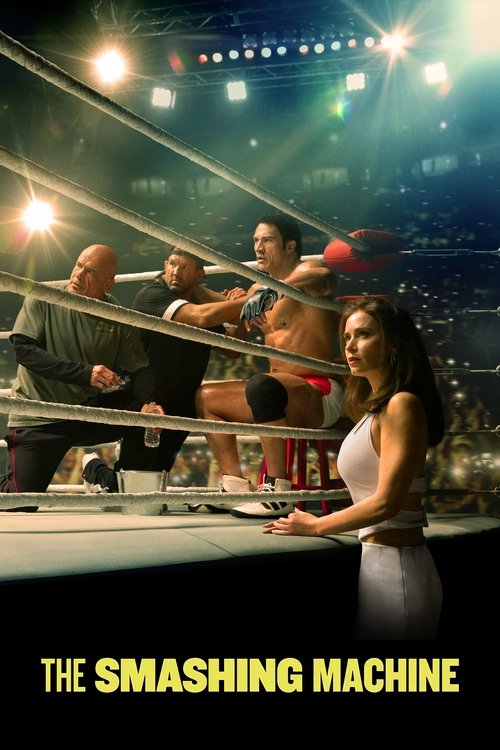
The Smashing Machine
A raw, melancholic biographical drama charting a hulking fighter's inward collapse as his armor of muscle and painkillers cracks to reveal a fragile human core.
The Smashing Machine

The Smashing Machine

"The unforgettable true story of a UFC legend."

01 October 2025 United States of America 123 min 6.4 (690)

Director: Benny Safdie

Cast: Dwayne Johnson, Emily Blunt, Ryan Bader, Bas Rutten, Oleksandr Usyk

Drama History Action Addiction, Physical Pain, and Chemical Coping Deconstruction of Masculine Invincibility Codependency and Fractured Domesticity Brotherhood, Mentorship, and Isolation
Budget: $50,000,000
Box Office: $21,133,481

Overview

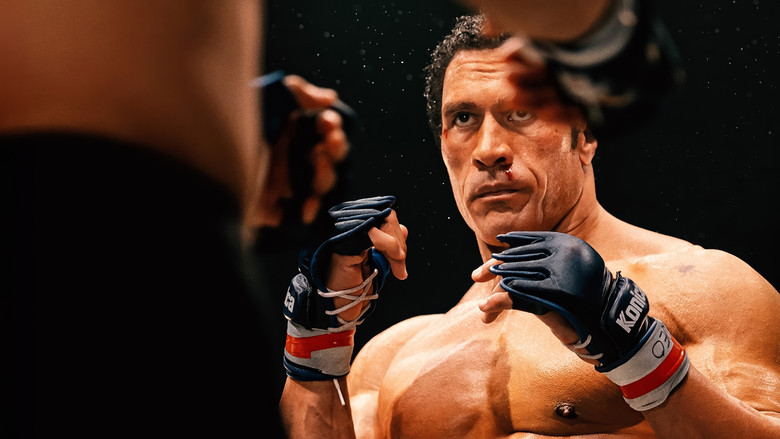
Set in the raw, unregulated dawn of modern mixed martial arts between 1997 and 2000, The Smashing Machine chronicles the rise, unraveling, and quiet reckoning of real-life heavyweight wrestler and early Ultimate Fighting Championship (UFC) and PRIDE FC standout Mark Kerr. Revered as an unstoppable force inside the ring, Kerr dominates early no-holds-barred tournaments across the globe, earning the moniker that defines his brutal fighting style.

Beneath his intimidating physical stature, Kerr is a soft-spoken, gentle man bearing the excruciating physical toll of professional combat. To withstand grueling injuries and sustain championship-level performance, Kerr drifts into an escalating dependence on prescription opioids. His escalating chemical reliance places a severe strain on his volatile, codependent relationship with his long-term partner, Dawn Staples, as well as his close bond with his trainer and fellow fighter Mark Coleman.

As Kerr heads to Tokyo for high-stakes PRIDE tournaments against lethal international opponents, the pressure of maintaining an undefeated record threatens to shatter his physical body and psychological stability. Director Benny Safdie eschews the standard triumphant sports movie formula to deliver an intimate, observational character study examining the quiet loneliness of athletic devotion, addiction, and emotional survival.
Core Meaning

Benny Safdie’s central premise deconstructs the traditional myth of masculine invulnerability and sports glory. Rather than presenting victory inside the ring as the ultimate redemption, the film demonstrates that true liberation comes from embracing vulnerability, confronting addiction, and learning how to lose without surrendering one’s self-worth. Safdie strips away the spectacle of violence to expose combat sports as an exhausting trade where athletes mortgage their physical bodies and mental well-being for fleeting public adoration.

Thematic DNA

Addiction, Physical Pain, and Chemical Coping 35%
Deconstruction of Masculine Invincibility 25%
Codependency and Fractured Domesticity 20%
Brotherhood, Mentorship, and Isolation 20%

Addiction, Physical Pain, and Chemical Coping

The narrative highlights the hidden epidemic of pharmaceutical reliance in early no-rules combat sports. Kerr turns to painkillers to mask physical trauma, but chemical numbness becomes an emotional shield that detaches him from reality.

Deconstruction of Masculine Invincibility

Through Kerr’s quiet persona and subsequent losses, the film explores the mismatch between an athlete’s public persona as an unstoppable machine and his private vulnerability as an ordinary man grappling with self-doubt.

Codependency and Fractured Domesticity

The toxic, volatile dynamic between Mark and Dawn explores how unresolved trauma and substance abuse erode romantic intimacy, revealing how partners of fighters bear their own profound emotional scars.

Brotherhood, Mentorship, and Isolation

Kerr’s relationship with Mark Coleman depicts the fragile camaraderie of fighters who serve as confidants, cornermen, and competitors, balancing mutual loyalty with the solitary burden of stepping into the cage alone.

Character Analysis

Mark Kerr

Dwayne Johnson

Archetype: Tragic Antihero / Reluctant Gladiator Key Trait: Soft-spoken gentleness masked beneath an imposing, monolithic physique.

Motivation

To maintain his championship status, provide financial security, and escape persistent physical and emotional pain.

Character Arc

Transitions from an undefeated, chemically numbed heavyweight champion to a broken, hospitalized addict, ultimately finding peace through sobriety and accepting defeat.

Dawn Staples

Emily Blunt

Archetype: The Catalyst / Volatile Companion Key Trait: Fierce, turbulent emotional honesty.

Motivation

To find stability and emotional reciprocity in an erratic athletic lifestyle.

Character Arc

Shifts from a supportive partner in Kerr’s corner to an alienated, frustrated lover alienated by his addiction and emotional withdrawal.

All 5 characters and cast

Symbols & Motifs

The Ropes and Cage Barriers

Meaning:

Visually imprisons Mark within the spectacle of combat, reinforcing his alienation and separation from ordinary human connection.

Context:

Employed during fight sequences where camera angles are deliberately positioned behind cage meshes or ring ropes.

The Hypodermic Needle and Pill Bottles

Meaning:

Represents both temporary relief from physical agony and progressive bodily and psychological degradation.

Context:

Framed repeatedly in mundane bathroom settings, demonstrating how clinical trauma and chemical dependence infiltrate domestic life.

The Japanese Stadium Arenas (PRIDE FC)

Meaning:

Symbolizes how commercial sports spectacle swallows human pain and dwarfs the individual athlete.

Context:

Cavernous, roaring Tokyo stadiums that contrast starkly with Kerr's profound, quiet isolation in backstage locker rooms.

Mark’s Altered Physical Reflection

Meaning:

Reflects Mark's diminishing grip on his core identity as his body suffers the consequences of brutal violence.

Context:

Captured in locker room and hotel mirrors, showcasing swelling, scar tissue, and an altered facial structure.

Memorable Quotes

You don't know a thing about me!
— Dawn Staples (Emily Blunt)

Context

Shouted during a heated mid-film domestic argument with Mark.

Meaning

Underscores the deep emotional chasm between the two characters, revealing that Mark’s inward withdrawal and addiction keep him fundamentally detached from his partner.

In the end, you realize that true self-acceptance — and being at peace with who you are — is often life's biggest win.
— Mark Kerr / Dwayne Johnson

Context

Reflected during the film's climactic thematic resolution.

Meaning

Represents the core thematic shift from an obsession with invulnerability and victory to finding peace beyond the championship ring.

All 3 quotes

Philosophical Questions

What is the true cost of invulnerability?

The film demonstrates that striving to be indestructible in public requires suppressing physical pain and emotional truth, which ultimately destroys the self.

Can an identity built solely on physical dominance survive athletic decline?

Kerr must confront who he is once his undefeated status evaporates and his physical tools fail him.

Is survival a greater victory than winning?

The narrative shifts the definition of athletic victory from championship belts to overcoming personal demons and choosing sobriety.

Alternative Interpretations

The film can be interpreted through multiple lenses:

  • The Deconstructed Anti-Biopic: Viewed as an intentional subversion of the sports genre that rejects triumphant climaxes to highlight the unglamorous mechanics of burnout and physical decay.
  • The Psychological Tragedy of Codependency: Interpreted as a domestic tragedy where ring violence acts as an outward symptom of Mark and Dawn’s fractured home life and emotional avoidance.
  • The Ambiguous Epilogue: The grounded, non-triumphant ending is read either as an empowering victory of self-acceptance or as a somber look at an athlete facing the quiet void after athletic glory.

Full ending explanation

Cultural Impact

The Smashing Machine captures mixed martial arts during its formative, controversial era (1997–2000), before corporate sanctioning and modern athletic regulations transformed the sport. Premiering at the Venice Film Festival to praise for Safdie's direction and Johnson's vulnerable performance, the film stood out against typical sports cinema. Produced for $50 million by A24 and Seven Bucks Productions, it grossed $21.1 million globally, underperforming commercially due to its somber arthouse tone contrasting with standard sports action blockbusters.

Audience Reception

Audiences and critics widely praised Dwayne Johnson’s career-best dramatic acting, Emily Blunt’s visceral performance, Kazu Hiro’s seamless makeup effects, and Benny Safdie’s disciplined, patient direction. Criticisms centered on a deliberately sparse screenplay that omits conventional biographical backstory, slower pacing, and an anticlimactic narrative resolution that left some traditional sports film fans disconnected. Overall, it was received as a gritty, idiosyncratic, and poignant sports drama that prioritizes human vulnerability over genre clichés.

Interesting Facts

  • Benny Safdie’s first solo narrative directorial feature without his brother Josh Safdie following their creative separation.
  • A dramatized adaptation of John Hyams’s 2002 HBO documentary of the same name, with Hyams serving as a producer.
  • Held its world premiere at the 82nd Venice International Film Festival on September 1, 2025, where Benny Safdie won the Silver Lion for Best Director.
  • Dwayne Johnson underwent an extensive physical transformation created by prosthetics designer Kazu Hiro, earning an Oscar nomination for Best Makeup and Hairstyling.
  • Professional fighters Ryan Bader, Oleksandr Usyk, and Bas Rutten were cast in prominent roles.
  • Reunited Dwayne Johnson and Emily Blunt in dramatic territory after previously collaborating on the Disney adventure film Jungle Cruise.
  • Features an atmospheric, ambient, and jazz-infused musical score composed by experimental musician Nala Sinephro.

Easter Eggs

1990s Vale Tudo & PRIDE Archival Aesthetic

The opening sequence set in São Paulo in 1997 utilizes era-accurate video textures and color grading to mirror raw VHS tapes, paying homage to John Hyams’s original 2002 documentary.

Meta-Casting of Dwayne Johnson

Johnson’s real-world history as a professional wrestling icon and action movie superstar is deliberately subverted by Safdie to comment on the psychological toll behind hyper-masculine personas.

MMA Pioneer Cameos

Bas Rutten appearing alongside real MMA luminaries recreates the authentic locker room atmosphere from the golden era of PRIDE FC.

Frequently Asked Questions

Explore More About This Movie

Dive deeper into specific aspects of the movie with our detailed analysis pages

Comments (0)

Leave a comment

No comments yet. Be the first to share your thoughts!

Similar Movies