Skip to content
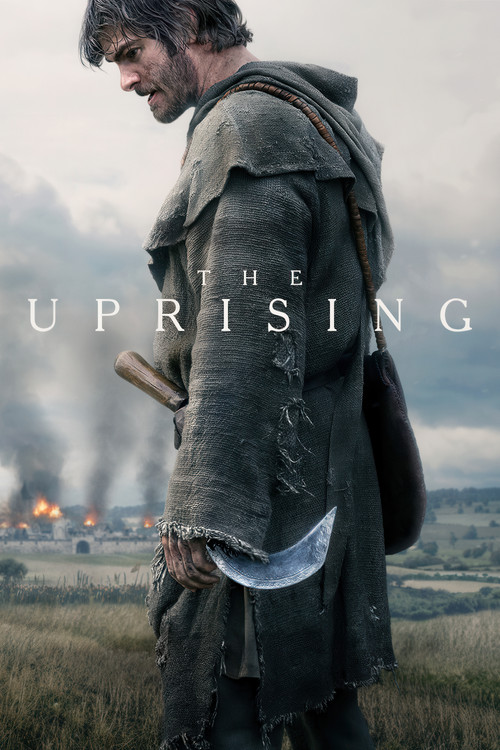
The Uprising
A visceral historical drama steeped in raw grief and collective fury, where bloodstained soil and rain-drenched fens mirror the desperate breaking point of an exploited populace.
The Uprising

The Uprising

"Rise or die."

10 September 2026 Germany 128 min 8.0 (216)

Director: Paul Greengrass

Cast: Andrew Garfield, Jamie Bell, Stephen Dillane, Woody Norman, Tom Hollander

Drama History Action Class Warfare and Oligarchical Exploitation Post-Pandemic Social Awakening Private Grief Transformed into Collective Defiance The Enduring Legacy of Resistance
Budget: $20,000,000
Box Office: $8,079,597

Overview

Set in fourteenth-century England against the grim aftermath of the Black Death, the film follows a grieving Essex farmer identified simply as Ploughman. Having lost his entire family to the plague, he endures a life stripped to relentless physical labor. His fragile survival is shattered when the Crown, desperate to finance endless foreign wars, imposes an extortionate poll tax enforced by ruthless bailiffs.

When royal collectors arrive in his village to violently seize grain and assault local women, Ploughman is pushed past endurance and strikes back. His act of defiance ignites smoldering resentment across the countryside, drawing him into an alliance with the radical reformist priest John Ball and the hardened military veteran Wat Tyler. Together, they mobilize tens of thousands of impoverished rural workers into an unprecedented march on London.

Converging on the capital, the rebel multitude demands the abolition of serfdom and an audience with the fourteen-year-old King Richard II. As peasant fury breaches the corridors of aristocratic authority, the rebellion exposes the deep divide between an unyielding feudal hierarchy and a workforce demanding the recognition of their fundamental humanity.

Core Meaning

At its core, The Uprising is a searing examination of the moment when ordinary, expendable people reclaim their dignity and agency against an oligarchy hoarding wealth and power. Director Paul Greengrass uses the 1381 Peasants' Revolt to illustrate how global catastrophe strips bare social inequities, exposing the fragility of authoritarian rule.

The film contends that while uprisings may suffer immediate, brutal suppression, the spirit of resistance creates an enduring precedent that permanently shatters the illusion of unquestioned subservience.

Thematic DNA

Class Warfare and Oligarchical Exploitation 35%
Post-Pandemic Social Awakening 25%
Private Grief Transformed into Collective Defiance 25%
The Enduring Legacy of Resistance 15%

Class Warfare and Oligarchical Exploitation

The narrative exposes how entrenched rulers choose to extract wealth from the impoverished commoners rather than tax the aristocracy or commercial elites, depicting a corrupt economic framework designed solely to protect the status quo.

Post-Pandemic Social Awakening

Set in the vacuum left by the Black Death, the film depicts how widespread death destabilized feudal subservience, leading common laborers to recognize the irreplaceable value of their own labor and demand equity.

Private Grief Transformed into Collective Defiance

Ploughman's personal devastation over the loss of his family is channeled into a shared struggle, demonstrating that collective political movements often originate from individual pain that can no longer be contained.

The Enduring Legacy of Resistance

Even when military might breaks the rebellion, the film emphasizes that the act of challenging sovereign power creates a folkloric memory of defiance that future generations inherit.

Character Analysis

Ploughman

Andrew Garfield

Archetype: Reluctant Hero / Folk Champion Key Trait: Soulful stoicism masking fierce protective fury

Motivation

Initially motivated by an impulse to protect fellow villagers from abuse, which evolves into an unyielding drive to demand human dignity and accountability from the Crown.

Character Arc

Transitions from an emotionally deadened, grieving farmer focused solely on physical survival into a charismatic insurgent leader who eventually embraces a shadowy, mythical mantle of resistance.

John Ball

Jamie Bell

Archetype: Radical Prophet / Ideologue Key Trait: Fiery rhetorical conviction and unwavering faith

Motivation

To dismantle clerical corruption and feudal hierarchy in favor of a Christian commonwealth where all individuals are born equal.

Character Arc

Serves as the philosophical engine of the rebellion, preaching radical spiritual egalitarianism and providing moral legitimacy to the peasants' demand for systemic liberation.

All 5 characters and cast

Symbols & Motifs

The Three Wooden Crosses

Meaning:

Symbolizes the ubiquitous grief of the post-plague world and the quiet void driving Ploughman's emotional despair.

Context:

Erected beside Ploughman's humble cottage, marking the muddy burial ground of his wife and children.

those crosses serve as a constant reminder of everything he has already lost to fate before facing tyranny.

The Wooden Plough and Mud

Meaning:

Represents the relentless physical servitude of serfdom and the commoners' profound connection to the English earth.

Context:

Featured heavily during the opening sequences as Ploughman struggles behind an ox through bleak fenland furrows.

The Green Hood

Meaning:

Signifies rebirth into mythic defiance and the shift from defenseless agricultural labor to guerrilla rebellion against feudal injustice.

Context:

Donned by Ploughman in the final forest ambush sequence as he takes to the woods as a shadowed insurgent.

The Tax Rolls and Charters

Meaning:

Represents the bureaucratic instruments of legal enslavement used by feudal masters to fix wages and tie peasants to bondage.

Context:

Cast into flames by the insurgents as they take the streets of London and ransack administrative strongholds.

Memorable Quotes

All will be well when the poison of wealth is removed.
— John Ball

Context

Delivered by John Ball while preaching to gathered throngs of rebels as they mobilize for the march on London.

Meaning

Captures the fundamental socio-economic and theological message of the revolt, decrying systemic greed as the primary barrier to communal justice.

If we tax the merchants, they will expect a seat at the table… So we have no choice! We must tax the common man.
— Sir Robert Hales

Context

Spoken in royal council chambers while persuading advisors to levy another poll tax on the peasantry.

Meaning

Candidly articulates how political systems preserve power monopolies by shielding moneyed interests and burdening disenfranchised laborers instead.

All 4 quotes

Philosophical Questions

Can genuine systemic equality ever be negotiated with entrenched institutional power?

The narrative explores this through the tragic summit at Smithfield, where peasant belief in the Crown's benevolence is met with calculated ambush and slaughter.

Does a revolutionary movement fail if its immediate military rebellion is crushed?

The film suggests that by awakening common consciousness and entering the stage of history, suppressed revolts plant the ideological seeds for delayed social transformation.

How does shared catastrophe alter the social contract between the ruler and the ruled?

By showing the societal tremors of the Black Death, the film demonstrates how mass trauma strips away the divine mystique of the ruling class, leaving behind raw demands for material justice.

How It Ends

Alternative Interpretations

One prominent interpretation views the film as a somber allegory of political protest movements, showing that negotiations with monarchical power inevitably result in co-optation and slaughter unless backed by permanent vigilance. In this reading, the revolt's failure highlights the tragic naivety of relying on the good faith of rulers.

Full ending explanation

Cultural Impact

Released during widespread global discourse on wealth inequality, wage stagnation, and corporate oligarchy, The Uprising provoked intense cultural commentary for using medieval history to interrogate modern socio-political anxieties. Greengrass and Garfield explicitly discussed the film as a cautionary parable aimed at contemporary billionaires and political elites who ignore working-class desperation.

The film ignited debates among film critics and historians regarding the choice to tether an authentic historical crisis like the 1381 Peasants' Revolt to the folkloric origins of Robin Hood, illustrating modern Hollywood's impulse to blend docudrama realism with recognized intellectual property archetypes.

Audience Reception

Critical and audience reception to The Uprising proved notably polarized. Andrew Garfield's raw, understated performance received widespread acclaim, with critics praising his ability to convey deep moral weight and physical exhaustion amid harrowing settings.

However, the film drew sharp criticism from several reviewers and medieval history enthusiasts who felt Greengrass's trademark kinetic handheld camerawork and rapid zooms clashed with fourteenth-century aesthetics. Furthermore, the abrupt third-act marketing and epilogue connecting the plot to the Robin Hood legend divided viewers, with some calling it an inspired synthesis of myth and reality, while others regarded it as an awkward commercial concession.

Interesting Facts

  • Director Paul Greengrass began writing the screenplay on the second day of the 2020 COVID-19 pandemic lockdown, struck by modern parallels between post-pandemic rage and the Black Death aftermath of 1381.
  • Early drafts of the script carried working titles such as 'The Hood' and 'The Rage' before the production settled on 'The Uprising'.
  • Despite depicting Essex and London, primary location shooting took place in the forests of Bavaria and the historic medieval quarters of Nuremberg, Germany.
  • The production was mounted on a modest budget of approximately $20 million, produced by Blumhouse Productions in a rare departure into historical period action drama.
  • Noted medieval historian and author Dan Jones worked closely with Paul Greengrass as a historical advisor to capture fourteenth-century social dynamics.
  • Andrew Garfield spent weeks learning fourteenth-century agrarian farming methods and working with heavy oxen in knee-deep mud to ground his performance in authentic manual labor.
  • Two weeks prior to its domestic release, Focus Features revised its promotional campaign to market the film under the tagline 'The Rise of Robin Hood', including a branded custom island in Epic Games' Fortnite.

Easter Eggs

The Piers Plowman Literary Homage

By leaving Andrew Garfield's character nameless and calling him simply 'Ploughman', Greengrass directly evokes William Langland's fourteenth-century allegorical poem Piers Plowman, which was widely cited by the historical rebels in 1381.

Bloody Sunday Framing and Documentary Style

Several chaotic crowd sequences during the confrontation at London's gates mirror the handheld tracking shots Greengrass used in his 2002 historical drama Bloody Sunday, underscoring systemic violence against civilian protesters.

The Green Hood and Folkloric Outlaw Transition

Ploughman's final green-hued woodland attire, longbow usage, and forest band visually reframe the historical Peasants' Revolt as the mythic origin point for England's legendary Robin Hood folklore.

Frequently Asked Questions

Explore More About This Movie

Dive deeper into specific aspects of the movie with our detailed analysis pages

Comments (0)

Leave a comment

No comments yet. Be the first to share your thoughts!

Similar Movies