Uprising
전,란
"An era of chaos, a battle against destiny."
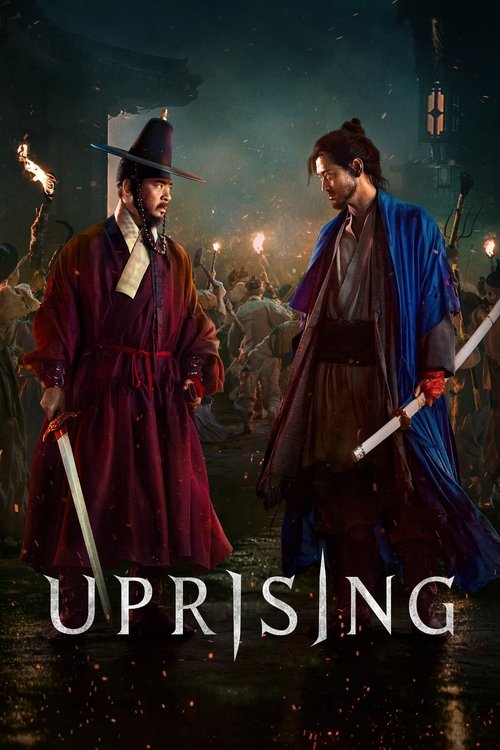
Director: Kim Sang-man
Cast: Gang Dong-won, Park Jeong-min, Cha Seung-won, Kim Shin-rock, Jin Sun-kyu
Overview
Core Meaning
Thematic DNA
Class, caste and the injustice of ownership
The film's engine is the Joseon slave system. Cheon-yeong is enslaved not by conquest but by his family's debt, a bureaucratic accident that determines everything about his life. Jeong Yeo-rip's creed that 'all people are equal and should have no master' hangs over the story as a heresy the state kills for, while the invasion exposes how little the nobility's claim to rule rests on competence. The result is a period epic that functions as a stinging commentary on social inequality, deliberately legible to a modern audience.
Friendship corrupted by hierarchy
Cheon-yeong and Jong-ryeo are raised together and love each other in the way boys do, yet one holds the deed to the other's body. Every shared moment carries an invisible asymmetry: the slave trains so the master may be seen to excel. When catastrophe arrives, the friendship cannot be separated from ownership, and grief and bad information convert intimacy into a lifelong vendetta. The film suggests that equality is the precondition of friendship, not its optional accessory.
Betrayal by the state and the failure of kingship
Cha Seung-won's King Seonjo is the film's most damning portrait: a monarch more frightened of an idea than of an army, who suspects his own subjects and abandons his capital while commoners take up arms. The court's treatment of the volunteer militias—useful while the enemy stands, dangerous the moment he doesn't—turns loyalty into a trap. Sovereignty in Uprising is not protection; it is a claim on other people's deaths.
Revenge and the unreliability of grief
Jong-ryeo's crusade is built on bad intelligence: he blames Cheon-yeong for the deaths of his wife and child without knowing what truly happened. The film treats vengeance as an epistemological failure as much as a moral one—a story a wounded man tells himself because it is easier to bear than the truth about the world that killed his family.
War as spectacle and as meat grinder
The Imjin War is staged with operatic, blood-heavy violence and highly physical swordplay, but the choreography keeps returning to who is actually swinging the sword: farmers, slaves, conscripts. Battle is where the powerless briefly become indispensable, and the film mines both the exhilaration and the obscenity of that bargain.
Character Analysis
Cheon-yeong
Gang Dong-won
Motivation
Freedom in the literal, legal sense—his name off the slave rolls—and, underneath that, the desire to be recognised as a person by the one man who once seemed to see him.
Character Arc
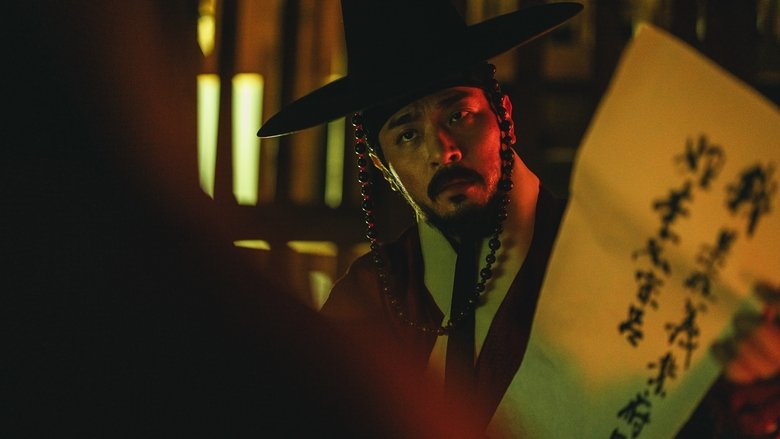
Begins as a boy sold into bondage by his family's debt and raised as a companion-property in a noble household. War converts the household's best swordsman into a militia leader, giving him command, followers and a cause he never asked for; by the end he is fighting Japanese generals, the Joseon court and the ghost of his own friendship at once. His trajectory is from stolen life to self-authored one, at enormous cost.
Yi Jong-ryeo
Park Jeong-min
Motivation
Vengeance for his family, and beneath it the need to keep believing that the order he was raised to inherit is just.
Character Arc
The privileged son of the family that owns Cheon-yeong, bound to him by genuine affection and by an ownership he never has to think about. War strips him of wife and child—his wife takes her own life and their child's rather than accept Cheon-yeong's help—and, acting on false information, he blames his friend and dedicates himself to revenge. He hardens into an instrument of the very state that failed them both.
Symbols & Motifs
The sword
Mastery that the social order refuses to acknowledge. Cheon-yeong's blade is the one thing he owns outright, and it makes him the most valuable man in Joseon precisely when Joseon is least able to admit it. The sword is skill divorced from status—merit with no legal standing.
Established in the boys' shared upbringing, where the slave's body absorbs the training meant to burnish the master's reputation, and carried through Cheon-yeong's rise as a militia leader to the duels that close the film.
The treasure box
The state's idea of what is worth saving. A sealed container of value travels safely while the country burns, a wordless verdict on a court that guards property more carefully than people.
It reaches the King at the very end of the film, delivered as a kind of accounting—while the fate of the man who fought for it remains unknown to the throne, with no soldier left alive to report it.
The river
Erasure and rebirth. Water carries a man out of the reach of both his enemy and his identity—the only exit available to someone the record refuses to acknowledge.
Used at the climax of Cheon-yeong's confrontation with the Japanese general Kikkawa Genshin, when he goes off a cliff into the water and escapes, leaving the duel unresolved and his status ambiguous.
Jeong Yeo-rip's 'Great Unity'
The utopian horizon the film measures every character against: a society where nobles and slaves share food, drink and training. It symbolises an idea powerful enough to be treated as treason.
Introduced in the opening as the heresy that King Seonjo destroys, then echoed in the militia camps where commoners and outcasts fight side by side—an accidental, temporary Great Unity produced by war rather than philosophy.
Master and servant clothing
Identity as costume. In a caste society, a person's worth is read off cloth, and the film keeps showing how easily that reading can be manipulated or mistaken.
Runs through the boys' interchangeable childhood roles and the wartime chaos in which rank becomes something men assert, fake or lose along with their garments.
Fire and the burning capital
The collapse of legitimacy. When the seat of power goes up in flames, so does the fiction that the hierarchy exists to protect anyone but itself.
Deployed as the invasion reaches the heart of the country and the dynasty fractures, framing the King's flight and the vacuum into which the popular uprising rushes.
Philosophical Questions
Can genuine friendship exist between a master and the person he owns?
The film gives Cheon-yeong and Jong-ryeo real warmth and real shared history, then applies pressure until the legal relationship underneath surfaces. Their bond does not die of malice; it dies because it was never symmetrical. Uprising proposes that affection without equality is a loan the powerful can call in at any moment.
What does a country owe the people it refuses to count as citizens?
Slaves and commoners take up arms while the King flees and suspects them. The film keeps asking why anyone should die for a state that treats them as property, and finds no satisfying answer — only the fact that they do it anyway, which becomes its own moral indictment of the throne.
Is an idea more dangerous to power than an army?
King Seonjo destroys Jeong Yeo-rip for teaching that all people are equal and should have no master, yet cannot repel an actual invasion. The juxtaposition suggests that regimes defend themselves most competently against thought, and most incompetently against reality.
Can vengeance survive contact with the truth?
Jong-ryeo's entire second life is built on a misreading of how his wife and child died. The film uses him to ask whether revenge is ever really about justice, or whether it is a narrative the grieving construct to avoid confronting a world in which no one is punishable.
Is freedom something granted, taken, or simply escaped into?
Cheon-yeong's emancipation never comes as a legitimate act of the state. What he gets instead is a river, a disappearance and the absence of anyone alive to report on him — freedom as erasure rather than recognition, which the film presents as both victory and loss.
Alternative Interpretations
<p><strong>The ending as liberation.</strong> Cheon-yeong survives his duel with Kikkawa Genshin by going over a cliff into the river, and the court is left with no witness to report what became of its men. Read optimistically, the water washes away his legal identity: a man no longer on anyone's ledger is, functionally, free, and the uprising's meaning is that freedom had to be...
Cultural Impact
Audience Reception
Interesting Facts
- The Korean title 전,란 is usually rendered as 'War and Revolt' — the comma splits the word for wartime chaos into its two halves, foreign war and internal rebellion, which is exactly how the film is structured.
- The screenplay is credited to Shin Cheol and Park Chan-wook, with Park also serving as producer; critics noted his fingerprints in the film's mordant humour, operatic violence and streak of nihilism.
- Director Kim Sang-man's connection to Park Chan-wook goes back to the 2000s, when he worked on a number of Park's productions — primarily in the marketing department.
- Principal photography took place in South Korea, reportedly beginning in early June 2023 and wrapping by early November 2023.
- Uprising opened the 2024 Busan International Film Festival on 2 October 2024 — the first time a streaming title had ever opened Asia's largest film festival, which sparked public debate about streaming's role in cinema.
- The film was released globally on Netflix on 11 October 2024, just over a week after its Busan premiere.
- The story is anchored in the real history of the Imjin War (1592–1598), when Japan invaded the Korean peninsula.
- The opening is built around the historical scholar Jeong Yeo-rip, who argued that all people are equal and should have no master and founded a community called 'Great Unity' where nobles and slaves shared food, drink and martial training — and whom King Seonjo accused of treason.
- Gang Dong-won's swordwork drew particular praise from reviewers, who singled out choreography that stays realistic while standing out for its sheer energy.
- Park Chan-wook framed the film's relevance in contemporary terms, noting that even when class is not formally codified by a social system, 'there is still that stratification of class' in societies today.
Easter Eggs
Jeong Yeo-rip and the 'Great Unity' community in the prologue
Not an invention but a real historical figure whose egalitarian teaching — that all people are equal and should have no master — was crushed as treason by King Seonjo. Dropping him into the first minutes tells Korean viewers exactly which political argument the film is joining, before a single sword is drawn.
Park Chan-wook's authorial signature inside another director's film
Reviewers repeatedly noted that Park's mordant sense of humour, operatic approach to violence and pitch-black nihilism surface in the writing even though Kim Sang-man directs. For Park's fans the film plays partly as a spot-the-fingerprint exercise.
A streaming film opening the Busan International Film Festival
Uprising's selection as BIFF's 2024 opener made it the first streaming title to hold that slot, turning the premiere itself into a cultural talking point about whether Netflix productions belong at the centre of Asia's largest film festival.
Frequently Asked Questions
Explore More About This Movie
Dive deeper into specific aspects of the movie with our detailed analysis pages
Comments (0)
No comments yet. Be the first to share your thoughts!