Skip to content
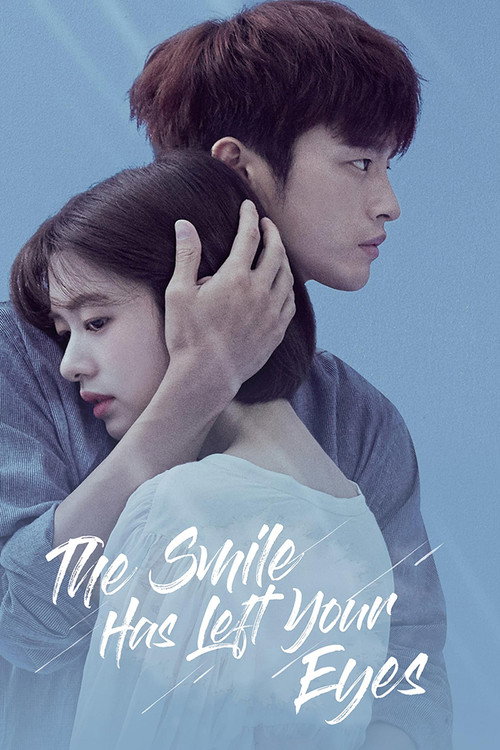
The Smile Has Left Your Eyes
A wintry Korean noir-melodrama where love arrives like a confession and a suspicion at once — two damaged people orbiting a staged suicide, smiling with everything except their eyes.
The Smile Has Left Your Eyes

The Smile Has Left Your Eyes

하늘에서 내리는 일억개의 별

03 October 2018 — 22 November 2018 South Korea 1 season 16 episode Ended 8.0 (103)

Cast: Seo In-guk, Jung So-min, Park Sung-woong, Seo Eun-soo, Jang Young-nam

Drama Crime Mystery Memory, amnesia and the invention of a self Love as recognition between damaged people The sins of the fathers Suspicion and the impossibility of knowing another person Exhaustion, guardianship and the wearing-down of a family

Overview

The Smile Has Left Your Eyes (하늘에서 내리는 일억개의 별, literally "A Hundred Million Stars Falling from the Sky") is a 16-episode tvN series that aired from October 3 to November 22, 2018, and is a remake of the 2002 Japanese drama Sora Kara Furu Ichioku no Hoshi. It opens with the death of a female university student, Jeong Mi-yeon, whose killing has been dressed up to look like a suicide — and never really leaves the shadow that case casts over everyone it touches.

The investigation belongs to Yoo Jin-kook, a veteran detective worn down to the bone by his job, whose professional instincts collide with his role as a fiercely protective older brother. His younger sister, Yoo Jin-kang, an advertising designer trying to build a life on her own terms, falls into a relationship with Kim Moo-young, a beautiful, unreadable young man who works at a brewery, claims to remember almost nothing of his past, and drifts to the very center of Jin-kook's suspect list. Around them circles Im Yu-ri, a friend who loves Moo-young and leans on him through her own crises while carrying secrets of her own.

What follows is less a whodunit than a slow psychological siege. The series braids suspense, doomed romance, and family tragedy into a single line of tension: every scene of tenderness is shadowed by the possibility that the man being loved is the man being hunted. Its subject is not only who killed Mi-yeon, but what happens to people when the answer would cost them everything they have chosen to believe.

Core Meaning

At heart the series argues that a person is not the sum of what was done to them, but they may never get the chance to prove it. Kim Moo-young's amnesia is the show's central moral device: it lets the audience meet a man with no history and then watch history arrive anyway, in pieces, carried by other people's guilt.

Reviewers repeatedly identified the drama's governing idea as the sins of the fathers landing on the heads of the children — inherited damage, class privilege, and adult cowardice being paid for by the young. The romance between Moo-young and Jin-kang is the counter-argument the series stages against that inheritance: two people recognizing each other's wounds and choosing, briefly, to be legible to someone.

That the show refuses a consoling resolution is the point. It insists that love and truth are not the same rescue — that you can be completely known and still be destroyed by the machinery that was built before you were born. The title says it plainly: the smile is still there, and it means nothing; look at the eyes.

Thematic DNA

Memory, amnesia and the invention of a self 25%
Love as recognition between damaged people 24%
The sins of the fathers 20%
Suspicion and the impossibility of knowing another person 18%
Exhaustion, guardianship and the wearing-down of a family 13%

Memory, amnesia and the invention of a self

Moo-young enters the story as a man without a usable past, and the series treats that blankness as both mercy and trap. Early episodes let him be charming and weightless; the middle stretch forces fragments back into him through other people's testimony, physical evidence and Jin-kook's investigation; the late episodes reveal how much of what he 'forgot' was a survival decision rather than an accident.

The arc runs from who is this man? to who was he allowed to become? — and the crueller question underneath, whether a self assembled from other people's accounts can ever belong to you.

Love as recognition between damaged people

The romance is built on sameness, not rescue. Jin-kang and Moo-young are drawn together because each detects in the other a hollowed-out quality nobody else notices, and the show lets that recognition deepen across all sixteen episodes rather than resolving it into safety.

Crucially, the affection never neutralizes the danger: even the sweetest scenes carry a heavy overtone, and viewers were kept holding tenderness and dread in the same hand. By the finale the relationship has become the only place either character is fully seen — which is exactly what makes its end unbearable.

The sins of the fathers

Critics singled this out as the drama's driving theme. The crimes being investigated are surface events; the real causes lie a generation back, in the choices of powerful adults who arranged their lives so that someone else would absorb the consequences.

The wealthy CEO's family functions as the story's true antagonist — privilege that protects itself and, in the end, disposes of the people who threaten it. The young characters spend the series trying to escape a verdict that was passed before they had any say in it.

Suspicion and the impossibility of knowing another person

Jin-kook's police work and Jin-kang's love story are the same activity performed with opposite hopes: both are attempts to determine who Kim Moo-young really is. The series alternates their evidence, so the viewer is never allowed a stable reading of him — charm and menace occupy the same face.

As the episodes accumulate, the question shifts from whether he is guilty to whether certainty about another human being is available at all, and what it costs to keep loving someone in its absence.

Exhaustion, guardianship and the wearing-down of a family

Jin-kook is introduced as a detective in burnout, and the series treats his fatigue as moral, not merely physical — a man who has seen too much to trust anyone near his sister. The sibling relationship supplies the drama's warmth and much of its friction, with Park Sung-woong's performance adding both familial tension and humor.

Across the run, protection curdles into control and then into grief, tracing how the effort to keep one person safe can leave a family with nothing left to protect.

Character Analysis

Kim Moo-young

Seo In-guk

Archetype: Enigmatic antihero / holy fool with a criminal shadow Key Trait: Unreadable warmth — a smile that could be affection or predation

Motivation

Initially he wants nothing, which is his defense. Then he wants to be known by one person without being rejected for it, and finally he wants Jin-kang to survive whatever the truth turns out to be — a motive that ends in the ultimate self-sacrificing register.

Character Arc

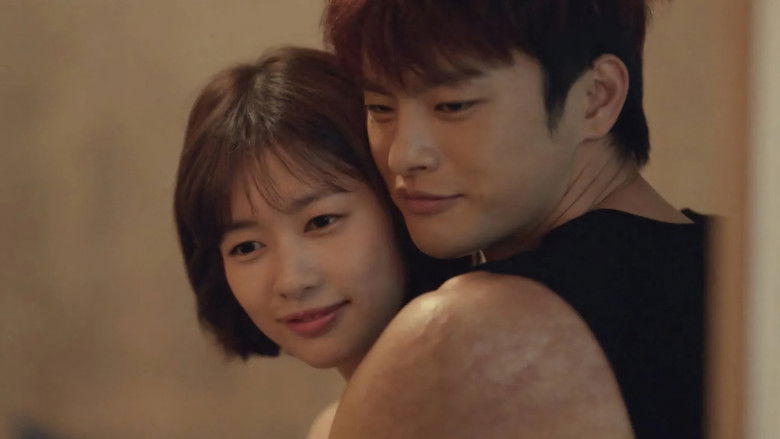
He begins as a beautiful blank: an emotionally detached young man working at a brewery, haunted by amnesia, disarming everyone he meets and committing to nothing. Falling into Jin-kang's orbit gives him his first reason to want a continuous self, and the middle episodes show him actively trying to be a person rather than a performance.

The investigation then forces his buried history back on him piece by piece, and his arc becomes a race between the man he is becoming and the one the evidence says he was. Critics praised Seo In-guk's ability to hold both at once — a character teetering between charm and menace to the very last scene.

Yoo Jin-kang

Jung So-min

Archetype: Romantic protagonist as investigator of the heart Key Trait: Stubborn, clear-eyed loyalty

Motivation

Autonomy first; then the conviction that Moo-young deserves to be believed by someone; finally the refusal to let him die as the person other people have decided he is.

Character Arc

An advertising designer pushing for personal independence, she starts the series trying to escape her brother's protective shadow and build a life she chose. Meeting Moo-young turns that independence into something far more dangerous: she keeps choosing him against her brother, against the evidence, and eventually against her own fear.

Her development is a hardening rather than a softening. By the final episodes she has moved from a young woman wanting freedom to one who has decided what she is willing to lose for another person, and she carries the series' grief in its closing stretch.

All 4 characters and cast

Symbols & Motifs

A hundred million stars falling from the sky

Meaning:

The original Korean title, carried over from the 2002 Japanese source, evokes something impossibly beautiful and impossibly brief — light that only becomes visible in the act of falling. It stands for the lovers themselves: luminous, doomed, and legible only in their descent.

Context:

The image works as the series' framing metaphor rather than a recurring prop, coloring the drama's night exteriors, its skyward compositions and its insistence that beauty here is inseparable from loss.

The smile that does not reach the eyes

Meaning:

The English title names the show's core motif: affect as camouflage. A smile is a social contract Moo-young can perform flawlessly while feeling nothing behind it, which makes it both his shield and the evidence against him.

Context:

Reviewers repeatedly credited Seo In-guk with a performance that teeters between charm and menace — the same expression readable as flirtation or threat depending on what the viewer has just learned.

The staged suicide

Meaning:

Jeong Mi-yeon's murder disguised as a self-inflicted death is the series' thesis in miniature: violence dressed as choice, and a system happy to accept the tidier story.

Context:

It opens the narrative and remains its unresolved engine, structuring Jin-kook's investigation and quietly implying that the powerful are believed while the dead are not.

The brewery and alcohol

Meaning:

Moo-young's workplace ties him to a substance of forgetting and disinhibition — the manufactured version of the amnesia he already lives inside.

Context:

His job situates him socially at the bottom of the story's class ladder, in service to people whose money will later decide his fate.

Winter light and cold interiors

Meaning:

The chill of the show's world stands for emotional anaesthesia — the numbness both leads carry and briefly thaw in each other's company.

Context:

Praised by reviewers as gritty lighting set against gorgeous sets, the visual cold persists even in romantic scenes, refusing the warmth the genre would normally supply.

Blood ties, real and suspected

Meaning:

Kinship in this series is never simply comforting; it is a verdict. Who is related to whom determines what love is permitted and what guilt is inherited.

Context:

The question of a possible blood relation between the two leads is dangled as the story's cruellest threat before being resolved in the endgame — after it has already done its damage.

Memorable Quotes

사랑해 ("I love you")
— Kim Moo-young

Context

Season 1, Episode 16. Recappers noted the finale is 'tragically concluded, right down to the last words of Moo-young, which was I love you' — the closing beat of a Romeo-and-Juliet ending engineered by forces neither lover could fight.

Meaning

The series' final line and its emotional verdict. A man defined by emotional detachment and a missing past ends by naming the one thing he is certain of — the show's insistence that feeling, not memory or evidence, is what finally constitutes a self.

Episode Highlights

Episode 1

S1E1

The premiere establishes the whole machine: the death of university student Jeong Mi-yeon, staged to look like a suicide, lands on burned-out detective Yoo Jin-kook's desk, while his sister Jin-kang's path crosses that of the amnesiac brewery worker Kim Moo-young. Charm and dread are introduced in the same breath.

Significance:

Everything the series will spend fifteen more hours complicating is present here — a lie about how someone died, a man with no past, and a family about to be pulled apart by the collision of the two.

Episode 16 (Finale)

S1E16

The finale delivers a deliberately unhappy, disconcerting ending. The wealthy CEO's family is exposed as the story's true villain, a hired killer is sent after the couple, and the drama closes on Moo-young's last words: I love you. It also resolves the long-dangled question of blood relation between the lovers — they were not siblings after all.

Significance:

Recappers and reviewers treated this as the episode that defines the series: a Romeo-and-Juliet conclusion in which two people who could have been happy are destroyed by an older generation's power. It divided viewers but was widely judged as the only ending consistent with the story's darkness and its characters' arcs.

Philosophical Questions

If you cannot remember what you did, are you still the person who did it?

Moo-young's amnesia converts a moral abstraction into a plot. The series lets the audience form an attachment to a man with no history, then reintroduces that history through evidence and other people's accounts, forcing a choice between the person present and the record. It never resolves the question so much as demonstrates how little the answer matters to the institutions doing the judging.

Can you love someone you cannot be certain about?

Jin-kang's entire arc is an experiment in loving without proof, staged against her brother's insistence that proof is the only thing that counts. The drama grants her position dignity — she sees things the investigation cannot — while refusing to pretend her faith makes her safe.

Who pays for the crimes of the powerful?

Identified by critics as the show's governing theme, the sins of the fathers land on the children throughout: privileged adults arrange their lives so that consequences fall on the young and poor, and the finale makes this literal when a wealthy family simply removes the people who inconvenience it.

Is a smile evidence of anything?

The English title poses the question and the performance answers it. The series repeatedly shows expression detaching from feeling, teaching viewers to distrust the most legible social signal there is — and, by extension, to wonder how much of anyone's interior life is ever available to observation.

Does knowing the truth ever actually save anyone?

The investigative plot promises the usual genre payoff: uncover the truth, restore order. The ending withholds it. Truth arrives, and it rescues no one — a deliberate refusal that reframes sixteen episodes of detection as a story about what knowledge cannot do.

Alternative Interpretations

Tragedy of fate versus tragedy of class. One reading takes the show at its Romeo-and-Juliet word: two people simply born under the wrong star, whose love was never survivable. The competing reading — the one most reviewers gravitated toward — is materialist: nothing about the ending is cosmic, because it is the CEO's family that sends a killer. The stars are a metaphor the powerful can afford; the deaths are a business decision.

Full ending explanation

Cultural Impact

The series arrived in the autumn of 2018 as part of tvN's run of author-driven, cinematic cable dramas, and it belongs to a specific lineage: the Korean remake of a prestige Japanese drama. Its source, the 2002 Sora Kara Furu Ichioku no Hoshi, was a hit led by Kimura Takuya, and the 2018 version inherited both its title and its willingness to end badly — a rarity in a market where melodrama usually negotiates some form of consolation.

Commercially it was not a hit. Its nationwide average of 2.9% was unremarkable, and the drama was frequently described as underrated during and after its broadcast. Its afterlife has been the opposite: an 8.2 average from over 26,000 MyDramaList users and a 7.9 on IMDb reflect a work that found its audience slowly, through word of mouth and streaming, and has been steadily recommended since as a benchmark for how dark a mainstream Korean romance is permitted to be.

Its clearest legacy is performative and tonal. Seo In-guk's Kim Moo-young became a reference point for the beautiful, unreadable male lead whose charm is indistinguishable from threat, and the show is routinely cited among the K-dramas that treat mental illness, forbidden attachment and inherited class violence without softening them. It also functions, for many viewers, as the standard argument that broadcast ratings are a poor measure of a drama's worth.

Audience Reception

The split between ratings and regard is the defining fact of this show's reception. It averaged just 2.9% nationwide on tvN, yet accumulated an 8.2/10 from over 26,000 MyDramaList users and 7.9 on IMDb — the profile of a drama that failed to find a live broadcast audience and then acquired a devoted one.

What was praised. Almost universally, the acting. Seo In-guk's Kim Moo-young was singled out for emotional depth and versatility in playing a character teetering between charm and menace, and the leads' chemistry was described as extraordinary — capable of making viewers feel joy, dread, hope and heartbreak simultaneously. Reviewers also praised the craft: cinematography with sophisticated camera movements and reveals, gorgeous sets, gritty lighting, and a soundtrack that together pushed the show to an almost cinematic level. Audiences credited it for engaging bold, uncomfortable subject matter — mental illness, forbidden attachment, class violence — without flinching.

What divided people. The ending, overwhelmingly. It is disconcerting and unhappy by design, and a share of viewers found it punishing. The counter-position was widely voiced too: that a happy ending would have been unrealistic for a story this dark, and that the conclusion fit the narrative and the character arcs even as it was heart-wrenching. The drama's deliberate pacing and unrelenting heaviness were the other recurring criticisms — reviewers consistently warn that it is not a light watch.

Verdict. Over time the consensus has settled firmly on the positive side, with the show most often described as underrated: a beautiful, emotionally punishing melodrama best recommended to viewers who want a story that lingers rather than one that comforts.

Interesting Facts

  • The series is a remake of the 2002 Japanese television drama Sora Kara Furu Ichioku no Hoshi, which starred Kimura Takuya; the Korean title, 하늘에서 내리는 일억개의 별 ('A Hundred Million Stars Falling from the Sky'), is a direct carry-over of the original's title.
  • It aired on tvN from October 3 to November 22, 2018, on Wednesdays and Thursdays at 21:30 KST, running 16 episodes.
  • Seo In-guk and Jung So-min were confirmed as the leads in June 2018, ahead of the autumn broadcast.
  • The series drew a nationwide average rating of 2.9% across its run, with a metropolitan average of 3.4% — modest numbers that contrasted sharply with its passionate online following.
  • Despite the low broadcast ratings, it holds an average of 8.2 out of 10 from more than 26,000 users on MyDramaList and 7.9 on IMDb.
  • Production staff said the two leads had unusual chemistry, describing them as able to work off each other with nothing more than eye contact.
  • Behind-the-scenes videos released during the run showed a markedly lighter set than the finished product: Seo In-guk and Jung So-min repeatedly cracked each other up between takes, including a much-shared clip of them laughing over her selfie-taking.
  • At a press conference, Jung So-min described the early shoot as feeling like the two actors were 'testing each other' face to face, adding that most of their scenes were built around the thought 'Who is that person?' before the characters begin to sympathize with one another in a way no one else can.
  • Reviewers singled out the cinematography as unusually sophisticated for television, praising its camera movements and reveals, its gorgeous sets and its gritty lighting.

Easter Eggs

The Korean title is inherited whole from the Japanese original

Rather than rebranding, the remake kept 하늘에서 내리는 일억개의 별, the exact title of the 2002 Kimura Takuya vehicle Sora Kara Furu Ichioku no Hoshi. For viewers who knew the source, the title itself functioned as a signal of what kind of ending to brace for — while the English title, The Smile Has Left Your Eyes, points instead at the drama's own central motif of unreadable affect.

Frequently Asked Questions

Explore More About This Movie

Dive deeper into specific aspects of the movie with our detailed analysis pages

Comments (0)

Leave a comment

No comments yet. Be the first to share your thoughts!

Similar Movies