Skip to content
The Sound of Magic
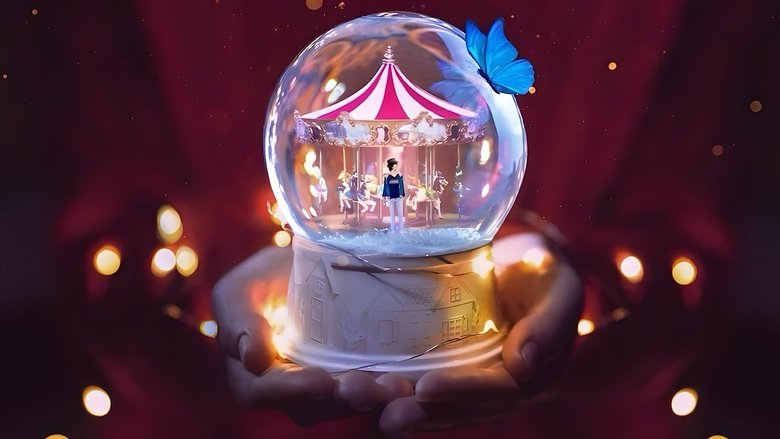
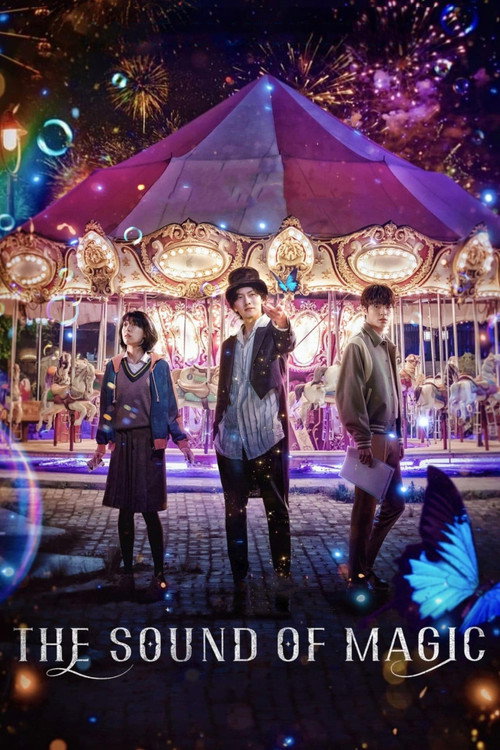
Enveloped in a melancholic fantasy, this musical fable awakens longing and wonder like a neon carousel spinning through the rain, turning the crushing asphalt of adult reality into a cascade of luminous butterflies.
The Sound of Magic

The Sound of Magic

안나라수마나라

"Do you believe in magic?"

06 May 2022 — 06 May 2022 South Korea 1 season 6 episode Ended 7.7 (197)

Cast: Ji Chang-wook, Choi Sung-eun, Hwang In-youp, Ji Hye-won, Choi Young-jun

Drama Sci-Fi & Fantasy Loss of Childhood & Societal Pressure to Mature The Tyranny of Expectations & Academic Elitism Illusion vs. Reality and the Nature of Belief Poverty, Social Inequality & Class Dignity

Overview

The Sound of Magic is a six-episode musical fantasy drama directed by Kim Sung-youn and written by Kim Min-jeong, adapted from Ha Il-kwon's webtoon Annarasumanara. Set in contemporary South Korea, the story centers on Yoon Ah-yi, an impoverished high school student forced to abandon her childhood dreams to provide for her younger sister after their parents disappear under heavy debts. Viewing wonder as an unaffordable luxury, Ah-yi wishes only to grow up quickly to achieve financial stability.

Her bleak life is interrupted when she encounters Ri-eul, an enigmatic magician living in a decaying, abandoned amusement park on the edge of town, who greets strangers with the question: "Do you believe in magic?" Concurrently, Ah-yi's wealthy and academically high-achieving classmate, Na Il-deung, finds his rigid life challenged by both Ah-yi and the magician after being trapped under the suffocating academic expectations of his parents.

As Ri-eul provides both adolescents temporary solace through illusions and musical reveries, dark societal realities intervene. Local rumors, crimes, and deep-seated prejudices lead the community and police to target Ri-eul, pushing the three individuals to challenge conventional definitions of success and rediscover genuine human agency.
Core Meaning

The core message of the series is a critique of modern society's rigid metrics of success, which sacrifice youthful wonder, innocence, and empathy for conformity, academic elitism, and financial security. Contrasting the cold asphalt of the modern city with the sanctuary of a decaying amusement park, the narrative asserts that growing up does not require extinguishing one's inner child. Magic functions as an empowering metaphor for hope, self-determination, and the emotional agency needed to heal from trauma and choose one's own path.

Thematic DNA

Loss of Childhood & Societal Pressure to Mature 30%
The Tyranny of Expectations & Academic Elitism 25%
Illusion vs. Reality and the Nature of Belief 25%
Poverty, Social Inequality & Class Dignity 20%

Loss of Childhood & Societal Pressure to Mature

Explored through the contrast between Ah-yi, who is forced by economic hardship to grow up prematurely, and Ri-eul, an adult who rejects the transactional numbness of conventional maturity. The series redefines true maturity not as cynical endurance, but as the preservation of sensitivity and joy.

The Tyranny of Expectations & Academic Elitism

Illustrated through Na Il-deung's existential struggle and Ri-eul's past, critiquing South Korea's hyper-competitive education system that forces youth onto a cold "asphalt road" while pathologizing those who deviate.

Illusion vs. Reality and the Nature of Belief

Revealed by continuously blurring stagecraft with supernatural occurrences, questioning whether the mechanics of magic matter as much as its power to bring genuine emotional healing and hope to despairing individuals.

Poverty, Social Inequality & Class Dignity

Depicted through Ah-yi's daily trials with debt collectors, exploitative employers, and financial shame, demonstrating how magic provides a sanctuary of self-worth against systemic degradation.

Character Analysis

Ri-eul / Ryu Min-hyuk

Ji Chang-wook (young: Nam Da-reum)

Archetype: The Enigmatic Mentor / The Wounded Healer Key Trait: Uncompromising Childlike Wonder

Motivation

Driven to protect childlike wonder and share joy, evolving to help Ah-yi and Il-deung break free from their mental constraints.

Character Arc

Transitions from an eccentric, isolated figure living in an abandoned theme park to confronting his past trauma as Ryu Min-hyuk, ultimately completing a final vanishing act on his own terms enabled by Ah-yi's faith.

Yoon Ah-yi

Choi Sung-eun

Archetype: The Reluctant Hero / Coming-of-Age Protagonist Key Trait: Emotional Resilience & Empathy

Motivation

Initially focused on basic survival and protecting her sister, evolving toward living an authentic life of self-determination.

Character Arc

Begins as an impoverished, cynical teenager desperate for adulthood; gradually embraces magic, overcomes despair, and matures into an autonomous young adult who shares wonder with others.

All 3 characters and cast

Symbols & Motifs

The Abandoned Amusement Park

Meaning:

Represents a monument to forgotten dreams and a liminal sanctuary free from the transactional rules of capitalist utility.

Context:

Serves as Ri-eul's residence on the outskirts of town where Ah-yi and Il-deung escape societal pressures.

The Cold Asphalt Road

Meaning:

A metaphor for the smooth, predetermined, yet emotionally freezing path toward conventional success demanded by parents and society.

Context:

Used visually and lyrically during Na Il-deung's musical sequence to depict the suffocating trajectory forced upon him.

Yellow Butterflies

Meaning:

Signify Ri-eul's magic, emotional liberation, rebirth, and the fragile beauty of retaining one's spirit.

Context:

Appear during key moments of wonder, transformation, and magical manifestations throughout the series.

Torn Stockings

Meaning:

Physical signifiers of poverty, deprivation, and social embarrassment.

Context:

Repeatedly worn and hidden by Yoon Ah-yi to ground her psychological and financial struggles in tactile reality.

Bella the Parrot

Meaning:

Symbolizes pure, non-judgmental companionship untainted by social status or hierarchy.

Context:

Ri-eul's animal companion who lives with him in the amusement park and communicates freely with visitors.

The Magician's Top Hat and Cloak

Meaning:

Represent the transformation of identity and the transmission of belief, empathy, and agency across generations.

Context:

Worn by Ri-eul and later passed to Ah-yi during the climactic vanishing illusion.

Memorable Quotes

당신, 마술을 믿습니까?
— Ri-eul

Context

Spoken by Ri-eul across Episodes 1 through 6 whenever encountering new or struggling individuals.

Meaning

Functions as an invitation to open one's heart to hope, imagination, and empathy beyond societal cynicism, rather than a literal inquiry about illusions.

누군가의 기대에 맞춰 살지 마. 네가 원하는 대로 살아.
— Ri-eul

Context

Spoken to Na Il-deung in Episode 5 during his emotional breakdown regarding the predetermined path laid out for him.

Meaning

Encourages autonomy and self-authorship in defiance of oppressive social and parental pressures.

All 4 quotes

Episode Highlights

Do You Believe in Magic?

S1E1

Introduces Ah-yi's harsh financial struggles, the town's social climate, and her first encounter with Ri-eul inside the glowing, derelict amusement park.

Significance:

Establishes the central visual and musical dichotomy between bleak social reality and whimsical fantasy.

Don't Let Me Dream Anymore

S1E2

Ri-eul intervenes to rescue Ah-yi from a predatory situation, followed by a poignant musical duet exploring the pain of false hope.

Significance:

Deepens Ah-yi's psychological conflict between embracing comforting illusions and facing unforgiving realities.

Merry-Go-Round

S1E3

Ri-eul brings the illuminated amusement park to life for Ah-yi, while Il-deung begins observing Ah-yi and questioning his own rigid existence.

Significance:

Marks a crucial shift in character dynamics and initiates Il-deung's inner ideological conflict.

Becoming An Adult

S1E4

Il-deung offers Ah-yi money in exchange for lowering her test scores, straining their relationship and exposing moral vulnerabilities.

Significance:

Critiques class dynamics and examines what it means to compromise personal integrity under societal strain.

Curse of Asphalt

S1E5

Features Il-deung's surreal musical breakdown under academic pressure, while police investigate Ri-eul for a local crime.

Significance:

Brings the psychological and suspenseful narrative threads to a dramatic peak ahead of the finale.

The Last Performance

S1E6

Min-hyuk's past is revealed, the true criminal is exposed, and Ah-yi performs a disappearing trick to help Ri-eul escape, followed by a time jump showing the characters' futures.

Significance:

Resolves the core mysteries, confirms the protagonists' personal growth, and completes the thematic arc of self-determination.

Philosophical Questions

What constitutes true maturity?

Explored through the tension between societal demands for emotional numbness and economic productivity versus the preservation of empathy, vulnerability, and imagination.

What is the true measure of a successful life?

Examined via Na Il-deung's rejection of pre-determined elite standards in favor of personal autonomy and self-defined fulfillment.

What is the purpose of belief?

Investigated by asking whether an illusion holds genuine truth if it provides real comfort, moral clarity, and psychological transformation.

Alternative Interpretations

The narrative supports multiple interpretive lenses:

Full ending explanation

Cultural Impact

The series addresses prominent South Korean social issues, specifically "Hell Joseon" anxieties, intense academic pressure from cram schools (hagwons), and youth mental health struggles. By adapting Ha Il-kwon's classic 2010 webtoon into a high-budget musical drama, it represented a notable stylistic departure for Netflix Korea, achieving global Top 10 rankings and encouraging genre experimentation within Korean television.

Audience Reception

The series received widespread praise for its visual direction, cinematography, imaginative musical staging, and faithful adaptation of the webtoon's themes. Lead performances—particularly Ji Chang-wook's balance of charisma and vulnerability, Choi Sung-eun's grounded emotional resonance, and Hwang In-youp's coming-of-age portrayal—were widely commended. Conversely, some viewers and critics found the tonal shifts between whimsical musical numbers and dark subplots involving attempted assault and crime jarring, while noting that the six-episode runtime compressed certain mystery elements in the finale.

Interesting Facts

  • Director Kim Sung-youn and screenwriter Kim Min-jeong previously collaborated on the hit 2016 historical drama Love in the Moonlight.
  • Renowned South Korean illusionist Lee Eun-gyeol served as the official magical scene director, designing stage illusions and training the cast to perform real sleight-of-hand tricks without relying solely on CGI.
  • The production was developed as a full-fledged on-screen musical drama, featuring original songs sung by the cast to express character psychology.
  • Music director Park Sung-il spent over 18 months composing and arranging the score in collaboration with lyricists Seo Dong-sung and Kim Eana.
  • Ji Chang-wook utilized his previous musical theatre background from productions such as The Days and Thrill Me to perform his vocal and choreographed sequences.
  • Webtoon creator Ha Il-kwon stated that the visual concept and mood of the original story were inspired by a Cirque du Soleil performance.

Easter Eggs

Casting of Nam Da-reum as young Ryu Min-hyuk

Meta-references Nam Da-reum's widespread reputation in Korean television for portraying the younger versions of male protagonists with traumatic backstories.

Yoo Jae-myung as Na Il-deung's father

Reunites actor Yoo Jae-myung with director Kim Sung-youn after previously playing the authoritarian patriarch Chairman Jang Dae-hee in Itaewon Class.

Selective monochrome and color palette transitions

Pays homage to the art style of Ha Il-kwon's original webtoon, which utilized grayscale panels interspersed with vibrant bursts of color during magical scenes.

Mid-credits theatrical curtain call in Episode 6

Emulates traditional musical theatre by having the entire cast, including antagonists and minor characters, dance and take a bow on the theme park stage.

Frequently Asked Questions

Explore More About This Movie

Dive deeper into specific aspects of the movie with our detailed analysis pages

Comments (0)

Leave a comment

No comments yet. Be the first to share your thoughts!

Similar Movies