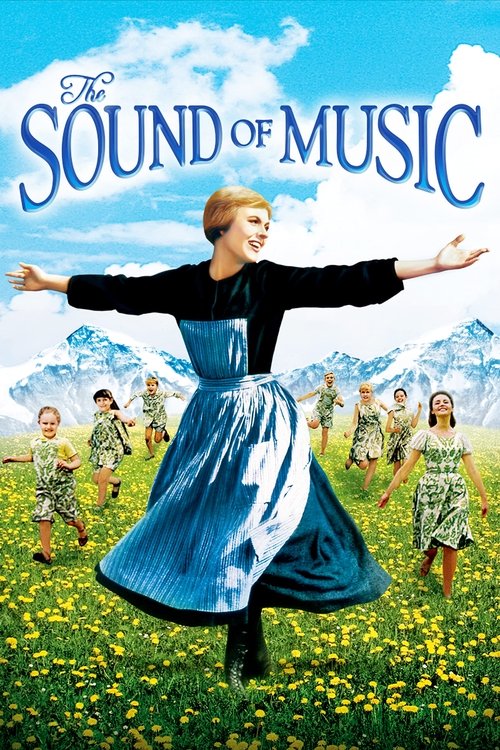
The Sound of Music
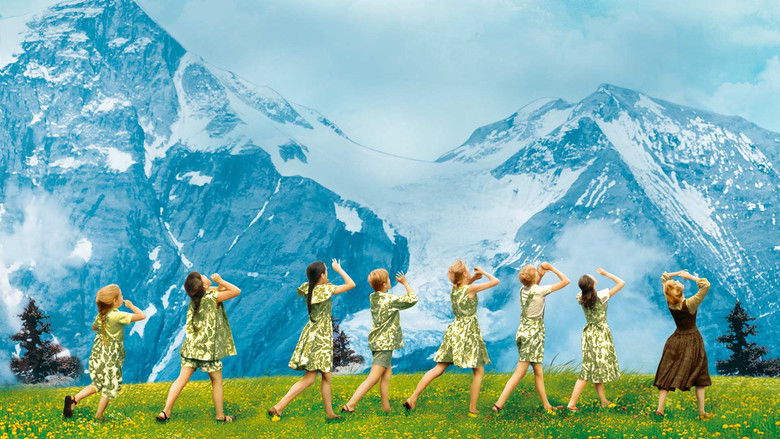
A sweeping musical epic where the majestic Austrian Alps witness the collision of love, duty, and looming war. Through song and spirit, a young novice transforms a fractured family, turning their home from a cold fortress into a bastion of joy and resistance.
The Sound of Music

The Sound of Music

"The happiest sound in all the world!"

29 March 1965 United States of America 174 min ⭐ 7.7 (3,531)
Director: Robert Wise
Cast: Julie Andrews, Christopher Plummer, Eleanor Parker, Charmian Carr, Nicholas Hammond
Drama Family Romance Music
Music as Healing and Liberation Duty vs. Conscience Family and Unity Nature vs. Artificial Order
Budget: $8,200,000
Box Office: $286,214,286

Overview

In 1938 Austria, Maria, a high-spirited postulant at Nonnberg Abbey, proves too free-spirited for convent life and is sent to serve as a governess for the seven children of the widowed Captain von Trapp. The Captain, a retired naval officer, runs his household with military precision, summoning his children with a whistle and banning music and frivolity to suppress his grief. Maria introduces the children to the joys of music, singing, and play, winning their hearts and gradually softening the Captain's stern exterior.

As Maria and the Captain fall in love, they must navigate his engagement to a wealthy Baroness and Maria's own spiritual confusion. Their personal romance unfolds against the darkening political backdrop of the Nazi Anschluss (annexation of Austria). The family's newfound unity and musical fame become their only hope for survival as the Captain receives orders to serve in the German navy, forcing them to make a daring life-altering decision.


Core Meaning

At its heart, The Sound of Music is a testament to the transformative power of love and music to heal trauma and defy oppression. Director Robert Wise contrasts the rigid, lifeless order of authoritarianism (both in the Captain's initial parenting and the Nazi regime) with the organic, liberating vitality of nature and song. The film suggests that true moral courage comes not from blind obedience to rules or state, but from listening to one's conscience and finding harmony with those you love.

Thematic DNA

Music as Healing and Liberation 30%
Duty vs. Conscience 25%
Family and Unity 25%
Nature vs. Artificial Order 20%

Music as Healing and Liberation

Music is not just entertainment but the lifeblood of the film. It serves as the catalyst that reconnects the Captain with his emotions and his children. While the Captain uses silence and whistles to control, Maria uses song to express freedom and joy. The return of music to the villa symbolizes the return of life and love.

Duty vs. Conscience

The film explores the conflict between societal/military duty and personal moral conviction. The Captain's refusal to compromise his Austrian identity and serve the Third Reich highlights the importance of standing by one's principles, even at great personal cost. This parallels Maria's journey of finding her true vocation outside the abbey walls.

Family and Unity

The narrative arcs from a fractured, regimented group of individuals to a cohesive, loving family unit. The external threat of the Nazis cements this bond, transforming their domestic unity into a mechanism for survival. The family strength is portrayed as a fortress stronger than any military might.

Nature vs. Artificial Order

The Alps represent divine freedom and spiritual purity, contrasting sharply with the man-made, rigid environments of the villa (initially) and the Nazi regime. Maria is constantly associated with the natural world (hills, rain, flowers), bringing its chaotic but benevolent energy into the sterile order of the Captain's world.

Character Analysis

Maria

Julie Andrews

Archetype: The Caregiver / The Catalyst
Key Trait: Unrepressed joy

Motivation

To find God's will for her life and to bring joy and music to those around her.

Character Arc

Starts as a naive, impulsive postulant unsure of her place. Through her time as a governess, she matures, learning that loving a man and a family is as holy a vocation as being a nun. She brings life back to the von Trapp household.

Captain Georg von Trapp

Christopher Plummer

Archetype: The Shadow King / The Redeemed Father
Key Trait: Integrity

Motivation

Initially to maintain order and hide from grief; later to protect his family and his country's integrity.

Character Arc

Begins as a cold, grief-stricken authoritarian who shuts out love to avoid pain. Maria's influence melts his defenses, restoring him to a loving father and a passionate patriot who defies tyranny.

Max Detweiler

Richard Haydn

Archetype: The Pragmatist / The Jester
Key Trait: Opportunism

Motivation

Self-preservation and commercial success.

Character Arc

Serves as a foil to the Captain. He is charming but politically opportunistic, willing to compromise with the Nazis ('appeasement') to survive and prosper. However, he ultimately aids the family's escape.

Baroness Elsa Schraeder

Eleanor Parker

Archetype: The Rival
Key Trait: Sophistication

Motivation

Social standing and a practical marriage.

Character Arc

Represents the wealthy, sophisticated, but superficial world the Captain thinks he belongs to. She graciously bows out when she realizes the Captain loves Maria and that she cannot share his anti-Nazi stance.

Symbols & Motifs

The Alps (The Hills)

Meaning:

Symbolize spiritual freedom, sanctuary, and connection to God. They are where Maria finds her true self and where the family eventually finds physical safety.

Context:

Featured prominently in the opening and closing shots. Maria goes to the hills to sing when she is overwhelmed; the family escapes over them to freedom at the end.

The Whistle

Meaning:

Represents military discipline, emotional distance, and the suppression of individuality. It reduces the children to soldiers rather than people.

Context:

Used by the Captain to summon his children and staff. Its abandonment—when the Captain finally whistles for the children but stops himself to use their names—marks his emotional transformation.

Edelweiss

Meaning:

A symbol of Austrian patriotism, resilience, and quiet defiance against the Nazi occupation. It represents a love for the homeland that persists through harsh conditions.

Context:

Sung by the Captain. First as a tender moment with his children, and later as a powerful act of political protest at the Salzburg Festival, inviting the audience to join in against the Nazi presence.

The Gazebo

Meaning:

A transitional space representing romance and the threshold of adulthood. It is a shelter for secret loves but also a place of exclusion.

Context:

Used for the innocent Sixteen Going on Seventeen duet and the mature declaration of love between Maria and the Captain in Something Good.

Memorable Quotes

The hills are alive with the sound of music.

— Maria

Context:

Sung by Maria in the opening sequence as the camera sweeps over the Austrian Alps.

Meaning:

The film's most iconic line, expressing the idea that nature itself is infused with divine joy and music, which sustains Maria's spirit.

You can't save yourself by burying your head in the sand.

— Captain von Trapp

Context:

Spoken during a heated discussion about the impending German annexation of Austria.

Meaning:

A political rebuke to Max, highlighting the Captain's moral stance that ignoring evil (Nazism) is not a valid survival strategy.

Climb every mountain, ford every stream, follow every rainbow, 'til you find your dream.

— Mother Abbess

Context:

Sung to Maria before she leaves the abbey to return to the von Trapp villa to confront her feelings.

Meaning:

A powerful directive to face life's challenges rather than hide from them. It reframes Maria's departure from the abbey not as a failure, but as a courageous pursuit of destiny.

I'm not finished yet, Captain!

— Maria

Context:

Spoken (shouted) when the Captain tries to silence her with his whistle after the boat incident.

Meaning:

Asserts Maria's strength and refusal to be cowed by the Captain's bullying tactics, marking the first time someone challenges his authority.

Philosophical Questions

Does moral duty require resistance or survival?

The film contrasts the Captain's uncompromising idealism (refusing to serve) with Max's pragmatism (collaborating to survive). It asks whether it is better to lose everything for one's principles or to compromise to protect one's life. The ending suggests that true survival is impossible without spiritual integrity.

What is the nature of a true vocation?

Maria struggles with the idea that serving God must look a specific way (being a nun). The film argues for a broader theological view: that following one's heart and loving another person is as valid a spiritual calling as monastic life.

Alternative Interpretations

The Anti-Fascist Parable: While often viewed as a fluffy family film, some critics analyze it as a sharp critique of complacency. The 'happy' characters like Max and the Baroness represent the dangers of political appeasement, while the 'difficult' Captain represents the necessary vigilance against authoritarianism.

Feminist Reading: Maria can be seen as a subversive force who dismantles a patriarchy. The Captain runs his home like a military dictatorship; Maria infiltrates this space and, through 'soft power' (music, emotional intelligence), democratizes the household and liberates the children (and eventually the Captain) from rigid male control.

Cultural Impact

The Sound of Music is a cultural phenomenon that redefined the movie musical. Upon release, it shattered box office records, displacing Gone with the Wind as the highest-grossing film of all time. While critics like Pauline Kael initially dismissed it as saccharine ('The Sound of Mucus'), audiences embraced its sincerity, making it a perennial classic.

Culturally, it created an idyllic, romanticized image of Austria that drives tourism to Salzburg to this day. The songs by Rodgers and Hammerstein—such as 'Do-Re-Mi' and 'My Favorite Things'—have become global standards, embedded in the collective consciousness. The film's legacy endures in 'Sing-Along' screenings, parodies, and its annual television broadcasts, solidifying its status as a shared intergenerational ritual celebrating comfort, family, and resilience.

Audience Reception

The audience reception is characterized by an immense, enduring adoration that starkly contrasted with early critical cynicism. Viewers praised the film's joyous energy, the chemistry between Andrews and Plummer, and the lush cinematography of the Alps. It became a 'comfort movie' for millions. Points of criticism over the years have focused on its historical inaccuracies and high levels of sentimentality (campiness). However, for the vast majority, the emotional payoff and musical excellence outweigh these flaws, maintaining its 8.1/10 rating on IMDB and 90%+ audience scores on review aggregators.

Interesting Facts

  • Christopher Plummer's singing vocals were dubbed by Bill Lee; Plummer described the film as 'The Sound of Mucus' due to its sentimentality.
  • The opening scene was filmed with a helicopter that created such a strong downdraft it repeatedly knocked Julie Andrews over into the mud.
  • The song 'Edelweiss' is not a traditional Austrian folk song; it was written specifically for the musical by Rodgers and Hammerstein.
  • Kym Karath (Gretl) nearly drowned during the boat scene because she couldn't swim; she went under and swallowed a lot of water before being rescued.
  • Charmian Carr (Liesl) slipped and injured her ankle while filming the 'Sixteen Going on Seventeen' dance in the gazebo; in some shots, she is wearing a bandage covered by makeup.
  • The film saved 20th Century Fox from bankruptcy after the financial disaster of Cleopatra (1963).
  • Real history differs significantly: the family escaped by train to Italy, not by hiking over the mountains to Switzerland (which would have led them into Germany near Hitler's retreat).

Easter Eggs

Real Maria von Trapp Cameo

The real Maria von Trapp, along with her daughter and granddaughter, can be seen walking in the background of the 'I Have Confidence' scene as Julie Andrews walks through the Salzburg archway.

Impossible Geography

The final shot shows the family hiking over the Untersberg mountain. Geographically, this path leads directly into Germany (the Eagle's Nest), not Switzerland. It is a metaphorical escape rather than a literal geographical one.

⚠️ Spoiler Analysis

Click to reveal detailed analysis with spoilers

Frequently Asked Questions

Explore More About This Movie

Dive deeper into specific aspects of the movie with our detailed analysis pages

Comments (0)

Leave a comment

No comments yet. Be the first to share your thoughts!