Skip to content
The Spy Gone North
A suffocating, dialogue-driven geopolitical noir of quiet dread and reluctant brotherhood, where two patriotic adversaries navigate a labyrinth of state betrayal, exchanging subtle glances across an icy ideological abyss.
The Spy Gone North

The Spy Gone North

공작

"In the lasting days of the Cold War."

08 August 2018 South Korea 138 min 7.3 (223)

Director: Yoon Jong-bin

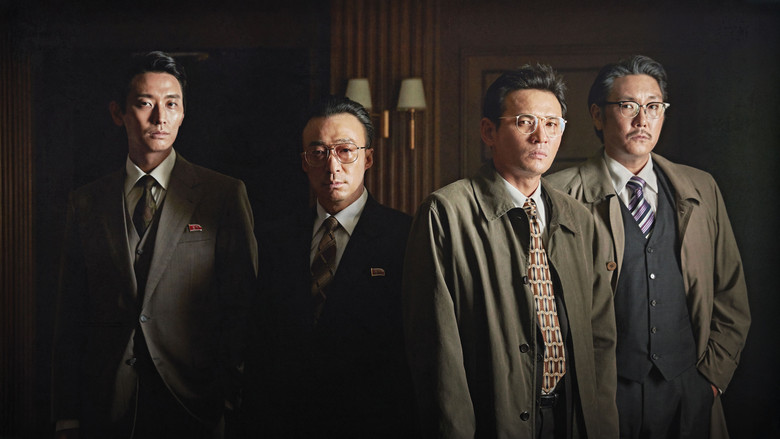
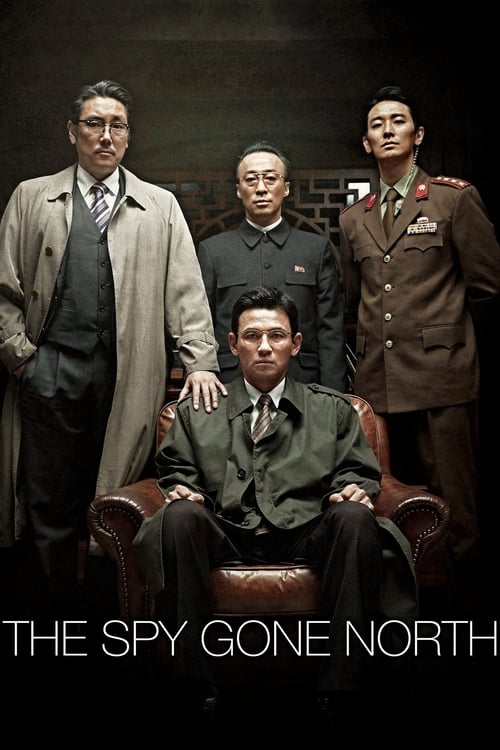
Cast: Hwang Jung-min, Lee Sung-min, Cho Jin-woong, Ju Ji-hoon, Jeong So-ri

Drama History Thriller The Weaponization of Ideology & State Hypocrisy The Psychological Warfare of Espionage Kinship Beyond Borders Individual Conscience vs. Institutional Loyalty
Budget: $17,000,000
Box Office: $3,175

Overview

Set in the early to mid-1990s against the backdrop of escalating nuclear tensions on the Korean Peninsula, The Spy Gone North (Gongjak, 2018) follows former military officer Park Seok-young (Hwang Jung-min). Recruited by the Agency for National Security Planning (ANSP, later NIS) under the codename "Black Venus," Park is assigned a perilous undercover mission: to infiltrate North Korea's highest political and military echelons and uncover the true state of their nuclear weapons development.

To execute his cover, Park stages a personal downfall—ruining his reputation through drinking and debt—before reinventing himself in Beijing as an ambitious, profit-driven South Korean entrepreneur. He sets his sights on Ri Myung-woon (Lee Sung-min), a shrewd, high-ranking director within North Korea's External Economic Committee. Proposing a lucrative joint venture to shoot commercial advertisements in North Korean heritage sites, Park slowly chips away at the North's suspicion, navigating lethal scrutiny from hardline security chief Jung Moo-taek (Ju Ji-hoon).

As Park penetrates deeper into the secretive state—eventually securing an audience with North Korean leader Kim Jong-il—his mission becomes entangled in high-stakes political machinations. When the political elites of both North and South conspire behind closed doors for their own partisan survival, Park is forced to confront whether his true allegiance lies with the regime he serves or the shared humanity of his divided homeland.
Core Meaning

Director Yoon Jong-bin uses the real-life historical espionage scandal of "Black Venus" to demystify Korean division and challenge the traditional hero-versus-villain Cold War narrative. The film illustrates how political elites on both sides of the Demilitarized Zone (DMZ) maintain a symbiotic relationship, weaponizing cross-border fear and nuclear saber-rattling to preserve their domestic power.

At its core, the movie argues that genuine patriotism transcends regime orthodoxy. True loyalty is reflected not in obedience to self-serving intelligence apparatuses, but in mutual empathy, ethical integrity, and the recognition of a shared national destiny across artificially drawn ideological borders.

Thematic DNA

The Weaponization of Ideology & State Hypocrisy 30%
The Psychological Warfare of Espionage 25%
Kinship Beyond Borders 25%
Individual Conscience vs. Institutional Loyalty 20%

The Weaponization of Ideology & State Hypocrisy

The narrative deconstructs how political hardliners in Seoul and Pyongyang exploit mutual enmity for political self-preservation—exemplified by the real-world "Wind from the North" (Chongpung) scandal, where South Korean conservatives attempted to buy North Korean military provocations to sway a presidential election.

The Psychological Warfare of Espionage

Eschewing conventional Hollywood shootouts and car chases, the film frames espionage as intellectual combat: verbal fencing, concealed micro-expressions, tactical negotiations, and nerve-wracking bluffing in closed rooms.

Kinship Beyond Borders

Through the evolving relationship between Park Seok-young and Ri Myung-woon, the film explores how two deeply committed men from opposing systems find common ground in their shared desire to feed their people and prevent catastrophe.

Individual Conscience vs. Institutional Loyalty

Park confronts the moral collapse of his intelligence agency, forcing him to choose between blind institutional obedience and the ethical defense of democratic integrity.

Character Analysis

Park Seok-young / "Black Venus"

Hwang Jung-min

Archetype: The Undercover Hero / Moral Pragmatist Key Trait: Unflappable composure under pressure and a sharp strategic intellect.

Motivation

Infiltrate North Korea’s nuclear program to protect South Korean security, later shifting to preventing an orchestrated military conflict.

Character Arc

Begins as a disciplined intelligence operative executing state orders, but transforms into an autonomous moral agent when he discovers his superiors are sabotaging South Korean democracy.

Ri Myung-woon

Lee Sung-min

Archetype: The Noble Adversary / Reluctant Bureaucrat Key Trait: Dignified intellectual discernment and unwavering economic pragmatism.

Motivation

Secure foreign capital and economic survival for North Korea to alleviate famine without surrendering state sovereignty.

Character Arc

Initially cautious and rigorously suspicious, he gradually recognizes Park's integrity, eventually risking his life to aid Park against hardliners in his own regime.

All 4 characters and cast

Symbols & Motifs

The Rolex Watch and the Korean Tie Pin

Meaning:

Personal artifacts functioning as secret tokens of mutual respect, unbroken trust, and unspoken fraternity across ideological divides.

Context:

Park gifts Ri a counterfeit-looking yet valuable Rolex watch, while Ri gifts Park a tie clip engraved with a traditional motif symbolizing national harmony. They are quietly revealed during their reunion in 2005.

The Hidden Tape Recorder in the Shoe

Meaning:

Represents the existential tightrope Park walks, where a single mechanical failure or metal detector scan means immediate exposure and execution.

Context:

Used as Park's primary espionage tool throughout his undercover mission to record sensitive conversations and intelligence.

The Antiques and Joint Advertising Project

Meaning:

Symbolizes commercial pragmatism bridging ideological divides, using culture and commerce to open previously impenetrable borders.

Context:

The business proposal to shoot advertisements at scenic North Korean sites such as Mount Kumgang, used as Park's cover to gain direct access to North Korean territory.

Kim Jong-il’s Maltese Dog

Meaning:

A stark symbol of opulence and authoritarian decay, highlighting the grotesque divide between the ruling elite and the populace.

Context:

Shown being coddled by Kim Jong-il during Park’s audience at the palatial residence, directly contrasting with the starving masses shown in the North Korean countryside.

The Dividing Doorways and Banquets

Meaning:

Symbolizes division, hidden motives, and the fragile barrier separating trust from betrayal.

Context:

Repeated compositions framing characters across long tables, partitioned sliding doors, and dim private dining rooms during tense negotiations.

Memorable Quotes

장사꾼은 이익을 쫓고, 군인은 조국을 지킵니다.
— Ri Myung-woon

Context

Spoken during early tense negotiations in Beijing.

Meaning

Establishes the boundary between capitalist trade and national duty while testing Park's motives.

공작이라는 게 뭡니까? 상대를 속이는 게 아니라 우리 스스로를 속이는 것 아닙니까?
— Park Seok-young

Context

Park's moral confrontation with Choi Hak-sung after uncovering the ANSP's collusion with North Korea to rig the election.

Meaning

Expresses moral indignation against the intelligence agency's hypocrisy and self-serving corruption.

All 3 quotes

Philosophical Questions

What constitutes authentic patriotism?

The film examines whether true love for one's country requires obedience to its current ruling government, or the courage to resist corrupt leaders for the democratic good of its citizens.

Can ethical brotherhood survive institutional enmity?

Explores how two sworn enemies maintain genuine human solidarity when both serve regimes that demand each other's destruction.

Is political division sustained by real external threat or manufactured fear?

The narrative questions whether perpetual cross-border conflict is maintained more by genuine ideological incompatibility or by domestic leaders exploiting fear to consolidate power.

Alternative Interpretations

Anti-Authoritarian Critique vs. Tragic Realism: Some critics view the film as an indictment of the conservative military and intelligence apparatus, showing how institutions manipulate national security. Others interpret it as a tragic look at how individuals remain pawns of larger geopolitical structures.

Full ending explanation

Cultural Impact

In the 1990s, the end of the Cold War and the North Korean famine (the "Arduous March") overlapped with South Korea’s democratic transition. The ANSP was historically notorious for instigating border skirmishes ("Wind from the North") to induce fear in conservative voters and defeat liberal candidate Kim Dae-jung.

Premiering during the 2018 inter-Korean diplomatic thaw and summit meetings, the film resonated with contemporary hopes for dialogue and reconciliation. Furthermore, The Spy Gone North redefined the Korean spy genre, moving away from action-heavy formulas toward cerebral, historically grounded political realism.

Audience Reception

Praised Elements: Audiences and critics widely praised the masterclass performances—particularly the on-screen chemistry and tension between Hwang Jung-min and Lee Sung-min—along with Yoon Jong-bin’s suspenseful direction without action sequences, detailed period production design, realistic atmosphere, and historical accuracy.

Points of Criticism: Some noted slower pacing and heavy political exposition in the first half, as well as the dense domestic 1990s South Korean political context that can occasionally confuse international viewers.

Overall Verdict: Widely hailed as one of the smartest and most sophisticated espionage thrillers in modern Korean cinema, earning multiple accolades including Best Film, Best Director, and Best Actor at the Grand Bell, Blue Dragon, and Baeksang Arts Awards.

Interesting Facts

  • Director Yoon Jong-bin intentionally made the film without traditional action sequences or gunfights, relying instead on dialogue and psychological pressure to build suspense.
  • The film dramatizes the real-life memoirs and declassified reporting of former South Korean intelligence officer Park Chae-seo ("Black Venus"), who met Kim Jong-il in person in the 1990s.
  • The film held its world premiere at the 71st Cannes Film Festival in the Midnight Screenings section, receiving widespread critical praise.
  • Veteran actor Ki Joo-bong underwent hours of specialized prosthetic makeup to achieve an uncanny visual resemblance to North Korean leader Kim Jong-il.
  • Production design teams meticulously recreated 1990s Beijing, Pyongyang streets, and luxurious DPRK state guest villas using historical photographs and defector testimonies.
  • Despite its dialogue-heavy structure and competition with summer blockbusters, the film grossed over $38.5 million worldwide with nearly 5 million admissions in South Korea.

Easter Eggs

Lee Hyori's Real-Life Cameo

Pop superstar Lee Hyori appears as herself in the film’s epilogue, recreating the famous real-world 2005 Samsung Anycall television commercial that she filmed alongside North Korean dancer Cho Myung-ae. Yoon Jong-bin convinced her to appear by sending a personal handwritten letter.

The "Chongpung" Operation Details

The film incorporates real names, secret back-channel locations (such as the Beijing Grand Hotel), and transcripts from the real 1997 "Wind from the North" election scandal.

John le Carré Homages

The film subtly references the bleak bureaucratic world of George Smiley, trading flashy gadgetry for cigarette smoke, gray tape recorders, and administrative deceit.

Frequently Asked Questions

Explore More About This Movie

Dive deeper into specific aspects of the movie with our detailed analysis pages

Comments (0)

Leave a comment

No comments yet. Be the first to share your thoughts!

Similar Movies