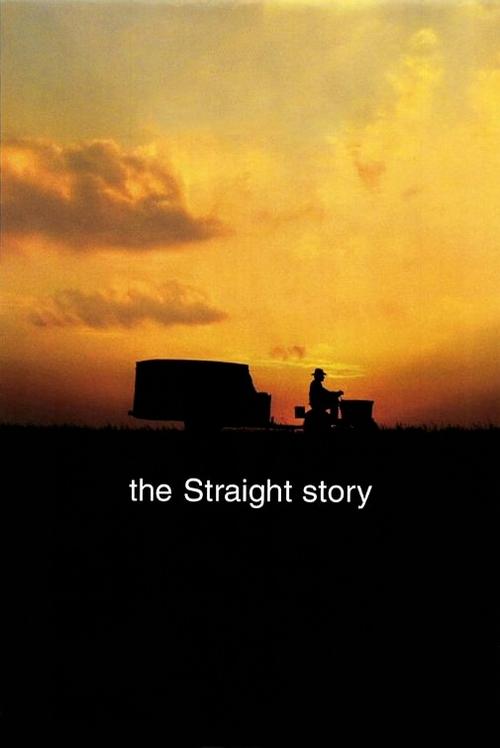
The Straight Story
A slow-burning, tender road movie where an elderly man traverses the American Midwest on a lawnmower to mend a broken brotherhood. It transforms a simple journey into a profound meditation on aging, stubbornness, and the enduring power of family ties under the vast starry sky.
The Straight Story

The Straight Story

"A true story that proves a little determination goes a very, very long way."

15 October 1999 United States of America 112 min ⭐ 7.7 (1,728)
Director: David Lynch
Cast: Richard Farnsworth, Sissy Spacek, Jane Galloway Heitz, Joseph A. Carpenter, Donald Wiegert
Drama
The Burden and Wisdom of Aging Reconciliation and Forgiveness Family Unity The Pace of Life
Budget: $10,000,000
Box Office: $6,418,028

Overview

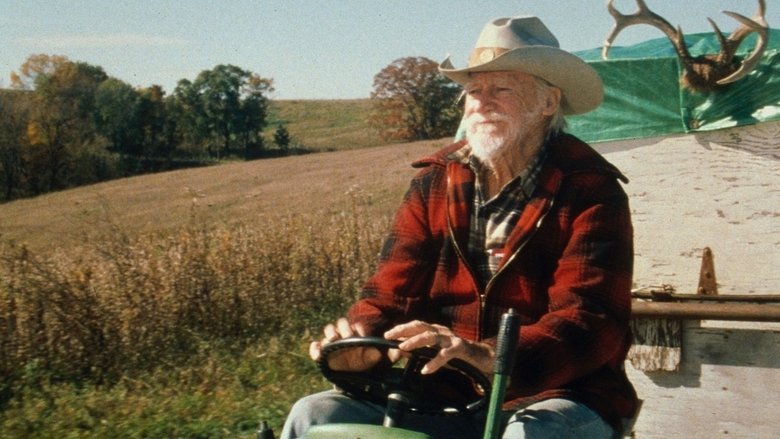
Alvin Straight, a 73-year-old widower living in Laurens, Iowa, with his intellectually disabled daughter Rose, learns that his estranged brother Lyle has suffered a stroke. Determined to make amends before it's too late, but unable to drive due to poor eyesight and impaired legs, Alvin concocts an unlikely plan: he will travel the 240 miles to Mount Zion, Wisconsin, aboard his 1966 John Deere riding lawnmower.

Ignoring the protests of his family and neighbors, Alvin sets off towing a makeshift trailer filled with supplies. His weeks-long journey at five miles per hour becomes an odyssey of endurance. Along the way, he encounters a diverse cast of strangers—a pregnant teenage runaway, a frantic woman who hit a deer, fellow war veterans, and helpful mechanics—sharing with them his hard-earned wisdom and simple kindness while reflecting on his own life's regrets.

As he crosses the Mississippi River and nears his destination, Alvin's health deteriorates and his machine falters. Yet, his steely resolve pushes him forward. The film culminates in a quiet, emotionally resonant reunion on a dilapidated porch, where two brothers let go of a decade of silence without needing to say much at all.
Core Meaning

At its heart, The Straight Story is a film about the dignity of old age and the necessity of reconciliation. David Lynch strips away his usual surrealist artifice to reveal a raw, human truth: that it is never too late to heal old wounds, but doing so requires immense effort and humility. The lawnmower represents a form of penance—a slow, painful pilgrimage undertaken to prove love and commitment.

Thematic DNA

The Burden and Wisdom of Aging 30%
Reconciliation and Forgiveness 30%
Family Unity 20%
The Pace of Life 20%

The Burden and Wisdom of Aging

The film unflinchingly portrays the physical indignities of getting old, from Alvin's bad hips to his inability to drive. However, it juxtaposes this physical frailty with immense mental fortitude and emotional clarity. Alvin's interactions with younger characters allow him to pass on the wisdom that "the worst part of being old is remembering when you was young," highlighting the bittersweet nature of memory.

Reconciliation and Forgiveness

The entire plot is driven by the need to bridge a gap caused by "anger and booze." The journey is a physical manifestation of the emotional distance Alvin must cross. The film suggests that true forgiveness isn't just a spoken word but an action—a difficult, deliberate journey one must make to show the other person they matter.

Family Unity

Illustrated through the "bundle of sticks" metaphor, this theme underscores that individuals are fragile alone but unbreakable together. Rose and Alvin's tender relationship stands in contrast to the broken bond with Lyle, reinforcing that family is the essential anchor in a lonely world.

The Pace of Life

By forcing the protagonist to travel at 5 mph, the film critiques the modern obsession with speed. Alvin experiences the landscape and people in a way drivers whizzing by cannot. The slow pace allows for contemplation, connection, and a genuine appreciation of the world, suggesting that moving too fast causes us to miss the essence of life.

Character Analysis

Alvin Straight

Richard Farnsworth

Archetype: The Stubborn Hero / The Pilgrim
Key Trait: Unyielding determination

Motivation

To reconcile with his brother Lyle before one of them dies. He is driven by guilt over their estrangement and a desperate need to "make it right" on his own terms.

Character Arc

Alvin starts as a physically broken man who has fallen in his kitchen, refusing help. He transforms into a determined pilgrim who conquers his limitations to achieve a spiritual goal. His journey is one of shedding pride while maintaining dignity, moving from isolation to connection.

Rose Straight

Sissy Spacek

Archetype: The Innocent / The Caregiver
Key Trait: Gentle loyalty

Motivation

To protect and care for her father, and to see the family made whole again.

Character Arc

Rose begins as a protected figure, seemingly dependent on Alvin. However, she displays immense emotional intelligence and strength, supporting Alvin's crazy plan when others doubt it. She represents the pure heart of the family.

Lyle Straight

Harry Dean Stanton

Archetype: The Estranged Brother
Key Trait: Silent sorrow

Motivation

Unknown for most of the film, but ultimately, he shares the deep, unspoken need for brotherly connection.

Character Arc

Lyle is an absence for most of the film, a destination. When he appears, he is frail and guarded. His arc is the immediate, silent acceptance of Alvin's gesture. The sight of the lawnmower breaks down his defenses instantly.

Symbols & Motifs

The Lawnmower

Meaning:

It symbolizes penance, stubbornness, and absurdity. It is an impractical vessel for a long journey, much like Alvin's broken body is an impractical vessel for his strong spirit. Riding it is an act of sheer will, turning a mundane chore machine into a vehicle of redemption.

Context:

Used throughout the entire film as Alvin's only mode of transport. Its mechanical failures mirror Alvin's physical struggles, and its slow speed dictates the film's rhythm.

The Bundle of Sticks

Meaning:

A metaphor for strength in unity. A single stick snaps easily, but a bundle is impossible to break.

Context:

Alvin tells this story to a pregnant teenage runaway at his campfire to encourage her to return to her family. Later, she leaves a bundle of sticks for him as a sign she understood.

The Stars

Meaning:

They represent eternity, the cosmos, and connection. They are a constant over the heads of all people, regardless of where they are or their age.

Context:

Lynch frequently cuts to shots of the starry night sky during Alvin's stops. The film ends with the two brothers sitting in silence, looking up at the stars, suggesting their bond has been restored to the cosmic order.

Grain Elevators and Harvest

Meaning:

These represent the cycles of life and the autumn of Alvin's own years. The harvest season parallels Alvin entering the final chapter of his life.

Context:

The visual backdrop of the film is constantly filled with harvesting machinery, grain silos, and drying corn, rooting the story in the agricultural reality of the Midwest.

Memorable Quotes

I did, Lyle.

— Alvin Straight

Context:

Sitting on Lyle's porch after the reunion. Lyle asks, "Did you ride that thing all the way out here to see me?"

Meaning:

The final line of the film. It is a simple confirmation that carries the weight of the entire journey. It answers Lyle's disbelief that Alvin drove a lawnmower to see him, proving the depth of his love.

The worst part of being old is remembering when you was young.

— Alvin Straight

Context:

Spoken to a group of young cyclists at a campsite who ask him about old age.

Meaning:

Captures the melancholic pain of aging—not the physical pain, but the emotional burden of nostalgia and lost capability. It highlights that the mind remains young while the body fails.

I'd give each one of 'em a stick and, one for each one of 'em, then I'd say, 'You break that.' Course they could real easy. Then I'd say, 'Tie them sticks in a bundle and try to break that.' Course they couldn't. Then I'd say, 'That bundle... that's family.'

— Alvin Straight

Context:

Alvin sharing wisdom with a pregnant teenage runaway around a campfire.

Meaning:

A parable about family unity. It serves as the film's central thesis on why family relationships are worth fighting for.

There's no one knows your life better than a brother that's near your age. He knows who you are and what you are better than anyone on earth. My brother and I said some unforgivable things the last time we met, but, I'm trying to put that behind me... and this trip is a hard swallow of my pride. I just hope I'm not too late.

— Alvin Straight

Context:

Alvin talking to a priest in a cemetery near the end of his journey.

Meaning:

Alvin clearly articulates his motivation. It acknowledges the unique bond of siblings who share a history that no one else can understand.

Philosophical Questions

Does the method of the journey matter as much as the destination?

The film asks whether Alvin could have just taken a bus. By choosing the mower, the film suggests that the suffering and time invested in the journey are what validate the apology. The 'how' creates the meaning of the 'what.'

Is pride the biggest obstacle to human connection?

Alvin admits that 'anger and booze' and vanity kept the brothers apart. The film explores how pride hardens over time and how humility—symbolized by driving a lawnmower in public—is the antidote required to reconnect.

Alternative Interpretations

While largely straightforward, some critics argue the film is a spiritual allegory for the journey to the afterlife, with Alvin shedding his earthly burdens (his pride, his first mower) before reaching 'Mount Zion' (a biblical reference to the promised land). Another interpretation suggests the journey is an act of self-flagellation; the physical pain Alvin endures is a necessary punishment he inflicts upon himself for the years of silence and anger. There is also a reading that the film is Lynch's subversion of the road movie, where the vehicle is not a symbol of freedom and speed (like in Easy Rider or Wild at Heart), but of constraint and duty.

Cultural Impact

The Straight Story occupies a unique place in cinema history as the "Disney movie directed by David Lynch." Culturally, it challenged the pigeonholing of Lynch as solely a purveyor of the weird and grotesque, proving his mastery of pure emotion and classic storytelling. It was critically acclaimed, particularly for Richard Farnsworth's performance, which became a poignant capstone to his career. The film is often cited in philosophical discussions about the ethics of care, the value of slowness in a hyper-accelerated world, and the American Midwest's landscape. It showed that an 'indie' sensibility could be applied to a heartwarming story without descending into schmaltz.

Audience Reception

The film holds a very high rating among audiences and critics (often 95%+ on aggregators). Viewers consistently praise its heart, simplicity, and the emotional payoff of the ending. Many admit to being surprised that a film about a man on a lawnmower could be so moving. Common criticisms are rare but usually focus on the slow pacing, which some impatient viewers find tedious. However, the majority view the pace as a feature, not a bug, essential to the film's meditative quality.

Interesting Facts

  • Richard Farnsworth was terminally ill with metastatic bone cancer during filming, which caused the paralysis of his legs seen in the movie. He took the role out of admiration for the real Alvin Straight.
  • Tragically, Richard Farnsworth committed suicide in 2000, the year after the film's release, due to the immense pain from his cancer.
  • The film was shot in chronological order along the actual route taken by the real Alvin Straight.
  • This is the only David Lynch film to receive a G rating from the MPAA (General Audiences).
  • David Lynch calls this his 'most experimental movie' precisely because it is a linear, G-rated film distributed by Disney, which defies his avant-garde reputation.
  • At 79 years old, Richard Farnsworth became the oldest person ever nominated for the Academy Award for Best Actor at that time.
  • The character of Rose builds birdhouses; in real life, the prop birdhouses were built by the real Alvin Straight's daughter.
  • Alvin's gunner story about shooting a scout by mistake during WWII was based on a real experience of Richard Farnsworth's, which he suggested adding to the script.
  • The scene where Alvin shoots his first lawnmower with a shotgun is based on a true event; the real Alvin actually did shoot his mower when it broke down.

Easter Eggs

The Deer Woman

The scene with the woman who hysterically claims she hits a deer every day is the most 'Lynchian' moment in the film. It provides a burst of surreal humor and existential dread in an otherwise grounded movie, reminding viewers of Lynch's fascination with the bizarre in everyday life.

The Sound Design

Despite being a G-rated drama, the film utilizes Lynch's signature industrial soundscapes (wind, humming machinery, grain elevators) to create an atmosphere that feels distinctively his, even without the visual horror.

Harry Dean Stanton

Stanton, a regular collaborator with Lynch (appearing in Wild at Heart, Twin Peaks, Inland Empire), plays the brother. His casting serves as a meta-link to Lynch's wider filmography.

⚠️ Spoiler Analysis

Click to reveal detailed analysis with spoilers

Frequently Asked Questions

Explore More About This Movie

Dive deeper into specific aspects of the movie with our detailed analysis pages

Comments (0)

Leave a comment

No comments yet. Be the first to share your thoughts!