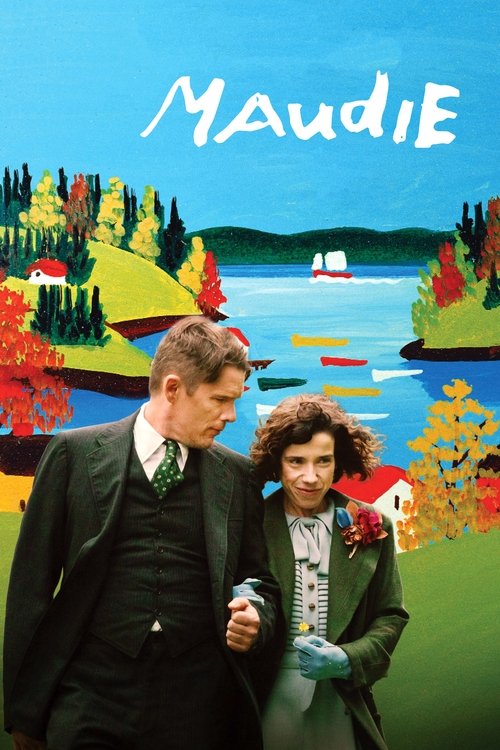
Maudie
"Triumph epitomizes adversity"
Overview
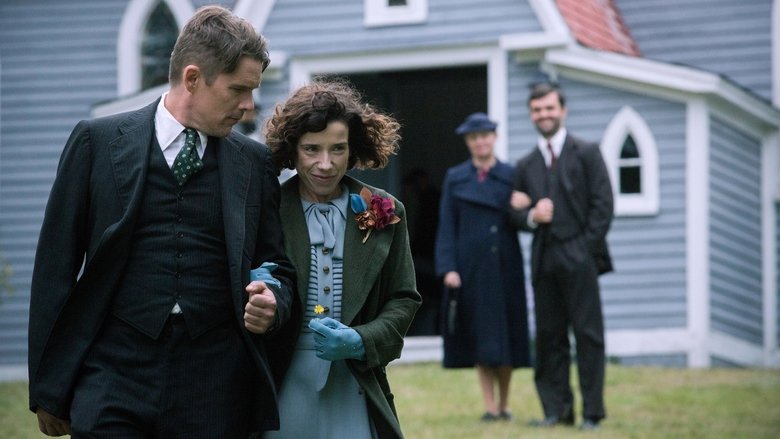
Maudie is a biographical drama that paints the intimate portrait of Maud Lewis, one of Canada's most beloved folk artists. Set in Nova Scotia (though filmed in Newfoundland), the story follows Maud, a woman living with severe rheumatoid arthritis who is disregarded by her family as incapable of independence. Determined to live her own life, she answers an ad for a live-in housekeeper placed by Everett Lewis, a surly and reclusive fish peddler living in a tiny, one-room shack.
What begins as a transactional and often harsh arrangement evolves into a complex, deep, and enduring romance. As Maud transforms their grim little house with her bright, cheerful paintings of flowers, birds, and landscapes, she inadvertently attracts the attention of the outside world. The film explores their struggle against poverty and illness, the changing dynamics of their relationship, and how Maud's unyielding optimism and art brought light to their marginalized lives.
Core Meaning
At its heart, Maudie is a meditation on the nature of happiness and the power of art to transcend suffering. Director Aisling Walsh explores the idea that a meaningful life isn't defined by material wealth or physical capability, but by the ability to see and create beauty in the smallest of things. The film challenges the viewer to find value in an imperfect world and suggests that even the most damaged souls ('mismatched socks') can find profound connection and purpose.
Thematic DNA
Art as Survival and Expression
For Maud, painting is not just a hobby but a lifeline. It is her voice in a world that tries to silence her and her escape from the physical pain of her arthritis. The brightening of the house's interior parallels the blossoming of her own agency and spirit.
The Resilience of the Human Spirit
Despite crippling arthritis, rejection by her family, and initial abuse from Everett, Maud refuses to be a victim. Her resilience is quiet but unbreakable; she meets cruelty with wit and darkness with vibrant color.
Mismatched Love and Companionship
The relationship between Maud and Everett is the film's emotional core. They are two societal outcasts who form a symbiotic bond. The film examines how love can grow in the most unlikely soil, evolving from need and tolerance to genuine, albeit unspoken, affection.
Perception vs. Reality
While the world sees a crippled woman and a mean recluse living in squalor, Maud sees a world 'already framed' with beauty. The film contrasts the bleak landscape with the vivid colors of Maud's perspective.
Character Analysis
Maud Lewis
Sally Hawkins
Motivation
To achieve independence, express herself through art, and find a place where she belongs.
Character Arc
Starts as a dependent, dismissed woman living with a controlling aunt. She seizes agency by taking a menial job, endures hardship, and eventually blossoms into a celebrated artist and beloved wife, finding peace before her death.
Everett Lewis
Ethan Hawke
Motivation
Survival, maintaining control/order in his small world, and avoiding emotional vulnerability.
Character Arc
Begins as an abusive, closed-off recluse who treats Maud lower than his dogs. Through her patience and the success of her art, he slowly softens (though never fully changes), coming to realize her value and his love for her only when he is about to lose her.
Sandra
Kari Matchett
Motivation
Appreciation of authentic folk art.
Character Arc
A sophisticated visitor who spots Maud's talent. She serves as the catalyst for Maud's commercial success and offers a contrast to the rural poverty of the Lewis's life.
Symbols & Motifs
The Painted House
The house represents Maud's inner world and the life she builds with Everett. As she covers the walls, stairs, and windows with bright tulips and birds, the house transforms from a prison of poverty into a sanctuary of joy and a living canvas.
Throughout the film, the house evolves visually. It starts dark and dirty but ends up covered in art, becoming a physical manifestation of Maud's legacy.
The Window
Symbolizes Maud's unique perspective and her philosophy that she doesn't need to travel to see the world. It represents contentment and the artist's eye.
Maud tells a customer, 'The whole of life, already framed, right there,' referring to the view from her small window.
Mismatched Socks
A metaphor for Maud and Everett's relationship—two damaged, imperfect people who somehow fit together perfectly.
Maud describes them to Everett: 'We're like a pair of odd socks... a plain white cotton sock and a royal blue canary.'
Birds and Flowers
Motifs of innocence, freedom, and the simple beauty of nature that Maud clings to despite her harsh reality.
These appear constantly in her paintings and on the walls of the house, often painted when she is in physical or emotional pain.
Memorable Quotes
I was loved.
— Maud Lewis
Context:
Spoken to Everett in the hospital scene just before she dies, offering him a final absolution and comfort.
Meaning:
Maud's final realization and affirmation of her life's worth. Despite the abuse and hardship, she identifies love as the defining element of her existence.
The whole of life, already framed, right there.
— Maud Lewis
Context:
Maud explaining to a visitor why she doesn't need to leave her home to paint landscapes.
Meaning:
Encapsulates her artistic philosophy: you don't need to travel the world to find inspiration; it is present in the everyday if you have the eyes to see it.
We're like a pair of odd socks.
— Maud Lewis
Context:
Maud talking to Everett about their relationship, accepting their oddness as a form of belonging.
Meaning:
Acknowledges their strangeness and incompatibility with the rest of society, while validating their bond with each other.
I don't like people. I like dogs. And chickens... and geese.
— Everett Lewis
Context:
Early in the film when Everett is setting the ground rules for Maud living in his house.
Meaning:
Establishes Everett's misanthropic nature and his hierarchy of value, which Maud has to climb.
Philosophical Questions
Does suffering fuel art, or does art survive despite suffering?
The film asks whether Maud painted because of her pain (as an escape) or if her creative spirit was an innate force that simply couldn't be crushed. It challenges the 'tortured artist' trope by showing her art as a source of pure joy rather than angst.
What is the nature of a 'good life'?
Maud lives in poverty, in a shack, with an abusive husband and a crippling disease. Yet, she claims she was 'loved' and found happiness. The film forces the audience to question their own materialistic metrics of success and happiness.
Alternative Interpretations
The Romanticization of Abuse: A major point of critical debate is the film's softening of Everett Lewis. While the movie portrays him as grumpy but ultimately loving, historical accounts and some critics suggest the real Everett was far more controlling and financially exploitative. Some viewers interpret the film not as a romance, but as a survival story where Maud navigates a hostage-like situation with Stockholm syndrome undertones to secure the safety needed to paint.
The Daughter Narrative: The film presents a plot twist where Maud is told her daughter died, then learns she was sold. Real-life biographers note that Maud knew about her daughter (Catherine) but was forced to give her up and later refused to have a relationship with her. The film's version paints Maud as more of a victim of her family's deceit, whereas the reality was likely more complex and painful regarding her agency as a mother.
Cultural Impact
Maudie played a significant role in reviving global interest in Maud Lewis and Canadian folk art. While Lewis was known in Canada, the film introduced her story to an international audience, leading to record-breaking attendance at the Art Gallery of Nova Scotia where her real house is preserved. The film was a critical success, sweeping the Canadian Screen Awards with seven wins, including Best Motion Picture. It sparked conversations about disability representation in cinema and the definition of 'outsider art'.
Audience Reception
Maudie was warmly received by audiences, holding a high score on review aggregators and winning the People's Choice Award at festivals. Viewers overwhelmingly praised Sally Hawkins' transformative performance and the film's emotional resonance. However, some criticisms arose regarding the age gap between the actors (Hawkins and Hawke were much younger than the real couple in their later years) and the perceived sanitizing of Everett's abusive behavior, which some found difficult to watch or forgive as 'romance'.
Interesting Facts
- Although set in Nova Scotia, the film was shot primarily in Newfoundland and Labrador because the landscape was more reminiscent of the 1930s era.
- Sally Hawkins painted the artwork seen in the film herself, studying Maud Lewis's style to replicate it authentically.
- The small house was a recreation, but the production team had to make it slightly larger than the real 10x12 foot shack to accommodate the camera crew.
- Ethan Hawke and Sally Hawkins did not rehearse their scenes extensively to keep the interactions feeling raw and spontaneous.
- The real Maud Lewis was much shorter than Sally Hawkins, and her arthritis was more severe in her later years than depicted in some scenes.
- Director Aisling Walsh is herself a trained painter, which influenced the film's strong focus on the visual act of creating art.
- The real Everett Lewis was killed in 1979 during a robbery attempt at the house, years after Maud's death, a tragic fact not covered in the film.
Easter Eggs
Real Footage of Maud Lewis
The film credits feature actual black-and-white documentary footage of the real Maud and Everett Lewis. This grounds the film in reality and shows the incredible likeness achieved by the actors.
The Screen Door Flies
In the scene where Maud asks for a screen door, the flies buzzing around are real. The production crew reportedly hatched thousands of flies to make the infestation look authentic to the poverty of the time.
⚠️ Spoiler Analysis
Click to reveal detailed analysis with spoilers
Frequently Asked Questions
Explore More About This Movie
Dive deeper into specific aspects of the movie with our detailed analysis pages
Comments (0)
No comments yet. Be the first to share your thoughts!