Skip to content
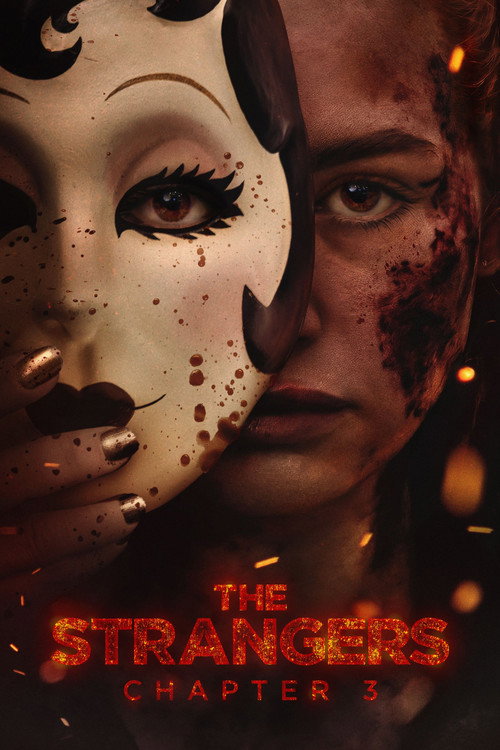
The Strangers: Chapter 3
A suffocating, blood-soaked descent into rural dread where fragile survival curdles into violent retribution, framing a scarred woman's soul as a shattered mirror reflecting the monstrous faces of her tormentors.
The Strangers: Chapter 3

The Strangers: Chapter 3

"Embrace your fears."

05 February 2026 United Kingdom 92 min 5.9 (273)

Director: Renny Harlin

Cast: Madelaine Petsch, Richard Brake, Ema Horvath, Gabriel Basso, Pedro Leandro

Thriller Horror The Corrosive Transformation of the Victim Institutional Complicity and Small-Town Secrecy The Myth of the 'Stranger' vs. Born Monsters Grief, Co-dependency, and Shared Madness
Budget: $8,500,000
Box Office: $11,031,947

Overview

The Strangers: Chapter 3 serves as the climactic conclusion to director Renny Harlin’s horror reboot trilogy. Picking up immediately after the harrowing events of Chapter 2, the film tracks protagonist Maya through the fog-shrouded backcountry of Venus, Oregon. Battered, exhausted, and running on pure adrenaline, Maya seeks safety among the reclusive locals and town structures, only to realize the boundaries between the town and the masked trio hunting her are far more permeable and conspiratorial than she ever feared.

As the masked killers close in for a final confrontation, the film expands beyond classic home-invasion mechanics into psychological captivity and town-wide conspiracy. While Maya wages a desperate struggle for survival, outside searchers arrive in Venus looking for answers, raising the stakes and turning the forested Oregon community into a lethal game of cat-and-mouse.
Core Meaning

Director Renny Harlin aimed to deconstruct the cyclical, viral nature of violence and trauma. Unlike Bryan Bertino’s 2008 original, which championed terrifying randomness, Harlin’s trilogy finale explores how institutional complicity and generational corruption breed monstrous behavior. The film argues that prolonged exposure to sadism strips away innocence, transforming the victim into the very violent entity they sought to escape.

Thematic DNA

The Corrosive Transformation of the Victim 35%
Institutional Complicity and Small-Town Secrecy 25%
The Myth of the 'Stranger' vs. Born Monsters 20%
Grief, Co-dependency, and Shared Madness 20%

The Corrosive Transformation of the Victim

Maya’s journey across the trilogy culminates in the loss of her former humanity. Pushed past endurance, her fight transitions from self-defense into cold, ruthless vengeance.

Institutional Complicity and Small-Town Secrecy

The film exposes the dark social contract of Venus, Oregon, where authority figures and townsfolk protect local sociopaths by directing violence strictly toward outsiders.

The Myth of the 'Stranger' vs. Born Monsters

By pulling back the masks, the narrative examines how monsters are not supernatural phantoms, but mundane, deeply broken individuals shaped by familial enablement and unchecked malice.

Grief, Co-dependency, and Shared Madness

The emotional bond between the killers reveals how sociopathic behavior can operate as a warped form of family and romance.

Character Analysis

Maya Lucas

Madelaine Petsch

Archetype: Final Girl / Tragic Avenger Key Trait: Relentless resilience

Motivation

Survival, followed by absolute vengeance for the slaughter of her loved ones.

Character Arc

Evolves from a terrified, grieving tourist into a hardened, uncompromising killer.

Gregory Rotter / Scarecrow

Gabriel Basso

Archetype: Sociopathic Shadow / Antagonist Key Trait: Cold, ritualistic sadism masked by domestic familiarity

Motivation

Preserving the legacy of his murderous relationship and indoctrinating Maya.

Character Arc

Shifts from a masked enigma to an unmasked, grieving psycho seeking to replace his deceased partner.

All 4 characters and cast

Symbols & Motifs

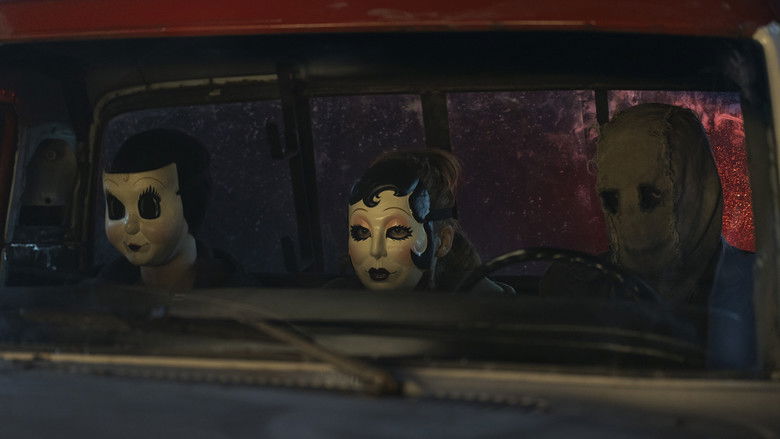
The Masks (Scarecrow, Dollface, Pin-Up Girl)

Meaning:

Tools of depersonalization used to strip away identity and guilt.

Context:

In the climax, the mask becomes an heirloom of trauma that Maya herself inherits.

The Catchphrase 'Is Tamara Home?'

Meaning:

Originally an unsettling question, revealed to be an obsessive ritual rooted in the killers' original childhood murder of a girl named Tamara.

Context:

Used repeatedly by the killers before abducting and murdering their victims, as seen in the 2021 flashback.

The Smiley Face Brand/Tattoo

Meaning:

Symbolizes forced ownership, indoctrination, and irreversible psychological scarring.

Context:

Carved and branded onto the flesh of victims, specifically when Gregory brands Maya's skin in the underground bunker.

The Sawmill and Wood Chipper

Meaning:

An industrial motif representing the town’s utilitarian, brutal nature.

Context:

Used to erase evidence and human lives without ceremony, such as when Gregory and Jasmine dispose of Shelly's body.

Memorable Quotes

You're still alive, huh?
— Gregory Rotter

Context

Spoken coldly to Maya in the church.

Meaning

Establishes Gregory’s shock and morbid fascination with Maya’s endurance.

Because you were here.
— Shelly Barnes / Pin-Up Girl

Context

Delivered in the opening 2021 flashback to Claire before killing her.

Meaning

Reiterates the franchise’s nihilistic philosophy.

All 4 quotes

Philosophical Questions

Can innocence survive prolonged brutality without turning into cruelty?

The film explores whether Maya’s vengeful survival compromises her soul until she is indistinguishable from the killers.

What constitutes a community's moral threshold?

Investigates how an entire town can normalize atrocity against 'outsiders' to preserve internal stability.

Is human evil inherently born, learned, or enabled?

Contrasts Gregory’s latent sociopathy with the sheriff’s legal shielding and parental enablement.

Alternative Interpretations

Different interpretations of the ending include:

Full ending explanation

Cultural Impact

Released theatrically on February 6, 2026, by Lionsgate, The Strangers: Chapter 3 concluded a bold experimental release model that attempted to launch a pre-planned three-film horror arc across an 18-month window. Culturally, it sparked debates over the merits of explaining enigmatic horror villains versus preserving the terrifying ambiguity of original cult classics. While financially modest ($11 million box office), it stands as a unique case study in modern serialized genre production.

Audience Reception

The film was widely panned by critics (Rotten Tomatoes ~18%, Metacritic 24) for demystifying the terrifying randomness of the 2008 original and stretching thin plot material into an overlong trilogy. Main points of criticism highlighted tedious pacing, predictable slasher tropes, unconvincing origin lore, and unnecessary exposition regarding the killers' identities.

Conversely, praised elements included Madelaine Petsch’s committed physical performance, Richard Brake’s sinister presence, and José David Montero’s moody cinematography.

Interesting Facts

  • Renny Harlin shot all three chapters continuously in late 2022 across 52 days, working from a monolithic 280-page master screenplay written by Alan R. Cohen and Alan Freedland.
  • The entire trilogy was shot on location and soundstages in Bratislava, Slovakia, doubling for rural Oregon.
  • Lead actress Madelaine Petsch served as an executive producer on the trilogy, actively influencing Maya’s emotional descent and stunt choreography.
  • Following polarizing responses to Chapter 1 and test screenings, additional pickups and re-edits were conducted prior to Chapter 3's 2026 theatrical run.
  • Director Renny Harlin developed a 4.5-hour continuous 'supercut' intended for physical home media release, integrating all three chapters as one continuous narrative.

Easter Eggs

The 2008 Callback Line

Shelly's flashback answer 'Because you were here' explicitly repeats the iconic line uttered by Dollface in Bryan Bertino's original 2008 film.

Tamara's Origin Revealed

The trilogy finally reveals the backstory behind the recurrent phrase 'Is Tamara home?', revealing Tamara was an actual high school classmate murdered by Gregory and Shelly.

Renny Harlin's Action Roots

The climax in the underground lair features close-quarters, visceral axe and shotgun combat, a hallmark of Harlin’s 1990s action-horror filmmaking pedigree (Cliffhanger, Deep Blue Sea).

Frequently Asked Questions

Explore More About This Movie

Dive deeper into specific aspects of the movie with our detailed analysis pages

Comments (0)

Leave a comment

No comments yet. Be the first to share your thoughts!

Similar Movies