The Summit of the Gods
Le Sommet des dieux
Overview
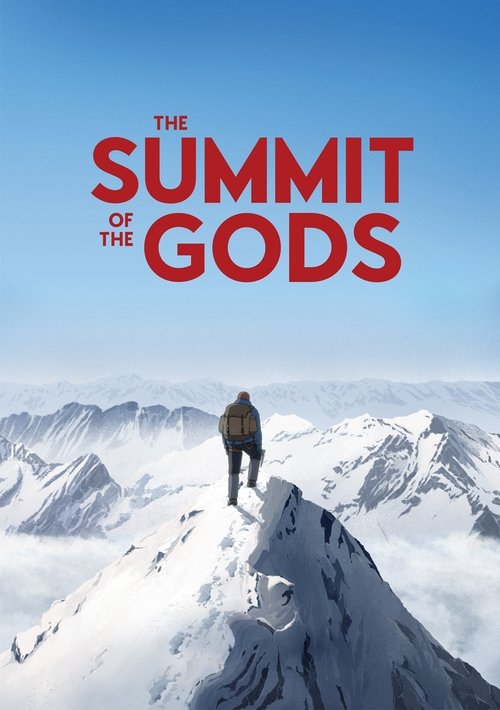
The Summit of the Gods (Le Sommet des dieux) follows Makoto Fukamachi, a young Japanese photojournalist who stumbles upon a mysterious Vest Pocket Kodak camera in a Kathmandu shop. The camera may have belonged to George Mallory, the legendary British mountaineer who disappeared on Mount Everest in 1924. If the film inside remains intact, it could prove whether Mallory reached the summit decades before Sir Edmund Hillary, potentially rewriting mountaineering history.
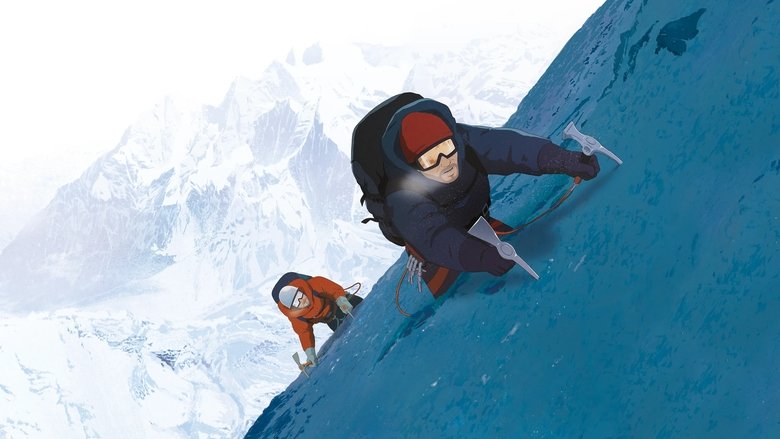
Fukamachi's investigation leads him to Joji Habu, a reclusive and legendary climber who has vanished from the public eye. As Fukamachi delves into Habu's past—marked by fierce rivalries, tragic accidents, and an uncompromising spirit—the film transforms from a journalistic mystery into a harrowing exploration of the human soul. The narrative eventually converges on Everest, where both men must face the ultimate physical and psychological test against the indifferent power of the mountain.
Core Meaning
The core meaning of the film lies in the nature of obsession and the rejection of external validation. While the plot is initially driven by the mystery of Mallory's camera, the resolution suggests that the "truth" of history is secondary to the personal experience of the climb. The director explores why individuals pursue seemingly futile, life-threatening goals. Ultimately, the film posits that for the true seeker, the summit is not a destination but merely a step; the purpose is found in the will to keep moving despite the lack of a logical 'why.'
Thematic DNA
The Burden of Obsession
The film portrays obsession as both a destructive force and a source of life. Habu's singular focus on climbing alienates him from society and leads to tragedy, yet it is the only thing that makes him feel truly alive. Fukamachi, initially a spectator, eventually finds himself consumed by the same relentless drive.
Man vs. Indifferent Nature
Unlike many adventure films, nature here is not a conscious antagonist but a vast, indifferent god. The mountains do not care about human ambition or morality; they simply exist, posing a lethal challenge that exposes the fragility of human existence.
The Value of the Process over the Result
The mystery of Mallory's camera serves as a MacGuffin. The film emphasizes that the act of climbing—the struggle, the breath, and the movement—is more significant than the historical record of who reached the top first.
Mentorship and Legacy
Through the character of Buntaro, the film explores the weight of responsibility a mentor carries. Habu's guilt over Buntaro's death shapes his reclusive nature and his eventual willingness to let Fukamachi follow him, passing on the 'fire' of his passion.
Character Analysis
Joji Habu
Éric Herson-Macarel
Motivation
Driven by a need to prove himself in a world that he feels has rejected or surpassed him, and a desire to feel 'alive' only through extreme physical challenge.
Character Arc
Initially a bitter and isolated genius who views climbing as a purely selfish pursuit, Habu's arc leads him to sacrifice his solo goal to save Fukamachi, eventually finding peace in his final, unseen ascent.
Makoto Fukamachi
Damien Boisseau
Motivation
Originally motivated by professional success, he becomes obsessed with the mystery of Mallory and the enigmatic character of Habu.
Character Arc
Starts as a cynical journalist looking for a scoop, but becomes an obsessive participant who learns the true, unspoken meaning of mountaineering by following Habu's footsteps.
Buntaro
Kylian Rehlinger
Motivation
The desire to be recognized by his idol, Habu, and to prove his worth as a climber.
Character Arc
His tragic death serves as the pivot point for Habu's life, representing the cost of pushing oneself and others beyond their limits.
Symbols & Motifs
The Vest Pocket Kodak Camera
Represents the objective truth and the human desire to document and validate experiences. Its ultimate fate symbolizes the shift from seeking external proof to finding internal meaning.
Discovered in Kathmandu, it is the catalyst for the entire plot and the primary connection to George Mallory.
The Rope
A symbol of human connection and responsibility. It represents the literal and metaphorical tie between climbers, signifying how one person's life is entirely dependent on another's strength and commitment.
Featured prominently in the flashback of Buntaro's accident and later during the final ascent of Everest.
The Mountain (Everest)
Symbolizes the unknowable and the absolute. It is a 'Summit of the Gods' where human ego is stripped away, leaving only the raw instinct to survive or transcend.
The primary setting for the climax, portrayed as a character that 'speaks' through sound design and weather.
Breath and Frost
Symbolizes life and the struggle to maintain it in an environment hostile to biology. The visual focus on the characters' breathing underscores their proximity to death.
The sound design emphasizes heavy breathing and the visual detail of frost on eyelashes and masks during high-altitude scenes.
Memorable Quotes
Pourquoi on grimpe toujours plus haut? Pour être le premier? Pourquoi risquer sa vie? Pourquoi faire une chose aussi futile?
— Makoto Fukamachi
Context:
Spoken at the beginning and echoed at the end, framing the story as a search for an answer that may not exist.
Meaning:
This opening narration poses the central existential question of the film, setting the stage for the exploration of human drive.
Certains cherchent un sens à leur vie. Pas moi. Grimper, c'est la seule chose qui me fasse me sentir vivant. Et c'est ce que j'ai fait, jusqu'au bout. Sans regrets.
— Joji Habu
Context:
Written in a letter left for Fukamachi, explaining his decision to continue his final ascent.
Meaning:
Defines Habu's philosophy: life is validated by the action itself, not by a higher meaning or external approval.
Pour certains, la montagne n'est pas un but, mais un chemin. Et le sommet, une étape. Une fois là-haut, il ne reste plus qu'à continuer.
— Makoto Fukamachi
Context:
The final lines of the film as Fukamachi is seen climbing again, having adopted Habu's perspective.
Meaning:
Signifies Fukamachi's ultimate understanding of the mountaineer's mindset; there is no finality, only the continuation of the journey.
Philosophical Questions
Does an achievement have value if no one is there to witness it?
The film addresses the 'if a tree falls in the forest' dilemma through the mystery of Mallory and Habu's final climb. It suggests that personal experience is the only true witness that matters.
Is obsession a virtue or a vice?
The film refuses to moralize Habu's behavior. It shows the devastating consequences of his obsession (alienation, death of others) while also presenting it as the only path to his personal greatness.
Alternative Interpretations
Some viewers interpret the ending as a tragedy, seeing Habu's final ascent as a form of slow suicide driven by an inability to function in the modern world. Conversely, a more spiritual reading suggests that Habu achieves a form of Nirvana; by leaving the camera and the 'proof' behind, he transcends the need for human history and becomes one with the mountain. Another interpretation focuses on Fukamachi as the true protagonist, suggesting the film is actually about the transformation of a spectator into a participant—an allegory for how we consume stories versus how we live our own lives.
Cultural Impact
The Summit of the Gods has been hailed as a landmark in adult animation, moving away from fantasy tropes to embrace a grounded, 'prestige' drama aesthetic. It bridged the gap between Franco-Belgian animation traditions and Japanese manga storytelling, receiving a standing ovation at the Cannes Film Festival. Critics praised it for its maturity and for proving that animation can depict the physical toll and psychological depth of sports more effectively than live-action. It significantly boosted international interest in the works of Jirō Taniguchi and underscored the growing trend of 'adult-skewing' animation on global platforms like Netflix.
Audience Reception
The film was met with widespread critical acclaim, holding a high approval rating on Rotten Tomatoes. Audiences particularly praised the immersive sound design and the vertigo-inducing cinematography. Main points of praise included the film's ability to create tension without dialogue and its respectful, non-romanticized depiction of mountaineering. Some viewers found the pacing of the urban investigation in the first half slow compared to the thrilling mountain sequences, but most agreed that the character building made the final act significantly more impactful.
Interesting Facts
- The film is an adaptation of the 1,500-page manga by Jirō Taniguchi, which itself was based on Baku Yumemakura's 1998 novel.
- Director Patrick Imbert admitted he knew almost nothing about mountaineering before starting the project and relied on extensive research and consultants.
- Real-life mountaineers were hired as consultants to ensure the technical movements of the characters—such as knot-tying and ice-ax use—were 100% accurate.
- The film won the César Award for Best Animated Film in 2022.
- Despite being a story about Japanese characters set largely in Japan and Nepal, it is a French-Luxembourgish production and was originally recorded in French.
- The background art was inspired by live-action cinematography and high-resolution photography of the actual Himalayas.
- The soundtrack by Amine Bouhafa was designed to be the 'voice of the mountain' in the second half of the film, where dialogue becomes sparse.
Easter Eggs
George Mallory's Kodak Camera
The specific model, a Kodak Vest Pocket, is historically accurate to the 1924 expedition. The film treats it as a 'holy grail' of mountaineering lore.
Cinematic Influences
The director cited Alejandro G. Iñárritu's The Revenant as a major influence on how the film depicts the sensory experience of extreme environments and the sound of breathing.
Taniguchi's Art Style
The character designs pay homage to the 'Ligne Claire' style of the original manga artist, Jirō Taniguchi, balancing realism with clean, expressive lines.
⚠️ Spoiler Analysis
Click to reveal detailed analysis with spoilers
Frequently Asked Questions
Explore More About This Movie
Dive deeper into specific aspects of the movie with our detailed analysis pages
Comments (0)
No comments yet. Be the first to share your thoughts!