Skip to content
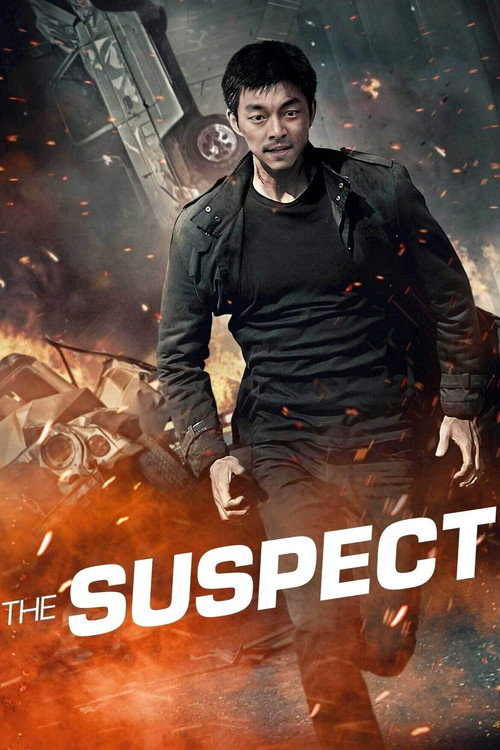
The Suspect
A relentless, rain-slicked Korean spy thriller in which a haunted defector tears through Seoul like a blade drawn in the dark, grief burning under every blow and every screaming car chase.
The Suspect

The Suspect

용의자

"All evidences say he did it."

24 December 2013 South Korea 137 min 6.9 (217)

Director: Won Shin-yun

Cast: Gong Yoo, Park Hee-soon, Cho Seong-ha, Yoo Da-in, Kim Sung-kyun

Action Thriller Abandonment and the defector's limbo Grief and revenge Institutional corruption Honor and conscience Truth and exposure

Overview

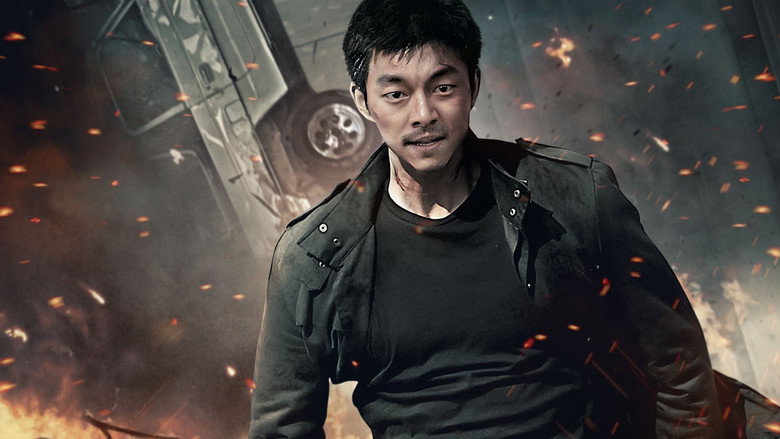
The Suspect (용의자) is a 2013 South Korean action spy thriller directed by Won Shin-yun. It runs 137 minutes. Gong Yoo plays Ji Dong-cheol, a North Korean defector who works as a taxi driver in Seoul and lives in a shabby little shack. Beneath this quiet life he is a former elite North Korean special forces agent, abandoned by his own side during a mission. He is hunting Ri Kwang-jo, a fellow former agent who betrayed him and murdered his wife and daughter.

One night Dong-cheol visits his part-time employer, the industrial magnate Park Geon-ho. While he is there, Park is killed by a death squad connected to Kim Seok-ho, the corrupt head of the NIS, South Korea's intelligence agency. Kim pins the murder on Dong-cheol and sets up a task force to catch him.

The task force is led by Colonel Min, an honorable soldier whose career was damaged by an earlier encounter with Dong-cheol. While Min closes in and a documentary producer digs into the case, Dong-cheol has to stay ahead of the whole South Korean security apparatus and keep looking for the man who destroyed his family.

Core Meaning

Behind its nonstop action, The Suspect is about a man abandoned by both Koreas. The North threw him away and the South treats him as useful, disposable and an easy scapegoat. Korea's film council described the film as depicting "the agony of an abandoned North Korean agent."

The film suggests that the real enemies are not across the border but inside the institutions. A corrupt intelligence chief turns the state's machinery against an innocent man. An honorable soldier is gradually forced to question whom he serves. Under the genre surface, the story is about grief and a loyalty that has nowhere left to go, and it asks whether a man trained to be a weapon can hold on to anything human.

Thematic DNA

Abandonment and the defector's limbo 25%
Grief and revenge 25%
Institutional corruption 20%
Honor and conscience 15%
Truth and exposure 15%

Abandonment and the defector's limbo

Dong-cheol was left behind by the North during a mission and now lives on the edge of Southern society as a taxi driver in a shack. He is trusted by no system, which makes him the ideal fall guy when the NIS needs one.

Grief and revenge

The murder of his wife and daughter drives everything Dong-cheol does. His hunt for Ri Kwang-jo gives the relentless action its emotional center, and Gong Yoo carries that grief mostly through silence.

Institutional corruption

NIS chief Kim Seok-ho uses a death squad and a manufactured manhunt to cover his own crimes. The film shows the security state as a predator rather than a protector.

Honor and conscience

Colonel Min is an honorable officer who holds a personal grudge against Dong-cheol, yet he is taking orders from a corrupt superior. His path through the investigation shows duty colliding with conscience.

Truth and exposure

A documentary producer gets pulled into the case. Her role reflects the idea that the truth has to be dragged out of institutions that are built to bury it.

Character Analysis

Ji Dong-cheol

Gong Yoo

Archetype: Wounded avenger / antihero Key Trait: Lethal skill paired with quiet, consuming grief

Motivation

To find and kill Ri Kwang-jo, who betrayed him and murdered his wife and daughter, and to clear himself of the murder he did not commit.

Character Arc

He starts out as a silent defector hiding in a menial job. After he is framed for Park Geon-ho's murder, he is forced back into his old skills as a special forces agent. From there he has to keep evading the state while still pursuing his personal revenge.

Colonel Min Se-hoon

Park Hee-soon

Archetype: Honorable pursuer / rival Key Trait: Dogged integrity

Motivation

Duty, professional pride and the chance to redeem his damaged career.

Character Arc

Min leads the task force with a personal grudge, because his career was damaged by an earlier encounter with Dong-cheol. The deeper he goes, the more the corruption above him comes into view.

All 5 characters and cast

Symbols & Motifs

The taxi

Meaning:

Anonymity and endless motion. It is the invisible working-class disguise of a man who used to be an elite weapon.

Context:

Dong-cheol drives a taxi in Seoul as his cover life. This connects to the film's heavy use of vehicles and car chases.

The shabby shack

Meaning:

The defector's marginal place in South Korean society: tolerated, but never at home.

Context:

The introduction to Dong-cheol's everyday life establishes how isolated and poor he is.

The staircase car chase

Meaning:

A descent into chaos. The city itself turns into an obstacle course for a hunted man.

Context:

Viewers single out a suspension-rattling car chase down a flight of stairs as a standout set piece.

The surveillance eye

Meaning:

The all-seeing state that hunts the individual.

Context:

Large-scale chase scenes were filmed from aerial and surveillance-style angles, so the audience watches Dong-cheol the way his pursuers do.

Philosophical Questions

Can a man trained to be a weapon reclaim his humanity?

Dong-cheol's lethal skills are what keep him alive. His motive, though, is love for the family he lost, and that tension runs through the whole film.

Where does loyalty belong when every state betrays you?

The North abandoned him and the South frames him. The film leaves him loyal only to the memory of his family.

Is the institution guilty, or only the individuals running it?

Kim Seok-ho, the corrupt chief, stands next to honorable officers like Colonel Min. The film asks whether the system can be redeemed from inside.

How It Ends

Alternative Interpretations

As pure genre spectacle: some critics treat the film as a fairly typical action vehicle, with a predictable story that mainly exists to set up chases and fights.

Full ending explanation

Cultural Impact

The Suspect belongs to a wave of Korean films about North–South espionage and the experience of defectors. Korea's film council framed it as the story of "an abandoned North Korean agent." On a budget of about $9.5 million it took in about $26.9 million, a solid commercial success.

It was also an important career turn for Gong Yoo. He was mostly known for romantic and dramatic roles, and here he remade himself as an action lead through physical training, Systema and stunt work he did himself. Its kinetic car chases, including the much-discussed chase down a flight of stairs, place it alongside the high-octane Korean action cinema of the early 2010s.

Audience Reception

Audiences and critics mostly praised Gong Yoo's magnetic performance and physical commitment. They also praised the relentless pacing: reviewers said the film "never slows down, never lets up," and the staircase car chase is often mentioned. On IMDb it has a rating of roughly 6.8.

The main criticism is that the story is lackluster and predictable and gets buried under nonstop fighting. The 137-minute running time and dense plot also struck some viewers as heavy. Overall, it is seen as a strong, muscular Korean action thriller that works best for genre fans and admirers of Gong Yoo.

Interesting Facts

  • The film had a budget of about US$9.5 million and earned about US$26.9 million at the box office.
  • Gong Yoo dieted for three months to cut his body fat for the role.
  • Gong Yoo learned the Russian martial art Systema for the fight scenes.
  • Gong Yoo reportedly did car chases, rock climbing and skydiving at the Han River without stuntmen.
  • The latest Hollywood equipment was used to shoot the large-scale car chases from aerial and surveillance angles.
  • The film runs 137 minutes.
  • The Korean title 용의자 is written in Hanja as 容疑者, meaning 'suspect'.
  • Reviewers noted that the film has very little dialogue and relies on Gong Yoo's screen presence.

Frequently Asked Questions

Explore More About This Movie

Dive deeper into specific aspects of the movie with our detailed analysis pages

Comments (0)

Leave a comment

No comments yet. Be the first to share your thoughts!

Similar Movies