Skip to content
The Flu
A suffocating epidemic thriller where a modern metropolis devolves into a quarantined charnel ground under the indifferent gaze of authoritarian power.
The Flu

The Flu

감기

"Death goes viral."

14 August 2013 South Korea 122 min 7.5 (1,290)

Director: Kim Sung-soo

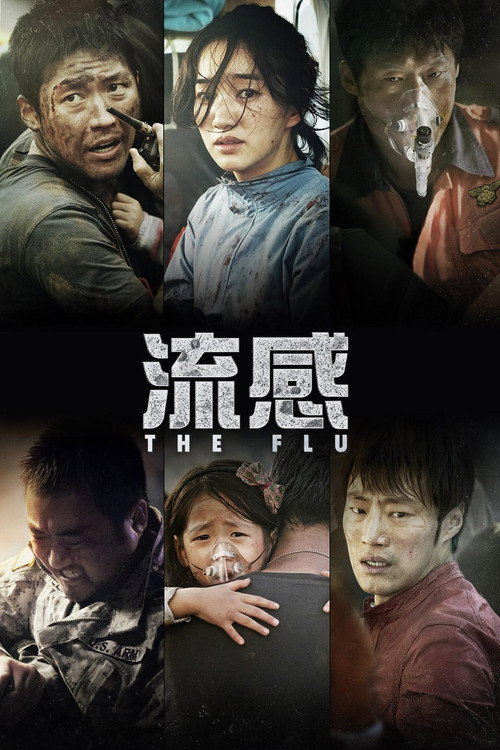
Cast: Jang Hyuk, Soo Ae, Park Min-ha, Yoo Hai-jin, Don Lee

Action Thriller Science Fiction Government Callousness vs. Human Dignity Maternal Instinct & Moral Compromise Everyday Heroism & Civic Duty Xenophobia & Marginalized Populations National Sovereignty vs. Foreign Intervention
Box Office: $19,775,853

Overview

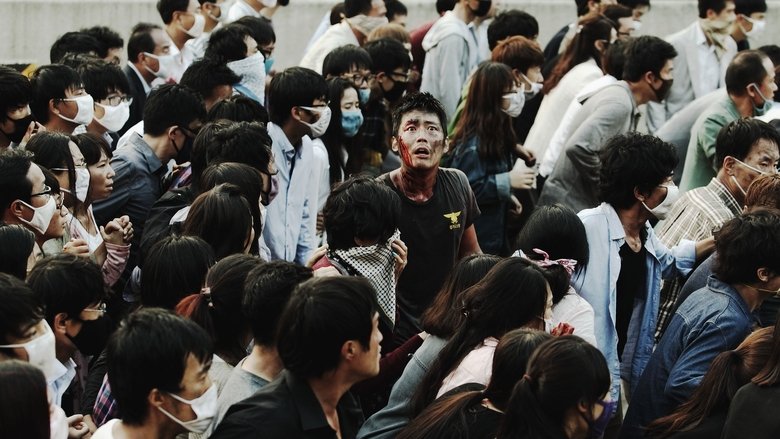
Set in Bundang, an affluent satellite district of Seoul with nearly half a million residents, The Flu begins when an illicit shipping container filled with undocumented immigrants arrives from Hong Kong. All but one passenger have perished from an extraordinarily virulent, mutated strain of avian influenza (H5N1). As the sole survivor flees into the metropolis and the human traffickers fall ill, the airborne pathogen sweeps across the city with terrifying velocity, claiming victims within 36 hours through severe respiratory distress, skin eruptions, and fatal internal hemorrhaging.

At the epicenter of the escalating crisis are Kang Ji-goo, a selfless emergency rescue worker, and Dr. Kim In-hae, an infectious disease specialist and single mother desperately trying to safeguard her young daughter, Mi-reu. When national authorities abruptly enact a total military quarantine around Bundang—cutting communication lines and cordoning off the populace into hastily constructed containment camps—the medical emergency escalates into an all-out civil catastrophe.

As social order collapses inside the containment perimeter, Ji-goo and In-hae navigate panic, mob violence, and draconian political mandates in a desperate race against time to locate the fugitive carrier possessing the natural antibodies needed to synthesize a cure.

Core Meaning

Director Kim Sung-soo crafts The Flu as a critique of structural dehumanization and political expediency in times of catastrophic crisis. The film posits that the most perilous threat during a biological disaster is not the pathogen itself, but the erosion of empathy by governing systems that treat civilian populations as statistical collateral. By contrasting the raw survival instincts of ordinary citizens against bureaucratic indifference and geopolitical sovereignty struggles, the narrative champions the fundamental sanctity of human life and individual compassion as the ultimate antidote to societal breakdown.

Thematic DNA

Government Callousness vs. Human Dignity 30%
Maternal Instinct & Moral Compromise 25%
Everyday Heroism & Civic Duty 20%
Xenophobia & Marginalized Populations 15%
National Sovereignty vs. Foreign Intervention 10%

Government Callousness vs. Human Dignity

The film examines how institutional hierarchies prioritize containment and political optics over humanitarian care. The quarantine camp transitions from a medical triage center into an oppressive internment facility, culminating in the horrific disposal of infected and living patients alike. The state's utilitarian calculus—sacrificing one city to spare the capital—demonstrates how institutional fear strips citizens of their civil rights.

Maternal Instinct & Moral Compromise

Dr. Kim In-hae embodies the conflict between medical ethics and the primal drive of parenthood. When her daughter Mi-reu exhibits symptoms, In-hae actively conceals the infection, fakes diagnostic results, and illicitly administers an experimental serum. The narrative illustrates how systemic cruelty forces moral individuals into self-interested compromises to protect their loved ones.

Everyday Heroism & Civic Duty

Kang Ji-goo represents ground-level, uncalculated altruism. Unlike the administrative elites who manage the crisis from sanitized control rooms, Ji-goo continuously wades into contamination and danger, motivated solely by his commitment as a first responder and his emotional bond with Mi-reu.

Xenophobia & Marginalized Populations

The outbreak originates from undocumented migrant trafficking. Rather than acknowledging structural vulnerabilities, initial societal responses weaponize xenophobia. However, the narrative flips this prejudice: Monssai, the undocumented immigrant initially viewed as a vector of death, becomes the sole biological salvation for the entire nation.

National Sovereignty vs. Foreign Intervention

The political conflict reaches its peak through the confrontation between the South Korean presidency and foreign military/alliance commanders (specifically Snyder and the Combined Forces Command). The film highlights tensions over wartime operational control and the right of a sovereign state to defend its own citizens from allied military strikes.

Character Analysis

Kang Ji-goo

Jang Hyuk

Archetype: The Selfless Hero / Everyman Key Trait: Unflinching altruism and physical bravery.

Motivation

Protecting Mi-reu and ensuring the survival of those around him.

Character Arc

Evolves from an easygoing rescue worker into an unwavering protector who risks his life against soldiers and infected mobs.

Dr. Kim In-hae

Soo Ae

Archetype: The Conflicted Specialist / Fierce Mother Key Trait: Keen scientific intellect paired with fierce maternal devotion.

Motivation

Ensuring the survival of her daughter, Mi-reu, and securing an effective vaccine.

Character Arc

Shifts from an aloof, professional epidemiologist into a desperate mother willing to break protocol to save her child.

All 5 characters and cast

Symbols & Motifs

The Shipping Container

Meaning:

Symbolizes globalization’s dark underbelly, human commodification, and the unseen vectors of global vulnerability.

Context:

It serves as a literal pressure cooker where the mutated virus originates and is discovered containing dead smuggled migrants.

The Bundang Tancheon Sports Complex / Stadium

Meaning:

Symbolizes how modern social infrastructure can be repurposed into apparatuses of death and state concealment.

Context:

Transitions from a civic arena of recreation into a mass containment zone and incineration pit where infected patients are dumped.

Protective Masks and Hazmat Suits

Meaning:

Visual barriers that emphasize emotional alienation, social division, and the breakdown of interpersonal trust. Those with masks hold authority, while the unmasked populace is rendered vulnerable and disposable.

Context:

Worn by military and medical enforcers to separate themselves physically and socially from the unmasked, vulnerable citizens.

Mi-reu’s Cell Phone & Video Footage

Meaning:

Digital recordings serve as instruments of bearing witness and countering state censorship.

Context:

Used to expose hidden realities throughout the film, from the initial discovery of the container corpses to the state-sanctioned disposal in the stadium.

The Containment Line Highway

Meaning:

Represents the physical and moral boundary between survival and systemic abandonment.

Context:

The asphalt highway boundary between Bundang and Seoul where civilians face down armed military forces and allied bombers.

Memorable Quotes

나에겐 저들이 국민입니다. 전폭기가 접근하면 격추 명령을 내리겠습니다.
— The President (Cha In-pyo)

Context

When the US/allied commander orders an airstrike on the quarantined civilians marching toward Seoul, the President asserts constitutional authority and threatens to down allied bombers.

Meaning

Demonstrates constitutional authority, moral leadership, and the defense of national sovereignty over foreign military dictates.

우리 엄마 쏘지 마세요!
— Kim Mi-reu (Park Min-ha)

Context

Mi-reu stands directly in front of armed military forces, spreading her arms to shield her mother In-hae from the firing squad at the quarantine perimeter.

Meaning

Serves as the emotional climax of innocence confronting state violence, dissolving the soldiers' willingness to execute citizens.

All 4 quotes

Philosophical Questions

Utilitarian Calculus vs. Deontological Ethics

Explores whether it is morally defensible to sacrifice an entire quarantined city of 500,000 people to guarantee the survival of the remaining 50 million.

The Social Contract under Catastrophe

Examines whether a citizen’s obligation to obey the state dissolves when a government deceives its citizens and discards basic human rights.

Medical Ethics vs. Family Preservation

Investigates whether a medical professional's duty to the public supersedes their instinct to save their own child when resources are scarce and life is on the line.

Alternative Interpretations

The Anti-Imperialist / Sovereignty Reading: Focuses on the climax where South Korean military assets are ordered to target allied aircraft. In this reading, the virus is secondary to the geopolitical allegory of a nation reclaiming self-determination and refusing to be treated as a disposable buffer zone.

Full ending explanation

Cultural Impact

In 2013, public memory in East Asia was shaped by the SARS (2003) and H1N1 (2009) outbreaks. South Korean cinema had explored biological disasters via creature/parasite features like The Host (2006) and Deranged (2012), but The Flu was South Korea’s first large-scale, realistic viral disaster blockbuster focused directly on airborne avian flu.

The Flu opened strongly, grossing nearly $20 million worldwide. While domestic and international critics commended its visceral action, pacing, and visual effects, some criticized its sudden shifts into high melodrama and familiar disaster-genre tropes during the final act.

During the onset of the COVID-19 pandemic in 2020, The Flu experienced an international resurgence on streaming platforms worldwide. Audiences and media outlets revisited the film due to its depictions of contact tracing, mask shortages, hospital overload, and quarantine dilemmas.

Audience Reception

Critical and audience reception was largely positive regarding tension, pacing, and emotional energy, while drawing criticism for medical inaccuracies and late-stage melodrama:

  • Relentless Pacing & Direction: Kim Sung-soo’s direction during the initial outbreak and riot sequences was celebrated for intensity and kinetic energy.
  • Visceral Staging: The containment camp and stadium incineration scenes were universally recognized as shocking and memorable set pieces.
  • Strong Lead Performances: Jang Hyuk’s grounded charm and Soo Ae’s emotional intensity anchored the high-stakes narrative.
  • Scientific & Logical Liberties: Fast-tracking antibody production within minutes and the rapid lethality curve (36 hours) strained medical plausibility.
  • Melodramatic Climax: The slow-motion standoff at the quarantine line was viewed by several Western and domestic critics as emotionally manipulative and overly theatrical.

Interesting Facts

  • The film marked director Kim Sung-soo’s major feature comeback a decade after Please Teach Me English (2003); he was renowned for seminal Korean hits like Beat (1997) and Musa: The Warrior (2001).
  • Released in August 2013, The Flu competed against two domestic blockbusters—Bong Joon-ho’s Snowpiercer and Huh Jung’s Hide and Seek—still managing to draw over 3.1 million admissions domestically.
  • Jang Hyuk underwent specialized emergency rescue and fire academy training prior to filming to ensure authentic handling of equipment and victim transport.
  • The film was shot in extreme summer heat, forcing cast and extras to spend 12-hour shooting days inside non-breathable protective suits and gas masks.
  • Jang Hyuk personally asked director Kim Sung-soo to alter Ji-goo’s dialogue from sounding like an idealized Hollywood action hero to an ordinary first responder driven by grounded human empathy.

Easter Eggs

Soo Ae and Park Min-ha's Prior Connection

Actresses Soo Ae and child star Park Min-ha played mother and daughter in the high-rating SBS drama Queen of Ambition (Yawang, 2013) immediately before appearing together in The Flu.

Historical Genocide Imagery

The mass dumping and burning of bodies in the sports stadium explicitly references historical imagery of mass graves from WWII and the Holocaust, adapted into a modern biohazard catastrophe.

Wartime Operational Control (OPCON) Commentary

The political climax references South Korea’s real-world geopolitical OPCON arrangement with the United States Combined Forces Command during DEFCON escalations.

Frequently Asked Questions

Explore More About This Movie

Dive deeper into specific aspects of the movie with our detailed analysis pages

Comments (0)

Leave a comment

No comments yet. Be the first to share your thoughts!

Similar Movies