Skip to content
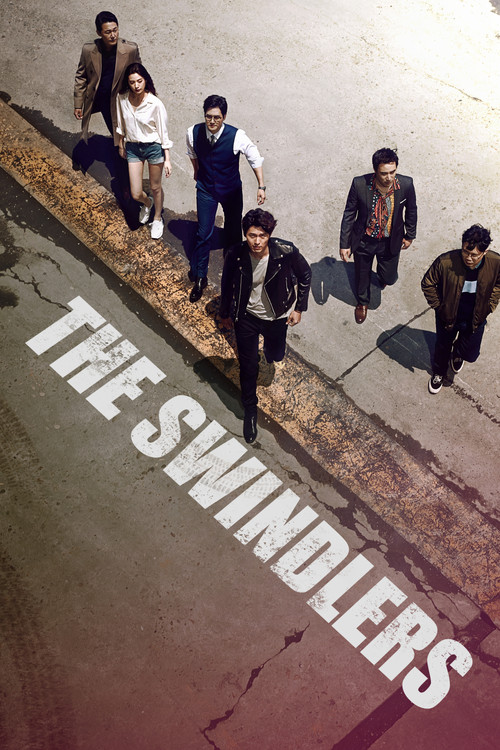
The Swindlers
A slick, playful crime caper where charm is a weapon and every smile hides a second plan. Like a deck of cards shuffled in neon light, the film dazzles while you wonder who is really holding the winning hand.
The Swindlers

The Swindlers

꾼

"Are you in or out?"

22 November 2017 South Korea 117 min 6.7 (107)

Director: Jang Chang-won

Cast: Hyun Bin, Yoo Ji-tae, Bae Sung-woo, Park Sung-woong, Nana

Crime Action Thriller Deception as a tool of justice Corruption and power Revenge and personal loss Teamwork among misfits Trust and identity

Overview

The Swindlers (Kkun, 2017) is the directorial debut of Jang Chang-won, who also wrote it. It is a South Korean crime-comedy heist film. A news report announces the death of Jang Doo-chil, a notorious con artist who once turned the country upside down. Rumors soon spread that he is still alive, and that powerful figures who once protected him may have set him free.

Ji-sung is a swindler who specializes in conning other con artists. He insists Jang is alive and takes a plan to catch him to Prosecutor Park Hee-soo, who is handling the case. Park secretly assembles an off-the-books team of skilled scammers, including Go Seok-dong, Choon-ja and Chief Kim. Together they set out to run a con on the man who is the master of cons.

The film is built on the Ocean's Eleven template of a multi-star caper, with layered schemes, disguises and reversals. Its tone is brisk and humorous, and it is backed by a revenge motive and the shadow of political corruption.
Core Meaning

The film argues that in a system where the powerful are protected, justice may only be reachable through the same deceit the powerful use. The film treats the con as a moral instrument. Its heroes are criminals who aim their skills at someone worse, and in doing so they expose the greater fraud of the politicians and officials who shield a swindler.

It also celebrates teamwork and trust among outcasts. Ji-sung starts as a solitary trickster driven by personal grievance. The mission turns a group of mismatched professionals into a team. The message is that deception can serve truth, and that real trust is the one thing a con artist cannot fake.

Thematic DNA

Deception as a tool of justice 30%
Corruption and power 25%
Revenge and personal loss 20%
Teamwork among misfits 15%
Trust and identity 10%

Deception as a tool of justice

The law and the prosecutor's office cannot or will not catch Jang Doo-chil, so a team of swindlers is recruited unofficially. Con craft becomes the only effective means of accountability.

Corruption and power

Rumors say influential figures protected Jang Doo-chil, so the con artist stands for a wider network of protected wrongdoing. The film's grievance is as much with the establishment as with the criminal.

Revenge and personal loss

Ji-sung's pursuit is personal. His attraction to the plan is fuelled by his history with Jang, which gives the lighthearted caper emotional weight.

Teamwork among misfits

Unlikely allies from both sides of the law, each with a specialty such as disguise or seduction, depend on each other. The film plays them against one another and ends by showing a bond.

Trust and identity

With everyone lying, nobody's role is certain. The film asks who is playing whom, and the performance of identity is its main pleasure.

Character Analysis

Hwang Ji-sung

Hyun Bin

Archetype: Charming antihero Key Trait: Smooth, quick-witted trickster

Motivation

Revenge on Jang Doo-chil and justice for those wronged.

Character Arc

He begins as a lone swindler who targets other swindlers and becomes the heart of a team assembled to bring down Jang Doo-chil.

Park Hee-soo

Yoo Ji-tae

Archetype: Ambiguous authority figure Key Trait: Calculating and composed

Motivation

Capturing Jang, which also bears on his own ambitions and the people above him.

Character Arc

He is a prosecutor who works outside official channels, and his true loyalties are a source of tension as the plan unfolds.

All 5 characters and cast

Symbols & Motifs

The news report of Jang's death

Meaning:

The official story, which is a lie that power has sanctioned.

Context:

The film opens with the announced death, and the rumors that follow set the plot going.

Disguises and role-playing

Meaning:

Identity as performance, and the instability of truth.

Context:

The team adopts false personas in each stage of the scheme, so the audience is often fooled along with the targets.

The con itself (the 'play')

Meaning:

Narrative as a weapon: whoever controls the story controls the outcome.

Context:

Each stage of the plan is staged like theatre, with scripted roles and reversals.

Money (the huge fraud)

Meaning:

The scale of the damage that fraud inflicts on ordinary victims.

Context:

The fraud at the film's center left tens of thousands of victims, which gives the revenge a public dimension.

Philosophical Questions

Can deception be justified when it serves justice?

The heroes lie, steal and manipulate to catch a worse liar. The film invites viewers to cheer for this, and in doing so it asks whether the ends redeem the means.

Who is the greater criminal: the swindler or the system that shelters him?

Rumors say powerful figures protected Jang Doo-chil, which shifts blame from the individual fraudster to institutions that profit from him.

Can trust exist among professional liars?

The team must rely on each other while constantly doubting each other, and the film finds a tentative answer in shared purpose.

How It Ends

Alternative Interpretations

The film can be read as a light genre entertainment whose plot twists are its whole purpose. It can also be read as political satire in which con artists are more honest than the officials and politicians they target. A third reading sees it as a story of personal revenge disguised as a caper, with the group dynamic offering a surrogate family.

Full ending explanation

Cultural Impact

The film belongs to the wave of Korean cons-and-heists that borrow from Hollywood's multi-star caper tradition. Reviewers explicitly compared it to the Ocean's Eleven series. It performed solidly at the box office: Wikipedia gives US$28.9 million, and Baidu gives about 4.02 million admissions. The story's political backdrop of protected elites and a fraud victimizing tens of thousands resonates with Korean public anger at white-collar crime. Critical reaction was mixed, and some foreign reviewers found it weaker than its genre peers.

Audience Reception

On IMDb the film holds a 6.6/10 rating from roughly 2,700 votes. Audience comments praise its fast pace, plot twists, funny scenes and its ending, and some call it a good way to pass time. Critics are more divided. Asian Movie Pulse liked its multilayered storyline and fast start. Roger Ebert's site was harsher, calling some of the expository dialogue tin-eared and the film uneven, although it conceded that subtitles may have dulled the dialogue. The verdict is an entertaining but familiar caper that works best if you do not think too hard about it.

Interesting Facts

  • It is Jang Chang-won's directorial debut, and he also wrote the screenplay.
  • The film was produced by Doodoong Films and distributed by Showbox, and it was released in South Korea on November 22, 2017.
  • Cinematography was by Lee Tae-yoon, and the music was composed by Bang Jun-seok.
  • Its running time is about 117 minutes per Wikipedia.
  • IMDb lists Thailand as a filming location.
  • Wikipedia reports a box office of about US$28.9 million, while Baidu lists 4.02 million admissions.

Frequently Asked Questions

Explore More About This Movie

Dive deeper into specific aspects of the movie with our detailed analysis pages

Comments (0)

Leave a comment

No comments yet. Be the first to share your thoughts!

Similar Movies