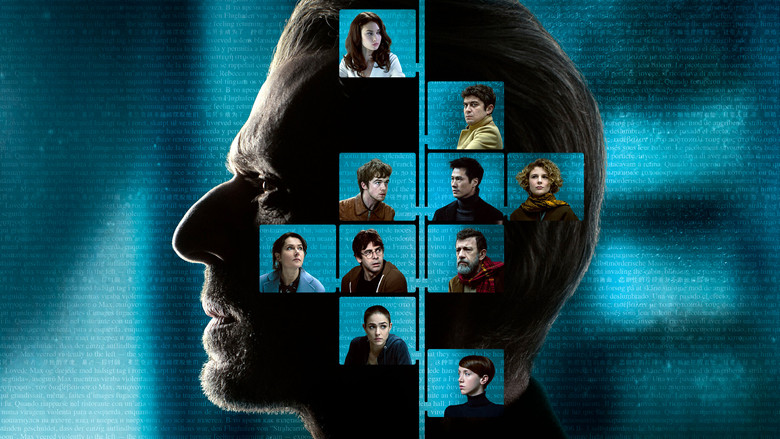

The Initial Deception: Angstrom locks the nine translators into the underground bunker to translate The Man Who Wouldn't Die, the third volume of the Dedalus series. Soon after, an anonymous email arrives containing the first ten pages of the manuscript and demanding five million euros, followed by an escalation to twenty million euros, or the entire book will be uploaded online. Angstrom descends into paranoia, cutting hot water, stripping the translators, and subjecting them to armed intimidation.
The Bunker Shootout: As paranoia reaches a fever pitch, Angstrom identifies Danish translator Helene Tuxen as a prime suspect after discovering handwritten pages matching the leak. In the ensuing confrontation, Angstrom brandishes a firearm, and Helene is shot and seemingly left for dead, fracturing the group and revealing Angstrom as a homicidal monster.
The Mid-Film Twist & The Heist Revealed: The film pivots 180 degrees through an extensive flashback sequence: the leak did not originate from inside the bunker during the lockdown; it was planned months in advance. Alex Goodman is Oscar Brach—Alex Lawther's character is not merely a translator, but the reclusive author who wrote the entire Dedalus trilogy. As a brilliant young writer, Alex had entrusted his manuscripts to Georges Fontaine, an elderly Parisian bookseller who acted as his mentor and surrogate father. Fontaine submitted the manuscript under the pseudonym "Oscar Brach" to Angstrom Éditions. Angstrom capitalized on the mysterious author persona, signed predatory contracts, cheated Fontaine out of royalties, and drove Fontaine to despair and suicide.
Knowing Angstrom would lock translators away for the final book, Alex recruited the translators beforehand in Paris. Nearly all of the translators were co-conspirators in an elaborate heist designed to liberate Alex's final book and destroy Angstrom. Using the cover of Fontaine's memorial and a clandestine photocopy operation during the initial manuscript transfer at the publishing house, the conspirators copied the pages long before setting foot inside the bunker. Helene's death was staged using theatrical blood to push Angstrom into committing an undeniable criminal act.
The Climax and Epilogue: Outside the bunker, Angstrom tracks Alex down to a railway station, demanding the codes to stop the final internet leak. Alex reveals his true identity as Oscar Brach. Realizing he has been outwitted by an author he considered his property, Angstrom attacks Alex in a murderous rage. However, the confrontation is a sting: Alex is wired, and police officers surround and arrest Angstrom on charges of extortion, assault, attempted murder, and financial fraud. In the epilogue, Alex visits a defeated and impoverished Angstrom in prison, presenting him with a published copy of the novel and reminding him that words cannot be owned, enslaved, or locked in a safe.