Skip to content
The Translators
A razor-sharp, claustrophobic psychological thriller bathed in mounting dread and simmering paranoia, where human intellect is trapped like a bird in a concrete cage while shadows whisper rebellion beneath cold fluorescent lights.
The Translators

The Translators

Les Traducteurs

20 December 2019 France 105 min 6.4 (564)

Director: Régis Roinsard

Cast: Olga Kurylenko, Lambert Wilson, Manolis Mavromatakis, Sidse Babett Knudsen, Alex Lawther

Thriller Mystery Art vs. Capitalist Exploitation The Invisibility of Cultural Labor Paranoia, Confinement, and Surveillance Authorship, Identity, and Fiction Rebellion, Solidarity, and Poetic Justice

Overview

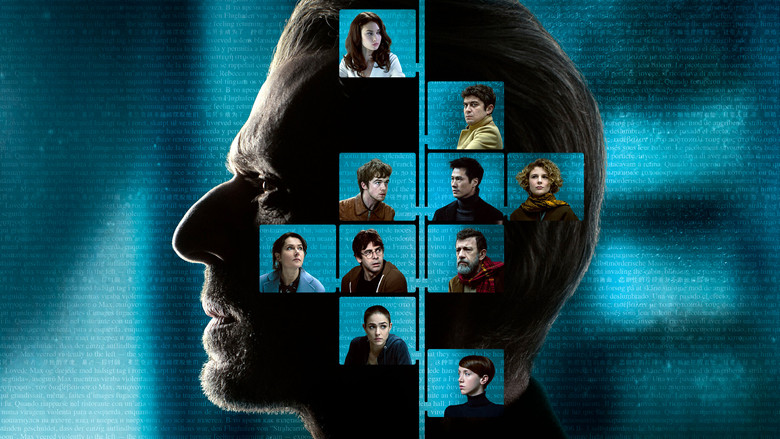
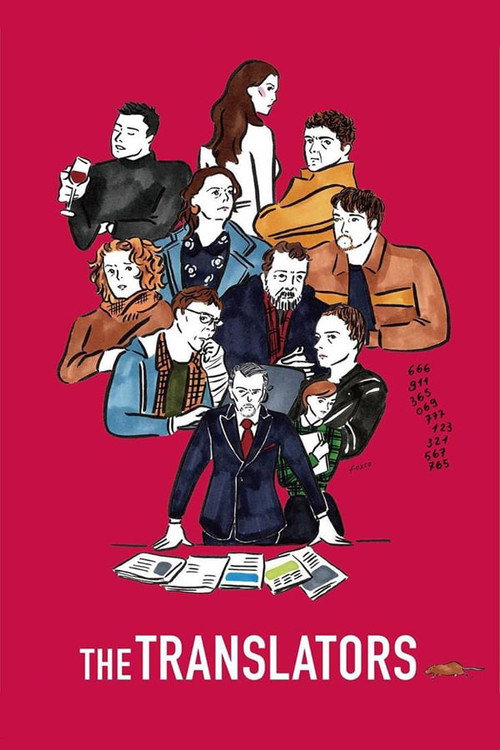
Directed by Régis Roinsard, The Translators (Les Traducteurs, 2019) opens within the high-stakes corridors of international literary publishing. Éric Angstrom, the ruthless and imperious head of a major publishing empire, has acquired the rights to The Man Who Wouldn't Die, the climactic final volume of the globally acclaimed Dedalus trilogy written by the reclusive, pseudonymous author Oscar Brach. To maximize profits and forestall catastrophic piracy, Angstrom organizes a simultaneous worldwide release across nine major language markets.

To ensure absolute confidentiality, nine professional translators—representing English, Russian, Italian, Spanish, German, Chinese, Danish, Greek, and Portuguese—are brought together and sequestered in a luxurious, fortified subterranean bunker beneath an isolated French manor. Stripped of mobile phones, internet access, and contact with the outside world, they are monitored round-the-clock by armed guards. Each morning, they receive only a limited quota of translated pages under strict surveillance, and each evening, the manuscripts are locked into an impenetrable safe.

The claustrophobic paradise turns into a nightmare when an anonymous blackmailer contacts Angstrom, announcing that the first ten pages of the top-secret manuscript have been published online. Demanding millions of euros under threat of releasing subsequent chapters, the extortionist triggers an all-consuming spiral of suspicion. Convinced the culprit is trapped with him inside the bunker, Angstrom resorts to increasingly tyrannical measures to protect his prize, igniting a war of nerves between a corporate despot and nine captive minds.

Core Meaning

The core message of The Translators is a defense of literature as a sacred, collaborative human endeavor against the soulless commodification of corporate capitalism. Régis Roinsard explores how contemporary publishing often reduces transcendent art into marketable content, transforming authors and translators from cultural artisans into expendable cogs.

Through the clash between Angstrom and the multilingual captives, the director illustrates that language and creative expression carry an inherent drive toward freedom that cannot be chained by non-disclosure agreements, security cameras, or reinforced vaults. The film ultimately champions the invisible laborers of culture—the translators—affirming that genuine intellectual passion and human solidarity will always outmaneuver bureaucratic greed.

Thematic DNA

Art vs. Capitalist Exploitation 30%
The Invisibility of Cultural Labor 25%
Paranoia, Confinement, and Surveillance 20%
Authorship, Identity, and Fiction 15%
Rebellion, Solidarity, and Poetic Justice 10%

Art vs. Capitalist Exploitation

The film contrasts the love of literature with commercial monetization. Éric Angstrom does not read books for intellectual resonance; he views them purely as financial assets. The tension is revealed through his willingness to subject creative professionals to prison-like conditions to protect profit margins.

The Invisibility of Cultural Labor

Literary translators are frequently treated as transparent conduits rather than artists in their own right. The film dramatizes their subordinate status—the translators are locked underground and treated as potential thieves, reflecting the real-world marginalization of translation in global literary commerce.

Paranoia, Confinement, and Surveillance

Confining nine distinct individuals beneath reinforced concrete explores panoptic power. As deadlines loom and blackmail threats escalate, mutual trust disintegrates, revealing how institutional paranoia infects human psychology.

Authorship, Identity, and Fiction

By centering the story on the anonymous novelist Oscar Brach, Roinsard questions what constitutes the identity of a writer. Characters project their romantic ideals and personal fantasies onto the text, blurring the line between reader, translator, and creator.

Rebellion, Solidarity, and Poetic Justice

Despite deep cultural and personal differences, the translators' shared appreciation for the text fosters an underground kinship, demonstrating that resistance against tyranny requires collective ingenuity.

Character Analysis

Éric Angstrom

Lambert Wilson

Archetype: The Tyrant / Capitalist Antagonist Key Trait: Narcissistic authoritarianism masked as refined professionalism.

Motivation

Wealth, absolute market supremacy, and preserving his publishing empire at all costs.

Character Arc

Begins as a suave, polished, and unflappable cultural tastemaker. As his control over the manuscript unravels, his urbane facade collapses into psychotic, despotic rage, exposing his moral emptiness.

Alex Goodman

Alex Lawther

Archetype: The Trickster / Underdog Hero Key Trait: Deceptive vulnerability concealing razor-sharp strategic intelligence.

Motivation

Reclaiming artistic sovereignty and avenging an exploited literary mentor.

Character Arc

Introduced as the youngest and seemingly meekest translator, quiet and insecure in the English seat. As tensions escalate, his keen intellect and steel resolve emerge, revealing a mastermind orchestrating events from the shadows.

All 5 characters and cast

Symbols & Motifs

The Subterranean Bunker

Meaning:

Symbolizes corporate alienation and the modern panopticon. It visually represents how capital imprisons human creativity.

Context:

Used as the primary setting where the translators are held; while furnished with luxury amenities, it remains a windowless concrete dungeon.

The Dedalus Manuscript

Meaning:

Represents both the mythical labyrinth of Minos and the golden fleece of modern publishing. It is simultaneously a sacred text of literary brilliance and a raw commodity over which men are willing to kill.

Context:

Forms the central plot device around which the entire narrative rotates, distributed page by page under guard and extorted by the blackmailer.

The Heavy Bank Safe

Meaning:

The physical embodiment of Angstrom’s obsession with control and intellectual property, underscoring the absurdity of treating ideas as static, capturable physical property.

Context:

Featured in the daily bunker ritual where sheets of the manuscript are locked away each evening.

Katerina’s Rebecca Wardrobe

Meaning:

Symbolizes the intoxicating, escapist power of fiction and the dangerous tendency to substitute literary narrative for lived reality.

Context:

Russian translator Katerina wears clothes styled identically to the female protagonist of the Dedalus novels.

The Station / Public Train

Meaning:

Serves as a symbol of movement, connection, and transition.

Context:

Recurs as a visual motif outside the bunker, contrasting directly with the static, dead air of the underground facility.

Memorable Quotes

« Neuf traducteurs, enfermés dans un bunker... C’est la seule façon d’éviter le piratage. »
— Éric Angstrom

Context

Angstrom justifies the extreme surveillance protocol to the press and stakeholders.

Meaning

Frames human imprisonment as a pragmatic business necessity.

« Vous n’êtes pas ici en tant qu'artistes. Vous êtes des traducteurs. »
— Éric Angstrom

Context

Spoken during a confrontation in the dining hall.

Meaning

Lays bare his contempt for the creative agency of his workforce.

All 4 quotes

Philosophical Questions

Can Art Exist Outside Capital?

The film questions whether great literature can remain pure in an era of globalized corporate conglomerates, or if commercial commodification inevitably poisons creative culture.

What Is the True Boundary of Authorship?

By exploring translation as an art form, the narrative asks whether a translated novel belongs solely to the original writer or represents a dual creation shaped by the translator's voice.

Is Extreme Surveillance Self-Defeating?

The bunker environment raises questions regarding security and human freedom, illustrating how obsessive control often produces the conditions for subversion.

Is Retributive Deception Justified Against Injustice?

The film tests the ethics of deception, asking whether breaking the law to reclaim stolen intellectual and moral rights constitutes true justice when the legal system protects the exploiter.

Alternative Interpretations

Marxist Reading (Alienated Labor): The bunker is an explicit metaphor for the alienation of labor under late capitalism. Angstrom is the capitalist who owns the means of production and distribution, while the translators represent the cognitive proletariat who generate surplus value while being locked away, surveilled, and stripped of humanity.

Full ending explanation

Cultural Impact

Released in France in late 2019 and early 2020, The Translators arrived at a time of fierce debate surrounding the monopolization of media, digital piracy, intellectual property rights, and the gig economy. It highlighted the traditionally neglected profession of literary translators, who often struggle for royalties, public visibility, and copyright ownership.

The film's global theatrical release was heavily disrupted by the emergence of the COVID-19 pandemic and theater closures in early 2020. However, it found critical reappraisal and a wider cult audience across international streaming and video-on-demand platforms.

French and international critics praised the film's brisk pacing, high production values, and Lambert Wilson's magnetic performance as the unraveling publisher. Some reviewers noted that the film's multiple reversals and intricate heist logic require a generous suspension of disbelief, but acknowledged its status as a stylish European crowd-pleaser.

Audience Reception

Aggregated critical and audience responses highlight several key aspects of the film:

  • What Was Praised: Lambert Wilson's commanding, multifaceted performance shifting from suave arrogance to unhinged brutality; Alex Lawther’s nuanced performance balancing youthful innocence with cold, calculated purpose; elegant production design and cinematography that transformed an underground set into a visually stimulating battleground; and a fast-paced, engaging plot with narrative momentum and twist reveals.
  • Main Points of Criticism: An over-reliance on exposition flashbacks during the second-half reveal, which briefly halts dramatic momentum, and strained plausibility regarding the physical mechanics of the manuscript leak and heist operations.
  • Controversial Moments: Angstrom's sudden escalation to physical violence and armed threats inside the bunker polarized some viewers, who found the transition from publishing thriller to hostage thriller abrupt.

Overall, it was received as an inventive, stylish literary thriller offering an entertaining critique of greed and a celebration of language.

Interesting Facts

  • The film was directly inspired by the real-world security protocols implemented for Dan Brown's 2013 novel Inferno, where eleven translators were sequestered in a windowless underground facility at Mondadori headquarters in Milan, working under armed guard to prevent internet leaks.
  • Director Régis Roinsard chose native-speaking actors for each translator role rather than casting French actors adopting accents (including British actor Alex Lawther, Ukrainian-French Olga Kurylenko, Italian Riccardo Scamarcio, Spanish Eduardo Noriega, Danish Sidse Babett Knudsen, German Anna Maria Sturm, Greek Manolis Mavromatakis, and Portuguese Maria Leite).
  • The manor exteriors and upper-floor living quarters were filmed at the historic Château de Voisins in Saint-Hilarion, Yvelines, France, contrasting 18th-century French architectural grandeur with high-tech security sets.
  • Roinsard conceived the project as an explicit hybridization of Agatha Christie’s classic parlor mystery And Then There Were None and modern ensemble heist mechanics akin to The Usual Suspects and Ocean's Eleven.
  • Alex Lawther had to deliver dialogue in both fluent, naturally spoken French and English, requiring dialect coaching to capture subtle literary nuances.

Easter Eggs

James Joyce and Stephen Dedalus

The fictional trilogy is titled Dedalus, a direct reference to Stephen Dedalus (Joyce's protagonist in A Portrait of the Artist as a Young Man and Ulysses), as well as Daedalus, the mythological craftsman who built the Cretan Labyrinth.

Agatha Christie Structure

The locked-room bunker scenario directly mirrors Christie's And Then There Were None, where an isolated group is punished one by one under extreme psychological tension.

Daphne du Maurier / Hitchcock's Rebecca

Katerina’s wardrobe, posture, and hairstyle are styled around classic Gothic heroines, specifically referencing Hitchcock's cinematic adaptation of Rebecca.

The Gutenberg Printing Press Motif

Archival illustrations and antique printing presses appear during transitions and credits, highlighting the historical evolution of mechanical reproduction of thought.

Frequently Asked Questions

Explore More About This Movie

Dive deeper into specific aspects of the movie with our detailed analysis pages

Comments (0)

Leave a comment

No comments yet. Be the first to share your thoughts!

Similar Movies