
Skip to content
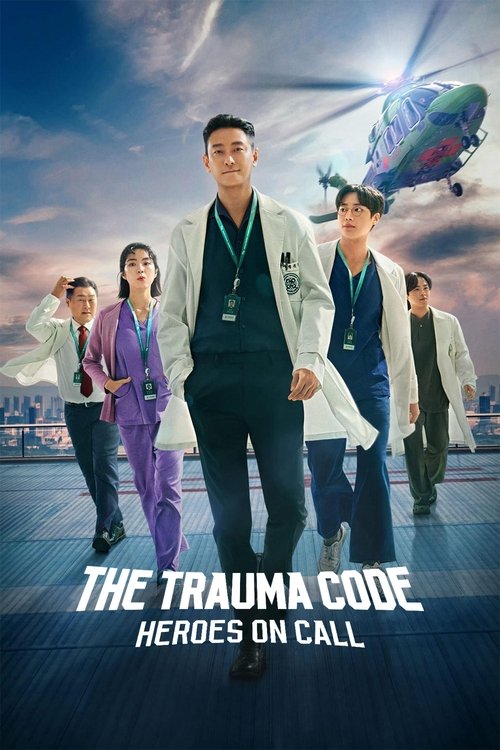
The Trauma Code: Heroes on Call
A pulse-pounding medical adrenaline trip that blazes with ferocious human empathy, cutting through cold hospital bureaucracy like a fiery scalpel slicing through darkness during the breathless golden hour.
The Trauma Code: Heroes on Call

The Trauma Code: Heroes on Call

중증외상센터

"We must keep on running."

24 January 2025 — 24 January 2025 South Korea 2 season 16 episode Ended 8.5 (167)

Cast: Ju Ji-hoon, Choo Young-woo, Ahn Ha-young, Yoon Kyung-ho, Jeong Jae-kwang

Drama Comedy Institutional Corruption vs. Medical Ethics The Sanctity of the 'Golden Hour' and Decisive Action Mentorship, Growth, and Vocation Teamwork and Interdisciplinary Synergy Under Pressure Battlefield Trauma and Individual Redemption

Overview

The Trauma Code: Heroes on Call is a high-octane South Korean medical action-comedy series. The narrative centers on Dr. Baek Kang-hyuk, a brilliant trauma surgeon with extensive battlefield experience in global conflict zones. Upon returning to South Korea, he is hired to head and revitalize the severely underfunded and neglected Severe Trauma Center at Hankuk National University Hospital (HNUH). Upon arrival, Kang-hyuk immediately disrupts the hospital’s comfortable status quo, utilizing unconventional, aggressive tactics to save lives within the critical 'golden hour'—the vital window immediately following severe trauma.

Across the series, Kang-hyuk handpicks and molds a ragtag team of healthcare workers—including a reluctant proctology resident, a fiercely devoted senior nurse, and a skilled anesthesiologist. Together, they navigate harrowing medical emergencies ranging from cliffside helicopter rappelling and multi-car highway pileups to military medical evacuations in active war zones and urban disasters.

Beyond the high-stress surgical suite, the overarching story arc revolves around the conflict between medical ethics and institutional greed. While the trauma team fights against the clock to save critically injured patients, hospital administrators and board members view the trauma center as a financial drain because saving severe trauma victims yields heavy operational deficits. The series tracks the team’s battle to defend their patients' lives and validate the necessity of emergency trauma care against corporate red tape and political maneuvering.


Core Meaning

The fundamental message of The Trauma Code: Heroes on Call is that human life and moral duty must take precedence over financial profit, administrative convenience, and institutional bureaucracy. Through Kang-hyuk’s uncompromising crusade, the creators highlight how modern healthcare systems often commodify human life, penalizing emergency units that prioritize patient survival over bottom-line revenue.

The series redefines the 'Golden Hour' not merely as a medical metric, but as an existential moral obligation. It posits that true doctoring requires courage, radical empathy, and the willingness to break broken rules when a human life is on the line.

Thematic DNA

Institutional Corruption vs. Medical Ethics 30%
The Sanctity of the 'Golden Hour' and Decisive Action 25%
Mentorship, Growth, and Vocation 20%
Teamwork and Interdisciplinary Synergy Under Pressure 15%
Battlefield Trauma and Individual Redemption 10%

Institutional Corruption vs. Medical Ethics

The primary conflict pits hospital administrators—who prioritize profit margins and budget cuts—against doctors fighting for patient survival. The theme evolves as the trauma center proves that saving lives is a public necessity that cannot be evaluated purely through a corporate balance sheet.

The Sanctity of the 'Golden Hour' and Decisive Action

Emphasizes the critical timing required in emergency medicine. The theme develops through various extreme scenarios (airborne surgeries, disaster triage) demonstrating that hesitation born of fear or bureaucracy can prove fatal.

Mentorship, Growth, and Vocation

Focuses on the transformation of young medical professionals. Mentored by Kang-hyuk, resident Yang Jae-won evolves from a timid, career-focused junior doctor into a courageous trauma surgeon who understands the true weight of the Hippocratic Oath.

Teamwork and Interdisciplinary Synergy Under Pressure

Highlights how life-saving care requires seamless trust between surgeons, nurses, anesthesiologists, and rescue personnel. The dynamic deepens as individual ego gives way to collective commitment.

Battlefield Trauma and Individual Redemption

Explores Kang-hyuk’s past as a combat medic in war zones. His relentless drive to rescue others stems from carrying the emotional scars of past losses, driving his refusal to abandon any patient.

Character Analysis

Dr. Baek Kang-hyuk

Ju Ji-hoon

Archetype: Maverick Genius / Antihero Mentor Key Trait: Unyielding determination and surgical brilliance under extreme pressure

Motivation

Save every preventable death within the golden hour regardless of cost, rules, or personal danger.

Character Arc

Arrives as an arrogant, blunt 'mad dog' battlefield medic; over time, he builds a cohesive team, learns to rely on others, and solidifies a permanent trauma center.

Dr. Yang Jae-won

Choo Young-woo

Archetype: Reluctant Protege / Everyman Hero Key Trait: Deep empathy, resilience, and rapid adaptability

Motivation

Initially sought a comfortable medical career in proctology, but evolves to find his true purpose in emergency trauma medicine.

Character Arc

Starts as an intimidated resident press-ganged into the trauma unit; through rigorous trial by fire, he gains confidence, masters trauma techniques, and stands up to authority.

All 5 characters and cast

Symbols & Motifs

The Medical Helicopter / Rappelling Harness

Meaning:

Symbolizes breaking through physical and administrative barriers to reach patients wherever disaster strikes.

Context:

Used during extreme rescue operations, such as cliffside rescues and mid-air evacuations.

The Ticking Clock / Golden Hour Timer

Meaning:

A visual and narrative motif representing the thin line between life and death and the relentless nature of time.

Context:

Emphasized during urgent medical procedures to heighten tension and underscore critical timing.

The Scalpel

Meaning:

Represents surgical precision, decisive action, and a tool of moral clarity used to slice through institutional decay.

Context:

Used in surgical scenes where Kang-hyuk performs aggressive, immediate life-saving procedures.

Motorcycles and Ambulance Drifting

Meaning:

Visual motifs signifying Kang-hyuk’s rogue personality and willingness to bypass traditional boundaries to save time.

Context:

Featured during emergency transit scenes as Kang-hyuk races to reach scenes of trauma or transport patients.

The Red Financial Ledger

Meaning:

Symbolizes corporate hospital management's view of trauma care as an operational deficit versus the human value of saved lives.

Context:

Brought up during administrative budget hearings and corporate meetings opposing trauma center funding.

Memorable Quotes

우아하고 고상하게 환자 언제 살릴 거야?
— Baek Kang-hyuk

Context

Episode 1, while criticizing hospital doctors who delay emergency procedures out of fear or decorum.

Meaning

Encapsulates Kang-hyuk’s belief that emergency medicine is gritty, urgent work that cannot wait for polite protocols.

환자는 얼마나 아픈지에 따라 치료받아야지, 돈을 얼마나 낼 수 있는지에 따라 치료받는 게 아니다.
— Baek Kang-hyuk

Context

Episode 4, during a heated hospital administrative budget hearing.

Meaning

The moral core of the entire series, challenging profit-driven healthcare.

All 5 quotes

Episode Highlights

Enter Doctor Maniac

S1E1

Introduces Dr. Baek Kang-hyuk at Hankuk University Hospital. He immediately takes on a high-stress stabbing case and mountain accident, forcibly recruiting resident Yang Jae-won.

Significance:

Sets up the conflict with hospital administration and establishes the central dynamic of the trauma center team.

Mid-Air Operation

S1E2

Features a cliffside helicopter rescue where Kang-hyuk and Jae-won rappel down to stabilize a patient and perform mid-air surgical maneuvers.

Significance:

Solidifies the mentor-mentee relationship and establishes the high-stakes physical realities of trauma rescue.

Mass Casualty & Organ Race

S1E3

A massive multi-car pileup floods the ER. The team performs emergency procedures while battling administrative pushback over resource usage.

Significance:

Demonstrates the team's ability to operate under extreme mass casualty pressure despite financial friction.

The Tunnel & Budget War

S1E4

Collides hospital budget hearings with a major tunnel truck crash disaster.

Significance:

Forces administrators to witness the life-and-death stakes of trauma funding firsthand.

Media Storm & Public Triage

S1E5

The team faces public scrutiny, administrative leaks, and political pressure.

Significance:

Kang-hyuk uses public transparency to defend emergency medical protocols against bureaucratic cover-ups.

South Sudan Evacuation

S1E7

The team deploys to war-torn South Sudan to rescue a severely wounded military captain.

Significance:

Kang-hyuk utilizes his past private military connections (Black Wings) in an international rescue operation.

The Fire & The Golden Hour

S1E8

Dr. Han and Dr. Baek enter a burning building with impending oxygen tank explosions to perform triage. Kang-hyuk risks his life to save a patient, and the team unifies to pull him through.

Significance:

The season finale, which culminates in securing the trauma center's official standing after the team saves Kang-hyuk's life.

Philosophical Questions

What is the value of human life in a commercialized healthcare system?

Explored through the constant friction between the trauma team’s life-saving operations and the hospital board’s focus on budget deficits.

Is it ethical to break institutional laws to fulfill a higher moral duty?

Exposed through Kang-hyuk’s disregard for hospital regulations when a patient’s life hangs in the balance.

What defines a true doctor—technical mastery or selfless duty?

Examined through Jae-won's transformation from a career-oriented resident into a dedicated trauma surgeon.

Alternative Interpretations

Socio-Political Satire: Some critics view the series as a critique of neoliberal healthcare, where institutional profit metrics undermine public health safety nets.Superhero / Action Fantasy: Another perspective sees the show as a medical superhero narrative, where Kang-hyuk operates as an invincible action hero breaking systemic rules to fulfill a savior fantasy.Institutional Critique: A third re...

Full ending explanation

Cultural Impact

The Trauma Code: Heroes on Call was created against the backdrop of real-world debates in South Korea surrounding emergency healthcare infrastructure, regional doctor shortages, and severe funding deficits in trauma surgery.

Upon its global Netflix premiere on January 24, 2025, the series became a commercial and critical success. It reached #1 on Netflix's Global Non-English TV chart within 10 days, topped charts in 17 countries, and accumulated over 184 million viewing hours. Critics praised the series for streamlining the medical action drama formula—comparing its cathartic pacing to Dr. Romantic while infusing sharp comedy and action-movie beats.

The show won Best Drama, Best Actor (Ju Ji-hoon), and Best New Actor (Choo Young-woo) at major events, including the 2025 Blue Dragon Series Awards and Baeksang Arts Awards.

Audience Reception

Praised Aspects: Audiences praised the brisk pacing, chemistry between Ju Ji-hoon and Choo Young-woo, crisp surgical action, and blend of humor and tension.

Criticisms: Main criticisms focused on the short 8-episode length—with many viewers requesting a traditional 16-episode format—and occasionally over-the-top action sequences.

Overall Verdict: Widely regarded as one of the best K-dramas of 2025, achieving high viewer scores (9.1/10 on MyDramaList; 8.4/10 on IMDb).

Interesting Facts

  • Adapted from the popular Naver web novel and webtoon Trauma Center: Golden Hour by Hansanleega (illustrated by Hongbichira).
  • Creator/author Hansanleega (Dr. Lee Nak-jun) is an active ear, nose, and throat (ENT) specialist.
  • Author Hansanleega graduated from Inha University Medical School; the exterior of Inha University was used to shoot administrative hospital scenes.
  • Primary interior and hospital filming took place at Ewha Womans University Seoul Hospital (the same medical facility used in Hospital Playlist).
  • Trauma surgery professors from Ewha Womans University Seoul Hospital served as technical advisors and provided live consultations during filming.
  • Ju Ji-hoon performed many of his own physical action scenes, including riding motorcycles, operating harnesses, and helicopter sequences.
  • Ju Ji-hoon explicitly stated in interviews that he approached the show as a 'fantasy-driven action drama about fighting systemic injustice' rather than a traditional medical procedural.

Easter Eggs

The Hospital Playlist Mention

In Episode 1, Pediatrics Professor Ahn Jeong-won (a lead character from tvN's Hospital Playlist) is explicitly named, creating an easter egg connection between K-drama medical universes.

Homage to Webtoon Colors

In Episode 8, the formal uniform colors of the helicopter crew and flight director match the exact color palette ('Dalgu' and 'Apricot') used in the webtoon artwork.

Parallels to Real-Life Medical Hero

Critics and viewers noted strong parallels between Baek Kang-hyuk and Dr. Lee Cook-jong, a pioneering South Korean trauma surgeon who advocated for regional trauma centers.

Frequently Asked Questions

Explore More About This Movie

Dive deeper into specific aspects of the movie with our detailed analysis pages

Comments (0)

Leave a comment

No comments yet. Be the first to share your thoughts!

Similar Movies