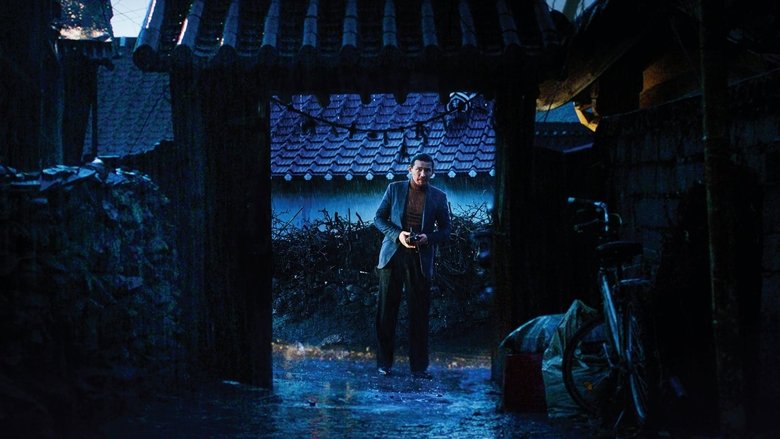
The narrative unravels through a series of misdirections:
- The Mushroom Cover-Up & The Sickness: Early deaths are blamed on mushroom poisoning, but Jong-goo realizes a supernatural curse is taking hold when his daughter Hyo-jin exhibits wild aggression, violent sores, and insatiable eating.
- The Cabin Discovery: Jong-goo breaks into the Japanese Stranger’s home, discovering a room filled with photos of past victims alongside Hyo-jin’s shoe. Jong-goo kills the Stranger's guard dog and demands he leave town.
- The Ritual Misdirection (The Kut): Shaman Il-gwang performs a hex while the Japanese Stranger performs a ritual in his cabin. Director Na Hong-jin cross-cuts between both scenes. In reality, the Stranger is trying to reanimate a corpse in his truck, while Il-gwang’s stake-driving hex is targeting Hyo-jin’s soul. Jong-goo interrupts the ritual, inadvertently preventing Il-gwang from finishing.
- Vigilante Action: Jong-goo and his friends hunt down the Japanese Stranger. After a chase, the Stranger falls off a cliff, is struck by Jong-goo's truck, and his body is dumped over a ravine. Hyo-jin temporarily appears to recover.
- The Dual Climaxes: In the alleyway, Moo-myeong tells Jong-goo he must wait for the rooster to crow three times before returning home. Il-gwang calls frantically, claiming Moo-myeong is evil. Overwhelmed by doubt and noticing Moo-myeong wearing victims' clothes, Jong-goo breaks her boundary ward (the snapdragon flowers dry up into skulls) and rushes inside after two crows. Simultaneously, in a mountain cavern, deacon Yang I-sam confronts the Japanese Stranger, who recites scripture, grows horns, and reveals his true form as the Devil taking photos.
- The Tragic Aftermath: By failing the test of faith, Jong-goo allows the curse to complete its work. Inside his home, Hyo-jin has slaughtered her entire family. Il-gwang arrives, takes photos of the dead bodies, and adds them to his trunk. The film ends with a dying Jong-goo reminiscing about happier times with his daughter as he slips away.