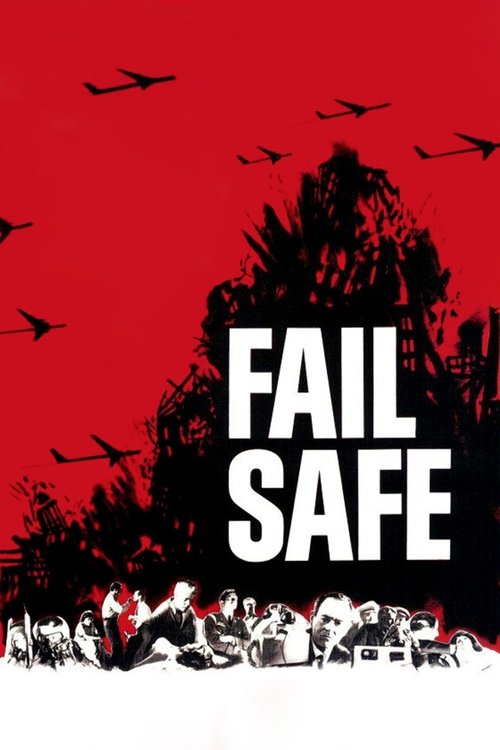
Fail Safe
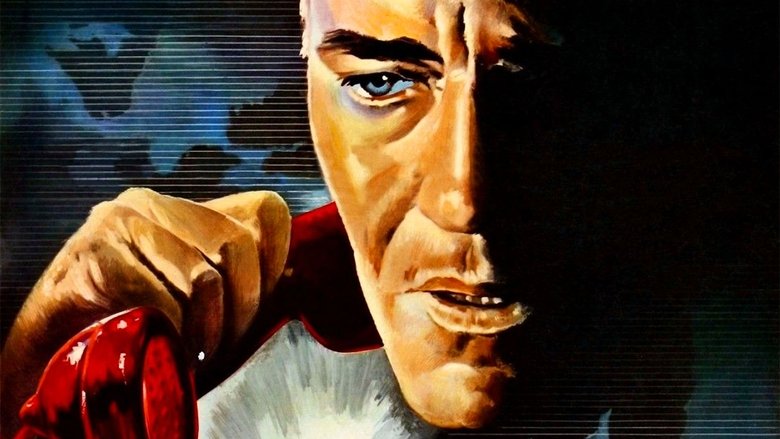
A stark Cold War thriller where metallic silence and claustrophobic dread collide. This cinematic pressure cooker transforms human error into a global funeral pyre, visualized as a melting telephone receiver screaming into the void.
Fail Safe

Fail Safe

"It will have you sitting on the brink of eternity!"

07 October 1964 United States of America 112 min ⭐ 7.8 (440)
Director: Sidney Lumet
Cast: Henry Fonda, Walter Matthau, Fritz Weaver, Larry Hagman, Frank Overton
Drama War Thriller
Human vs. Machine The Burden of Absolute Power Ideological Blindness Shared Humanity in Crisis

Overview

Directed by Sidney Lumet, Fail Safe is a harrowing political thriller that explores the terrifying possibility of an accidental nuclear apocalypse. Set during the height of the Cold War, the story begins when a technical malfunction—a simple blown transistor—causes a group of American Vindicator bombers to receive a valid attack code for Moscow. The pilots, trained to ignore all voice communications once the "fail-safe" point is crossed, proceed with their mission, leaving the President of the United States and his advisors in a desperate race against time to stop their own planes.

The film shifts between four claustrophobic locations: the Strategic Air Command (SAC) war room in Omaha, the Pentagon, the President's underground bunker beneath the White House, and the cockpit of the lead bomber. As diplomatic efforts with the Soviet Premier grow increasingly tense and military attempts to intercept the bombers fail, the President is forced to contemplate a horrific moral bargain to prevent a full-scale retaliatory strike that would end human civilization. Unlike its satirical contemporary Dr. Strangelove, Fail Safe maintains a tone of grim realism and relentless tension.
Core Meaning

The core meaning of Fail Safe lies in its warning about the dehumanization of warfare through automation. Lumet argues that once humanity abdicates its moral agency to machines and rigid protocols, catastrophe becomes inevitable. The film serves as a critique of the "Mutual Assured Destruction" (MAD) doctrine, suggesting that the systems designed to keep us safe are the very ones that will destroy us. It suggests that in the face of absolute technological power, individual human decency and even the highest political authority are ultimately impotent. The film's final message is one of shared responsibility: it is not just the machines that failed, but the men who built a world where such a failure could be terminal.

Thematic DNA

Human vs. Machine 35%
The Burden of Absolute Power 25%
Ideological Blindness 20%
Shared Humanity in Crisis 20%

Human vs. Machine

The film highlights the asymmetry between human intent and mechanical execution. While the leaders desperately seek a human solution, the machines proceed with unthinking efficiency. The plot hinges on the fact that humans have built a system so "perfect" that it can no longer be overridden by its creators.

The Burden of Absolute Power

Revealed through the President's character, this theme explores the isolation and moral agony of a leader forced to make a utilitarian choice between the death of millions and the end of the world. It strips away the glamour of leadership, showing it as a series of impossible, soul-crushing decisions.

Ideological Blindness

Portrayed primarily through Professor Groeteschele and Colonel Cascio, this theme examines how abstract theories and hatred of the "other" can override common humanity. Groeteschele treats nuclear war as a mathematical game, while Cascio’s rigid anti-Sovietism leads to a psychological breakdown when he is ordered to cooperate with the enemy.

Shared Humanity in Crisis

Despite the geopolitical divide, the film emphasizes that the American and Soviet leaders are more similar to each other than they are to the machines they control. Their awkward, desperate phone calls reveal a shared vulnerability and a common desire for survival that transcends borders.

Character Analysis

The President

Henry Fonda

Archetype: The Reluctant Tragic Hero
Key Trait: Measured Gravitas

Motivation

Driven by the preservation of the human race. He is willing to commit a monstrous act (sacrificing New York) to prevent a total global extinction.

Character Arc

He begins as a man attempting to manage a crisis through logic and diplomacy, but his path leads to the ultimate sacrifice of his own morality and his people. He is the anchor of the film, moving from hope to a state of hollowed-out resolve.

Professor Groeteschele

Walter Matthau

Archetype: The Cold Intellectual / Antagonist
Key Trait: Clinical Detachment

Motivation

Driven by a Darwinian view of civilization and a fanatical desire to see the "American way of life" survive at any cost, regardless of the body count.

Character Arc

He remains static and unyielding. While others are horrified by the unfolding events, he sees only opportunity to "win" the war, reinforcing his position as a man who has replaced his heart with a balance sheet.

Brigadier General Warren A. Black

Dan O'Herlihy

Archetype: The Moral Conscience
Key Trait: Philosophical Melancholy

Motivation

Driven by a sense of duty and a deep awareness of human frailty. He understands the insanity of the system better than anyone else but is ultimately forced to serve it.

Character Arc

He starts as a weary soldier haunted by nightmares and ends as the instrument of the President's horrific bargain. His arc is a descent from prophetic dread into the literal heart of the nightmare.

Buck

Larry Hagman

Archetype: The Everyman / Witness
Key Trait: Empathetic Vulnerability

Motivation

Initially professional duty, transitioning into a desperate desire to humanize the "enemy" to the President through his translations.

Character Arc

As the President's interpreter, he serves as the emotional proxy for the audience. He starts as a professional conduit but becomes visibly shaken as he translates the raw terror of the Soviet Premier.

Symbols & Motifs

The Bull and the Matador

Meaning:

A symbol of inescapable destiny and the blur between victim and executioner.

Context:

General Black recounts a recurring nightmare about a bull being slowly destroyed by a matador. At the end of the film, as he prepares to drop bombs on New York, he realizes that he is both the bull and the matador, representing humanity's self-destruction.

The Red Phone / Hot Line

Meaning:

Symbolizes the fragility of human communication and the thin thread holding the world together.

Context:

The President spends much of the film clutching the phone in a barren bunker, his only connection to the Soviet Premier and the American Ambassador. It represents the last vestige of diplomacy in an automated age.

The Melting Phone / Shrill Sound

Meaning:

Symbolizes the physical reality of annihilation and the abrupt end of communication.

Context:

The President tells the Ambassador in Moscow that he will know the city has been hit when he hears a shrill sound—the phone melting. The sound provides a haunting, sensory confirmation of mass death in an otherwise abstract war.

The Map Screen

Meaning:

Symbolizes abstraction and the distancing of war from human life.

Context:

Military officials watch the bombers as tiny blips on a screen. This visual abstraction allows them to discuss strategy and "kill ratios" without confronting the reality of the people inside those dots.

Memorable Quotes

The machines work so fast... they are so intricate... that very often a human being just can't know whether a machine is lying or telling the truth.

— Gordon Knapp

Context:

Spoken by the technical expert during the initial investigation into the computer error at SAC headquarters.

Meaning:

This encapsulates the loss of human agency. It suggests that our technology has outpaced our cognitive ability to monitor or control it.

I'm not your kind... I'm not a beast.

— Professor Groeteschele

Context:

Spoken to Ilsa Woolfe after she expresses a morbid, sexualized fascination with his nuclear theories at a dinner party.

Meaning:

A chilling ironic statement where the character claims superiority over a woman who finds nuclear war erotic, while he himself advocates for the death of millions as a "logical" necessity.

Who would survive? That's an interesting question. I would predict... convicts and file clerks.

— Professor Groeteschele

Context:

Spoken during the dinner party scene to dismiss fears that nuclear war means the total end of humanity.

Meaning:

Highlighting the absurdity and nihilism of nuclear strategy, where survival is a matter of geography and bureaucracy rather than merit.

Today we had a chance to look into the window of the future... and we didn't like what we saw.

— The President

Context:

Spoken to the Soviet Premier in the final moments as they agree to cooperate to prevent future accidents.

Meaning:

A mournful reflection on the precariousness of the modern world and the recognition that the "peace" they've achieved is built on a pile of corpses.

Philosophical Questions

Does technology possess its own inherent morality?

The film explores how technological systems can create situations that bypass human moral judgment. It asks if we are truly in control of our tools or if the logic of the machine dictates human behavior.

Is any life worth living in a world built on such a bargain?

Through General Black’s final realization, the film questions if humanity forfeits its right to exist when it becomes ruthless enough to sacrifice its own people to fix its own technological mistakes.

Alternative Interpretations

Critics have often debated the ending: Is it a supreme act of statesmanship or a monstrous war crime? One interpretation suggests the President is the ultimate utilitarian, saving billions by sacrificing millions. Another, more cynical reading, argues that the President's choice proves that the system has successfully brainwashed even the leader into believing that mass murder is a valid "solution." Some viewers interpret the film as a theological allegory, with the President offering New York as a literal burnt offering to appease a vengeful god (the nuclear machines). Others see it as a critique of 1950s masculinity, where men would rather destroy their families and cities than admit that their systems and egos are flawed.

Cultural Impact

Fail Safe is often overshadowed by Dr. Strangelove, yet its cultural impact lies in its legacy as the definitive realistic depiction of nuclear anxiety. While Kubrick's film used laughter to cope with the unthinkable, Lumet forced audiences to stare directly into the abyss. It influenced a generation of political thrillers and "techno-thrillers," from WarGames to The Hunt for Red October. The film is credited with helping to humanize the Cold War enemy for American audiences by showing the Soviet Premier as a rational, equally terrified human being. Historically, it reflects the post-Cuban Missile Crisis shift toward a desperate need for communication (the "Hotline") between superpowers. Its ending remains one of the most shocking and uncompromising in American cinema history.

Audience Reception

Upon its 1964 release, Fail Safe was a critical success but a commercial failure. Audiences, having recently seen Dr. Strangelove, found it difficult to take the same plot seriously, leading to many viewers laughing at scenes intended to be suspenseful. Over time, however, the film has undergone a significant critical re-evaluation. Modern audiences and critics praise it for its masterful tension and the sheer bravery of its ending. It is now frequently taught in political science and film courses as a masterclass in claustrophobic directing and as a stark warning against technological hubris. Rotten Tomatoes and IMDb scores remain consistently high, reflecting its status as a "lost" masterpiece of the 60s.

Interesting Facts

  • Director Sidney Lumet intentionally chose not to include a musical score to heighten the realism and tension of the film.
  • Stanley Kubrick, who was filming Dr. Strangelove at the same time, sued the producers of Fail Safe for copyright infringement because the plots were so similar.
  • The lawsuit resulted in Columbia Pictures buying Fail Safe and delaying its release until after Dr. Strangelove had been in theaters for several months.
  • Henry Fonda reportedly said that he would never have played the role straight if he had seen Dr. Strangelove first, as the comedy would have made the drama seem ridiculous.
  • The 'Vindicator' bombers were not real aircraft; the film used stock footage of the Convair B-58 Hustler.
  • Walter Matthau, known primarily for comedy, gives one of his most chilling dramatic performances as the cold-blooded Professor Groeteschele.
  • The character of Professor Groeteschele was heavily inspired by real-life military strategist Herman Kahn.
  • Dom DeLuise makes one of his few dramatic appearances as a technician at the SAC base.

Easter Eggs

The 'Vindicator' flight simulator footage

Because the Department of Defense refused to cooperate with the filmmakers, they had to use a commercial flight simulator and stock footage of B-58s to create the bomber interior, which contributes to the film's gritty, low-budget realism.

Relationship to 'Red Alert'

Both Fail Safe and Dr. Strangelove are based on books (Fail-Safe and Red Alert) that were so similar they were also the subject of a plagiarism lawsuit, highlighting how pervasive this specific nuclear anxiety was in the early 60s.

⚠️ Spoiler Analysis

Click to reveal detailed analysis with spoilers

Frequently Asked Questions

Explore More About This Movie

Dive deeper into specific aspects of the movie with our detailed analysis pages

Comments (0)

Leave a comment

No comments yet. Be the first to share your thoughts!