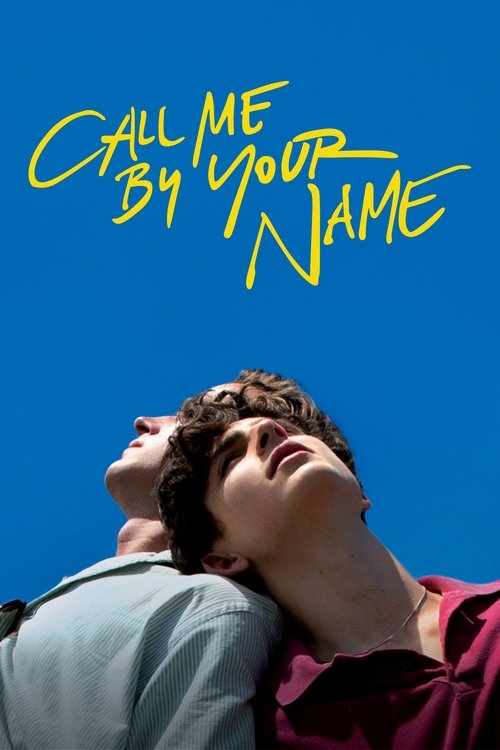
Call Me by Your Name
"Is it better to speak or die?"
Overview
Set in the idyllic summer of 1983 in Northern Italy, "Call Me by Your Name" chronicles the transformative romance between Elio Perlman (Timothée Chalamet), a precocious 17-year-old Italo-French boy, and Oliver (Armie Hammer), a charming 24-year-old American graduate student. Oliver arrives to live with Elio's family as a summer intern for his archaeologist father (Michael Stuhlbarg). Initially, the introspective and musically gifted Elio feels he has little in common with the seemingly carefree and confident Oliver.
As the sun-drenched days unfold, filled with intellectual conversations, classical music, and lazy swims, a powerful and unexpected attraction blossoms between them. The film delicately portrays their tentative courtship, a dance of desire, fear, and burgeoning intimacy that unfolds through shared glances, subtle gestures, and intellectual sparring. Their connection deepens into a passionate affair that will profoundly alter both of their lives over the course of one unforgettable summer.
Core Meaning
"Call Me by Your Name" is a profound exploration of first love, desire, and self-discovery. Director Luca Guadagnino described the film not as a "gay" movie, but as one about "the beauty of the newborn idea of desire, unbiased and uncynical." The core message is an encouragement to embrace one's feelings fully and without shame, even if they lead to pain and heartbreak. This is most poignantly articulated in the final monologue by Elio's father, who advises his son not to kill his sorrow, as it is intrinsically linked to the joy he experienced. The film celebrates the transformative power of a profound connection, suggesting that such experiences, however fleeting, become an indelible part of who we are. The act of calling each other by their own names signifies a complete merging of identities, a deep understanding and acceptance that transcends the self.
Thematic DNA
First Love and Desire
The film is a masterful depiction of the all-consuming nature of first love. It captures the initial obsession, the intellectual and physical attraction, and the emotional vulnerability that defines this experience. The narrative is driven by Elio's intense and often confusing feelings for Oliver, charting his journey from tentative curiosity to profound passion. Guadagnino focuses on the "newborn idea of desire" in its purest form, unburdened by societal judgment within the accepting bubble of the Perlman household.
Identity and Self-Discovery
Elio's summer with Oliver is a crucial period of self-discovery, particularly concerning his sexuality and emotional capacity. His journey is not just about discovering his attraction to men but about understanding the depths of his own feelings and identity. The theme is also explored through the motif of Jewish identity; Oliver's open wearing of the Star of David encourages Elio to connect with a part of his heritage his family keeps more private, symbolizing a broader journey towards self-acceptance.
The Passage of Time and Memory
The film is suffused with a sense of nostalgia and the bittersweet awareness of time's relentless march. The idyllic summer is a finite, precious period, and its fleeting nature lends urgency and poignancy to Elio and Oliver's romance. The story is framed as a memory, a "golden and sweet" recollection of a time that is now past. This is emphasized by the film's ending, which leaps forward in time, showing that while life moves on, the impact of that summer remains, forever coloring Elio's emotional landscape.
Pain and Acceptance
A central tenet of the film is that pain is an inevitable and valuable part of love and life. This is most explicitly stated by Elio's father in his iconic monologue, where he urges Elio to embrace his heartbreak. He says, "We rip out so much of ourselves to be cured of things faster than we should that we go bankrupt by the age of thirty." The film suggests that to deny oneself pain is to deny the joy that preceded it, advocating for a full, unfiltered experience of emotion.
Character Analysis
Elio Perlman
Timothée Chalamet
Motivation
Elio's primary motivation is to understand and act upon his overwhelming attraction to Oliver. He is driven by a deep longing for connection and intimacy, seeking to bridge the emotional and physical distance between them while wrestling with his own insecurities and the fear of rejection.
Character Arc
Elio begins the summer as a precocious but emotionally inexperienced 17-year-old. He is intellectually mature but introverted and self-conscious. His intense infatuation with Oliver forces him to confront his own desires and vulnerabilities. Throughout the film, he navigates the complexities of first love, jealousy, and passion, ultimately emerging from the experience with a profound, albeit painful, understanding of himself and the nature of love and loss. His journey is a classic coming-of-age arc, moving from innocence to a deeper emotional maturity.
Oliver
Armie Hammer
Motivation
Oliver is motivated by a desire for academic success and a need to maintain a conventional life path. However, he is also drawn by a genuine and powerful desire for Elio. His arc is defined by the tension between these conflicting motivations: the pull of his authentic feelings versus the pressure of societal norms.
Character Arc
Oliver arrives as a confident, carefree American scholar who initially appears almost aloof. He acts as the catalyst for Elio's emotional and sexual awakening. While he seems more worldly and experienced, his arc reveals his own vulnerabilities and internal conflicts. He is initially hesitant to reciprocate Elio's feelings, aware of the potential complications, but ultimately gives in to their powerful connection. His eventual decision to conform to societal expectations by getting engaged reveals the constraints he operates under, making his time with Elio a rare moment of freedom.
Mr. Perlman
Michael Stuhlbarg
Motivation
Mr. Perlman's motivation is rooted in his deep love for his son. He wants Elio to live a full life, to embrace joy and pain without reservation, and to not shy away from profound emotional experiences, perhaps because he himself may have held back in his own life.
Character Arc
Mr. Perlman is a supportive and observant father throughout the film. He fosters an environment of intellectual and emotional freedom for Elio. His character doesn't have a dramatic arc in the traditional sense, but his profound impact is fully revealed in the film's final act. He moves from a background figure of quiet knowing to the story's moral and emotional anchor, delivering a powerful monologue that provides the film's core message of acceptance and empathy.
Annella Perlman
Amira Casar
Motivation
Annella is motivated by a desire to nurture her son's intellectual and emotional growth. She provides a safe and accepting space for Elio to discover himself, understanding him with a gentle, unspoken wisdom.
Character Arc
Annella is a warm, intelligent, and perceptive presence in the household. Like her husband, she is quietly aware of the developing bond between Elio and Oliver. Her arc is subtle; she remains a constant source of quiet support and understanding. She facilitates their connection without explicit intervention, such as when she reads a German story about a princess and a knight, which mirrors Elio's own dilemma: "Is it better to speak or to die?" Her quiet encouragement and emotional intelligence are fundamental to the loving, non-judgmental atmosphere of the home.
Symbols & Motifs
The Peach
The peach symbolizes burgeoning sexuality, vulnerability, and the raw, sometimes messy, nature of desire. It represents Elio's uninhibited exploration of his own body and his intense longing for Oliver. When Oliver discovers the peach and eats from it without judgment, it signifies a profound moment of acceptance and the erasure of shame between them.
In a moment of intense sexual frustration and longing after sleeping with Oliver for the first time, Elio masturbates with a peach from his family's orchard. Oliver later finds the peach and, in a gesture of ultimate intimacy and acceptance, begins to eat it.
Star of David Necklace
The Star of David necklace symbolizes Jewish identity, self-acceptance, and the bond between Elio and Oliver. Oliver wears his openly, representing a comfort with his identity that Elio, whose family are "Jews of discretion," initially lacks. Elio's decision to start wearing his own necklace signifies his growing self-acceptance and his deepening connection to Oliver.
Oliver consistently wears a Star of David necklace, which Elio notices early on. Their shared heritage becomes a point of connection. After their relationship begins, Elio starts wearing his own Star of David, a subtle sign of the profound impact Oliver has on him.
Recovered Roman Statue
The fragmented ancient statue represents classical ideals of male beauty, homoerotic love, and the enduring nature of desire across time. Its recovery from the water is a metaphor for the unearthing of Elio and Oliver's own hidden passions. The statue, a beautiful and powerful male form, stands as a timeless affirmation of the love that is blossoming between them.
Elio's father, an archaeologist, takes Elio and Oliver to watch the recovery of a Roman bronze statue from Lake Garda. As the muscular, youthful figure emerges from the water, the three of them marvel at its beauty, a moment that mirrors the burgeoning homoerotic tension between Elio and Oliver.
Music
Music serves as a primary mode of communication and emotional expression for Elio. It is the language through which he initially explores his feelings for Oliver, reinterpreting Bach to both test and flirt with him. The film's score, including the original songs by Sufjan Stevens, articulates the characters' inner emotional states, from yearning and confusion to joy and heartbreak.
Elio is a talented musician, constantly playing piano and transcribing music. In a key scene, he plays a piece by Bach for Oliver, then plays it again in the style of different composers, a clever and intimate form of flirtation. Music is a constant presence, from the diegetic classical pieces to the pop songs of the era and Sufjan Stevens' poignant soundtrack.
Memorable Quotes
Call me by your name and I'll call you by mine.
— Oliver
Context:
Oliver says this to Elio after they have slept together for the first time. It is a moment of profound connection and vulnerability, marking the deepest point of their bond. The phrase is repeated in their final, heartbreaking phone call, serving as a poignant reminder of the intimacy they shared.
Meaning:
This line, which gives the film its title, encapsulates the ultimate intimacy and merging of identities between Elio and Oliver. It signifies a love so profound that the boundaries between the two individuals dissolve. They have become so intertwined and understand each other so completely that they can exchange names, becoming one another in their most private moments.
We rip out so much of ourselves to be cured of things faster than we should that we go bankrupt by the age of thirty and have less to offer each time we start with someone new. But to feel nothing so as not to feel anything—what a waste!
— Mr. Perlman
Context:
This quote is part of a longer, heartfelt monologue delivered by Mr. Perlman to a devastated Elio after Oliver has left Italy. Sitting on the couch, he reveals his awareness and complete acceptance of their relationship, offering his son wisdom and unconditional love.
Meaning:
This is the cornerstone of the film's philosophy. Mr. Perlman advises his heartbroken son not to suppress his pain, because doing so would also mean erasing the joy he felt. It's a powerful plea to embrace the full spectrum of human emotion, arguing that emotional richness, even when painful, is essential to a meaningful life. To numb oneself to pain is to become emotionally impoverished.
Is it better to speak or to die?
— Annella Perlman (reading from a story)
Context:
Elio's mother, Annella, reads this line aloud from a 16th-century French romance, the Heptaméron. The story she reads is about a knight in love with a princess who is unsure whether to confess his feelings. The scene occurs while Elio and Oliver are present, directly reflecting Elio's internal struggle.
Meaning:
Though read from a book, this question perfectly articulates Elio's central conflict for the first half of the film. He is tormented by his unspoken feelings for Oliver, wrestling with the fear of rejection versus the agony of silence. The question frames his dilemma as a matter of emotional life and death, highlighting the immense courage it takes to voice one's desire.
I remember everything.
— Oliver
Context:
Oliver says this at the end of his phone call with Elio during the winter, after he has announced his engagement. Elio has just called him "Elio," and Oliver has responded, "Oliver." This final line from Oliver validates their entire relationship just before the call ends, leading into the film's final shot of Elio by the fire.
Meaning:
These three words are Oliver's final confirmation that his summer with Elio was not a fleeting or insignificant affair. Despite his engagement and the separate life he is returning to, the experience was as profound and unforgettable for him as it was for Elio. It is a heartbreakingly beautiful acknowledgment of their shared past and enduring love.
Philosophical Questions
Is it better to embrace painful emotions or to numb oneself to avoid suffering?
The film's central philosophical question is explicitly addressed in Mr. Perlman's monologue. He argues passionately against the instinct to "kill" pain and sorrow, suggesting that these feelings are inextricably linked to the joy that caused them. To erase the pain of loss would be to devalue the love that was found. The film explores this through Elio's final scene; instead of cutting away from his grief, the camera holds on his face, forcing the audience to experience it with him. It posits that a full, meaningful life requires embracing the entire spectrum of emotion, and that emotional "bankruptcy" is the result of shutting oneself off from feeling.
What is the nature of identity and connection in profound love?
The film delves into the idea that true love involves a merging of selves. The titular phrase, "Call me by your name and I'll call you by mine," is the ultimate expression of this concept. It's not about losing one's identity, but expanding it to encompass another. Elio and Oliver see the best versions of themselves in each other; they become mirrors and conduits to their own true natures. The film explores how a deep connection with another person can be a catalyst for profound self-discovery and self-acceptance, as seen in Elio's embrace of his Jewish heritage after connecting with Oliver.
Alternative Interpretations
While the primary reading of the film is as a sincere and tragic first love story, some alternative interpretations have been discussed by critics and audiences. One perspective focuses on the power dynamics and age gap between the 17-year-old Elio and the 24-year-old Oliver. While the film portrays their relationship as consensual and loving within a safe environment, some viewers interpret the dynamic through a more critical lens, highlighting Elio's youth and vulnerability.
Another interpretation views the film less as a literal romance and more as a memory piece, an idealized and romanticized recollection of the past. This reading is supported by the dreamlike, hazy quality of the cinematography and the first-person perspective of the source novel. From this viewpoint, the story may not be an exact representation of events but rather Elio's subjective, nostalgic reconstruction of a formative summer, with all the heightened emotions and poetic license that memory entails.
Finally, the ending can be interpreted in different ways. The more optimistic reading, bolstered by Mr. Perlman's speech, is that Elio, though heartbroken, has become a more emotionally complete person through the experience. A more melancholy interpretation sees the ending as a tragic commentary on the societal pressures that force Oliver into a conventional life, suggesting that such pure, unguarded love is unsustainable in the real world. The final, unbroken shot of Elio's face allows for both interpretations: it is a portrait of profound grief, but also of profound feeling, a testament to having truly lived and loved.
Cultural Impact
A New Benchmark in Queer Cinema
"Call Me by Your Name" was released to widespread critical acclaim and is considered a landmark film in LGBTQ+ cinema. Moving away from narratives centered on trauma, coming out, or societal oppression, the film presents a love story in a supportive, idyllic environment, focusing on the universal emotions of desire and heartbreak. This "utopic" setting, as described by Timothée Chalamet, allowed the story to resonate with a broad audience, normalizing a same-sex romance by treating it with tenderness, artistry, and psychological depth.
Influence and Reception
The film was praised for its screenplay by James Ivory (who won an Academy Award), Guadagnino's direction, and the breakout performance of Timothée Chalamet, which launched him to international stardom. The on-screen chemistry between Chalamet and Armie Hammer was universally lauded. Critics celebrated the film's patient, sensuous pacing and its stunning cinematography, which captured the languor of an Italian summer. It received four Oscar nominations, including for Best Picture. The film's aesthetic—the 1980s fashion, the sun-drenched Italian countryside, and the evocative soundtrack by Sufjan Stevens—has had a significant impact on pop culture, becoming a touchstone for a certain kind of romantic, nostalgic mood.
Philosophical and Cultural References
The film is steeped in high culture, with references to Greco-Roman art, classical music (Bach, Ravel), and literature. This intellectual backdrop serves to elevate the romance, framing it not just as a physical attraction but as a meeting of minds. The discovery of the ancient Greek statue, for example, directly links their contemporary love to a classical, idealized form of homoeroticism, suggesting its timelessness. The very title, a reference to a complete merging of souls, has become an iconic phrase in its own right.
Audience Reception
Overwhelmingly Positive with Some Points of Criticism
Audience reception for "Call Me by Your Name" has been largely positive, with many viewers echoing the sentiments of professional critics. Praised aspects frequently include the powerful and authentic performances by Timothée Chalamet and Armie Hammer, the beautiful and immersive cinematography of the Italian countryside, and the poignant, emotionally resonant soundtrack by Sufjan Stevens. The film's final twenty minutes, particularly Mr. Perlman's monologue and the final shot of Elio, are often cited as incredibly moving and impactful.
Main Points of Criticism
Criticism from some audience members tends to focus on the film's slow, leisurely pace, which some viewers found banal or boring. Another point of debate is the age gap between the 17-year-old Elio and 24-year-old Oliver. While the film handles the relationship with sensitivity and portrays it as consensual, some viewers expressed discomfort with this dynamic. A less frequent criticism is the perceived lack of explicit sex scenes compared to the novel, though many viewers and critics felt the film's focus on emotional intimacy over graphic detail was a strength.
Overall Verdict
For most viewers, "Call Me by Your Name" is considered a beautiful, heartbreaking, and masterfully crafted film about first love. It has developed a passionate fanbase and is often regarded as a modern classic of romantic and queer cinema, celebrated for its emotional depth and artistic integrity.
Interesting Facts
- The film was shot chronologically to allow the actors' relationship to develop organically on screen.
- Director Luca Guadagnino and cinematographer Sayombhu Mukdeeprom shot the entire film using only one 35mm lens (a Cooke S4), giving it a consistent, observational visual style.
- The film's final, devastating shot of Elio crying by the fireplace was unscripted. Luca Guadagnino gave Timothée Chalamet a general framework and let him improvise, with Sufjan Stevens' song "Visions of Gideon" playing in his earpiece to guide his emotions.
- The only rehearsal Armie Hammer and Timothée Chalamet had was for a scene where they make out in the grass. The director, Luca Guadagnino, instructed them to be passionate and then walked away, leaving them to it until crew members pulled them apart.
- The year the story takes place was changed from 1987 in the novel to 1983 for the film. This was partly to create a more "utopic" atmosphere before the AIDS crisis was as widely understood and feared.
- Author André Aciman makes a cameo appearance in the film as Mounir, one half of a gay couple who are dinner guests at the Perlman's villa.
- The film received the longest standing ovation in the history of the New York Film Festival, reportedly lasting for ten minutes.
- Before Armie Hammer was cast, actor Shia LaBeouf did screen tests for the role of Oliver and was a serious contender.
Easter Eggs
Director Luca Guadagnino dedicated the film to the late actor Bill Paxton.
While not a traditional easter egg, the dedication in the end credits is a poignant tribute. Bill Paxton passed away in February 2017. He was a friend of producer Peter Spears and was very supportive of the project during its development, making the dedication a personal nod to someone who championed the film behind the scenes.
⚠️ Spoiler Analysis
Click to reveal detailed analysis with spoilers
Frequently Asked Questions
Explore More About This Movie
Dive deeper into specific aspects of the movie with our detailed analysis pages
Comments (0)
No comments yet. Be the first to share your thoughts!