Skip to content
Tidal Wave
Beneath the sun-drenched, boisterous warmth of a Busan seaside summer pulses a harrowing undercurrent of unspoken regret, culminating in a colossal wall of ocean that swallows mundane human frailties to reveal the raw gold of sacrificial love.
Tidal Wave

Tidal Wave

해운대

"There is No Escape from Nature's Wrath."

22 July 2009 South Korea 120 min 6.9 (501)

Director: JK Youn

Cast: Sul Kyung-gu, Ha Ji-won, Park Joong-hoon, Uhm Jung-hwa, Lee Min-ki

Drama Action Thriller Guilt, Forgiveness, and Redemption Familial and Romantic Sacrifice Everyday Community vs. Impending Chaos Bureaucratic Complacency vs. Scientific Warning Social Class Disparity and Reconciliation
Budget: $16,000,000
Box Office: $71,641,901

Overview

Set against the backdrop of Haeundae Beach in Busan—one of South Korea’s most popular coastal destinations—Tidal Wave (해운대, 2009) follows the intertwined daily lives, romantic entanglements, and family quarrels of local seaside residents and holidaymakers. At the heart of the community is Choi Man-sik (Sul Kyung-gu), an ordinary, rough-around-the-edges local fisherman who carries deep personal guilt over the loss of a fellow fisherman during the 2004 Indian Ocean tsunami, which complicates his unspoken feelings for the victim's daughter, Kang Yeon-hee (Ha Ji-won).

Meanwhile, Man-sik’s brother, lifeguard Choi Hyeong-sik (Lee Min-ki), gets drawn into an unpredictable relationship with an outspoken tourist from Seoul, Kim Hee-mi (Kang Ye-won). Concurrently, marine geologist Kim Hwi (Park Joong-hoon) observes disturbing tectonic anomalies in the East Sea (Sea of Japan) that mirror the conditions preceding the catastrophic 2004 mega-tsunami. Hwi crosses paths with his estranged ex-wife, event manager Lee Yoo-jin (Uhm Jung-hwa), and the young daughter she raised without him.

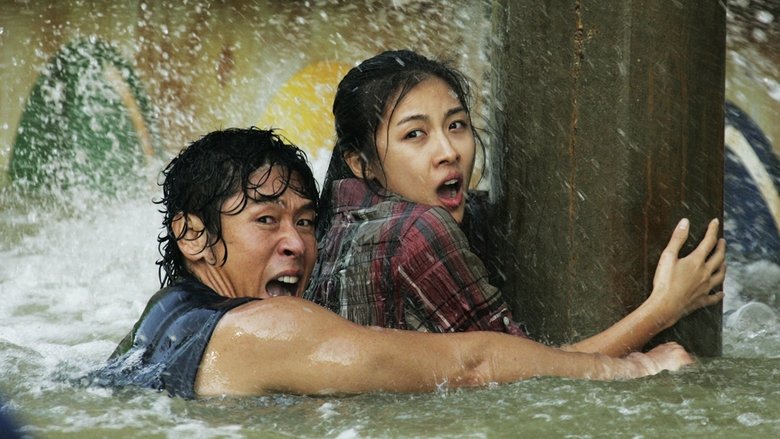
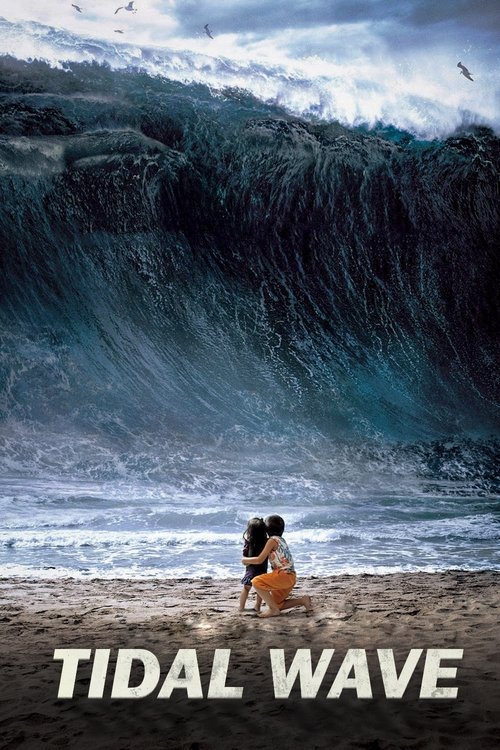
As the characters navigate unresolved emotional wounds, class tensions, and everyday comedic blunders, government disaster agencies dismiss Hwi's urgent warnings as alarmism. When an underwater earthquake triggers a mega-tsunami traveling straight toward Haeundae, the bustling vacation paradise has only minutes to confront the sudden fury of nature.
Core Meaning

Director Yoon Je-kyoon uses the disaster canvas not merely to showcase visual destruction, but to explore the fragility of human existence and the transformative power of forgiveness. The film asserts that people spend their everyday lives caught up in petty grudges, class divisions, unexpressed love, and paralyzing guilt. When the absolute equalizer—an unavoidable natural catastrophe—strikes, all social barriers and superficial squabbles dissolve instantly, revealing that community solidarity, reconciliation, and self-sacrifice are the truest measures of humanity.

Thematic DNA

Guilt, Forgiveness, and Redemption 30%
Familial and Romantic Sacrifice 25%
Everyday Community vs. Impending Chaos 20%
Bureaucratic Complacency vs. Scientific Warning 15%
Social Class Disparity and Reconciliation 10%

Guilt, Forgiveness, and Redemption

Man-sik’s paralyzing trauma from the 2004 deep-sea fishing disaster prevents him from confessing his love to Yeon-hee. Only the arrival of an existential crisis forces characters to confront their past mistakes and grant unconditional forgiveness.

Familial and Romantic Sacrifice

The film anchors its emotional core in selfless love, demonstrated through life-and-death choices where parents, siblings, and romantic partners willingly put others before themselves.

Everyday Community vs. Impending Chaos

By devoting substantial runtime to comedic, slice-of-life neighborhood conflicts before the wave hits, the film highlights how quickly the comfort of the mundane can be upended.

Bureaucratic Complacency vs. Scientific Warning

Kim Hwi’s struggle against dismissive disaster authorities embodies the recurring societal hazard of underestimating natural dangers due to economic and political inertia.

Social Class Disparity and Reconciliation

The interactions between working-class Busan locals and affluent Seoul vacationers show how natural catastrophe strips away socioeconomic hierarchies.

Character Analysis

Choi Man-sik

Sul Kyung-gu

Archetype: The Flawed Common Hero Key Trait: Sincere, stubborn, deeply emotional.

Motivation

To protect Yeon-hee and atone for his past.

Character Arc

Moves from paralyzing guilt to emotional honesty and courageous leadership in disaster.

Kang Yeon-hee

Ha Ji-won

Archetype: The Resilient Survivor Key Trait: Spirited, hardworking, fiercely loyal.

Motivation

To forge a dignified livelihood and find genuine love.

Character Arc

Shifts from an independent woman harboring unspoken affection to a survivor fighting beside Man-sik.

All 5 characters and cast

Symbols & Motifs

The Mega-Tsunami Wave

Meaning:

Symbolizes nature’s indifferent might and an emotional cleanser that sweeps away human hesitation, pride, and lingering remorse.

Context:

Strikes Haeundae Beach and Gwangan Bridge after seismic activity in the Tsushima Basin, forcing characters to confront mortality.

The Gwangan (Diamond) Bridge

Meaning:

A prominent Busan architectural landmark representing modern human engineering; its devastation illustrates human vulnerability against natural forces.

Context:

Featured in key urban scenes and later undergoes catastrophic destruction during the disaster sequence.

The Engagement Ribbon / Ring

Meaning:

Symbolizes Man-sik’s deferred commitment and the vulnerability of unexpressed love hanging in the balance of everyday life.

Context:

Represents the central romantic deadlock between Man-sik and Yeon-hee throughout their daily interactions.

The Coast Guard Rescue Rope

Meaning:

Embodies duty, selflessness, and the literal lifeline connecting human souls in crisis.

Context:

Used during the climactic helicopter rescue operation where Choi Hyeong-sik must make a crucial choice.

The Unlicensed Seafood Stall (Pojangmacha)

Meaning:

Represents working-class heritage, local livelihood, and resilience against encroaching urban redevelopment.

Context:

Run by Yeon-hee in the Busan seaside district and later rebuilt by survivors in the aftermath.

Memorable Quotes

내가 니 좋아하믄 안 되나? 와 말을 몬하노...
— Choi Man-sik

Context

Expressed in his heavy Busan dialect when struggling to voice his long-held romantic feelings for Yeon-hee despite his lingering guilt.

Meaning

Captures the central emotional deadlock of the main protagonist before the disaster forces honesty.

우리 지민이 아빠 누구야? ... 내가 니 아빠다.
— Dr. Kim Hwi

Context

Said to his daughter Ji-min while securing her into the rescue helicopter as the floodwaters submerge the building rooftop.

Meaning

The moment of fatherly reconciliation and emotional culmination right before his tragic sacrifice.

All 3 quotes

Philosophical Questions

The Burden of Survival

When survival comes at the cost of another person’s life, how does one reconcile living with the weight of inherited guilt?

The Illusion of Human Mastery

To what extent does modern urban development and technology foster false security against unpredictable natural forces?

The Value of the Ordinary

Why do human beings frequently delay expressing love and seeking forgiveness until catastrophe makes tomorrow uncertain?

Alternative Interpretations

The film can be analyzed through several distinct thematic frameworks:

Full ending explanation

Cultural Impact

Released in July 2009, Tidal Wave proved that the Korean film industry could mount a domestic Hollywood-style effects spectacle that resonated far more deeply with local audiences than foreign imports. Earning over $71 million worldwide, it demonstrated the commercial viability of Korean blockbuster cinema.

Its genre-hybrid formula—combining communal melodrama and lowbrow comedy in the first half with disaster and tearjerker tragedy in the second—laid the blueprint for subsequent Korean mega-hits such as The Tower (2012), Train to Busan (2016), Pandora (2016), and Exit (2019).

Audience Reception

What was Praised:

  • Heartfelt emotional beats and high-energy ensemble performances (especially Sul Kyung-gu and Ha Ji-won).
  • The scale and staging of the Busan destruction sequence (Gwangan Bridge collapse, surging ocean waters).
  • Effective tearjerker moments that resonated strongly with East Asian audiences.

Points of Criticism:

  • Bipolar tonal shift: broad slapstick comedy dominates the first hour before abruptly pivoting into melodrama and destruction.
  • Occasional unevenness in CGI water rendering compared to top-tier Hollywood counterparts.

Overall Verdict: Regarded domestically as a milestone commercial blockbuster that solidified JK Youn’s reputation as a crowd-pleasing director, while Western critics viewed it as a somewhat uneven but emotionally earnest disaster spectacle.

Interesting Facts

  • Tidal Wave was marketed and recognized as South Korea's first large-scale mega-disaster film.
  • Director Yoon Je-kyoon collaborated with Hollywood visual effects supervisor Hans Uhlig (known for work on The Perfect Storm and The Day After Tomorrow) and Polygon Entertainment to produce the water simulation CGI.
  • The project took five years of planning and production to overcome technical challenges regarding liquid physics rendering.
  • The film became only the fifth movie in South Korean cinematic history to surpass the milestone of 10 million admissions, ultimately drawing over 11.3 million viewers domestically.
  • Made on a budget of roughly 13 to 16 billion KRW (approx. $10–$16 million USD), it was among the most ambitious South Korean film investments at the time.
  • Shot extensively in Busan's real Haeundae-gu district and along the iconic Gwangan Bridge, incorporating thousands of local extras during the evacuation panic scenes.

Easter Eggs

Lee Dae-ho and the Lotte Giants Cameo

In a famous comedic scene at Sajik Baseball Stadium, Man-sik gets drunk and heckles real-life South Korean baseball superstar Lee Dae-ho of the Busan-based Lotte Giants, provoking an on-field reaction from the athlete.

The 2004 Boxing Day Tsunami

The prologue and backstory reference the real-life 2004 Indian Ocean tsunami, using historical collective memory to ground the fictional scenario in relatable trauma.

Local Dialect (Satoori) Flavor

The film leans into the rough, expressive Gyeongsang/Busan regional dialect, providing distinct cultural authenticity that contrasts sharply with standard Seoul speech.

Frequently Asked Questions

Explore More About This Movie

Dive deeper into specific aspects of the movie with our detailed analysis pages

Comments (0)

Leave a comment

No comments yet. Be the first to share your thoughts!

Similar Movies