Skip to content
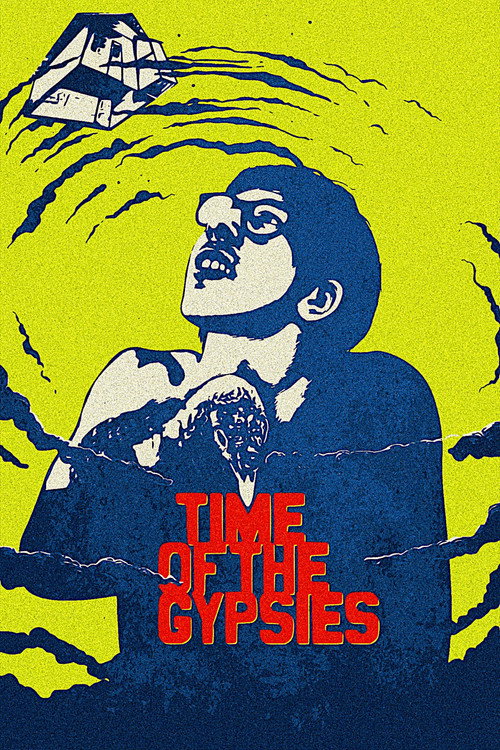
Time of the Gypsies
A tragicomic magical-realist odyssey through innocence and corruption, "Time of the Gypsies" is a visceral fever dream that breaks the heart, floating like a bride's wedding veil upon a river of profound sorrow and unfulfilled dreams.
Time of the Gypsies

Time of the Gypsies

Dom za vešanje

21 December 1988 Italy 142 min 7.6 (428)

Director: Emir Kusturica

Cast: Davor Dujmović, Borivoje Todorović, Ljubica Adžović, Husnija Hasimović, Sinolička Trpkova

Drama Crime Fantasy Comedy Loss of Innocence and Moral Corruption Marginalization and Exploitation Magical Realism vs. Gritty Reality Family Loyalty and Betrayal

Overview

Time of the Gypsies is a 1988 Yugoslav coming-of-age fantasy crime drama that follows the odyssey of Perhan, a pure-hearted Romani teenager with telekinetic powers. Living in a deeply impoverished but vibrant shantytown in Yugoslavia, Perhan's life revolves around his devoted healer grandmother, his crippled sister Danira, his destructive gambling uncle Merdžan, and his pet turkey. He is deeply in love with a local girl, Azra, but her mother furiously rejects his marriage proposal because he is entirely penniless.

Desperate to earn money to pay for his sister's life-changing leg surgery in Italy and to prove his worth to Azra's mother, Perhan leaves his village with Ahmed, a wealthy and charismatic "Sheik". However, what begins as a hopeful journey quickly devolves into a nightmare. Perhan discovers that Ahmed is a ruthless child trafficker and crime lord who exploits children for begging and petty theft on the streets of Milan. Trapped in this criminal underworld, Perhan is forced to compromise his morals, initiating a tragic transformation from a gentle, magical boy into a hardened criminal.
Core Meaning

The film is a devastating critique of the systemic marginalization and exploitation of the Roma people, portraying how extreme poverty corrupts innocence. Kusturica contrasts the rich, spiritual, and magical folklore of traditional Romani village life with the ruthless, materialistic greed of Western European urban society. Ultimately, the director suggests that for the deeply marginalized, the pursuit of the capitalist dream leads inevitably to the destruction of the soul, the severing of family roots, and a tragic cycle of exploitation.

Thematic DNA

Loss of Innocence and Moral Corruption 35%
Marginalization and Exploitation 30%
Magical Realism vs. Gritty Reality 20%
Family Loyalty and Betrayal 15%

Loss of Innocence and Moral Corruption

The central spine of the film is Perhan's tragic descent from a pure-hearted boy who cherishes a pet turkey to a violent, disillusioned mobster.

Marginalization and Exploitation

The film brutally depicts how the poverty-stricken Roma are pushed to the fringes of society, leaving their children vulnerable to human trafficking, forced begging, and crime rings in Italy.

Magical Realism vs. Gritty Reality

The narrative explores the intersection of Perhan's literal telekinetic magic and Romani mysticism with the harsh, neorealist grime of poverty and survival.

Family Loyalty and Betrayal

Perhan's initial motivation is entirely rooted in love for his sister and grandmother, but he is repeatedly betrayed by father figures like Ahmed and his own blood, Uncle Merdžan.

Character Analysis

Perhan

Davor Dujmović

Archetype: Tragic Hero Key Trait: Magical abilities masking deep vulnerability

Motivation

Saving his crippled sister Danira by paying for her leg surgery and earning enough money to marry Azra.

Character Arc

Transforms from an innocent, pure-hearted romantic with telekinetic powers into a vengeful, corrupted crime boss.

Ahmed

Bora Todorović

Archetype: The Mentor/Antagonist Key Trait: Manipulative charm

Motivation

Greed, wealth, and power achieved through human trafficking and exploitation.

Character Arc

Maintains a stance as a charismatic leader and father figure before revealing his true nature as a cold, ruthless crime lord.

All 5 characters and cast

Symbols & Motifs

The Turkey

Meaning:

Symbolizes Perhan's childhood, purity, and innocence.

Context:

Its fate directly mirrors Perhan's own tragic loss of innocence as he is forced to grow up too fast in a brutal world.

The Floating Wedding Veil / The River

Meaning:

Represents dreams, magic, tragic love, and the inescapable flow of fate.

Context:

The river is heavily featured during the St. George's Day (Ederlezi) festival, acting as a site of both spiritual birth and tragic death.

Coins on the Eyes

Meaning:

Drawing from the traditional burial practice of placing coins on the eyes of the dead, this motif ultimately symbolizes the triumph of greed over life and the perpetuation of corruption.

Context:

Appears during burial scenes, most notably at the end of the film when Perhan's young son steals the gold coins placed over his deceased father's eyes.

Boxes and Cardboard

Meaning:

Represents the physical entrapment, transience, and containment of the marginalized Roma.

Context:

A recurring visual motif throughout the film where characters literally live among and carry cardboard boxes.

Hanging (The Original Title)

Meaning:

Translating to Home for Hanging in the original title, it symbolizes overwhelming despair and the feeling of being suspended without roots.

Context:

Physically manifests in Uncle Merdžan's frequent, pathetic attempts at suicide.

Memorable Quotes

I was born in this world, and I will die in this world.
— Perhan

Context

Spoken by Perhan as he reflects on his inescapable tragic fate.

Meaning

Reflects Perhan's eventual fatalism and the realization that he cannot escape the tragic circumstances of his birth or the criminal underworld.

Ko visoko leti, brzo sleti
— Traditional Serbo-Croatian Proverb

Context

Associated culturally with Perhan's character arc in Balkan discussions of the film.

Meaning

Translating to Who flies high, falls fast, this proverb encapsulates Perhan's tragic rise to power in Milan and his sudden, violent downfall.

All 3 quotes

Philosophical Questions

Is moral corruption inevitable in the face of absolute poverty?

Explored through Perhan's tragic path, questioning whether a pure person ever truly had a choice when forced to turn to crime to save a family member's life.

What defines the 'Other' in European society?

Explored through the depiction of marginalized Romani groups navigating survival in a dominant society that ignores them except when exploiting them.

Can traditional spirituality survive modern capitalism?

Explored through the contrast between Grandmother Hatidža's pure spiritual healing and the corrosive, materialistic greed of Ahmed's trafficking network in Italy.

Alternative Interpretations

Critics and audiences interpret key elements of the film in contrasting ways:

Full ending explanation

Cultural Impact

Released on the eve of the violent breakup of Yugoslavia, Time of the Gypsies captured a pan-Balkan identity that was soon to be shattered. Culturally, it successfully fused Italian Neorealism with Gabriel García Márquez-esque Magic Realism. The film had a massive impact on world music, popularizing the Gypsy punk aesthetic that heavily influenced modern bands like Gogol Bordello. However, it also sparked intense sociological debate, with Romani scholars criticizing the film for perpetuating essentialist stereotypes of the Roma as inherent criminals, child traffickers, and exotic mystics.

Audience Reception

Audience consensus heavily praises the film as a deeply moving, chaotic masterpiece. Reviewers frequently highlight Goran Bregović's phenomenal musical score, Vilko Filač's breathtaking cinematography, and the raw, naturalistic performance of Davor Dujmović.

However, the film has detractors who criticize its sprawling 142-minute runtime as disjointed and episodic. Additional criticisms focus on discomfort regarding chaotic depictions of animal cruelty and concerns that the film reinforces negative ethnic stereotypes of Romani people. Overall, it is regarded as a demanding but deeply rewarding cinematic triumph.

Interesting Facts

  • Lead actor Davor Dujmović was not a professional actor; he was discovered by chance at a kafana near the Markale market in Sarajevo as a young boy.
  • It is one of the few internationally acclaimed films shot predominantly in the Balkan Romani dialect, featuring a cast composed largely of non-professional Romani actors.
  • The film won Emir Kusturica the Best Director award at the 1989 Cannes Film Festival.
  • In 2007, Kusturica and musician Nele Karajlić adapted the film into a successful Punk Opera titled Le Temps des Gitans, which premiered at the Opéra Bastille in Paris.
  • Goran Bregović's soundtrack, featuring the traditional Romani song Ederlezi, launched a global popularity for Balkan Gypsy music.
  • Lead actor Davor Dujmović struggled with severe substance abuse in adulthood and died by suicide by hanging in 1999 at age 29, echoing the film's title and themes.

Easter Eggs

The Alternative Ending

Discarded from the final cut but included in DVD extras, Uncle Merdžan runs toward a solitary chapel where the crucifix wobbles and flips upside down. This Chaplinesque detail visually symbolizes the inverted, marginalized position of the Roma relative to traditional Christian society.

Self-Referential Motifs in Later Works

Kusturica explicitly references Time of the Gypsies in his 1995 film Underground, reusing motifs such as the floating bride and the chaotic brass band as meta-textual nods to Perhan's story.

Stage Projections in the Opera Adaptation

In the 2007 Punk Opera stage adaptation, Kusturica projected literal scenes from the 1988 film, such as Perhan and Azra's river dream sequence, directly behind the live stage actors.

Frequently Asked Questions

Explore More About This Movie

Dive deeper into specific aspects of the movie with our detailed analysis pages

Comments (0)

Leave a comment

No comments yet. Be the first to share your thoughts!

Similar Movies