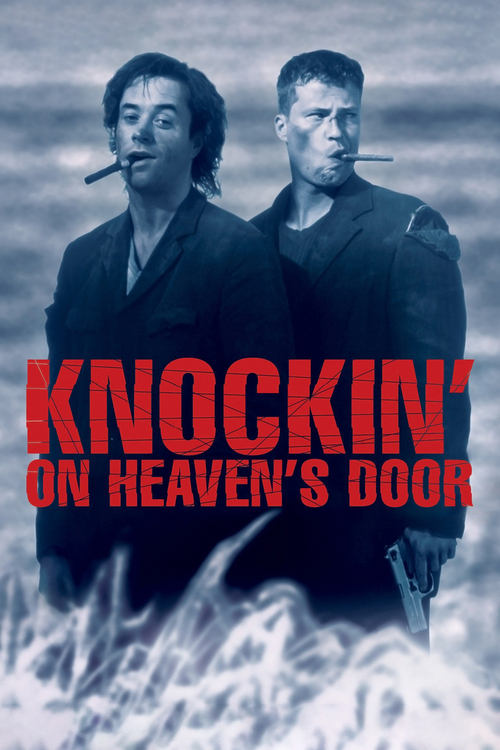
Knockin' on Heaven's Door
A high-octane tragicomedy where two terminally ill outlaws race against time, police, and gangsters in a baby-blue Mercedes to witness the ocean's eternal majesty before the curtain falls.
Knockin' on Heaven's Door

Knockin' on Heaven's Door

20 February 1997 Germany 89 min ⭐ 7.7 (566)
Director: Thomas Jahn
Cast: Til Schweiger, Jan Josef Liefers, Thierry van Werveke, Moritz Bleibtreu, Huub Stapel
Drama Crime Action Comedy
Mortality and Carpe Diem The Ocean as Salvation Friendship and Brotherhood Fate vs. Free Will
Budget: $3,500,000

Overview

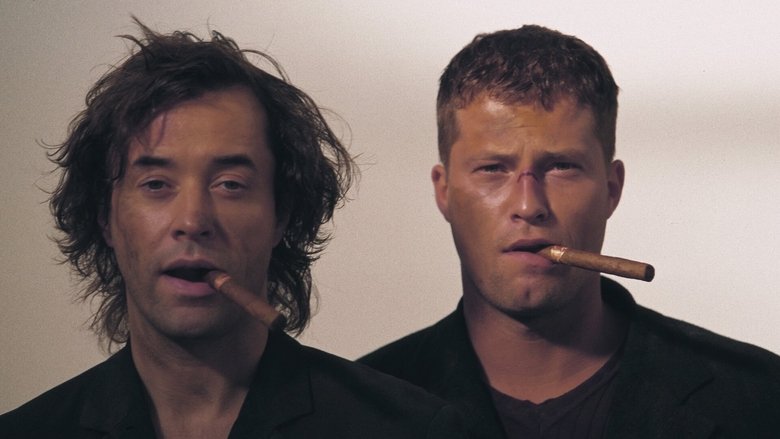
Knockin' on Heaven's Door is a cult German road movie that balances gritty action with poignant philosophical reflection. The story begins in a hospital where two strangers, Martin Brest and Rudi Wurlitzer, are diagnosed with terminal illnesses—a brain tumor and bone cancer, respectively. Discovering that Rudi has never seen the ocean, the rebellious Martin convinces him to escape. They steal a vintage Mercedes-Benz W113 from the hospital parking lot, unaware that it belongs to a powerful crime boss and contains a suitcase with one million Deutschmarks in the trunk.

As they journey toward the North Sea, the duo inadvertently becomes a sensation, robbing banks and gas stations while being pursued by a pair of bumbling henchmen, the entire police force, and the mob. Along the way, they bond over their shared fate, fulfilling items on a bucket list and learning to live fearlessly. The film culminates in a legendary showdown and a serene, heartbreaking finale on the beach, where they finally face the waves they risked everything to see.
Core Meaning

The film serves as a modern memento mori, delivering the powerful message that life is meant to be lived, not just survived. Director Thomas Jahn uses the impending death of the protagonists not to evoke pity, but to strip away societal fears and inhibitions. The core meaning is encapsulated in the recurring motif that at the end of life, the only things that matter are the experiences we've collected and the dreams we've fulfilled. It posits that fear is irrelevant in the face of death, and true freedom comes from accepting one's mortality.

Thematic DNA

Mortality and Carpe Diem 40%
The Ocean as Salvation 30%
Friendship and Brotherhood 20%
Fate vs. Free Will 10%

Mortality and Carpe Diem

The ticking clock of terminal illness drives every action in the film. Martin and Rudi's diagnosis forces them to seize the day, transforming them from passive patients into active agents of their own destiny. The film argues that awareness of death can heighten the intensity and value of life.

The Ocean as Salvation

The ocean is not just a destination; it represents heaven, purity, and the ultimate answer to life's questions. It is the spiritual anchor of the film, symbolizing the peace that awaits after the chaotic struggle of existence.

Friendship and Brotherhood

Two polar opposites—a reckless rebel and a timid rule-follower—forge a deep bond through shared adversity. Their relationship evolves from forced proximity to a genuine brotherhood where they complete each other, with Martin teaching Rudi courage and Rudi grounding Martin.

Fate vs. Free Will

While their death is fated (and medically certain), their path to it is a supreme act of free will. They choose how to die, rejecting the sterile hospital bed for the open road.

Character Analysis

Martin Brest

Til Schweiger

Archetype: The Tragic Hero / The Rebel
Key Trait: Fearlessness

Motivation

To die on his own terms and ensure his new friend doesn't arrive in heaven without having seen the ocean.

Character Arc

Starts as an aggressive, cynical man angry at his fate. Through the journey, he channels his rage into purpose, ensuring Rudi sees the ocean and finding his own redemption by giving back (e.g., the Cadillac for his mom).

Rudi Wurlitzer

Jan Josef Liefers

Archetype: The Companion / The Everyman
Key Trait: Innocence

Motivation

To experience life's 'salt' before it's too late and to see the ocean for the first time.

Character Arc

Begins as a timid, risk-averse character who follows all rules. He transforms into a brave man who robs banks and stands up to gangsters, eventually accepting his death with quiet dignity.

Frankie 'Boy' Beluga

Huub Stapel

Archetype: The Antagonist / The Mob Boss
Key Trait: Greed

Motivation

To retrieve his money and his beloved Mercedes.

Character Arc

A caricature of a crime lord who is more concerned with his car and money than human life, serving as a foil to the protagonists' existential journey.

Curtiz

Rutger Hauer

Archetype: The Deus Ex Machina / The Wise Elder
Key Trait: Omniscience

Motivation

Respect for those who have nothing left to lose.

Character Arc

Appears as the ultimate authority. Instead of killing the protagonists, he recognizes their plight and lets them go, acting as a gatekeeper to their final destiny.

Symbols & Motifs

The Ocean

Meaning:

Symbolizes the afterlife, eternal peace, and the admission ticket to heaven. It represents the only thing that truly matters when one's life is over.

Context:

referenced constantly in dialogue, particularly the monologue about souls in heaven talking about the sunset. It is the visual bookend of the film.

The Baby Blue Mercedes 230 SL

Meaning:

Represents freedom, style, and the vehicle of transition between life and death. It's a 'chariot' that carries them to their final destination.

Context:

The car they steal to escape the hospital, which ironically belongs to the mob boss, linking their freedom to danger.

Tequila, Salt, and Lemon

Meaning:

A ritual of bonding and hedonism. It symbolizes the taste of life—bitter, salty, and intoxicating—consumed in a single gulp.

Context:

Used in the hospital kitchen scene where they first bond and decide to leave, and again at the very end as a final sacrament before death.

The List of Wishes

Meaning:

Symbolizes the unfulfilled potential of a life lived in fear. Checking items off is an act of reclaiming their lost time.

Context:

Rudi writes a wish list which they attempt to complete during their crime spree, including sleeping with two women at once and buying a pink Cadillac.

Memorable Quotes

In heaven, they talk about nothing but the sea. And how wonderful it is.

— Martin Brest

Context:

Spoken by Martin in the hospital kitchen while drinking tequila to convince Rudi to escape.

Meaning:

The film's central philosophy. It frames the ocean not just as water, but as the only currency of value in the afterlife, emphasizing the importance of witnessing beauty while alive.

It's a knock on heaven's door.

— Rudi Wurlitzer

Context:

Referencing their terminal condition and the impending end of their journey.

Meaning:

Acknowledges their proximity to death. It connects the film's title to their immediate reality.

Schwester, können Sie mir einen blasen? ... Nieren- und Blasentee.

— Martin Brest

Context:

Martin teasing a nurse in the hospital.

Meaning:

A crude pun (Blowjob vs. Bladder tea) that establishes Martin's irreverent, rebellious attitude toward authority and social norms even while dying.

I have to see the ocean. I've never seen it.

— Rudi Wurlitzer

Context:

The moment of vulnerability that solidifies Martin's resolve to kidnap him for the road trip.

Meaning:

The confession that ignites the entire plot. It represents the tragedy of a life unlived.

Philosophical Questions

What constitutes a 'good' death?

The film explores whether the manner of one's death defines the value of their life. It suggests that dying while actively pursuing a dream is superior to fading away in a hospital, redefining a 'good death' as one of agency and fulfillment.

Is morality relative in the face of death?

Martin and Rudi break numerous laws (theft, kidnapping, robbery), yet the film frames them as moral heroes. It questions whether societal laws apply to those who have no future, suggesting a higher moral law based on fulfilling the soul's needs.

Alternative Interpretations

While the surface plot is a linear road movie, some critics view the entire journey as a purgatorial transition. In this reading, the hospital diagnosis is the moment of death, and the road trip is the soul's journey to the afterlife (the ocean), with the police and gangsters representing the demons or earthly attachments trying to hold them back. The character of Curtiz, who allows them to pass at the end, functions as a St. Peter figure or a benevolent God granting them entry into heaven.

Cultural Impact

Knockin' on Heaven's Door became a defining film of 1990s German cinema, breaking away from the heavy historical dramas the country was known for. It introduced a Hollywood-style coolness, blending Tarantino-esque dialogue with German sentimentality. The film launched Til Schweiger into superstardom and became an absolute cult classic in Russia and Eastern Europe, where its themes of fatalism, friendship, and the 'dream of the ocean' resonated deeply with the post-Soviet zeitgeist. It is frequently ranked among the best German films of all time by audiences.

Audience Reception

The film holds a very high status among audiences, particularly in Europe. Viewers praise the chemistry between Schweiger and Liefers, the balance of laugh-out-loud comedy with tear-jerking tragedy, and the iconic soundtrack. The ending is universally cited as one of the most emotional and perfect finales in cinema history. Criticism is rare but sometimes targets the stereotypical portrayal of the bumbling gangsters or the derivative nature of its Tarantino influences.

Interesting Facts

  • The names of the main characters are homages: Martin Brest is named after the director of 'Midnight Run', and Rudi Wurlitzer is named after the screenwriter of 'Two-Lane Blacktop'.
  • Til Schweiger not only starred in the film but also co-wrote the script and produced it.
  • The film was a massive cult hit in Russia and post-Soviet states, often quoted and beloved more there than in many English-speaking countries.
  • Rutger Hauer's role as the crime lord Curtiz is a cameo; his character's name is likely a nod to director Michael Curtiz or Kurtz from 'Apocalypse Now'.
  • The film's title comes from the famous Bob Dylan song, which is covered by the German band Selig for the soundtrack.
  • A Japanese remake of the film was released in 2009, starring Tomoya Nagase.
  • Despite being a road movie involving bank robberies, the protagonists never actually kill anyone.

Easter Eggs

Martin Brest's Name

A direct reference to the American director Martin Brest, known for Midnight Run and Scent of a Woman, acknowledging the film's inspiration from American road movies.

Rudi Wurlitzer's Name

A reference to Rudy Wurlitzer, the screenwriter of the 1971 cult road movie Two-Lane Blacktop, cementing the film's genre lineage.

Elvis Presley's Cadillac

Martin buys a pink Cadillac for his mother, identical to the one Elvis Presley famously bought for his mother, symbolizing the ultimate son's gift.

Quentin Tarantino Influence

The trunk shot (camera looking up from the trunk), the bumbling gangsters discussing mundane topics, and the non-linear storytelling style are direct visual nods to Pulp Fiction.

Curtiz

The character name of the big boss (played by Rutger Hauer) is a homage, possibly to director Michael Curtiz (Casablanca) or the character Kurtz from Heart of Darkness/Apocalypse Now.

⚠️ Spoiler Analysis

Click to reveal detailed analysis with spoilers

Frequently Asked Questions

Explore More About This Movie

Dive deeper into specific aspects of the movie with our detailed analysis pages

Comments (0)

Leave a comment

No comments yet. Be the first to share your thoughts!