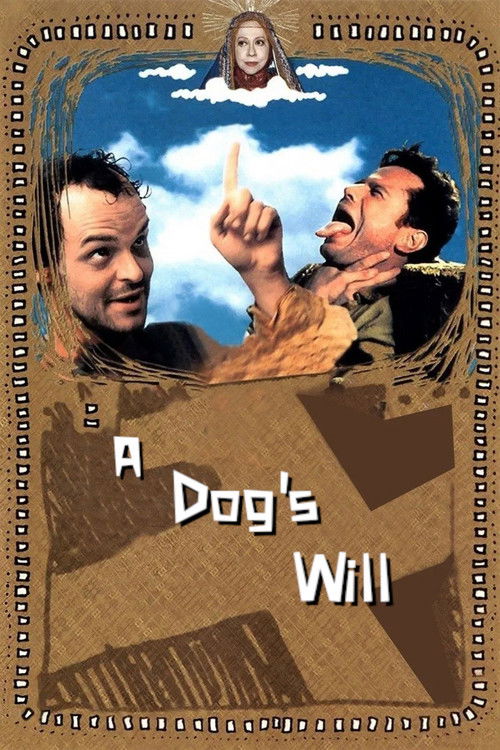
A Dog's Will
O Auto da Compadecida
"Lying with faith is not always a sin."
Overview
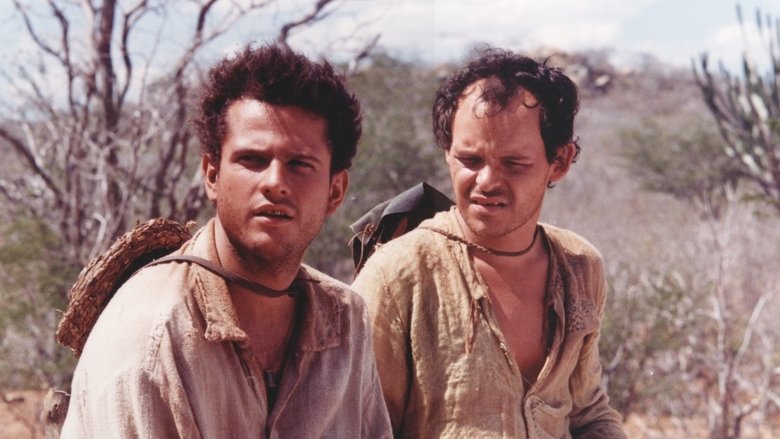
"A Dog's Will" (O Auto da Compadecida) follows the misadventures of two poor but clever friends, João Grilo (Matheus Nachtergaele) and Chicó (Selton Mello), as they navigate life in a small, arid town in the Northeast of Brazil during the 1930s. The quick-witted João Grilo relies on his sharp tongue to deceive the town's corrupt and powerful figures—including the priest, the baker, and the mayor—while the cowardly Chicó backs him up with fantastically unbelievable stories.
Their schemes often revolve around exploiting the greed and hypocrisy of the town's elite, leading to a series of hilarious and chaotic situations, such as convincing a priest to bless a dog and then to perform its funeral rites by claiming it left money to the church in its will. The duo's adventures take a dramatic turn with the arrival of the fearsome bandit Severino and his gang, leading to a violent confrontation that sends them all to face the ultimate trial. In the afterlife, they are judged by Jesus, the Devil, and are defended by the compassionate Virgin Mary, forcing them to account for their earthly deeds in a climactic and humorous celestial court.
Core Meaning
The core meaning of "A Dog's Will" lies in its exploration of compassion, faith, and the resilience of the human spirit in the face of social injustice and hypocrisy. Director Guel Arraes, adapting Ariano Suassuna's play, conveys that true virtue is not found in the rigid dogmas of powerful institutions like the church or the wealthy elite, but in the simple faith and empathy of the common person. The film celebrates the cleverness (malandragem) of the oppressed as a necessary tool for survival. Ultimately, it suggests that divine judgment values compassion and humility over wealth and status, and that everyone, no matter their sins, is worthy of a second chance through the intercession of mercy.
Thematic DNA
Social Critique and Religious Hypocrisy
The film satirizes the corrupt and self-serving authority figures of the town. The priest (Rogério Cardoso) and the bishop (Lima Duarte) are depicted as greedy men who bend religious rules for money, such as agreeing to bury a dog in consecrated ground for a hefty sum. This theme exposes the vast gap between the ideals of faith and the hypocritical actions of those in power, contrasting their behavior with the genuine, albeit flawed, faith of the poor protagonists.
Survival of the Witty (Malandragem)
João Grilo embodies the archetype of the malandro, a clever trickster who uses his wits to survive in a deeply unequal society. His schemes are not born of malice but of desperation and a desire for justice against the oppressive elite. This theme celebrates the Brazilian folk tradition of cleverness as a form of resistance and a necessary tool for the disenfranchised to navigate a harsh world.
Divine Mercy and Compassion
The climactic judgment scene is the film's centerpiece, where justice is tempered by mercy. While the Devil prosecutes the characters based on their sins, the Virgin Mary ("The Compassionate One") intercedes on their behalf, highlighting their human frailties and the difficult circumstances that led to their actions. This theme posits that divine understanding is compassionate and that redemption is available to all, especially the humble and downtrodden.
Brazilian Northeastern Culture and Identity
The film is a celebration of the culture of the Brazilian Northeast (Nordeste). It incorporates elements of literatura de cordel (popular folk pamphlets), regional dialects, religious syncretism, and the figure of the cangaceiro (social bandit). By grounding the story in this specific cultural context, the film serves as an act of cultural preservation and affirms the richness of a region often marginalized in Brazil's national identity.
Character Analysis
João Grilo
Matheus Nachtergaele
Motivation
His primary motivation is survival in a land of extreme poverty and social injustice. He cheats the rich and corrupt not just for personal gain, but also as a way of leveling the playing field. Deep down, he also possesses a sense of fairness and a desire for redemption.
Character Arc
João Grilo starts as a resourceful, albeit starving, con man focused solely on survival. His journey is a constant battle of wits against the powerful. His arc culminates in the ultimate trial, where he must use his cleverness not for earthly gain but for the salvation of his soul. After being given a second chance at life, he shows a begrudging but real change, donating his ill-gotten money and accepting a simpler, more honest existence.
Chicó
Selton Mello
Motivation
Chicó is motivated by a desire for a peaceful life, love (specifically for Rosinha), and loyalty to João Grilo. He fears conflict and danger above all else, but his friendship and romantic aspirations push him to overcome his cowardice at crucial moments.
Character Arc
Chicó is initially defined by his cowardice and his penchant for telling fantastic lies. He is often dragged into João Grilo's schemes against his better judgment. Throughout their adventures, and especially after facing death, Chicó finds moments of courage, driven by his friendship with João and his love for Rosinha. His arc is about finding bravery and learning to stand on his own, though he never fully loses his whimsical and fearful nature.
Our Lady, the Compassionate
Fernanda Montenegro
Motivation
Her motivation is pure compassion. As the "Compadecida," she feels the suffering of humanity and is driven to intercede on their behalf, offering salvation to those who, despite their faults, maintained a flicker of faith and goodness.
Character Arc
As a divine figure, her character does not have a traditional arc, but she is the agent of change for others. She represents ultimate compassion and mercy. Her role is to challenge the strict application of divine law, arguing for the importance of understanding human weakness and the context of people's lives. She is the moral center of the final act, tipping the scales from damnation to redemption.
Severino de Aracaju
Marco Nanini
Motivation
Initially, his motivation appears to be plunder and violence. However, his true motivation is a twisted sense of justice and revenge against a society and a system that destroyed his family. He sees himself as an avenging angel for the oppressed.
Character Arc
Severino is introduced as a fearsome cangaceiro, a ruthless bandit who brings terror to the town. His arc is revealed posthumously during the judgment scene. We learn his violence was born from a tragic past, where his parents were killed by the police. In death, he is revealed not as a monster, but as a misguided man twisted by a desire for vengeance. Jesus absolves him, recognizing his actions as a product of his deep-seated trauma and mental illness.
Symbols & Motifs
The Dog's Will
The will of the baker's dog, a fabrication by João Grilo, symbolizes the absurdity and corruption of the powerful. It shows that institutions and their leaders are willing to abandon their principles and logic for financial gain, becoming puppets in the hands of a clever commoner.
João Grilo invents a will for the deceased dog of the baker's wife, stating it left a large sum of money to the church. This convinces the initially hesitant priest and bishop to grant the dog a Catholic burial with full honors, highlighting their greed and hypocrisy.
The Last Judgment
The final trial in heaven is a symbolic representation of Brazilian syncretism and popular Catholicism. It's not a rigid, terrifying event but a vibrant, chaotic courtroom where human arguments and divine compassion collide. The portrayal of a Black Jesus (Manuel) and a deeply empathetic Virgin Mary challenges traditional European religious imagery and reflects a uniquely Brazilian understanding of faith, justice, and mercy.
After being killed by the bandit Severino, all the main characters find themselves in the afterlife being judged. João Grilo must use his rhetorical skills one last time to appeal to the Virgin Mary, who acts as their celestial advocate against the Devil's accusations.
Chicó's Lies
Chicó's outlandish and fantastical stories symbolize the power of oral tradition and imagination in the sertão (backlands). His tales, though unbelievable, represent a form of escapism and cultural richness that coexists with the harsh reality of their lives. They are a nod to the region's folk storytelling and the magical realism inherent in its culture.
Throughout the film, Chicó tells incredible stories, such as having a cat that defecates money or tricking a fearsome bandit with a blessed harmonica. These stories are often met with disbelief but are central to his character and the film's folkloric tone.
Memorable Quotes
Não sei, só sei que foi assim.
— Chicó
Context:
Chicó uses this phrase repeatedly after recounting one of his many fantastic and impossible stories, such as the time he was saved by a dying man's final breath or encountered a mysterious beast in the wilderness.
Meaning:
Translated as "I don't know, I just know that's how it was," this is Chicó's signature line, used to conclude his most unbelievable tales. It encapsulates the film's embrace of magical realism and the oral storytelling traditions of the sertão. The quote signifies that in this world, the line between fact and fiction is blurred, and the power of a good story often outweighs the need for literal truth.
Valha-me Nossa Senhora, Mãe de Deus de Nazaré! A vaca mansa dá leite, a braba dá quando quer. A mansa dá sossegada, a braba levanta o pé. Já fui barco, fui navio, mas hoje sou escaler. Já fui menino, fui homem, só me falta ser mulher.
— João Grilo
Context:
João Grilo recites this verse at several critical moments when he is in mortal danger, most notably when facing the bandit Severino and during his final plea to the Virgin Mary in the judgment scene.
Meaning:
This rhyming plea, taken from Brazilian folk poetry (cordel), is João Grilo's go-to invocation in times of extreme distress. It reflects the deep-rooted popular Catholicism of the region, where faith is expressed through personal, poetic, and almost conversational appeals to divine figures. The verse itself speaks of life's changes and humility, acknowledging his own smallness in the grand scheme of things.
Jesus às vezes se disfarça de mendigo pra testar a bondade dos homens.
— João Grilo
Context:
João Grilo says this to Chicó early in the film, expressing a piece of folk wisdom that guides his worldview. It's a sentiment that is later validated when Jesus himself appears as a humble, dark-skinned man to judge them.
Meaning:
"Jesus sometimes disguises himself as a beggar to test the goodness of men." This line reflects a core tenet of the film's morality: that true faith is demonstrated through actions of charity and kindness towards the poor and marginalized, not through empty rituals performed by the wealthy. It foreshadows the final judgment, where one's treatment of the less fortunate is a key measure of their worth.
Philosophical Questions
What is the relationship between justice and mercy?
The film directly confronts this question in its final act. The Devil argues for strict justice, demanding damnation for the characters based on their clear sins of greed, lust, and deceit. Jesus initially presides as an impartial judge. However, the Virgin Mary introduces the concept of mercy, arguing that their actions must be understood within the context of their suffering and social condition. The film ultimately suggests that true justice cannot exist without mercy and that a higher moral order is based on compassion rather than rigid adherence to rules.
Is it morally acceptable to break the law in an unjust society?
João Grilo's constant scheming and lying are technically immoral and illegal. However, the film portrays them as necessary acts of survival in a society where the powerful (the baker, the priest, the major) are themselves corrupt and exploitative. The narrative frames João's "sins" as a Robin Hood-esque leveling of the scales. The final judgment seems to validate this, as his deceptions against the hypocritical elite are viewed with more leniency than their own sins of greed and pride, raising questions about whether morality is absolute or relative to one's circumstances.
How does faith differ from organized religion?
The film draws a sharp distinction between the two. Organized religion is represented by the greedy, hypocritical priest and bishop, who use their positions for personal gain. Faith, on the other hand, is embodied by João Grilo's desperate but sincere appeals to the Virgin Mary and the simple piety of the common folk. The film suggests that true faith is a personal, compassionate relationship with the divine that exists outside of, and is often betrayed by, the flawed human institutions of the church.
Alternative Interpretations
While the film's ending is generally seen as a celebration of divine mercy, it can also be interpreted through a more critical, socio-political lens. One interpretation is that the celestial court is not a literal event but a metaphorical exploration of João Grilo's conscience and the cultural values of the sertão. The judgment is a projection of the popular belief that the oppressed will find justice in the afterlife that is denied to them on Earth. From this perspective, João's "resurrection" is less a miracle and more a folkloric tale's conclusion, reinforcing the idea that the clever hero always finds a way to survive.
Another reading focuses on the character of the Virgin Mary. Instead of a purely divine figure, she can be seen as the personification of maternal compassion, a cultural archetype deeply embedded in Latin American Catholicism. Her intervention is not just an act of grace but a statement that a value system based on empathy and understanding (often coded as feminine) is superior to one based on rigid, patriarchal laws (represented by the Devil's legalistic arguments and even Jesus's initial sternness). Her victory is a victory for a more humanistic and less dogmatic form of spirituality.
Cultural Impact
"A Dog's Will" is considered a landmark of modern Brazilian cinema and has had a profound cultural impact. Upon its release, it broke box office records and was praised by critics, reinvigorating national pride in Brazilian filmmaking. The film masterfully blends high art and popular culture, adapting Ariano Suassuna's erudite play, itself based on medieval popular theater and cordel literature, into an accessible and beloved comedy.
It brought the cultural richness of the often-stereotyped Brazilian Northeast to a mainstream audience, celebrating its dialect, religiosity, and spirit of resilience. The characters of João Grilo and Chicó have become iconic figures in Brazilian pop culture, and their quotes are widely recognized and repeated. The film's depiction of a Black Jesus and its critique of religious hypocrisy sparked conversations about race, faith, and social justice in Brazil. It remains one of the most cherished films in the country, a testament to its timeless humor and its powerful affirmation of Brazilian identity.
Audience Reception
Audience reception for "A Dog's Will" in Brazil has been overwhelmingly positive since its release, cementing its status as a beloved national classic. Viewers praise the film for its brilliant humor, charismatic performances by Matheus Nachtergaele and Selton Mello, and its heartfelt celebration of Brazilian culture. The chemistry between the two leads is consistently highlighted as a major strength. Many consider it a perfect blend of comedy and social commentary, capable of making audiences laugh while also provoking reflection on themes of inequality and faith. While some international viewers have noted that the humor can be culturally specific and may not fully translate, the film still garners appreciation for its creativity and charm. In Brazil, it is more than just a movie; it is a cultural touchstone that evokes a sense of nostalgia and national pride.
Interesting Facts
- The film is an edited version of a four-part television miniseries that aired on Brazil's Rede Globo in 1999. The miniseries version is about 40 minutes longer and contains subplots removed from the theatrical release.
- The story is primarily based on Ariano Suassuna's 1955 play of the same name but also incorporates elements from his other works, including "The Ghost and the Sow" and "Torture of a Heart".
- Ariano Suassuna, the author of the original play, was consulted by director Guel Arraes for the adaptation and contributed to the screenplay.
- "A Dog's Will" was a massive box office success in Brazil, becoming the highest-grossing Brazilian film of 2000.
- The primary filming location was the town of Cabaceiras in the state of Paraíba, a location so frequently used for films set in the arid backlands that it's known as "Roliúde Nordestina" (Northeastern Hollywood).
- A sequel, "O Auto da Compadecida 2", was released in December 2024, with Matheus Nachtergaele and Selton Mello reprising their iconic roles.
⚠️ Spoiler Analysis
Click to reveal detailed analysis with spoilers
Frequently Asked Questions
Explore More About This Movie
Dive deeper into specific aspects of the movie with our detailed analysis pages
Comments (0)
No comments yet. Be the first to share your thoughts!