Skip to content
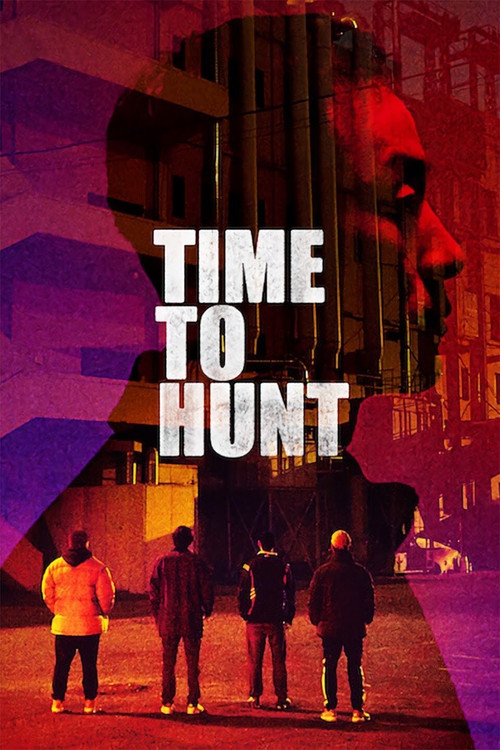
Time to Hunt
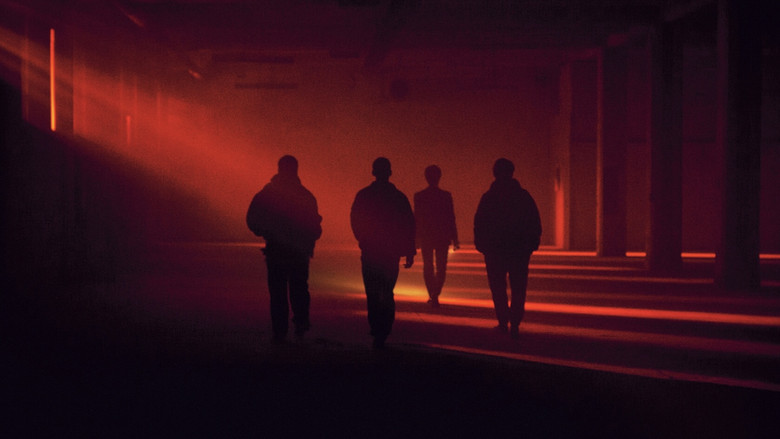
A neon-bruised dystopian heist thriller that curdles into a relentless chase, where friendship and desperation run through a darkened Seoul like a fuse burning toward an unseen predator.
Time to Hunt

Time to Hunt

사냥의 시간

"We became its prey."

22 February 2020 South Korea 135 min 7.1 (357)

Director: Yoon Sung-hyun

Cast: Lee Je-hoon, Ahn Jae-hong, Choi Woo-shik, Park Jeong-min, Park Hae-soo

Drama Action Thriller Economic despair and precarity Friendship and loyalty Predation and inescapable systems Illusory escape Guilt and trauma
Budget: $9,070,000

Overview

In a near-future South Korea wrecked by a financial crisis, the won has crashed and slums have spread. Jun-seok is released from prison after taking the fall for a botched heist. He comes home to a city he barely recognizes, full of drugs and guns, and finds his friends Jang-ho and Ki-hoon living honest but going-nowhere lives.

Jun-seok proposes one last job: robbing an illegal gambling den that keeps stacks of US dollars. He wants to use the money to escape to a quieter life on the beaches of Taiwan. The friends bring in Sang-soo, who works at the den, and get guns through Jun-seok's contact Bong-sik. The robbery is messy but succeeds.

The aftermath turns the film from a heist story into a survival thriller. An unidentified, relentless pursuer, Han, starts hunting the group. The film becomes a chase through shadow-soaked streets where nowhere is safe.
Core Meaning

Yoon Sung-hyun uses genre to portray a generation with nothing left to lose. In the film's world, honest work leads nowhere and crime is the only route to "living like human beings." The pursuer Han, who seems fused with the shadows, stands for a social and economic order that cannot be escaped. The film suggests that dreams of escape, here a Taiwanese paradise, are cruelly undercut by the system that created the desperation. Loyalty among friends is the only thing of value, and it is also what makes them vulnerable.

Thematic DNA

Economic despair and precarity 30%
Friendship and loyalty 25%
Predation and inescapable systems 20%
Illusory escape 15%
Guilt and trauma 10%

Economic despair and precarity

The crashed won, slums and futile jobs push young men toward crime. Reviewers note that futility is what binds the group together.

Friendship and loyalty

Jang-ho joins the heist partly out of loyalty to Jun-seok, who went to prison alone. The bond is both the group's strength and its weakness.

Predation and inescapable systems

Han, the relentless hunter, becomes an omnipresent threat. He works as a stand-in for societal corruption that cannot be overcome.

Illusory escape

Jun-seok's dream of Taiwan is a fantasy that drives the plot. The film keeps asking whether anyone can leave a world that has been rigged.

Guilt and trauma

Jun-seok is haunted by dreams of causing the deaths of those close to him, which shows the psychological cost of his past choices.

Character Analysis

Jun-seok

Lee Je-hoon

Archetype: Tragic hero Key Trait: Driven dreamer burdened by guilt

Motivation

To escape poverty and reach a better life, with his friends, in Taiwan.

Character Arc

He leaves prison with a plan for a new life, drags his friends into one last job, then is forced to face the consequences of that decision.

Jang-ho

Ahn Jae-hong

Archetype: Loyal friend Key Trait: Warm, joking loyalty

Motivation

Loyalty to Jun-seok, and the lack of any other future.

Character Arc

He joins the heist and follows Jun-seok into increasing danger.

All 5 characters and cast

Symbols & Motifs

Taiwan beaches

Meaning:

An unreachable, simple life and a dream of escape.

Context:

Jun-seok uses it to sell the heist to his friends, and it is the dream he cannot bear to lose.

Han as a shadow

Meaning:

Systemic corruption and an inescapable force of violence.

Context:

He stalks the group, appearing almost fused with the darkness.

Shiny LCD screens and neon

Meaning:

The glossy surface of a society that has failed its poorest people.

Context:

Bright screens and lights dot the dystopian cityscape against the characters' poverty.

US dollars

Meaning:

Stable value in a collapsed economy, the only currency of hope.

Context:

The stacks in the gambling den are the heist's target, while the won has become worthless.

Jun-seok's nightmares

Meaning:

Guilt and foreboding.

Context:

Visions of blood, ghosts and the deaths of loved ones foreshadow the group's fate.

Philosophical Questions

Can individuals escape the conditions of an unjust society?

The group tries to buy their way out with a heist. The relentless pursuit suggests that no matter where you are, you cannot escape.

What do we owe our friends?

Loyalty draws the group together and also drags them into danger.

Is crime justified when honest work leads nowhere?

The friends lived honest lives while Jun-seok was in prison and got nowhere, which makes the robbery feel less like a choice than a trap.

How It Ends

Alternative Interpretations

One reading treats Han as a literal criminal threat and the film as a pure genre exercise. Another treats him as an embodiment of systemic corruption, a force that makes escape impossible for the poor. A third reads the film as a story about masculine friendship, where bonds formed in poverty become fatal liabilities.

Full ending explanation

Cultural Impact

The film's economic collapse echoes South Korea's real experience of the Asian Financial Crisis, when the country defaulted on its loans and accepted concessions that many saw as humiliating. Its young, penniless protagonists fit a wider Korean cinema interest in class despair. Its Berlinale Special slot and Netflix release gave it international reach. Critics were mixed: Variety appreciated the engineered suspense and bold lighting, while others found the plot predictable. Choi Woo-shik was promoted as "the son in Parasite."

Audience Reception

IMDb users rate it about 6.3/10. Viewers praise the cinematography, use of colour and soundtrack. Common criticism is that the film is predictable and tries to be too many things at once. One reviewer said it feels like two films stitched together: a heist movie and a horror or action chase. Overall it is a stylish but uneven genre piece.

Interesting Facts

  • The film premiered at the 70th Berlin International Film Festival on February 22, 2020, the first South Korean film screened in the Berlinale Special section.
  • It was released worldwide on Netflix on April 23, 2020.
  • It was written and directed by Yoon Sung-hyun and produced by Handae Rhee for Sidus Pictures.
  • The running time is 134 minutes.
  • Variety noted that cinematographer Lim Won-geun worked on the film in his first feature as DP and used unconventional lighting.

Frequently Asked Questions

Explore More About This Movie

Dive deeper into specific aspects of the movie with our detailed analysis pages

Comments (0)

Leave a comment

No comments yet. Be the first to share your thoughts!

Similar Movies