Skip to content
Train Dreams
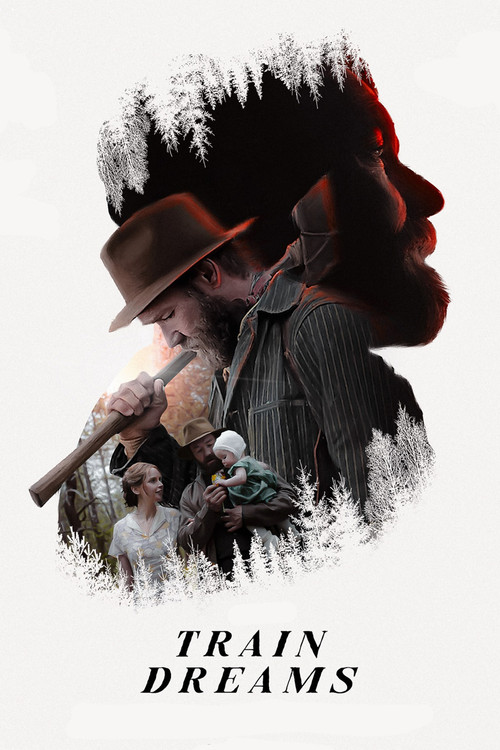
An elegiac frontier reverie wrapped in quiet ache and luminous wonder, Train Dreams captures an ordinary life drifting like woodsmoke across a vanishing American wilderness.
Train Dreams

Train Dreams

"The extraordinary story of an ordinary life."

05 November 2025 United States of America 102 min 7.3 (1,158)

Director: Clint Bentley

Cast: Joel Edgerton, Felicity Jones, Nathaniel Arcand, Clifton Collins Jr., John Diehl

Drama The Passage of Time and Fleeting Memory Man, Nature, and the Cost of Industrial "Progress" Invisible Grief, Solitude, and Enduring Love Guilt, Moral Complicity, and Transcendence
Budget: $10,000,000

Overview

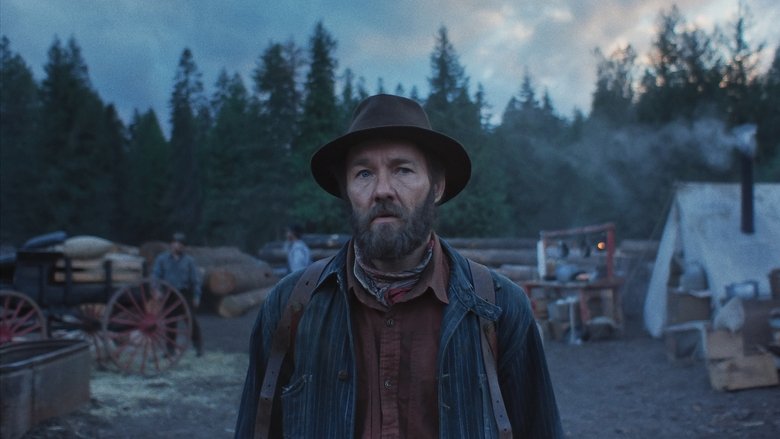
Set against the towering old-growth forests and rugged mountain passes of the Pacific Northwest during the transition into the twentieth century, Train Dreams chronicles the life of Robert Grainier (Joel Edgerton). Orphaned as a child and raised in the rural wilderness, Grainier makes his living as a day laborer, logging timber and laying tracks for the expanding transcontinental railroad system. Though taciturn and modest in his ambitions, he builds a life filled with quiet purpose after courting and marrying Gladys (Felicity Jones) and constructing a modest cabin in the woods to raise their infant daughter, Kate.

Grainier’s livelihood demands long, grueling stretches away from home, working alongside rough-hewn crews of loggers, dynamiters, and bridge builders. As industrialization pushes further into untouched terrain, Grainier finds himself straddling two worlds: the untamed natural frontier that feeds his soul, and the relentless machinery of American modernization. During his absences, Grainier carries memories of his family like talismans against the harshness of the elements and the unforgiving labor.

The film navigates Grainier's life not through rapid melodrama, but through a deeply lyrical, episodic rhythm narrated by Will Patton. It charts the profound transformations of early twentieth-century America through the eyes of an ordinary workingman who witnesses the country reshape itself from virgin forests and horse trails into steam engines, electric grids, and early aviation.


Core Meaning

Directed by Clint Bentley and co-written with Greg Kwedar from Denis Johnson’s acclaimed 2011 novella, Train Dreams explores how the measure of a human existence is not defined by historical grandiosity, but by the quiet accumulation of sensory moments, invisible grief, and connection.

Bentley illustrates the duality of the American myth: the physical expansion that connected the country was achieved through monumental destruction—the leveling of ancient ecosystems, the exploitation and casual brutality toward marginalized laborers, and the erasure of indigenous lands. Yet, beneath historical forces lies the individual soul. The film's core message posits that every ordinary, overlooked life holds vast mythic weight. In Grainier’s solitary resilience and lingering memory, Bentley asserts that even when stripped of everything, human consciousness possesses the capacity for grace, wonder, and communion with the world.

Thematic DNA

The Passage of Time and Fleeting Memory 30%
Man, Nature, and the Cost of Industrial "Progress" 25%
Invisible Grief, Solitude, and Enduring Love 25%
Guilt, Moral Complicity, and Transcendence 20%

The Passage of Time and Fleeting Memory

The film condenses eighty years into a fluid stream of vignettes. Time operates both as an unstoppable train and as a series of suspended moments—the feel of pine needles underfoot, the slant of late afternoon sunlight, or the memory of a child's laugh. The narrative structure emphasizes that life accelerates as it progresses, leaving the individual stranded in a world that moves faster than memory can process.

Man, Nature, and the Cost of Industrial "Progress"

Logging and railroad expansion serve as direct manifestations of humanity’s fraught relationship with the natural realm. Ancient trees are felled with crosscut saws, rivers are dammed, and rock faces are blasted with dynamite to make way for steel tracks. Progress brings convenience and national unity at the cost of irrevocable ecological and spiritual loss.

Invisible Grief, Solitude, and Enduring Love

Grainier spends the majority of his life in the wake of immense, sudden loss. His grief is quiet, domestic, and persistent—not dramatic outbursts, but the daily act of waking up alone in the woods, talking to animals, and preserving the physical remnants of a vanished family. The film portrays love not as something severed by death, but as a permanent lens through which a person continues to experience reality.

Guilt, Moral Complicity, and Transcendence

Early in his career, Grainier witnesses racial violence against a Chinese worker and fails to intervene. This haunting moment of passive complicity shadows his psyche, leading him to question whether later personal tragedies represent cosmic retribution. His spiritual journey involves living through that shame toward a humble, wordless reconciliation with the divine and natural order.

Character Analysis

Robert Grainier

Joel Edgerton

Archetype: The Stoic Pilgrim / Ordinary Hero Key Trait: Quiet observational tenderness, physical endurance, and deep humility.

Motivation

To live an honest life, provide for his household, and find peace within his memories.

Character Arc

Develops from an orphaned laborer seeking belonging to a devoted family man, and ultimately into a solitary mystic living with memory and loss across decades of industrial modernization.

Gladys Grainier

Felicity Jones

Archetype: The Radiant Anchor / Lost Grace Key Trait: Steadfast joy, warmth, and intuitive understanding of Robert.

Motivation

To build a warm home and family sanctuary in the remote frontier.

Character Arc

Enters Robert’s life with warmth and grounded optimism, transforming his loneliness before her sudden, tragic fate freezes her as Robert’s eternal touchstone.

All 5 characters and cast

Symbols & Motifs

The Train / Railroad Tracks

Meaning:

Represents the dual engine of American expansion—connection and industrial conquest on one hand, violence, exile, and environmental destruction on the other.

Context:

The recurring sound of a distant train whistle echoes through the woods as a reminder of the modern world encroaching on Grainier's solitude, as well as the physical tracks he spends years laying across the wilderness.

Old-Growth Trees

Meaning:

Act as silent, towering avatars of the divine and the eternal. Their felling marks the violation of primordial nature, while regenerating forests show nature's endurance over human enterprise.

Context:

Framed in extreme low-angle canopy perspectives throughout logging sequences and Grainier's solitary walks in the Pacific Northwest wilderness.

Wildfire and Ash

Meaning:

Symbolizes the sudden, uncontrollable wrath of nature and the fragility of human domesticity. Ash functions as a physical manifestation of grief and erasure.

Context:

An apocalyptic wildfire sweeps through the forest while Grainier is away, leaving ash covering the scorched ground where his cabin and family once stood.

The Cabin

Meaning:

The hand-hewn cabin represents the sacred sanctuary of family and manual creation, later transformed into a temple of memory.

Context:

Built by Grainier on the Moyie River for Gladys and Kate; after its destruction by fire, he rebuilds and inhabits a small shack on the exact same scorched site.

The Biplane Flight

Meaning:

Represents human ascension, technological arrival, and the bird's-eye perspective of an entire earthly voyage.

Context:

In Grainier's twilight years, he pays four dollars for a ride in a small open-cockpit biplane, gazing down at the rivers, mountains, and forests of his lifetime.

Memorable Quotes

I didn't think you'd be home this soon. / I just couldn't stop walking until I got here.
— Gladys Grainier and Robert Grainier

Context

Robert returns unexpectedly from a distant logging camp after hiking through the wilderness to see his wife and child.

Meaning

Captures the depth of Robert’s devotion and the magnetic pull of home against the exhausting transience of his work.

Sometimes the sadness feels like it could eat you alive, and sometimes it feels like it is happening to someone else.
— Will Patton (Narrator)

Context

Delivered over scenes of Robert surviving alone through long Pacific Northwest winters after the devastating wildfire.

Meaning

A definitive articulation of the film’s theme of dissociative, long-term grief and quiet survival.

All 3 quotes

Philosophical Questions

What constitutes a meaningful life?

The film demonstrates that a life without fame, wealth, or historical recognition can still be profoundly rich, holy, and complete through sensory appreciation and love.

Is human "progress" inherently destructive?

By contrasting majestic, ancient forests with the laying of industrial train tracks, the film questions whether technological advancements disconnect humanity from the very earth that sustains it.

How does consciousness survive catastrophic loss?

The narrative explores how human beings endure when the entire framework of their domestic world is obliterated, finding grace in routine, quiet memory, and radical acceptance.

Alternative Interpretations

The film invites multiple layered readings of Grainier's life and experiences:

Full ending explanation

Cultural Impact

Train Dreams arrives at a moment of renewed cinematic interest in introspective, anti-mythological Westerns that deconstruct Manifest Destiny. Premiering at the Sundance Film Festival in January 2025, the film was acquired by Netflix and received theatrical awards-qualifying runs in November 2025, where it became a major critical favorite.

Critics widely hailed it as one of the standout films of 2025, praising Joel Edgerton's quiet, emotionally restrained performance and Adolpho Veloso's naturalistic cinematography. It received end-of-year honors from the National Board of Review and the American Film Institute, alongside four Academy Award nominations. The film struck a cultural chord by offering an antidote to hyper-kinetic modern cinema, championing patience, transcendental nature reverence, and emotional sincerity.

Audience Reception

Holding a 95% approval rating on Rotten Tomatoes and an 88 on Metacritic, the film was widely acclaimed by mainstream critics and art-house reviewers.

Joel Edgerton’s understated performance was universally lauded as a career-best turn. Adolpho Veloso’s cinematography, Will Patton’s evocative narration, and Clint Bentley’s delicate handling of tone were praised for avoiding melodrama. A minor subset of viewers and critics found the pacing too deliberate and the loose, episodic narrative lacking traditional three-act tension.

Ultimately, it was recognized as a poetic, masterfully crafted meditation on American history, grief, and the quiet dignity of ordinary labor.

Interesting Facts

  • Clint Bentley and co-writer Greg Kwedar adapted the screenplay directly from Denis Johnson’s 2011 novella, which was a finalist for the 2012 Pulitzer Prize for Fiction.
  • The project reunites Bentley and Kwedar following their acclaimed prison drama Sing Sing (2023), further establishing their creative partnership centered on human resilience.
  • Cinematographer Adolpho Veloso and Bentley shot extensively on practical locations in remote areas of the Pacific Northwest (specifically Washington and surrounding regions), aiming for terrain untouched by modern power lines and roads.
  • Veloso operated the camera himself and avoided heavy artificial lighting, relying on the natural 'golden hour,' campfires, and lanterns, drawing stylistic inspiration from Depression-era photographer Dorothea Lange.
  • The atmospheric, string-heavy original score was composed by Bryce Dessner of The National, reinforcing the film’s lyrical and meditative tone.
  • Rather than relying purely on dialogue, Bentley incorporated Denis Johnson’s prose through third-person narration voiced by Will Patton, who had previously recorded popular audiobooks of Johnson's work.
  • Bentley revealed in interviews that the film went through fourteen different cuts of the ending before landing on the final biplane sequence to achieve the desired emotional resonance.

Easter Eggs

Terrence Malick Visual Homages

The sweeping golden-hour shots of swaying grain, low-angle canopy perspectives, and voiceover over ambient soundscapes directly evoke Terrence Malick’s Days of Heaven (1978) and The Tree of Life (2011).

Kelly Reichardt Influence & Will Patton

Patton’s casting as narrator serves as an intentional nod to Kelly Reichardt’s Pacific Northwest minimalist Westerns (Meek's Cutoff, First Cow), in which Patton frequently starred or collaborated.

The Four-Dollar Symmetry

In his old age, Grainier pays exactly $4 to take an airplane ride above the valley—the exact daily wage he was paid decades earlier for grueling manual logging, symbolizing a lifetime of labor exchanged for a fleeting view of the sky.

Denis Johnson Cameo Spirit

Johnson's distinctive literary digressions—such as passing mentions of astronomical comets and transient frontier characters—were deliberately preserved in the film's structure rather than smoothed out into a conventional Hollywood narrative.

Frequently Asked Questions

Explore More About This Movie

Dive deeper into specific aspects of the movie with our detailed analysis pages

Comments (0)

Leave a comment

No comments yet. Be the first to share your thoughts!

Similar Movies