Trainspotting
A frenetic, darkly comedic drama that plunges into the abyss of addiction, pulsating with the raw energy of 90s Britain and the desperate yearning for escape.
Trainspotting

Trainspotting

"Choose life."

23 February 1996 United Kingdom 94 min ⭐ 8.0 (10,040)
Director: Danny Boyle
Cast: Ewan McGregor, Ewen Bremner, Jonny Lee Miller, Kevin McKidd, Robert Carlyle
Drama Crime
Addiction and Escape Friendship and Betrayal The Futility of Rebellion Scottish Identity and Urban Decay
Budget: $4,000,000
Box Office: $71,981,823

Overview

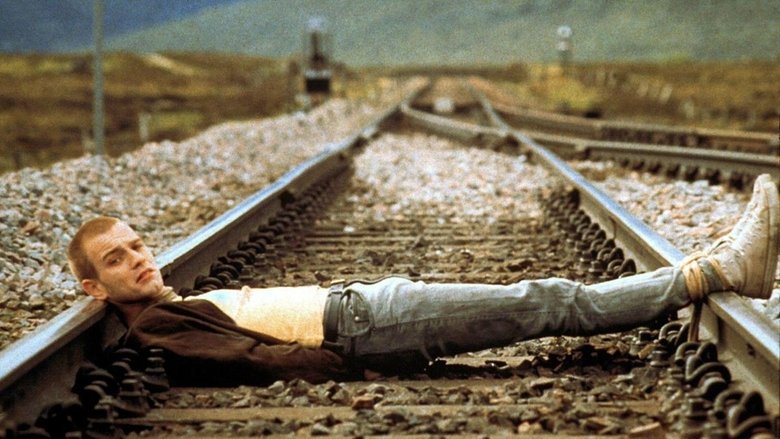
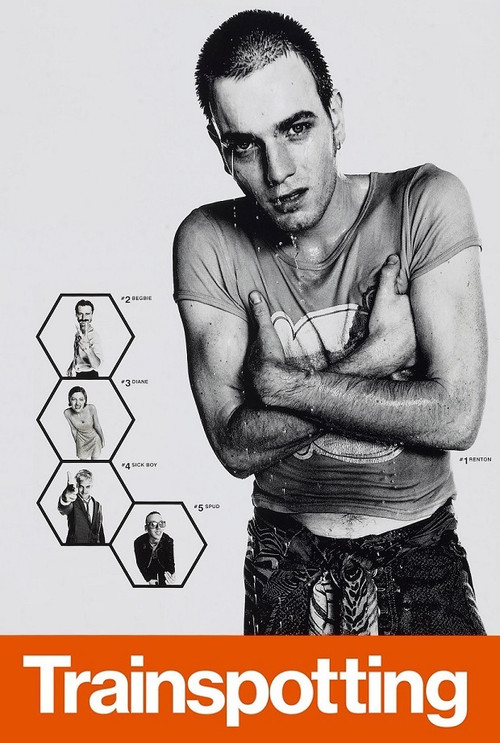
Set in the economically depressed suburbs of Edinburgh, "Trainspotting" chronicles the lives of a group of heroin addicts. The film is narrated by Mark Renton (Ewan McGregor), who is trying, with limited success, to kick his habit. His so-called friends include the duplicitous Simon "Sick Boy" Williamson, the simple and well-meaning Daniel "Spud" Murphy, the clean-cut athlete Tommy Mackenzie who gets drawn into their world, and the volatile, alcoholic psychopath Francis "Franco" Begbie.

The narrative follows Renton's chaotic existence, marked by attempts at sobriety that are repeatedly sabotaged by his environment and his friends. The film depicts the grim realities of their lives, including petty crime to fund their addiction, the tragic death of a friend's baby due to neglect, and Renton's own near-fatal overdose. After a forced withdrawal, Renton moves to London to start a new life, but his past catches up with him when his old friends reappear.

The climax sees the group involved in a lucrative drug deal in London. This presents Renton with a final, pivotal choice: to revert to his old ways with his destructive friends or to betray them and seize a chance for a different future.
Core Meaning

"Trainspotting" is fundamentally a story about the struggle for self-definition against the crushing weight of social and economic hopelessness. Director Danny Boyle presents a raw, unflinching look at heroin addiction, not merely as a physical dependency, but as a conscious rejection of a mundane, consumerist existence that the characters see as meaningless. The film's core message revolves around the idea of choice. Initially, Renton's famous "Choose Life" monologue is a cynical dismissal of societal norms. However, by the film's end, he reclaims the phrase, suggesting that true freedom lies not in nihilistic rebellion, but in the difficult, conscious decision to engage with life, despite its flaws and banalities. It is a bildungsroman in disguise, tracking a protagonist's journey from a state of arrested development towards self-awareness and responsibility.

Thematic DNA

Addiction and Escape 35%
Friendship and Betrayal 25%
The Futility of Rebellion 20%
Scottish Identity and Urban Decay 20%

Addiction and Escape

The central theme is addiction, primarily to heroin, which serves as both a literal trap and a metaphorical escape from the grim realities of their lives in economically depressed Edinburgh. The film portrays the highs—the pleasure and temporary freedom from worry—but unflinchingly depicts the horrific lows: withdrawal, overdose, crime, and death. Renton's narration reveals that the addiction is as much a psychological choice to opt out of a life he finds pointless as it is a physical dependency.

Friendship and Betrayal

The film explores the complexities and toxicity of the central friendships. The bonds between the characters are forged in shared experience and addiction, but are rife with selfishness, manipulation, and violence. Renton's friends are often the catalysts for his relapses. Sick Boy is a manipulative con artist, and Begbie is a violent psychopath who terrorizes his supposed friends. The film culminates in Renton's ultimate betrayal of his friends, which is framed as a necessary act of self-preservation and the only way to truly break the cycle of destruction.

The Futility of Rebellion

The characters' drug use is a form of rebellion against the consumerist, conventional lifestyle summarized in the "Choose Life" monologue. They see conformity as a slow death and heroin as an honest alternative. However, the film systematically demonstrates the pointlessness and futility of this rebellion. Their lives become a monotonous cycle of scoring, using, and dealing with the consequences, which is just as restrictive as the life they rejected. The title itself, "Trainspotting," alludes to a pointless hobby, symbolizing their static lives as they watch the world go by.

Scottish Identity and Urban Decay

Set against the backdrop of 1980s Edinburgh, the film explores themes of national and social identity. Renton's famous "It's shite being Scottish!" speech reflects a sense of post-industrial malaise and cultural impotence. The film vividly portrays the urban squalor and lack of opportunity that fuel the characters' despair and their turn to drugs. It captured the voice of a generation of working-class youth feeling left behind by the political and economic policies of the Thatcher era.

Character Analysis

Mark Renton

Ewan McGregor

Archetype: Antihero / Protagonist
Key Trait: Cynical Self-Awareness

Motivation

Initially, his motivation is simply to score his next hit and escape reality. As the film progresses, his motivation shifts towards a desperate desire to break free from the cycle of addiction and the toxic influence of his friends, and to "choose life" on his own terms.

Character Arc

Renton begins as a cynical heroin addict who uses drugs to escape the perceived meaninglessness of life. His journey is a cyclical battle of attempts to get clean, followed by relapses often triggered by his friends. He is self-aware and intelligent but also deeply selfish, causing harm to those around him, including his friend Tommy. His arc culminates in a move to London to escape his past, but he is drawn back in. Finally, he makes a decisive break by betraying his friends and stealing the money from a drug deal, choosing a conventional future over his destructive past.

Francis "Franco" Begbie

Robert Carlyle

Archetype: Antagonist / The Psychopath
Key Trait: Explosive Violence

Motivation

Begbie is motivated by a need for dominance, a love of violence, and a deep-seated insecurity. Robert Carlyle, the actor, famously interpreted the character as a closeted homosexual, with his rage stemming from a fear of being exposed.

Character Arc

Begbie is a terrifyingly violent, alcoholic psychopath who doesn't use heroin but is addicted to violence and chaos. He has no discernible arc; he is a static character who remains a menacing and unpredictable force throughout the film. He bullies and dominates his friends, representing the most dangerous and inescapable aspect of their destructive world. His rage culminates in him trashing a hotel room after being betrayed by Renton, leading to his arrest.

Simon "Sick Boy" Williamson

Jonny Lee Miller

Archetype: The Charmer / The Shadow
Key Trait: Manipulative Charisma

Motivation

Sick Boy is motivated by vanity, pleasure, and a need to feel superior to others. He uses his charm and wit to manipulate situations and people for his own gain.

Character Arc

Sick Boy is a charismatic, manipulative, and amoral con artist, obsessed with Sean Connery and theories of life. He is Renton's closest friend but also a negative influence and rival. His arc is one of steady decline; after the death of his neglected infant daughter, Dawn, he seems to spiral further into cynicism, becoming a pimp and small-time dealer in London. He shows no real growth and remains trapped in his self-serving lifestyle.

Daniel "Spud" Murphy

Ewen Bremner

Archetype: The Fool / The Victim
Key Trait: Hapless Innocence

Motivation

Spud is primarily motivated by a desire to fit in with his friends and to get his next fix. He lacks the cynicism of Renton and Sick Boy and the malice of Begbie, making him a more tragic figure.

Character Arc

Spud is the most docile, naive, and sympathetic member of the group. He is essentially a good-natured person who is easily led and suffers the consequences of the group's actions, such as being the only one imprisoned after a shoplifting incident. His arc is largely static; he remains a hapless addict throughout. However, he is the one character for whom Renton shows genuine compassion, leaving him a share of the stolen money at the end, offering him a glimmer of hope.

Tommy Mackenzie

Kevin McKidd

Archetype: The Innocent / The Tragic Hero
Key Trait: Honest Decency

Motivation

Initially, Tommy is motivated by a healthy lifestyle and his love for his girlfriend. After their breakup, his motivation collapses, and he turns to heroin out of despair and a desire to escape his emotional pain.

Character Arc

Tommy begins as the moral compass of the group—an honest, athletic man who doesn't use heroin and is in a stable relationship. His tragic arc is a downward spiral initiated by a breakup with his girlfriend (caused indirectly by Renton stealing their sex tape) which leads him to depression and eventually heroin addiction. He contracts HIV and dies from toxoplasmosis, serving as a cautionary tale and the most direct and tragic victim of the group's lifestyle.

Symbols & Motifs

The "Worst Toilet in Scotland"

Meaning:

This infamous toilet symbolizes the absolute depths of degradation and humiliation an addict will endure to get their fix. Renton's surreal dive into the filth to retrieve his lost opium suppositories represents his descent into the abyss of his addiction. The subsequent fantastical emergence into a clean, beautiful ocean signifies the transcendent escape that the drugs provide, no matter how foul the journey to get there.

Context:

After a period of being clean, Renton needs a hit but has only opium suppositories. In a pub toilet, he suffers a violent bout of diarrhea, losing the suppositories in a horrifically soiled toilet bowl. He then hallucinates diving into the toilet to recover them.

The Baby (Dawn)

Meaning:

The death of baby Dawn is a brutal and shocking symbol of the ultimate consequence of the group's lifestyle of neglect and self-obsession. It represents a profound loss of innocence and the horrifying reality that their actions—or inactions—have fatal consequences for others. Her death is a moment of potential clarity, yet the group largely fails to change its ways, highlighting the depth of their addiction.

Context:

Dawn is the infant daughter of Sick Boy and another addict, Allison. The friends are in a drug-induced stupor in their flat when they discover the baby has died in her cot from neglect. The event deeply shakes Sick Boy, but even this tragedy doesn't lead to lasting change for most of the group.

The Title "Trainspotting"

Meaning:

Literally the hobby of watching and recording the numbers of passing trains, the title metaphorically represents a futile, obsessive, and pointless activity. The characters are like trainspotters, passively watching life go by from the sidelines, trapped in the repetitive and meaningless cycle of their addiction.

Context:

The title is a reference to a scene in the original Irvine Welsh novel (not in the film) where Renton and Begbie encounter Begbie's father at a disused train station and he asks if they are "trainspotting". Although the scene is absent, the title remains a powerful allegory for the characters' stagnant existence.

Memorable Quotes

Choose Life. Choose a job. Choose a career. Choose a family. Choose a fucking big television, choose washing machines, cars, compact disc players and electrical tin openers... But why would I want to do a thing like that? I chose not to choose life. I chose somethin' else. And the reasons? There are no reasons. Who needs reasons when you've got heroin?

— Mark Renton

Context:

The film opens with Renton and Spud being chased by security guards after shoplifting. This monologue plays as a voiceover, contrasting the frantic action on screen with Renton's philosophical justification for his life choices.

Meaning:

This iconic opening monologue establishes the film's central theme of rebellion against societal norms and consumerism. It's a cynical anthem for a generation feeling alienated and disenfranchised, framing heroin use not as a failing but as a deliberate choice to reject a life they see as hollow and meaningless.

It's shite being Scottish! We're the lowest of the low. The scum of the fuckin' Earth! The most wretched, miserable, servile, pathetic trash that was ever shat into civilization. Some people hate the English. I don't. They're just wankers. We, on the other hand, are colonized by wankers.

— Mark Renton

Context:

Renton, Sick Boy, and Tommy are hiking in the Scottish Highlands. Tommy extols the beauty and pride of Scotland, prompting this bitter and furious outburst from Renton, who sees the fresh air and scenery as irrelevant to their grim urban reality.

Meaning:

This quote is a powerful expression of post-industrial Scottish despair and self-loathing. It speaks to a sense of national and cultural impotence, suggesting their problems are deeper than just blaming the English. It encapsulates the feeling of being trapped in a cycle of failure that fuels their nihilism and drug use.

So why do I do it? I could offer a million answers, all false. The truth is that I'm a bad person, but that's going to change, I'm going to change. This is the last of that sort of thing. I'm cleaning up and I'm moving on, going straight and choosing life. I'm looking forward to it already.

— Mark Renton

Context:

This is Renton's voiceover in the film's final scene. He has just stolen the £16,000 from the drug deal and is walking away to start a new life, leaving a share of the money for Spud. He walks across a bridge, smiling, as he recites a more sincere version of his opening monologue.

Meaning:

This closing monologue marks a significant shift in Renton's perspective. It recasts the "Choose Life" mantra from a sarcastic taunt into a genuine aspiration. His admission of being a "bad person" signifies a crucial step of self-awareness and accountability. The quote represents his final, hopeful decision to break from his past and embrace a conventional future.

Philosophical Questions

What is the nature of true freedom and choice?

The film constantly questions what it means to be free. Initially, Renton and his friends believe they are choosing freedom by rejecting society's expectations and embracing heroin. Their mantra is a rebellion against the pre-ordained path of work, family, and consumerism. However, the film reveals that their 'choice' leads to the ultimate form of imprisonment: a chemical dependency that dictates their every action. The philosophical question it poses is whether freedom is found in rejecting all constraints, or in the conscious, responsible choice to engage with a structured life, even with its inherent flaws. Renton's final decision suggests that true agency lies not in nihilistic escape, but in the difficult act of choosing a future and accepting its consequences.

Can one truly escape their past and environment?

"Trainspotting" explores the powerful gravitational pull of one's upbringing and social circle. Renton makes several attempts to escape his life of addiction in Edinburgh, most notably by moving to London and getting a job. Yet, his past inevitably catches up with him in the form of Begbie and Sick Boy, who pull him back into their world of chaos. The film suggests that escape is not simply a matter of changing one's geographical location. It requires a complete and often brutal severance of ties, as seen in Renton's final act of betrayal. The question remains whether his escape is permanent, or if the psychological scars and the people from his past will always be a part of him.

Alternative Interpretations

One of the main points of debate surrounding "Trainspotting" is the nature of its ending. On the surface, Renton's choice to take the money and embrace a conventional life is presented as a triumphant escape. However, an alternative interpretation views this ending with more cynicism. Renton's final monologue, while sounding hopeful, still lists the same mundane, consumerist items he scorned at the beginning. This suggests that he may not be truly free, but is instead just trading one form of addiction (heroin) for another (materialism). He hasn't found a higher meaning, but has simply surrendered to the "living death" of the society he once rejected.

Another perspective focuses on Renton's final declaration that he is going to be "just like you." This can be read not as a happy ending, but as a sinister warning. Having been a liar, a thief, and a betrayer, his integration into mainstream society could be seen as a critique of that society, implying that the very traits that made him a successful junkie are the ones that will allow him to thrive in the capitalist world. His smile at the end might not be one of joy, but the sly grin of a con man who has found a new, bigger game to play.

Cultural Impact

"Trainspotting" exploded onto the cultural scene in 1996, becoming a defining film of the decade and a landmark in British cinema. Released during the height of the 'Cool Britannia' era, its frenetic energy, iconic Britpop-heavy soundtrack (featuring Iggy Pop, Underworld, Blur, and Pulp), and stylish visuals captured the zeitgeist perfectly. It presented a raw, witty, and unapologetic look at a side of Britain rarely seen in mainstream film, giving a voice to a disenfranchised working-class youth in the post-Thatcher era.

The film was both critically acclaimed and controversial. Some critics and politicians, including US presidential candidate Bob Dole, accused it of glamorizing drug use. However, most praised its unflinching honesty, recognizing that it depicted both the allure and the horrific consequences of addiction. It was nominated for an Academy Award for Best Adapted Screenplay and won a BAFTA for the same category.

Its influence on cinema was immense. The film's dynamic editing, freeze-frames with character introductions, and use of voiceover inspired a wave of British gangster and crime films, though few matched its depth or style. It launched the international careers of director Danny Boyle and actor Ewan McGregor. Today, "Trainspotting" is regarded as one of the greatest British films of all time, ranked 10th by the British Film Institute in its list of the Top 100 British films. Its phrases like "Choose Life" have entered the popular lexicon, and its posters are iconic pieces of 90s design. The film remains a powerful and relevant commentary on addiction, alienation, and the search for meaning.

Audience Reception

Audience reception for "Trainspotting" has been overwhelmingly positive since its release, cementing its status as a beloved cult classic. Viewers have consistently praised its high-octane energy, stylish direction, dark humor, and phenomenal acting, particularly from Ewan McGregor and Robert Carlyle. The film's iconic soundtrack is frequently cited as one of the best of all time and is seen as perfectly capturing the 90s era.

The main point of criticism, and a source of controversy, has always been the film's depiction of drug use. A minority of viewers and critics felt that the film's energetic style and witty script glorified heroin, making a destructive lifestyle look cool and appealing. However, the vast majority of the audience argues that the film does the exact opposite, pointing to the horrifying and realistic depictions of withdrawal, the death of the baby, Tommy's decline, and Renton's overdose as powerful anti-drug statements. The consensus is that the film doesn't shy away from showing why people might take drugs, but it is brutally honest about the devastating price they pay.

Interesting Facts

  • Ewan McGregor lost 28 pounds (two stone) for the role of Renton by cutting out alcohol and dairy.
  • The infamous 'Worst Toilet in Scotland' scene was actually filmed with a toilet cut in half, and the 'feces' was made from chocolate.
  • Ewen Bremner, who plays Spud, had previously played the lead role of Renton in the stage adaptation of the novel.
  • The first 20 minutes of the film had to be re-dubbed for the U.S. release because American audiences found the thick Scottish accents difficult to understand.
  • Robert Carlyle portrayed Begbie as a closeted gay man, and author Irvine Welsh agreed with this interpretation of the character.
  • Kelly Macdonald, who played Diane, was a 19-year-old barmaid with no professional acting experience when she was cast after seeing a flyer for an open audition.
  • The opening chase scene where Renton is hit by a car took 20 takes to get right.
  • Author Irvine Welsh has a cameo in the film as Mikey Forrester, the hapless drug dealer who sells Renton the opium suppositories.
  • The football team playing against Renton's friends in the opening sequence is Calton Athletic, a real team of recovering heroin addicts who also served as advisors for the film's drug scenes.

Easter Eggs

During his cold turkey withdrawal sequence, Renton's room has wallpaper that is eerily similar to the carpet pattern in the Overlook Hotel from Stanley Kubrick's "The Shining."

This is a visual homage to another film that deals with psychological breakdown and confinement. Danny Boyle had the actors watch Stanley Kubrick's "A Clockwork Orange" to prepare for their roles, indicating Kubrick's influence on the film's style and themes of rebellious youth.

There's a visual reference to The Beatles' "Abbey Road" album cover.

When Renton and his friends arrive in London for the drug deal, there is a shot of them walking across a street that deliberately mimics the famous Beatles album cover, cementing the film's connection to British pop culture.

⚠️ Spoiler Analysis

Click to reveal detailed analysis with spoilers

Frequently Asked Questions

Explore More About This Movie

Dive deeper into specific aspects of the movie with our detailed analysis pages

Comments (0)

Leave a comment

No comments yet. Be the first to share your thoughts!