Skip to content
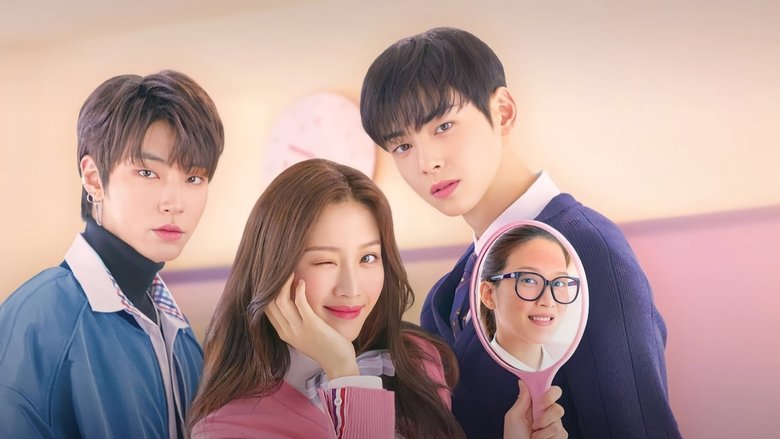
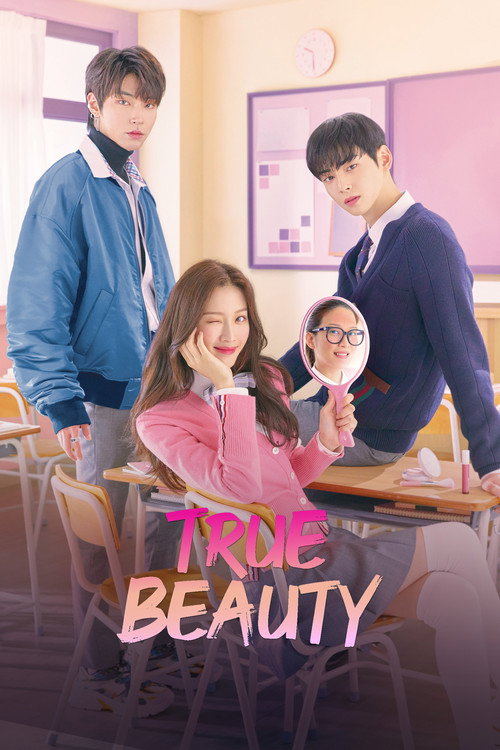
True Beauty
A pastel-hued coming-of-age romantic comedy woven with tender solace and vibrant humor, where a vulnerable girl’s cosmetic mask gradually dissolves into a mirror revealing unvarnished self-love.
True Beauty

True Beauty

여신강림

"Can makeup make it last?"

09 December 2020 — 04 February 2021 South Korea 1 season 16 episode Ended 8.3 (2,693)

Cast: Mun Ka-young, Cha Eun-woo, Hwang In-youp, Park You-na, Lim Se-mi

Drama Comedy Self-Acceptance vs. Lookism Shared Grief and Healing The Defense Mechanism of Masking Parental Pressure and Filial Autonomy Healthy Solidarity vs. Toxic Envy

Overview

True Beauty (여신강림, 2020–2021) is a 16-episode South Korean television series based on the popular Line Webtoon by Yaongyi. The story centers on Lim Ju-kyung, a high school girl who suffers severe social alienation and bullying due to her perceived awkward and ugly appearance. Desperate for a fresh start, she turns to online makeup tutorials before transferring to Saebom High School, transforming into a stunning goddess through mastery of cosmetics, while living in terror that someone will discover her bare face.

At her new school, Ju-kyung is drawn into the lives of two popular young men: Lee Su-ho, a brilliant, distant student carrying unspoken domestic trauma, and Han Seo-jun, a charismatic, motorcycle-riding rebel with a hidden heart of gold. As both see beyond her external appearance and get to know her true personality, an intricate web of friendship, romance, and shared healing unfolds.

Across its broadcast run, the series explores the turbulent landscape of late adolescence. Beyond vibrant high school romance, True Beauty navigates family expectations, societal pressures, emotional trauma, and the courage required to stand unmasked before the world.

Core Meaning

The fundamental message of True Beauty is that true self-worth and beauty are rooted in self-acceptance and genuine emotional connection rather than societal standards or external masks. Modern society often imposes rigid, superficial expectations—a phenomenon known as lookism—forcing individuals to hide their vulnerabilities behind polished facades. The series demonstrates that real intimacy and healing occur only when people allow themselves to be seen in their rawest, most authentic form. By illustrating that every character wears an armor—whether cosmetic, emotional, or behavioral—the creators emphasize that love and friendship thrive on unconditional acceptance.

Thematic DNA

Self-Acceptance vs. Lookism 30%
Shared Grief and Healing 25%
The Defense Mechanism of Masking 20%
Parental Pressure and Filial Autonomy 15%
Healthy Solidarity vs. Toxic Envy 10%

Self-Acceptance vs. Lookism

The narrative directly confronts South Korea’s intense societal beauty standards. Ju-kyung's journey tracks the progression from using makeup as an anxious disguise to embracing cosmetics as a creative, professional art form. True liberation comes not from hiding flaws, but from recognizing that her intrinsic value is entirely independent of her physical appearance.

Shared Grief and Healing

The emotional core of the male leads revolves around unresolved trauma and guilt following the suicide of their mutual best friend, Jung Se-yeon. The show explores how miscommunication and suppressed pain can alienate loved ones, while shared vulnerability and truth restore broken bonds.

The Defense Mechanism of Masking

Virtually every major character wears a symbolic mask. Ju-kyung hides behind makeup; Su-ho wears a cold, detached exterior to prevent emotional injury; Seo-jun projects a delinquent bad-boy persona to hide his domestic responsibilities; and Su-jin uses academic perfection to conceal household abuse. The story traces the gradual shattering of these armor pieces.

Parental Pressure and Filial Autonomy

The characters grapple with heavy parental expectations. Su-ho clashes with his distant idol-agency CEO father; Su-jin endures physical and mental abuse from her perfectionist father; and Ju-kyung initially lacks maternal emotional validation. The show highlights the adolescent journey toward self-determination.

Healthy Solidarity vs. Toxic Envy

The show contrasts healthy, protective relationships (Ju-kyung, Su-ho, Seo-jun, and Su-ah) against destructive envy (Su-jin's turn to cyberbullying). It illustrates that true solidarity requires uplifting others rather than tearing them down to soothe personal insecurities.

Character Analysis

Lim Ju-kyung

Mun Ka-young

Archetype: Underdog Heroine Key Trait: Resilience, empathy, and artistic passion

Motivation

Initially motivated by fear of social exclusion; evolves into seeking authentic love, self-respect, and creative expression.

Character Arc

Transforms from a traumatized, insecure girl terrified of being exposed into a self-assured young woman who walks bare-faced into the world and pursues a career as a professional makeup artist.

Lee Su-ho

Cha Eun-woo

Archetype: Reserved Prince / Wounded Healer Key Trait: Unconditional acceptance and quiet devotion

Motivation

Starts with isolation to avoid pain; evolves into actively protecting Ju-kyung and facing his past grief.

Character Arc

Evolves from an emotionally walled-off, icy academic superstar carrying trauma into an open, warm partner who confronts his father, reconciles with Seo-jun, and pursues musical composition.

All 4 characters and cast

Symbols & Motifs

Prince Comics (Prince Manhwa Store)

Meaning:

Symbolizes authenticity, sanctuary, and unmasked connection.

Context:

It is the retro horror comic shop where Ju-kyung and Su-ho meet without cosmetics or superficial school hierarchies, bonding over their shared niche interests.

The Makeup Brush and Cosmetics Kit

Meaning:

Represents dual concepts—initially serving as a defensive shield against societal cruelty, and later evolving into a legitimate medium of personal empowerment and professional artistry.

Context:

Used throughout Ju-kyung's transition from hiding her insecurity to pursuing her career path as a professional makeup artist.

The Silver Bracelet / Friendship Charm

Meaning:

Symbolizes the tragic bond between Su-ho, Seo-jun, and the late Se-yeon. It acts as a physical marker of lingering guilt, unresolved grief, and eventual reconciliation.

Context:

Shared between Su-ho, Seo-jun, and Jung Se-yeon as a physical reminder of their past and grief.

The Red Helmet and Motorcycle

Meaning:

Associated with Seo-jun, symbolizing his fiery, rebellious exterior while serving as a visual shield for his gentler, deeply caring nature toward his mother, sister, and friends.

Context:

Used by Han Seo-jun during his introductory scenes and throughout his interactions at school.

Mirrors

Meaning:

Visualizes Ju-kyung's ongoing internal struggle between perception and truth, highlighting dual identity by juxtaposing the goddess image against the bare face.

Context:

Frequently featured during transitional moments when Ju-kyung reflects on her identity.

Memorable Quotes

화장했건 안 했건, 너는 언제나 임주경이야.
— Lee Su-ho

Context

Season 1, Episode 5 / Episode 8. Su-ho reaffirms his feelings when Ju-kyung panics about her bare face.

Meaning

Reassures Ju-kyung that her value is rooted in who she is, not her cosmetic image.

남들이 나 놀린다고 나까지 날 미워하면, 그건 패배 인정하는 거잖아.
— Han Go-woon (reiterated by Lim Ju-kyung)

Context

Season 1, Episode 14. Ju-kyung chooses to walk into school bare-faced.

Meaning

The intellectual turning point where self-worth overrides social anxiety.

All 4 quotes

Episode Highlights

Goddess Reborn

S1E1

Introduces Ju-kyung's painful past of severe bullying, her near-suicidal moment on a rooftop where Su-ho intervenes, and her dramatic transformation through makeup at Saebom High.

Significance:

Sets up the central premise, Ju-kyung's core insecurity, and her first encounters with Su-ho.

Truth at Prince Comics

S1E5

Su-ho explicitly reveals to Ju-kyung at Prince Comics that he recognizes her bare face. Instead of exposing her, he embraces her authentic self, deepening their romantic connection.

Significance:

Deepens their romantic connection and proves Su-ho's unconditional acceptance of her true identity.

The Dumpling Showdown

S1E10

Highlights the iconic comic mandu (dumpling) making contest at Ju-kyung's home.

Significance:

Balances laugh-out-loud family comedy with underlying tensions between Su-ho and Seo-jun.

Hospital Reconciliation

S1E11

After a car accident leaves Su-ho and Seo-jun in neighboring hospital beds, they finally talk through the misunderstanding behind Se-yeon's death, mending their long-broken brotherhood.

Significance:

Mends Su-ho and Seo-jun's long-broken brotherhood and resolves key back-story trauma.

The Leaked Past

S1E13

Kang Su-jin leaks video footage of Ju-kyung’s former bullied, bare face across school networks. Ju-kyung flees in heartbreak, testing the solidarity of her true loved ones.

Significance:

Tests the solidarity of Ju-kyung's true loved ones and pushes her to a critical turning point.

Unmasked Courage

S1E14

Refusing to hide any longer, Ju-kyung walks into Saebom High without makeup, confronting her former harassers and publicly announcing her relationship with Su-ho.

Significance:

Marks Ju-kyung's ultimate emotional victory and step toward self-acceptance.

True Beauty (Finale)

S1E16

Following a two-year time jump, Seo-jun debuts successfully with Se-yeon's song, Ju-kyung becomes a professional makeup artist, Su-jin seeks forgiveness, and Ju-kyung and Su-ho reaffirm their eternal love.

Significance:

Concludes the emotional arcs of all major characters and reinforces the core theme of authentic self-worth.

Philosophical Questions

Is personal identity defined by external perception or internal consciousness?

Explored through Ju-kyung's dual existence as a goddess at school and her bare-faced self at home and Prince Comics, challenging whether public image dictates personal value.

Can cosmetic alteration serve as a tool of authentic self-expression, or is it inherently a form of social deception?

Examined through Ju-kyung's transition from using makeup as an anxious disguise to mask insecurity, to developing it into a legitimate creative profession and art form.

Does unaddressed trauma inevitably isolate individuals, or can shared grief form the foundation for deeper human connection?

Illustrated through Su-ho and Seo-jun's initial estrangement over Jung Se-yeon's death and their subsequent reconciliation when they openly communicate and share their grief.

Alternative Interpretations

Cosmetic Empowerment vs. Societal Conformity: A debate among critics centers on whether Ju-kyung's journey promotes true self-acceptance or paradoxically reinforces beauty norms. While some argue that her reliance on makeup surrenders to lookism, others view cosmetics in her story as a valid form of artistic self-expression and mental armor.

Full ending explanation

Cultural Impact

True Beauty aired during a period of global reflection on high school pressures, cyberbullying, and South Korea’s multi-billion-dollar cosmetic beauty industry. It directly tackled lookism—the social prejudice toward individuals based on physical appearance.

Upon release, the show became an international hit across streaming platforms like Rakuten Viki and Netflix. It elevated its lead trio to top-tier global stardom—Hwang In-youp’s social media following surged past 10 million during the broadcast run. The series stands as a landmark gateway K-drama for international audiences.

Audience Reception

Praised Aspects: Exceptional comic timing, electrifying chemistry among the leads, memorable original soundtrack (OST), and Hwang In-youp’s breakthrough performance.

Criticisms: Overreliance on classic high school rom-com tropes, second-lead syndrome heartbreak, and the sudden two-year separation time-skip in the final episodes.

Overall Verdict: Widely celebrated as an exceptionally comforting, high-energy romantic comedy. It holds high audience ratings globally, including an 8/10 on IMDb and 9.6/10 on Rakuten Viki.

Interesting Facts

  • Yaongyi, the author of the original webtoon, revealed that Cha Eun-woo was her visual inspiration for Lee Su-ho while drawing the manhwa.
  • Hwang In-youp, who was 29 years old playing an 18-year-old student, obtained a real motorcycle license and underwent vocal lessons to perform his own singing tracks.
  • Cha Eun-woo took formal Jiujitsu martial arts classes to perform his character’s action and grappling scenes realistically.
  • Director Kim Sang-hyeop previously directed Extraordinary You (2019), allowing him to coordinate crossover appearances with its original cast.
  • Romantic dates were filmed at scenic Korean cultural and natural landmarks, including Bukchon Hanok Village in Seoul, and the Seolli Skywalk and Sangju Silver Sand Beach in Namhae.

Easter Eggs

Extraordinary You Movie Theater Crossover (Ep 4)

Kim Hye-yoon (Eun Dan-oh) and Lee Jae-wook (Baek Kyung) reprise their roles. Su-ho mistakes them for Ju-kyung and her date in a theater. The manhwa page-turn click sound effect plays, and Dan-oh runs off shouting for Haru!

Kim Young-dae Cameo (Ep 15)

Kim Young-dae appears on a snowy bench as Oh Nam-joo (his character from Extraordinary You), repeating his catchphrase My girl loves strawberries.

SF9 Chani as Jung Se-yeon

SF9 member Chani makes a special guest appearance as Jung Se-yeon, the idol whose tragic death binds Su-ho and Seo-jun’s backstory.

The Viral Okey Dokey Scene

Seo-jun dancing frantically in leopard-print boxer shorts to Zico and Mino's song Okey Dokey became a massive social media phenomenon across global platforms.

Frequently Asked Questions

Explore More About This Movie

Dive deeper into specific aspects of the movie with our detailed analysis pages

Comments (0)

Leave a comment

No comments yet. Be the first to share your thoughts!

Similar Movies