Skip to content
Under the Queen's Umbrella
A fierce, rain-lashed period melodrama illuminated by unconditional maternal devotion, where an embattled queen transforms her royal robes into an unyielding shield against the ruthless storms of palace conspiracy.
Under the Queen's Umbrella

Under the Queen's Umbrella

슈룹

"The queen fights the storm for her children."

15 October 2022 — 04 December 2022 South Korea 1 season 16 episode Ended 8.3 (110)

Cast: Kim Hye-soo, Kim Hae-sook, Choi Won-young, Moon Seong-hyun, Kim Eui-sung

Drama Fierce Maternal Devotion & Protection as Moral Strength Identity, Acceptance, and Inclusivity in a Rigid Society Truth, Historical Accountability, and Power Succession Pedagogical Philosophy: Academic Pressure vs. True Wisdom

Overview

Under the Queen's Umbrella (Syurup, 2022) is a 16-episode South Korean historical drama set in a fictionalized Joseon Dynasty. The story centers on Queen Im Hwa-ryeong, the dignified yet pragmatic wife of King Lee Ho. While the royal palace expects consorts and queens to embody quiet grace, Hwa-ryeong spends her days running across court grounds to manage her troublesome, unconventional sons—four grand princes who lag behind their peers in the royal academy.

The delicate equilibrium of the court shatters when the exemplary Crown Prince, the Queen's eldest son and the sole bastion of stability, falls gravely ill with a mysterious, debilitating illness. Sensing vulnerability, the cunning Queen Dowager Cho and high-ranking court ministers led by Chief State Councillor Hwang Won-hyeong initiate a ruthless campaign to replace the heir through Taekhyeon, the practice of choosing the wisest prince regardless of birth status.

Faced with existential threats targeting her remaining sons, Queen Hwa-ryeong must navigate lethal political sabotage, hidden palace conspiracies, and intense academic competition. Balancing tough discipline with profound empathy, she guides her princes into adulthood and ethical leadership while uncovering dark historical secrets that threaten the foundation of the throne.

Core Meaning

The central thesis of the series is that true leadership and unconditional love are measured by the willingness to shield others from systemic cruelty rather than perpetuating generational trauma for political power.

Through the contrast between Queen Hwa-ryeong and Queen Dowager Cho, the narrative explores two opposing philosophies: destructive ambition that treats children as expendable pawns, versus protective stewardship that nurtures individual integrity, self-acceptance, and justice. True enduring legacy is built on historical truth, moral accountability, and embracing authenticity rather than conforming to rigid orthodoxy.

Thematic DNA

Fierce Maternal Devotion & Protection as Moral Strength 35%
Identity, Acceptance, and Inclusivity in a Rigid Society 25%
Truth, Historical Accountability, and Power Succession 20%
Pedagogical Philosophy: Academic Pressure vs. True Wisdom 20%

Fierce Maternal Devotion & Protection as Moral Strength

Maternal instinct is depicted not as passive gentleness, but as a strategic, active force. Queen Hwa-ryeong constantly places herself in the line of political fire to protect her children, empowering her sons to stand on their own moral foundation rather than manipulating them for power.

Identity, Acceptance, and Inclusivity in a Rigid Society

The series breaks conventional boundaries through subplots addressing personal identity, notably Grand Prince Gyeseong's gender non-conformity and cross-dressing. Queen Hwa-ryeong provides safety and affirmation, establishing that embracing one's authentic self is the highest form of virtue.

Truth, Historical Accountability, and Power Succession

The narrative examines the generational repercussions of past regicide and cover-ups surrounding Crown Prince Taein's death. It demonstrates that lasting peace and genuine royal legitimacy cannot stand on falsified history and require confronting uncomfortable truths.

Pedagogical Philosophy: Academic Pressure vs. True Wisdom

By juxtaposing Joseon royal education with hyper-competitive academic pressure reminiscent of modern culture, the drama critiques rote memorization, bribery, and obsessive parental pressure, proving that true wisdom stems from empathy, real-world hardship, and moral integrity.

Character Analysis

Queen Im Hwa-ryeong

Kim Hye-soo

Archetype: The Heroic Protector / Mentor Key Trait: Fierce resilience balanced with deep compassion

Motivation

Protecting her children's lives and guiding them to ethical self-realization.

Character Arc

Evolves from an embattled, reactive mother into a master political strategist who dismantles systemic palace corruption without compromising her moral compass.

Queen Dowager Cho

Kim Hae-sook

Archetype: The Shadow Matriarch / Antagonist Key Trait: Ruthless calculation and emotional detachment

Motivation

Maintaining uncontested dominance over the throne and court.

Character Arc

Remains steadfast in ruthless megalomania, ultimately consumed by her own desire to control the royal line and preserve her grip on the throne.

All 5 characters and cast

Symbols & Motifs

The Umbrella (Syurup / 슈룹)

Meaning:

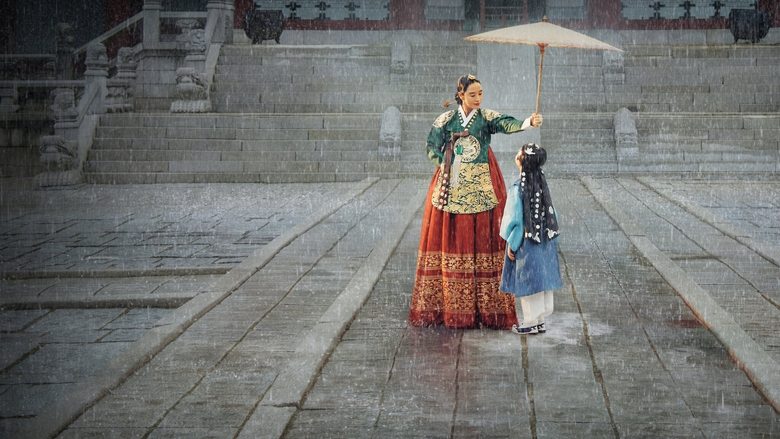
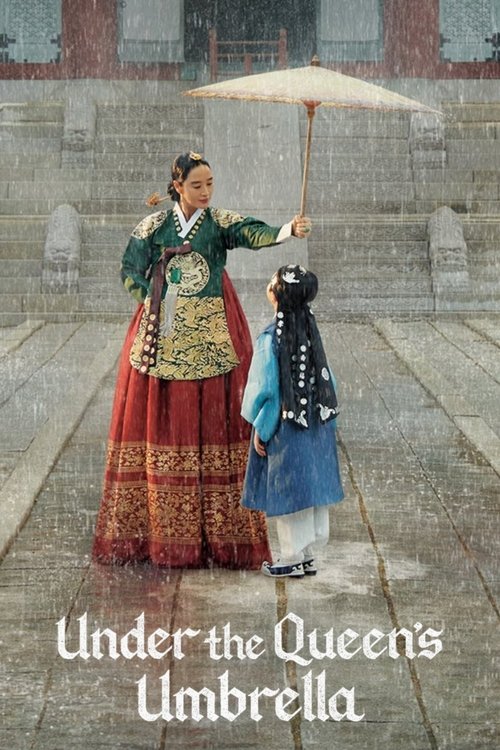
The overarching symbol of shelter, protection, and parental sacrifice, visualizing a mother willing to let her own shoulder get drenched in the rain so long as her child is kept dry.

Context:

Used throughout the series during storms and pivotal crises; the motif comes full circle in the finale when Grand Prince Seongnam holds the umbrella over Queen Hwa-ryeong to signal maturity and reciprocated care.

The Secret Chamber and Portrait

Meaning:

Represents suppressed inner truth, safe sanctuary, and unconditional maternal acceptance of authentic identity.

Context:

Found in Grand Prince Gyeseong's hidden quarters containing feminine clothing and cosmetics, and cemented when Queen Hwa-ryeong commissions his portrait in traditional women's attire.

Rain and Storms

Meaning:

Represents intense political turmoil, mortal danger, personal anguish, and emotional trials that test the royal family.

Context:

Accompanies major palace confrontations, cover-ups, and emotional breakthroughs, clearing only when the truth behind the royal murders is illuminated.

The Medical Records and Sacho

Meaning:

Signifies undeniable historical truth, national healing, and moral justice against corrupt state power.

Context:

Concealed records regarding the death of Crown Prince Taein that King Lee Ho and Queen Hwa-ryeong work to uncover and formally record in the royal annals.

Running Shoes and Quick Pace

Meaning:

Subverts traditional royal stillness to symbolize proactive, hands-on intervention and urgent maternal dedication.

Context:

Visualized through Queen Hwa-ryeong's dynamic running across palace courtyards to attend to her sons and thwart court plots.

Memorable Quotes

비바람이 몰아쳐도 내 아이들은 내가 지킨다.
— Queen Im Hwa-ryeong

Context

Spoken in Episode 2 as political pressure and threats against the grand princes begin to intensify.

Meaning

Establishes the foundational ethos of the drama and defines the symbolic meaning of the protective umbrella.

사람들은 누구나 마음속에 남에게 보이고 싶지 않은 자신만의 모습을 품고 살아간다. 나는 너의 그 모습까지도 온전히 품어줄 것이다.
— Queen Im Hwa-ryeong

Context

Spoken to Grand Prince Gyeseong in Episode 3 under the pouring rain after gifting him his portrait in women's attire.

Meaning

Marks a landmark moment of unconditional maternal acceptance and affirmation of queer/non-conforming identity.

All 4 quotes

Episode Highlights

Troublemaker Princes

S1E1

Introduces the cutthroat palace environment, Queen Hwa-ryeong's frantic maternal routine, and the sudden, ominous illness of the Crown Prince.

Significance:

Sets the narrative stakes, establishing the academic rivalry and the looming vulnerability of the Queen's household.

A Mother's Sanctuary

S1E3

Hwa-ryeong discovers Grand Prince Gyeseong's secret chamber, shields him from Queen Dowager Cho's investigation, and embraces his identity under her umbrella.

Significance:

Anchors the theme of unconditional maternal love and progressive acceptance, establishing Hwa-ryeong's role as a true shield.

The Fall of the Heir

S1E5

The Crown Prince succumbs to his condition and poisoning, leaving his mother and younger brothers completely exposed to court predators.

Significance:

Shifts the drama from an academic contest into a deadly, high-stakes battle for survival and royal succession.

The Taekhyeon Tournament

S1E8

The royal princes leave the palace grounds on real-world assignments to locate elusive scholars across Joseon.

Significance:

Tests the princes' street smarts, empathy, and practical leadership, separating true wisdom from palace privilege.

Proving the Bloodline

S1E10

Grand Prince Seongnam passes rigorous public examinations and dismantles political plots questioning his legitimacy and birthright.

Significance:

Solidifies Seongnam's legal and moral claim to the position of Crown Prince over rival candidates.

The New Crown Prince

S1E11

Seongnam is formally invested as Crown Prince while Queen Hwa-ryeong outmaneuvers Queen Dowager Cho in the selection of Yoon Cheong-ha as Crown Princess.

Significance:

Marks a major strategic victory for the Queen and shifts the balance of power within the palace.

The Web of Deceit

S1E15

The conspiracy behind Crown Prince Taein's past murder and the recent Crown Prince's poisoning collapses as Physician Kwon's true identity is exposed.

Significance:

Brings decades of palace secrets to a boiling point, setting up the final confrontation with the Queen Dowager.

The Unbroken Sky

S1E16

King Lee Ho officially records the truth in the royal annals, the Queen Dowager meets her poetic end, and Seongnam holds the umbrella over his mother.

Significance:

Resolves the generational trauma, establishes righteous leadership, and delivers a poignant conclusion to the umbrella motif.

Philosophical Questions

What constitutes legitimate rule: bloodline, merit, or moral integrity?

Explored through the Taekhyeon tournament and Grand Prince Seongnam's journey, arguing that genuine authority requires empathy and righteous duty rather than mere pedigree.

Can an institution founded on historical cover-ups achieve lasting justice?

Addressed through King Lee Ho's moral dilemma regarding the fratricidal origins of his reign, concluding that true stability demands confronting uncomfortable historical truths.

What is the true purpose of education: societal dominance or self-actualization?

Illustrated through the contrasting fates of Prince Ui-seong's forced academic ambition versus the Grand Princes' nurtured authenticity and moral development.

Alternative Interpretations

Critics and scholars have analyzed the drama through several distinct lenses:

Full ending explanation

Cultural Impact

Under the Queen's Umbrella subverted traditional sageuk tropes by transforming concubine dynamics from petty harem jealousy into stories of maternal desperation and systemic survival within an oppressive patriarchal structure.

The tender depiction of Grand Prince Gyeseong's gender non-conformity was widely celebrated as a progressive milestone for South Korean television. While conservative critics initially debated historical liberties regarding court protocols and the Taekhyeon mechanism, tvN clarified the fictionalized setting, and audiences warmly embraced its progressive themes. Furthermore, its global streaming performance on Netflix introduced international audiences to Joseon court structures and Middle Korean linguistics.

Audience Reception

The series received widespread critical acclaim for Kim Hye-soo's commanding lead performance, sharp writing, and balanced tonal shifts between lighthearted family comedy and gripping political thriller.

Viewers connected deeply with the emotional bond between Queen Hwa-ryeong and her sons, while the romance between Grand Prince Seongnam and Yoon Cheong-ha became a major fan-favorite subplot. Minor early criticisms regarding historical liberties dissipated as the series delivered tight, emotionally resonant narrative resolutions, cementing its status as one of the standout fusion historical dramas of the 2020s.

Interesting Facts

  • The title word 'Shuroop' (슈룹) is Middle Korean for 'umbrella', an archaic term deliberately chosen to evoke timeless protection.
  • This project marked Kim Hye-soo's return to historical drama television series after twenty years, her previous period TV role being Jang Hee-bin in 2002–2003.
  • The screenplay was written by Park Ba-ra, who earned widespread acclaim for tight pacing and multifaceted characterization in a screenwriting debut.
  • Kim Hye-soo ran dozens of sprints in heavy Joseon royal court attire per shooting day to convey the Queen's urgently paced walking style.
  • Young actors Moon Sang-min, Yoo Seon-ho, and Yoon Sang-hyeon underwent rigorous equestrian, martial arts, and historical etiquette training for their roles.
  • The series achieved major domestic success on tvN, starting at a 7.6% rating and concluding with a peak nationwide rating of 16.9%, ranking among the highest-rated cable dramas in Korean television history.

Easter Eggs

Rain (Jung Ji-hoon) Cameo in Episode 7

K-pop icon and actor Rain makes a humorous cameo appearance as a passerby who has a brief encounter with Yoon Cheong-ha while she searches for Seongnam.

Satirical 'Sky Castle' Modern Tutoring Parallels

The covert tutoring methods (Gwagil) and competitive study tricks used by palace concubines serve as an intentional satirical nod to South Korea's high-stakes modern college entrance exam culture.

Kim Hye-soo and Kim Hae-sook Reunion

The two veteran actresses previously co-starred in the 2012 box office hit The Thieves, bringing palpable real-world chemistry and tension to their on-screen mother-in-law vs. daughter-in-law feud.

Deposed Queen Yoon's Historical Allusions

The tragic household of Deposed Queen Yoon echoes real Joseon political purges, specifically recalling the downfall of Queen Jeheon and the historical Gapja Sahwa.

Frequently Asked Questions

Explore More About This Movie

Dive deeper into specific aspects of the movie with our detailed analysis pages

Comments (0)

Leave a comment

No comments yet. Be the first to share your thoughts!

Similar Movies