Skip to content
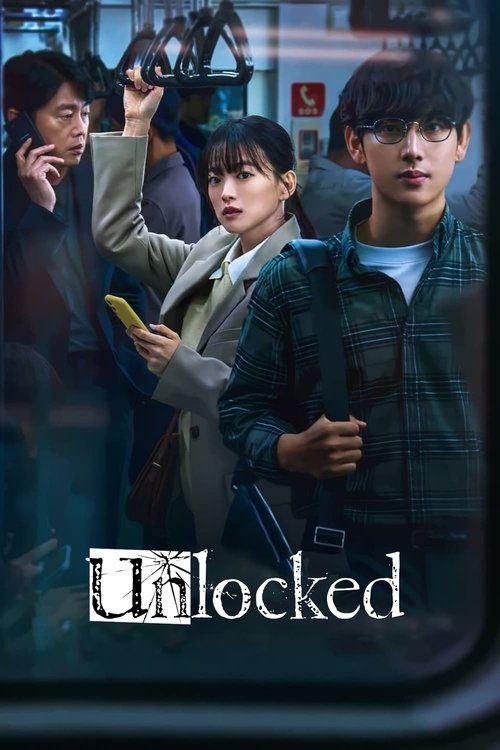
Unlocked
A claustrophobic techno-thriller drenched in cold paranoia, Unlocked turns the glowing black glass in our palms into a predatory mirror where our most intimate digital footprints become the weapons of our own annihilation.
Unlocked

Unlocked

스마트폰을 떨어뜨렸을 뿐인데

"Why are you doing this to me?"

17 February 2023 South Korea 117 min 7.3 (418)

Director: Kim Tae-joon

Cast: Chun Woo-hee, Yim Si-wan, Kim Hie-won, Park Ho-san, Kim Ye-won

Crime Thriller Mystery Digital Surveillance and the Illusion of Privacy Identity Theft and Fabricated Realities Social Isolation in the Hyperconnected Era Estrangement, Paternal Guilt, and Broken Families

Overview

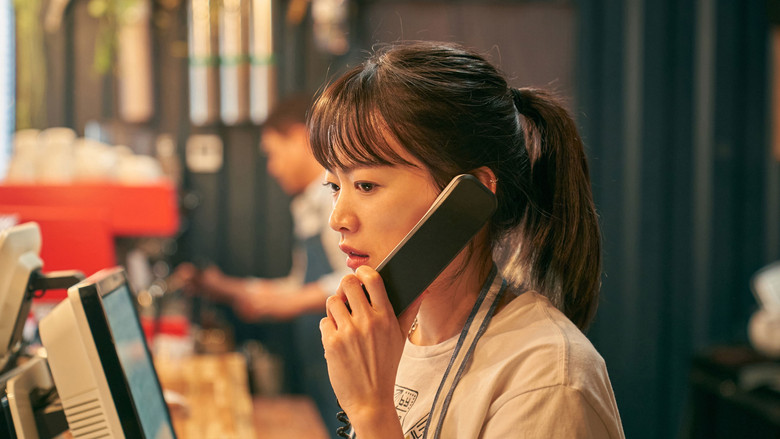
Unlocked follows Lee Na-mi, a hardworking marketing employee at a small startup beverage company who also helps run her father’s local café. Her entire existence—finances, friendships, daily schedules, social media feeds, and private communications—is managed through her smartphone. After a night out drinking with colleagues, Na-mi accidentally leaves her phone behind on a public bus.

The device is retrieved by Oh Jun-yeong, a calm, polite-sounding stranger who disguises his voice using speech software and tells Na-mi where she can pick up the repaired phone after intentionally cracking its screen. Under the guise of a repairman, Jun-yeong installs insidious spyware that gives him total remote control over her front and rear cameras, microphone, keystrokes, and stored private data.

Parallel to Na-mi’s increasingly destabilized personal and professional life, veteran police detective Woo Ji-man investigates a grim crime scene in a secluded forest where buried bodies are discovered. As clues point toward his estranged son, Na-mi finds herself ensnared in a web of targeted psychological warfare, social sabotage, and lethal surveillance.

Core Meaning

Director Kim Tae-joon constructs Unlocked as a cautionary psychological thriller about modern hyperconnectivity and vulnerability. The film's core message is that our smartphones are no longer merely communication tools; they have become our externalized "digital DNA" and cognitive extensions. By willingly surrendering every aspect of our lives to a single pocket device, humanity has engineered a system where losing custody of the device equates to losing custody of our identity, autonomy, and safety.

Thematic DNA

Digital Surveillance and the Illusion of Privacy 35%
Identity Theft and Fabricated Realities 25%
Social Isolation in the Hyperconnected Era 20%
Estrangement, Paternal Guilt, and Broken Families 20%

Digital Surveillance and the Illusion of Privacy

The film demonstrates how modern convenience breeds total vulnerability. Through spyware, the villain turns the victim's most personal possession into an omnipresent panopticon, weaponizing routine habits, passwords, and private conversations.

Identity Theft and Fabricated Realities

The killer does not merely physically attack; he methodically hijacks the protagonist's digital persona to turn her employer, colleagues, and friends against her through fake posts and manipulated communications.

Social Isolation in the Hyperconnected Era

Despite being connected to hundreds of followers online, Na-mi becomes completely isolated when the stalker methodically severs her trust with her closest ally and friend.

Estrangement, Paternal Guilt, and Broken Families

Mirrored between Na-mi and her father Seung-woo versus Detective Ji-man and his estranged son, the film contrasts unconditional paternal protection against the lingering blind spots caused by familial guilt and separation.

Character Analysis

Lee Na-mi

Chun Woo-hee

Archetype: Everywoman / Survivor Key Trait: Relatable resilience and optimism.

Motivation

Driven to reclaim her normal life, clear her damaged reputation, and protect her father from the stalker.

Character Arc

Shifts from a trusting, phone-dependent office worker to an isolated target, ultimately taking control of her survival.

The Killer ("Oh Jun-yeong")

Yim Si-wan

Archetype: Sociopathic Predator / Shape-shifter Key Trait: Disarmingly polite and emotionless cruelty.

Motivation

Driven by the psychological thrill of total control, digital manipulation, and appropriating the lives of his victims.

Character Arc

Operates with cold, robotic calculation, viewing human beings merely as data sets and identity skins to dismantle for sport.

All 5 characters and cast

Symbols & Motifs

The Cracked Smartphone Screen

Meaning:

Represents the fracture in the protagonist's private life and the vulnerability exposed to outside intrusion.

Context:

Occurs when the antagonist intentionally damages the phone screen to create a pretext for repair and malware installation.

The Phone Camera Lens / POV Shots

Meaning:

Serves as a recurring motif of the panoptic gaze, transforming the audience into unwilling voyeurs peering through the victim’s camera.

Context:

Framed frequently throughout the film to capture characters from the low, wide-angle vantage point of mobile devices.

The Glass of Plum Tea / Café Drinks

Meaning:

Symbolizes domestic safety, family bonds, and authentic physical connection in contrast to cold digital interactions.

Context:

Featured in scenes involving Na-mi's father's café and their family interactions.

The Bathtub / Water Submersion

Meaning:

Acts as a visceral visual metaphor for digital and physical asphyxiation—the overwhelming weight of being trapped under surveillance.

Context:

Used during the climactic scene where the antagonist attempts to drown the victims.

Social Media Secret/Sub-Accounts

Meaning:

Symbolize the fragmented, repressed facets of modern personas that can be mined and weaponized against an individual.

Context:

Discovered and exploited by the stalker to alienate Na-mi from her colleagues and employer.

Memorable Quotes

스마트폰을 떨어뜨렸을 뿐인데...
— Lee Na-mi

Context

Reflective dialogue capturing the shock and helplessness of losing control over her life.

Meaning

The recurring thematic thesis and title line, emphasizing how a trivial everyday mishap triggered the complete collapse of her life.

스마트폰 하나면 누구든 조종할 수 있고, 누구든 될 수 있어.
— The Antagonist (Jun-yeong)

Context

Spoken to assert the absolute power granted by unrestricted access to personal digital data.

Meaning

Expresses the antagonist's core ideology regarding the power balance in the digital age.

All 4 quotes

Philosophical Questions

Does digital convenience demand the surrender of human sovereignty?

The film asks whether our voluntary surrender of biometric and behavioral data to private devices makes absolute control by malicious actors inevitable.

Who are we when our digital record is altered?

When the antagonist falsifies Na-mi’s texts, emails, and posts, her entire real-world community immediately abandons her, illustrating that social perception is often dictated by digital output rather than personal trust.

Can true anonymity exist in an era of total surveillance?

The killer thrives by remaining an anonymous ghost while exploiting the hyper-visible online presence of everyone around him.

Alternative Interpretations

Critics interpret the killer's habit of discarding his original name and assuming the identities of his past murder victims—including Detective Ji-man's real son—as an allegory for modern cyberspace: a realm where individuals become nameless cyphers, borrowing skins and personas at will.

Full ending explanation

Cultural Impact

South Korea is one of the world's most digitally connected societies, with near-universal smartphone penetration and high reliance on mobile banking and government apps. Unlocked taps directly into everyday anxieties surrounding smishing, voice phishing, and digital identity theft.

The film joins a distinct lineage of Korean thrillers exploring telecommunication terror, including Phone (2002), Hand Phone (2009), and The Call (2020), updating the trope for the cloud and spyware era.

The film earned praise for its relatable setup and Yim Si-wan’s chilling acting, though some critics noted conventional thriller tropes in its third act.

Audience Reception

Aggregated reviews highlight strong praise for Chun Woo-hee’s emotional range as the victim, Yim Si-wan’s restrained and unsettling villainy, and the visceral dread created by familiar smartphone interactions.

Criticisms focus on formulaic police procedural tropes in the third act and occasional contrived protagonist decisions that adhere to conventional genre formulas.

Overall, the film achieved generally positive to solid standing among global streaming audiences, performing strongly on Netflix global charts as a gripping, socially resonant cyber-thriller.

Interesting Facts

  • Unlocked is the feature-length directorial debut of Kim Tae-joon, who previously worked in directing crews on films such as Office (2015).
  • The film is adapted from the Japanese novel Sumaho o Otoshita dake nanoni (2017) by Akira Shiga, which also spawned the 2018 Japanese adaptation Stolen Identity directed by Hideo Nakata.
  • Upon release on Netflix on February 17, 2023, the film reached the No. 2 position on Netflix's global movie chart and ranked No. 1 in 18 countries.
  • Yim Si-wan, widely recognized for heroic and soft-spoken roles, deliberately took on this sociopathic role following his sinister turn in Emergency Declaration (2022) to build a contrast between his boyish look and calculating brutality.
  • Director Kim stated in interviews that his goal was to evoke intense dread through psychological pacing and technological authenticity rather than explicit gore or supernatural elements.

Easter Eggs

Opening Digital Montage

The rapid opening sequence is constructed entirely from smartphone perspectives (texting, banking, social feeds, and streaming Netflix), mirroring the viewer's own routine and foreshadowing that the phone itself is the film's central stage.

In-House Streaming Cameo

In the opening sequence, Na-mi browses and watches content on Netflix on her mobile screen, an overt self-referential meta-nod to the film's distribution platform.

Reference to Japanese Neo-Noir / Mystery

While retaining Akira Shiga’s novel premise, the film shifts the detective subplot to emphasize Korean procedural dynamics and paternal drama.

Technical Interface Realism

The spyware and remote administration trojan (RAT) interfaces used by the killer realistically display access to microphone inputs, front-facing camera feeds, and automated keystroke capture.

Frequently Asked Questions

Explore More About This Movie

Dive deeper into specific aspects of the movie with our detailed analysis pages

Comments (0)

Leave a comment

No comments yet. Be the first to share your thoughts!

Similar Movies