Full spoilers follow.
The setup. The silent girl at the grandfather's funeral is Rin Kaga, the old man's illegitimate daughter by a much younger woman — making her Daikichi's aunt. The extended family's instinct is to place her somewhere out of sight (an institution is floated), and Daikichi's decision to take her is presented as anger as much as compassion. Everything afterward is the bill for that impulse.
The career sacrifice (ep. 3). Daikichi cannot make daycare pickup on his existing track, so he requests a transfer to a less demanding department — a permanent, unglamorous demotion he never complains about again. This is the series' true point of no return; the finale means nothing without it.
Masako (from ep. 4 onward). Rin's biological mother is alive and working as a manga artist. Contact is made, and the confrontation delivers the series' hardest scene: she does not want Rin, has not changed her mind, and says so. The anime declines to redeem her or to condemn her. The consequence is that Rin's place with Daikichi stops being provisional — no one is coming to reclaim her — and the household's shape becomes a matter of choice rather than a holding pattern.
The grandfather reframed (ep. 8). Late episodes return to Souichi's own story, recasting the scandal that produced Rin as a deliberate act of care by an old man who took in a child no one else would. Daikichi is revealed to be repeating his grandfather's decision — the family resemblance is behavioral, not genetic, which is the series' thesis stated through plot structure.
Naming and identity (ep. 5). The question of what Rin calls Daikichi — and, in the source material's terms, what surname she carries — is settled in the child's favor: he stays Daikichi, not \"Dad.\" The refusal of the sentimental option is the point. She is not reassigned to a familiar slot; a new relationship is simply allowed to exist without a name for it.
The pressure episodes (7, 9, 10). Rin's small flight from home tests whether she believes she'll be sought; the typhoon collapses the two households into one improvised unit with Yukari and Kouki; the stomach-flu episode strips parenting down to its least romantic labor. Together they confirm that the arrangement can survive disruption, illness and weather — that it is infrastructure, not a mood.
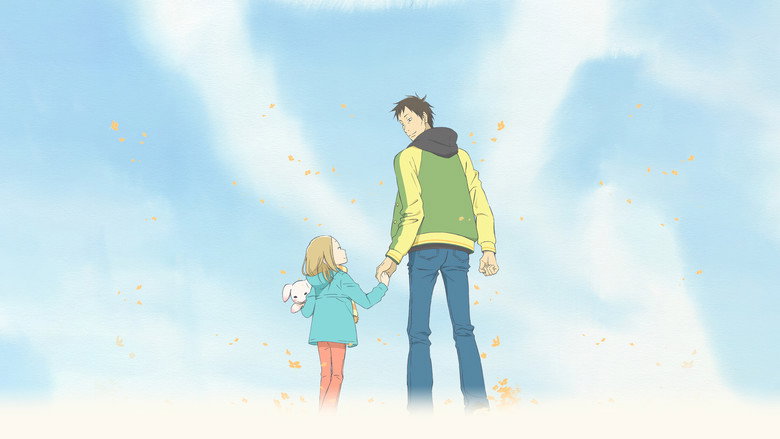
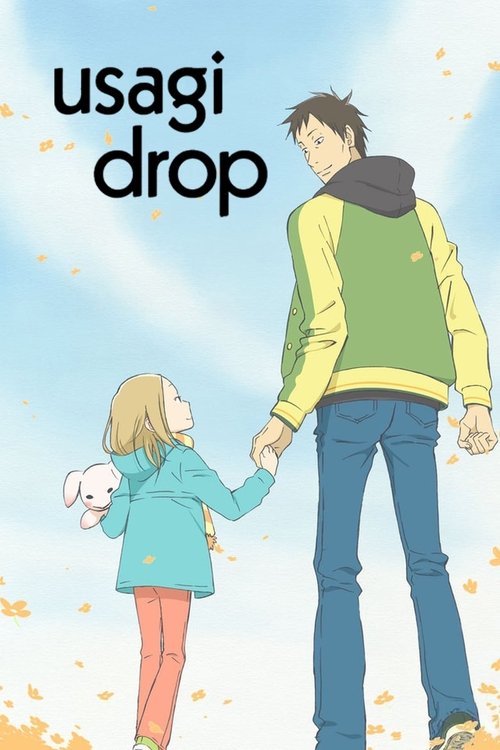
The finale. The series closes on Daikichi taking Rin to her elementary school entrance ceremony. There is no revelation, no reunion, no crisis — the climax is a threshold, and its emotional force is entirely retroactive: the same walk from episode one, performed by two people who have both changed. The anime deliberately ends here, adapting only the first four volumes of the manga.
The meta-twist. The largest spoiler is outside the anime. Yumi Unita's manga continues past a ten-year timeskip and resolves as a romance between the adult Rin and Daikichi — an ending the author has said was planned from the outset, framing the work as a josei story about age gaps rather than a pure parenting narrative. It was rejected by large portions of both the Western and Japanese readerships when the manga ended in 2011. Because the manga was still unfinished when the adaptation went into production, Production I.G ended the anime at the natural close of the childhood arc, producing a version many readers consider the story's better conclusion. Watched alone, the anime's final image is unambiguous; read alongside the manga, that same image acquires a retrospective unease no scene in the series itself supports.