Skip to content
Veteran
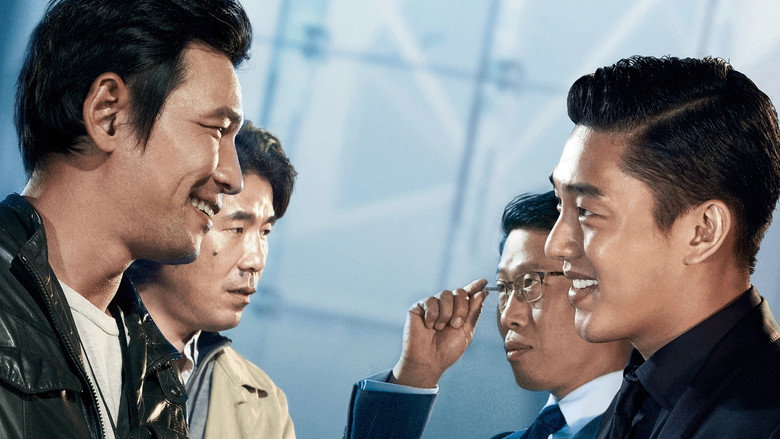
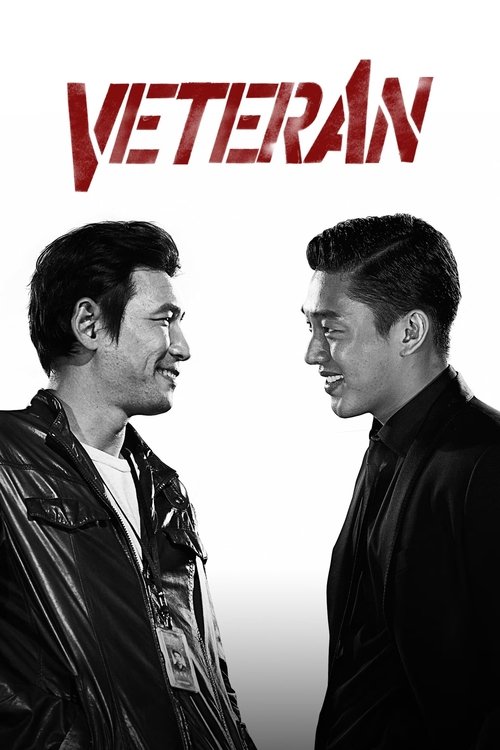
A fast, funny, furious crime thriller where a scruffy detective with nothing but pride takes on a smirking heir who treats the whole city as his personal playground.
Veteran

Veteran

베테랑

"The unstoppable. The untouchable."

05 August 2015 South Korea 123 min 6.9 (259)

Director: Ryoo Seung-wan

Cast: Hwang Jung-min, Yoo Ah-in, Yoo Hai-jin, Oh Dal-su, Jang Yoon-ju

Crime Action Thriller Comedy Class inequality and chaebol privilege Integrity versus corruption Labor rights and the powerless Cover-ups and the spiral of impunity Justice as catharsis
Budget: $7,528,230
Box Office: $87,970,000

Overview

Veteran (베테랑) is a 2015 South Korean action comedy written and directed by Ryoo Seung-wan. It stars Hwang Jung-min as Seo Do-cheol, a veteran police detective who is rough around the edges and cannot be bought. The film opens with a comic undercover sting in which Seo poses as a pompous rich husband trying to buy a Mercedes for his "wife," Miss Bong.

The main story begins when a truck driver named Bae and his coworkers are fired for joining a union and cheated out of their pay by a subcontractor. Bae's search for his wages brings him face to face with Jo Tae-oh (Yoo Ah-in), the sadistic third-generation heir of the powerful Sinjin Group. When Bae ends up in a supposed suicide, Seo starts to suspect the chaebol's world of privilege.

Tae-oh's handlers keep trying to cover up the damage his impulses cause, and each clumsy attempt makes things worse. The film switches between slapstick, drama and hard-hitting action as a detective with little money but plenty of pride goes after a man who has never had to answer for anything.
Core Meaning

Ryoo Seung-wan wanted to make a crowd-pleasing, black-and-white stand on class division and social injustice. The film holds up two kinds of power against each other. The chaebol heir has money, lawyers and fixers. The working detective has only his dignity, his gao (face, or pride). Veteran argues that integrity cannot be bought, and that the privileged are not above the law as long as someone refuses to be intimidated.

Jo Tae-oh is based on a real incident. The director said he looked into the kind of people involved rather than the event itself. He wanted audiences to leave unable to say whose story it was, so the villain works as a portrait of a whole class of untouchable heirs rather than one person.

Thematic DNA

Class inequality and chaebol privilege 30%
Integrity versus corruption 25%
Labor rights and the powerless 20%
Cover-ups and the spiral of impunity 15%
Justice as catharsis 10%

Class inequality and chaebol privilege

Jo Tae-oh is the son of a chaebol boss and has never had to take responsibility for anything. He is impulsive and cannot control his anger. His abuse of Bae, a fired truck driver owed wages, shows the gap between the conglomerate elite and ordinary workers in its starkest form.

Integrity versus corruption

Seo Do-cheol is poor but cannot be bought. His refusal to take bribes or back down sums up the film's moral center, as expressed in the line "We don't have money, but we have pride."

Labor rights and the powerless

Bae and his coworkers are dismissed for joining a union and short-changed by a subcontractor. The crime at the heart of the plot grows out of this ordinary injustice.

Cover-ups and the spiral of impunity

Much of the plot is driven by botched attempts to cover up the fallout from Tae-oh's pleasure-seeking. Every cover-up spins further out of control, suggesting that impunity eventually undoes itself.

Justice as catharsis

Korean press called the film saida (cider): a fizzy, refreshing release. Its satisfying payoff gives audiences a vicarious justice that real life often denies them.

Character Analysis

Seo Do-cheol

Hwang Jung-min

Archetype: Hero / incorruptible everyman cop Key Trait: Puckish, stubborn integrity

Motivation

Justice for the powerless and keeping his own gao (pride) intact against bribes and pressure.

Character Arc

He starts out as a brash, joking detective busy with undercover stings. The case of Bae's apparent suicide turns him into a man set on bringing down an untouchable heir, whatever it costs him.

Jo Tae-oh

Yoo Ah-in

Archetype: Villain / spoiled tyrant heir Key Trait: Grotesque entitlement and uncontrollable anger

Motivation

Self-gratification and asserting his dominance. He believes he can get away with anything.

Character Arc

The sadistic third-generation heir of the Sinjin Group has never faced consequences. As the cover-ups of his actions fall apart, his arrogance and loss of control lead to his downfall.

All 3 characters and cast

Symbols & Motifs

Gao (face, pride)

Meaning:

Dignity that money cannot buy. It is the one kind of wealth the working-class cop has.

Context:

Seo Do-cheol shouts it at a fellow detective: "We don't have money, but we have gao." The Japanese-derived slang word means "face" and is used in Korean to mean self-respect.

The "eoi" (millstone handle)

Meaning:

The absurdity of entitlement. To Tae-oh, any challenge from a lesser person feels like a broken tool that no longer obeys him.

Context:

Tae-oh uses the pun in his famous line "어이가 없네" (roughly, "This is absurd"), which became one of the film's most quoted lines.

The luxury car sting

Meaning:

Wealth as a costume. Seo can pretend to be rich for a day, but for Tae-oh wealth is identity itself.

Context:

In the opening, Seo poses as a pompous rich husband buying a Mercedes for Miss Bong. This sets up the film's playful look at class performance.

Unpaid wages

Meaning:

The small, concrete injustices that the powerful ignore and the powerless cannot.

Context:

Bae's attempt to collect the money owed to him and his fellow union workers starts the central conflict.

Memorable Quotes

우리가 돈이 없지, 가오가 없냐
— Seo Do-cheol

Context

Seo shouts it at a fellow detective when they are pressured to back off. Ryoo Seung-wan took the phrase from actress Kang Soo-yeon, who often said it.

Meaning

"We don't have money, but do we lack pride?" It became the film's rallying cry and sums up its argument that dignity is worth more than wealth. Police officers and others later quoted it as a motto for doing the job honestly.

지금 내 기분이 그래... 어이가 없네
— Jo Tae-oh

Context

Tae-oh says it while explaining his irritation to others, playing on "eoi," the handle of a millstone.

Meaning

"That's how I feel right now... it's absurd." The line captures Tae-oh's contemptuous disbelief that anyone would stand up to him, and it became a widely parodied catchphrase.

Philosophical Questions

Is dignity a form of wealth that money cannot buy?

Seo has no money but refuses to give up his gao. The film sets his pride against Tae-oh's unlimited resources and suggests that integrity is the one thing the powerful cannot purchase.

What happens to a person who never has to face consequences?

Tae-oh has never had to take responsibility and has become impulsive and unable to control his anger. The film presents impunity as something that damages character and eventually destroys itself.

Can one honest individual stand up to institutional power?

The chaebol's fixers try to bury the case, while Seo's small team keeps pushing. The film asks whether stubbornness alone can break through networks of protection.

How It Ends

Alternative Interpretations

The most common reading sees Veteran as a populist fantasy of justice. It is a satisfying catharsis because real chaebol scandals rarely end with such a clear reckoning. Critics noted that its black-and-white stand on class is both its power and its limit: the film offers emotional release more than structural critique.

Full ending explanation

Cultural Impact

Veteran came out during growing public anger in South Korea over the abuses of chaebol heirs. It drew about 13.4 million admissions and roughly US$92 million, becoming one of the highest-grossing Korean films ever. It also won Ryoo Seung-wan the Blue Dragon Award for Best Director.

Its catchphrases, especially \"어이가 없네\" and \"우리가 돈이 없지 가오가 없냐,\" spread into everyday Korean speech. The press credited much of the film's crowd-pleasing, cider-like satisfaction to its dialogue. The film's success helped build the popular genre of the anti-chaebol revenge story, and it led to the 2024 sequel I, the Executioner.

Audience Reception

Audiences in Korea turned the film into a phenomenon with more than 13 million admissions. Reviewers praised Hwang Jung-min \"at his most puckish\" and Yoo Ah-in, who was \"thoroughly committed\" to his grotesquely entitled executive (Variety). Critics also noted that the switching between comedy and drama works seamlessly. Its punchy dialogue and cathartic takedown of a chaebol villain were also widely loved.

The main criticism is that its black-and-white treatment of class and injustice lacks nuance. The overall verdict is that it is a hugely entertaining, crowd-pleasing action comedy with a pointed social edge.

Interesting Facts

  • Written and directed by Ryoo Seung-wan, the film drew about 13.4 million admissions in South Korea.
  • Its box-office gross was about US$92 million, which ranked it among the highest-grossing domestic films in South Korean history.
  • Ryoo Seung-wan won the Blue Dragon Film Award for Best Director for the film.
  • Jo Tae-oh is based on a real incident, but the director said he studied the kind of people involved rather than the event itself, so audiences could not tell whose story it was.
  • The line "We don't have money, but we have gao" came from actress Kang Soo-yeon, who often said it; the director liked it so much he put it in the film.
  • The film was followed by a sequel, I, the Executioner (2024), also directed by Ryoo Seung-wan.

Easter Eggs

The "gao" line is a tribute to Kang Soo-yeon

The famous line comes from a phrase the veteran actress Kang Soo-yeon often used. After her death in 2022, Korean media revisited it as a tribute to her.

Frequently Asked Questions

Explore More About This Movie

Dive deeper into specific aspects of the movie with our detailed analysis pages

Comments (0)

Leave a comment

No comments yet. Be the first to share your thoughts!

Similar Movies